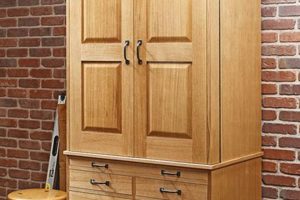
This type of woodworking focuses on crafting items from a single piece of lumber. The design constraints demand efficient material usage and creative problem-solving. Examples include small shelves, simple boxes, picture frames, or even basic toys. The inherent challenge lies in maximizing the potential of a limited resource.
Such projects offer several advantages, particularly for beginners or those with limited workshop space. They minimize material costs, reduce waste, and simplify the construction process. Historically, these approaches to woodworking fostered resourcefulness and emphasized fundamental joinery techniques. This methodology is also suited to teaching basic woodworking skills.
The following sections will detail specific project ideas achievable with this minimalist approach, explore suitable wood types, and offer practical tips for maximizing yield and minimizing waste when planning and executing such constructions. Techniques for efficient cutting, joinery, and finishing will also be addressed.
Tips for Maximizing Outcomes
The successful execution of constructions from minimal material requires meticulous planning and skillful execution. The following tips offer guidance for optimizing material usage and achieving desirable results.
Tip 1: Optimize Material Selection: Choose lumber with minimal knots or imperfections. Straight grain patterns are preferable, as they contribute to structural integrity and ease of cutting. Consider hardwood options like poplar or soft maple for enhanced durability.
Tip 2: Precise Measurement and Planning: A detailed cutting diagram is essential. Accurately measure all components and arrange them on the available board to minimize waste. Utilize software or online tools to aid in layout optimization.
Tip 3: Prioritize Accuracy in Cutting: Utilize sharp, well-maintained blades for clean cuts. Employ jigs and fences to ensure accurate angles and dimensions. Avoid rushing the cutting process, as errors can lead to significant material loss.
Tip 4: Consider Joinery Options Carefully: Simple joinery techniques such as butt joints, rabbets, or dados are often the most efficient. Reinforce joints with glue and fasteners as needed. Avoid complex joinery methods that consume excessive material.
Tip 5: Embrace Design Simplicity: Opt for straightforward designs that minimize material usage. Avoid elaborate curves or intricate details that generate waste. Focus on clean lines and functional forms.
Tip 6: Utilize Scrap Material: Salvage any remaining pieces for smaller projects or to create jigs and fixtures. Even small pieces can be repurposed, reducing overall material costs and environmental impact.
Tip 7: Practice Efficient Sanding Techniques: Use progressively finer grits of sandpaper to achieve a smooth surface. Avoid excessive sanding, which can remove valuable material, especially on thin components.
These strategies allow for maximizing material yield and achieving high-quality results, thereby reducing both expense and waste.
The succeeding segments will explore distinct examples and detailed instructions for effective execution.
1. Material Optimization

Material optimization, within the context of woodworking from minimal resources, denotes the strategic selection, preparation, and utilization of a single piece of lumber to maximize yield and minimize waste. The causal relationship is direct: constrained material availability necessitates meticulous planning and efficient execution. A failure to optimize material directly results in project failure, underscoring its critical importance. For example, when constructing a small box, a poorly planned cutting layout can easily render the project impossible due to insufficient material for the box’s sides. Accurate measurements and efficient nesting of components are therefore essential.
The practical significance extends beyond simple cost savings. Projects from limited resources often involve valuable or unique pieces of lumber. Effective optimization ensures these materials are not squandered. The process involves careful consideration of grain orientation, defect placement, and joinery methods. For instance, placing a component with higher structural stress along a section of the lumber with optimal grain flow improves the overall project integrity. Advanced strategies may involve using digital design tools to simulate cutting layouts, thereby predicting material usage and identifying potential problem areas before physical work begins. This proactive approach reduces errors and material waste.
In conclusion, material optimization is not merely a desirable practice within the framework of building with limited material, but a fundamental necessity. Its effective implementation directly determines project viability, reduces waste, and maximizes the utility of available resources. Challenges exist in achieving a balance between design aspirations and material constraints. Understanding this interplay is critical for woodworking projects constrained by the single board limitation. Success is directly linked to planning, execution, and respect for the material.
2. Design Simplicity

Design simplicity, in the context of single-board woodworking projects, is a crucial constraint that dictates project feasibility and aesthetic outcome. It demands a strategic approach to planning, emphasizing functionality and minimizing unnecessary complexity.
- Reduction of Components
Simpler designs require fewer individual parts. This reduction aligns directly with the limitations imposed by a single piece of lumber. Complex designs necessitate numerous pieces, leading to material shortages and design compromises. Examples include a basic picture frame versus a multi-tiered shelf. The frame, requiring only four pieces, is far more feasible given the material constraint.
- Straightforward Joinery
Design simplicity promotes the utilization of simple joinery techniques. Complex joinery, such as dovetails or mortise-and-tenon joints, consumes more material and demands greater precision, increasing the likelihood of errors and material waste. Butt joints, rabbets, or simple dadoes are preferable because they maximize material use and ease of construction.
- Emphasis on Functionality
Simple designs prioritize functionality over elaborate aesthetics. The focus shifts from decorative elements to the core purpose of the object. A basic shelf, for instance, prioritizes its load-bearing capacity and dimensional stability over ornate carvings or complex shapes. This functional emphasis aligns with the resource-constrained nature of single-board woodworking, encouraging efficient use of available materials.
- Geometric Primitives
Design simplicity often relies on basic geometric shapes like rectangles, squares, and triangles. These shapes are easily derived from a single board with minimal waste. Organic shapes or complex curves require more intricate cutting patterns, generating significant waste and potentially compromising the project’s structural integrity. The choice of geometric primitives directly impacts material efficiency.
The core relationship is evident: complexity is inversely proportional to project viability. A single board dictates a simplification of design, pushing designers to prioritize efficiency, functionality, and the inherent limitations of their chosen material. The challenge lies in creating visually appealing and structurally sound projects within this enforced simplicity, leveraging creative problem-solving to overcome material constraints.
3. Efficient Cutting

Within the framework of woodworking from a single board, efficient cutting transcends mere technique; it is a foundational prerequisite for project success. The limited material supply directly impacts the viability of any proposed design. Erroneous cuts or inefficient layout planning can render the project impossible, as the necessary components may no longer be obtainable from the remaining material. The cause-and-effect relationship is stark: suboptimal cutting practices lead to material waste, which, in turn, leads to project failure. As an illustrative instance, consider crafting a small bookshelf. If the initial cuts for the shelf sides are inaccurate, the subsequent cuts for the top and bottom may be impossible due to insufficient board length. The project then necessitates either design alterations or complete abandonment.
Efficient cutting involves several critical components. Precise measurement is paramount, as even minor discrepancies can compound across multiple cuts, leading to significant material loss. Kerf awarenessunderstanding the material removed by the saw bladeis also crucial. Neglecting to account for the kerf width in layout planning results in undersized components. Optimal layout planning necessitates nesting the components to minimize waste. This involves arranging the pieces in a way that utilizes as much of the board’s surface area as possible, leaving minimal gaps between cuts. Software tools can aid in this process, generating optimized cutting diagrams based on component dimensions and board size. Moreover, the selection of appropriate cutting tools is vital. Sharp blades and properly adjusted saws ensure clean, accurate cuts, minimizing splintering and tear-out, which further reduces material waste. The use of jigs and fixtures can also enhance accuracy and repeatability, particularly for repetitive cuts.
In summary, efficient cutting constitutes an essential pillar for successful completion of single-board woodworking projects. Meticulous planning, precise execution, and awareness of material properties collectively minimize waste and maximize the utilization of the available resource. The challenges inherent in these projects demand a disciplined approach to cutting, emphasizing accuracy, optimization, and the strategic application of appropriate tools and techniques. Ultimately, mastery of efficient cutting transforms limitations into opportunities for resourceful and creative woodworking.
4. Joinery Selection

Joinery selection plays a decisive role in the successful completion of constructions from a single piece of lumber. Given the inherent material limitations, the choice of joinery method directly influences structural integrity, aesthetic appeal, and overall project feasibility. A complex or material-intensive joint can quickly deplete the available resource, rendering the project untenable. Simple butt joints, secured with fasteners and adhesive, represent a common and economical solution. Rabbet joints offer increased strength and alignment assistance while minimizing material loss. Dadoes, though requiring more precise cutting, provide substantial structural support, particularly for shelves or dividers. The strategic selection of these simpler joinery methods becomes crucial in maximizing material yield and ensuring a robust finished product. A poorly chosen joint, conversely, can lead to structural weakness or necessitate significant design modifications to compensate for material deficiencies.
Consider a small box constructed from a single board. Utilizing intricate dovetail joints, while aesthetically pleasing, would consume a considerable amount of material, potentially reducing the box’s internal dimensions or necessitating thinner wood stock, compromising its strength. A more pragmatic approach involves rabbet joints at the corners, supplemented with glue and brad nails. This method provides adequate strength while minimizing material waste. Similarly, a simple picture frame benefits from mitered corners reinforced with splines or corner clamps, offering a clean aesthetic without excessive material consumption. The application of appropriate joinery techniques, therefore, represents a balancing act between structural requirements, aesthetic considerations, and the finite nature of the material resource. Careful planning and experimentation may be necessary to determine the optimal joint for each specific application.
In summary, joinery selection constitutes a critical element in crafting items from minimal resources. The choice must be guided by a deep understanding of material limitations and a commitment to efficient resource utilization. The effective application of simple, yet strong, joinery methods allows for the creation of functional and aesthetically pleasing objects, transforming the constraint of limited material into an opportunity for inventive and resourceful woodworking. Overlooking this crucial element results in projects that are either structurally unsound or ultimately unrealizable, underscoring the importance of informed joinery selection.
5. Waste Reduction
Waste reduction is an intrinsic principle within single-board woodworking endeavors. Given the limited material resource, minimizing waste is not merely an economically sound practice but a fundamental requirement for project viability and environmental responsibility. Each facet of the woodworking process, from initial planning to final finishing, must be carefully considered to optimize material usage and minimize discards.
- Optimized Cutting Layouts
Efficient arrangement of project components on the board’s surface minimizes offcuts. Software tools and careful manual layout planning can significantly reduce waste by nesting components together and strategically positioning them to avoid defects or unusable portions of the board. This maximizes the yield and ensures that the majority of the material is incorporated into the final product. Discarded material constitutes an inefficient use of valuable lumber resources and increases the cost of the undertaking.
- Strategic Component Sizing
Careful consideration of component dimensions, particularly thickness, can reduce material removal during milling and shaping operations. Overly thick components necessitate excessive planing, which generates sawdust waste. Optimizing the dimensions to meet structural requirements without unnecessary bulk minimizes this waste stream. For instance, using thinner shelf supports in a small bookshelf, where structurally sound, reduces the need for extensive planing and sawdust production.
- Effective Joint Design
The selection of joinery methods plays a critical role in waste reduction. Complex joints, such as dovetails, inherently produce more waste than simpler butt joints or rabbets. Choosing joinery methods that minimize material removal without compromising structural integrity contributes significantly to waste reduction efforts. This involves a thoughtful assessment of the joint’s structural requirements and a conscious decision to employ the most efficient method for the specific application.
- Reutilization of Offcuts
Even with optimized layouts, some offcuts are unavoidable. The practice of repurposing these smaller pieces for jigs, small parts, or unrelated projects greatly enhances waste reduction efforts. Small offcuts can serve as shims, spacers, or reinforcing elements in other projects, thereby reducing the overall demand for new lumber. This resourcefulness contributes to a more sustainable approach to woodworking by maximizing the utilization of available material.
The principle of waste reduction directly aligns with the core ethos of single-board woodworking. By minimizing waste through careful planning, strategic component sizing, effective joint design, and reutilization of offcuts, projects become both economically feasible and environmentally responsible. This commitment to efficient resource utilization transforms the constraint of limited material into an opportunity for resourceful and conscientious woodworking practices.
6. Functionality

In the context of projects constructed from a single piece of lumber, functionality assumes paramount importance, dictating design choices and construction methodologies. The inherent limitations of the material mandate a prioritization of utility, streamlining design and emphasizing essential purpose.
- Space Optimization
Designs must maximize the usable volume or area derived from the singular board. For example, a single-board shelf must efficiently support weight while minimizing wasted space above or below the shelf surface. Designs lacking efficient space utilization fail to leverage the limited resource fully, thereby diminishing functionality. This constraint encourages inventive solutions for storage and display that minimize material waste while providing maximal utility.
- Structural Integrity
The object’s capacity to withstand intended loads or stresses constitutes a key facet of functionality. A single-board stool, for instance, must support a person’s weight without collapsing or deforming. Designs that prioritize aesthetics over structural soundness compromise functionality and render the object unsafe or unusable. Strategic joinery and material orientation are crucial in achieving adequate structural integrity within the single-board constraint.
- Ease of Use
Functionality encompasses the ease with which the object can be used for its intended purpose. A single-board cutting board, for example, must provide a stable and easily cleanable surface for food preparation. Designs that introduce unnecessary complexity or impede usability diminish functionality. Simplicity and intuitive operation are valued over elaborate or cumbersome features.
- Durability and Longevity
An object’s capacity to withstand wear and tear over time constitutes another dimension of functionality. A single-board garden planter must resist moisture damage and degradation from exposure to the elements. Designs that employ durable materials and protective finishes extend the object’s lifespan, maximizing its functional value over the long term. Conversely, designs that neglect durability considerations diminish functionality as the object deteriorates and becomes unusable.
These facets underscore that constructions from limited material inherently necessitate a focus on function. Each design decision is weighed against its contribution to the object’s usability, structural integrity, and longevity. The success of a single-board woodworking project hinges on the effective integration of these functional considerations, yielding objects that are both aesthetically pleasing and practically useful.
Frequently Asked Questions
The following addresses common inquiries regarding woodworking projects constrained to a single piece of lumber. The information is intended to clarify fundamental concepts and address potential misconceptions.
Question 1: Is it possible to create structurally sound furniture using only one board?
While large, complex furniture pieces are unlikely, smaller, simpler furniture items are achievable. Structural integrity depends on careful design, appropriate wood selection, and strategic joinery. Reinforcements may be necessary for heavier load-bearing applications.
Question 2: What types of wood are best suited for limited-resource constructions?
Hardwoods like poplar, soft maple, or oak offer a balance of strength, workability, and cost. Softwoods can also be utilized for lighter-duty applications, but generally lack the structural integrity of hardwoods. Grain patterns and the presence of knots influence material selection.
Question 3: How does one minimize waste when cutting components from a single board?
Optimized cutting layouts are essential. Digital design tools or careful manual planning are beneficial. Accounting for the saw kerf is crucial to prevent undersized components. Re-purposing offcuts for smaller parts or jigs also reduces waste.
Question 4: What joinery techniques are recommended for projects with minimal material?
Simple joinery methods are preferred. Butt joints, rabbet joints, and dadoes offer ease of construction and minimize material loss. Reinforcement with glue and fasteners enhances joint strength without excessive material usage.
Question 5: Are there limitations to the size and complexity of these projects?
Significant limitations exist. Size is restricted by the dimensions of the available board. Complexity is constrained by the need for efficient material usage and simplified designs. Overly ambitious projects are unlikely to succeed given these constraints.
Question 6: How does one ensure a professional finish on a small woodworking piece?
Proper sanding, application of a suitable finish, and attention to detail are essential. Multiple coats of finish may be required. Careful surface preparation ensures optimal adhesion and a smooth, durable finish.
The above questions highlight key considerations. Adhering to the principles outlined will promote success within the imposed constraint.
The following section provides specific project examples.
Conclusion
This exploration of woodworking projects limited to a single board has illuminated the fundamental principles of resourcefulness, careful planning, and efficient execution. The constraint fosters creativity, demanding designers and builders to prioritize functionality, optimize material utilization, and embrace simplicity in design and construction.
The single-board limitation presents both challenges and opportunities. It encourages a deeper understanding of material properties, joinery techniques, and sustainable practices. Continued exploration and innovation within this framework will undoubtedly lead to new designs and approaches that maximize the potential of minimal resources.