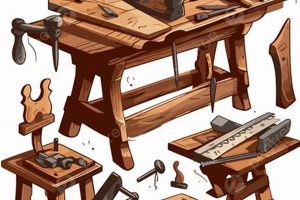
The capacity to produce implements for shaping wood through additive manufacturing processes represents a growing trend in both hobbyist and professional environments. These items, constructed from materials such as polymers and composites, offer a customizable alternative to traditionally manufactured equipment. A specific example is a 3D-printed plane used for smoothing wooden surfaces.
This method of tool creation can provide several advantages, including the potential for cost reduction, rapid prototyping of innovative designs, and the ability to create bespoke tools tailored to specific tasks. Historically, woodworking tools were forged from metal, requiring specialized skills and equipment. Additive manufacturing democratizes access to tool production, allowing individuals with a 3D printer and design skills to fabricate functional implements.
The subsequent sections will delve into specific types of these tools, the materials used in their construction, design considerations for optimal performance, and the potential impact on the future of woodworking practices.
Tips for Utilizing Additively Manufactured Woodworking Implements
Effective utilization of woodworking tools produced via additive manufacturing requires attention to design principles, material selection, and practical application. The following tips outline best practices for maximizing the utility and longevity of these instruments.
Tip 1: Material Selection is Critical: The properties of the filament, resin, or powder used in the additive manufacturing process directly influence the tool’s durability and performance. Consider factors such as tensile strength, impact resistance, and temperature resistance when selecting materials. For example, certain nylon-based filaments offer superior abrasion resistance for tools used in contact with abrasive materials.
Tip 2: Optimize Design for Print Orientation: The orientation of the tool during the printing process can significantly impact its structural integrity. Align the tool’s strongest axis with the direction of the highest anticipated stress. Pay particular attention to layer adhesion; design features to minimize stress on layer lines. A vertical print orientation might be suitable for a tool experiencing primarily compressive forces.
Tip 3: Consider Infill Density and Pattern: Infill density dictates the tool’s internal solidity and weight. Adjust infill percentage based on the intended application. Higher infill provides greater strength but increases material usage and print time. Explore various infill patterns, such as gyroid or honeycomb, to balance strength and material efficiency. A lightweight tool might benefit from a low-density gyroid infill.
Tip 4: Post-Processing Enhancements: Additive manufacturing often results in surface imperfections. Post-processing techniques, such as sanding, polishing, or coating, can improve the tool’s surface finish, reduce friction, and enhance its aesthetic appeal. Consider applying a sealant to prevent moisture absorption in hygroscopic materials. Sanding can remove support material remnants and layer lines for improved grip.
Tip 5: Reinforce Stress Points: Identify areas of the tool susceptible to high stress concentrations, such as corners or joints. Incorporate design features like fillets, radii, or internal ribs to distribute stress and prevent premature failure. Reinforcement strategies can significantly extend the tool’s operational lifespan. A radius applied to a sharp corner can reduce stress concentration at that point.
Tip 6: Implement a Regular Maintenance Schedule: Inspect additively manufactured woodworking implements for signs of wear, cracking, or deformation. Clean tools regularly to remove dust, debris, and resin residue. Replace worn components or reprint damaged tools promptly. Routine inspection can prevent catastrophic failure during operation.
Tip 7: Design for Modularity and Repairability: Break down complex tool designs into modular components that can be easily replaced or repaired. This approach minimizes downtime and reduces the need to reprint entire tools when a single component fails. Design interfaces for secure and easily detachable connections between modules.
These guidelines promote the creation and use of robust and effective woodworking tools utilizing additive manufacturing. Diligent application of these techniques can unlock the full potential of this rapidly evolving technology.
The following sections will explore specific case studies and examples of additively manufactured woodworking tools in practice.
1. Material Properties

The selection of appropriate materials represents a critical determinant in the performance and longevity of additively manufactured woodworking implements. Material properties directly influence a tool’s ability to withstand the stresses and strains inherent in woodworking operations. For instance, a 3D-printed chisel constructed from a brittle polymer would be prone to shattering upon impact, rendering it unsuitable for its intended purpose. Conversely, a tool made from a material exhibiting high tensile strength and impact resistance, such as a carbon fiber-reinforced nylon, demonstrates greater durability and resistance to failure under similar conditions.
Furthermore, material properties affect the tool’s interaction with wood. A material with a low coefficient of friction can facilitate smoother cutting or planing action, reducing the effort required from the user and improving the quality of the finished workpiece. Conversely, a rough or abrasive material could mar the surface of the wood. Consider the example of a 3D-printed plane sole; a smooth, low-friction polymer allows for easier gliding across the wood surface. Chemical resistance is also a relevant property, particularly for tools used in conjunction with adhesives, solvents, or finishes commonly employed in woodworking. Exposure to incompatible chemicals can degrade the material, leading to structural weakening and premature failure.
In summary, the careful consideration of material properties is essential for the successful fabrication of 3D-printed woodworking tools. Selecting materials with suitable mechanical strength, friction characteristics, and chemical resistance ensures that the resulting implements are both functional and durable. Ongoing research into novel materials and additive manufacturing techniques continues to expand the possibilities for creating high-performance woodworking tools through this technology, and mitigate the challenges that are related to material selection.
2. Design Optimization
Design optimization plays a pivotal role in the efficacy of 3D-printed woodworking tools. The additive manufacturing process allows for complex geometries and internal structures not easily achievable through traditional manufacturing methods. The design must leverage these capabilities to enhance the tool’s functionality and durability. A poorly designed tool, even if constructed from high-quality materials, will likely fail under the stresses of woodworking tasks. For example, a 3D-printed hand plane requires careful consideration of the blade angle, sole flatness, and handle ergonomics to ensure smooth and controlled cutting action. Improper design in any of these areas can result in chattering, tear-out, or user fatigue. The optimization process is therefore a critical component of producing functional and reliable tools.
Finite Element Analysis (FEA) is a valuable tool in optimizing the design of these tools. FEA allows engineers to simulate the stresses and strains that the tool will experience during use, enabling them to identify weak points and refine the design accordingly. For instance, when designing a 3D-printed mallet, FEA can be used to determine the optimal shape and internal structure of the head to maximize its impact force while minimizing the risk of cracking or deformation. The application of such analytical techniques translates to more efficient material usage, reduced prototyping cycles, and an enhanced lifespan of the resulting tool. This level of design control is a primary benefit of utilizing 3D printing for tool manufacturing.
In conclusion, design optimization is not merely an aesthetic consideration but a fundamental requirement for creating functional and durable 3D-printed woodworking tools. The capacity to iterate on designs, coupled with analytical tools such as FEA, allows for the creation of implements that are both lightweight and strong, specifically tailored to the demands of woodworking. While material selection is important, the design is ultimately what dictates whether the tool is truly fit for purpose. Continual improvements in design methodologies and software will undoubtedly lead to even more sophisticated and effective 3D-printed woodworking tools in the future.
3. Manufacturing Precision
Manufacturing precision is a critical factor in determining the functionality and reliability of 3D-printed woodworking tools. The inherent layered construction of additive manufacturing processes directly impacts dimensional accuracy and surface finish. Deviations from the intended design specifications can compromise the tool’s effectiveness, leading to inaccurate cuts, poor fitting joints, or premature failure. For example, a 3D-printed dovetail marker that lacks precise angles will produce inaccurate dovetail joints, undermining the woodworking project’s structural integrity. The attainable level of precision, therefore, directly influences the tool’s ability to perform its intended function reliably.
The precision of the 3D printing process is determined by various factors, including the printer’s resolution, material properties, and printing parameters. Higher resolution printers are capable of producing finer details and smoother surfaces, but often at the cost of increased printing time and material usage. Material shrinkage during cooling can also introduce inaccuracies, necessitating careful calibration and material-specific adjustments. The selection of appropriate printing parameters, such as layer height, print speed, and support structure density, is crucial for optimizing manufacturing precision. A 3D-printed spokeshave, for instance, requires a smooth and consistent cutting edge. This can only be achieved if the printing process ensures accurate layer adhesion and minimal surface roughness.
In summary, manufacturing precision is an indispensable component of 3D-printed woodworking tools. The ability to accurately reproduce the intended design directly affects the tool’s performance and longevity. Challenges related to material properties and printing parameters must be carefully addressed to maximize precision. Advances in 3D printing technology and process control are continuously improving the attainable level of precision, thereby expanding the range of woodworking tools that can be effectively produced through additive manufacturing.
4. Functional Durability
Functional durability, defined as the ability of a tool to withstand operational stresses and maintain its intended function over an extended period, is a paramount concern when evaluating 3D-printed woodworking tools. The materials and manufacturing processes involved in additive manufacturing present unique challenges and opportunities in achieving the requisite level of robustness for demanding woodworking applications. The following aspects are central to understanding functional durability in this context.
- Material Selection and Layer Adhesion
The choice of material dictates the tool’s inherent resistance to fracture, wear, and environmental degradation. Polymers, commonly employed in 3D printing, exhibit varying degrees of mechanical strength and chemical resistance. Layer adhesion, the bonding force between successive layers in the printed object, is critical. Weak layer adhesion can lead to delamination and premature failure under stress. For example, a 3D-printed mallet head made from PLA (polylactic acid) may exhibit insufficient impact resistance and be prone to cracking after repeated use. Optimizing printing parameters, such as extrusion temperature and layer height, can improve layer adhesion and enhance the tool’s overall durability.
- Design for Stress Distribution
The tool’s geometry significantly influences its ability to withstand applied forces. Sharp corners and abrupt transitions concentrate stress, increasing the likelihood of failure. Incorporating fillets, radii, and reinforcing structures can redistribute stress more evenly, enhancing the tool’s resistance to cracking or deformation. A 3D-printed hand plane, for instance, should be designed with rounded edges and internal ribs to minimize stress concentrations during planing operations. Finite element analysis (FEA) can be used to simulate stress distributions and identify potential weak points in the design.
- Resistance to Wear and Abrasion
Woodworking tools are often subjected to abrasive wear from contact with wood, fasteners, and other materials. The tool’s surface hardness and wear resistance determine its ability to withstand this abrasion without significant degradation. Certain polymers, such as nylon and PETG (polyethylene terephthalate glycol-modified), exhibit superior abrasion resistance compared to others. Surface treatments, such as coating or impregnation, can further enhance the tool’s resistance to wear. A 3D-printed sanding block, for example, should be constructed from a material that resists wear from the abrasive action of sandpaper.
- Environmental Stability
Exposure to moisture, temperature variations, and ultraviolet (UV) radiation can degrade the mechanical properties of certain polymers, reducing the tool’s functional durability. Hygroscopic materials, such as PLA, absorb moisture from the air, leading to swelling and dimensional changes. UV radiation can cause polymers to become brittle and prone to cracking. Selecting materials with high environmental stability and applying protective coatings can mitigate these effects. A 3D-printed marking gauge, for example, should be constructed from a material that resists dimensional changes due to humidity variations.
Ultimately, achieving adequate functional durability in 3D-printed woodworking tools requires a holistic approach that considers material selection, design optimization, and manufacturing process control. Addressing these factors is critical for ensuring that these tools can withstand the rigors of woodworking and provide reliable performance over time.
5. Cost-Effectiveness
Evaluating the cost-effectiveness of additively manufactured woodworking tools necessitates a comprehensive analysis of the financial implications associated with their production and utilization compared to traditionally manufactured counterparts. This encompasses material expenses, manufacturing overhead, labor costs, and the potential for customization and on-demand fabrication.
- Initial Investment and Equipment Costs
The primary expense associated with entering the realm of 3D-printed woodworking tools is the acquisition of a suitable 3D printer. While industrial-grade printers offer higher precision and larger build volumes, consumer-grade models may suffice for smaller tools or prototyping. The initial investment can be substantial, but this fixed cost amortizes over time with increased tool production. Moreover, the expense of maintaining traditional tool manufacturing equipment, such as mills and lathes, can often exceed the maintenance costs of a 3D printer, particularly for smaller-scale operations.
- Material Expenses and Waste Reduction
The cost of materials for 3D printing, primarily polymers in the form of filament or resin, is a recurring expense. The price varies depending on the material type, quality, and quantity purchased. Compared to the raw material costs for traditional metal tools, polymer expenses can be significantly lower. Furthermore, additive manufacturing minimizes material waste by only using the precise amount of material required for the tool, reducing scrap and disposal costs. This contrasts sharply with subtractive manufacturing methods, which often generate considerable material waste.
- Labor and Skill Requirements
The labor costs associated with 3D-printed woodworking tools are multifaceted. Designing the tool requires skilled personnel proficient in CAD software. Operating the 3D printer necessitates technical expertise to calibrate the machine, monitor the printing process, and perform routine maintenance. However, once the design is finalized and the printing process is optimized, the actual production requires minimal manual intervention, reducing ongoing labor costs. This semi-automated nature of 3D printing can offer a cost advantage compared to the skilled labor-intensive processes involved in traditional tool manufacturing.
- Customization and On-Demand Fabrication
One of the most compelling cost-effectiveness arguments for 3D-printed woodworking tools lies in the ability to customize designs and fabricate tools on demand. This eliminates the need to maintain a large inventory of specialized tools, reducing storage costs and minimizing the risk of obsolescence. Moreover, customized tools can be tailored to specific tasks or individual user preferences, potentially improving efficiency and reducing errors. For instance, a woodworker requiring a specialized marking gauge with unique dimensions can quickly and affordably 3D print a custom version, rather than investing in a costly, mass-produced alternative. This flexibility offers a significant cost advantage in specialized woodworking scenarios.
In conclusion, the cost-effectiveness of additive manufacturing in woodworking is a complex equation involving initial investment, material expenses, labor requirements, and the benefits of customization. While the initial cost of equipment can be a barrier to entry, the reduction in material waste, lower labor costs, and the potential for on-demand fabrication can make 3D-printed woodworking tools a financially viable alternative to traditional methods, especially for specialized applications and smaller-scale operations. The continuous advancements in 3D printing technology and materials are further enhancing the cost-effectiveness of this approach, making it an increasingly attractive option for woodworkers of all levels.
Frequently Asked Questions About 3D Printed Woodworking Tools
The subsequent questions and answers address common inquiries regarding the feasibility, durability, and practical applications of woodworking implements produced using additive manufacturing techniques.
Question 1: What materials are typically employed in the creation of these tools?
Common materials include various polymers, such as polylactic acid (PLA), acrylonitrile butadiene styrene (ABS), polyethylene terephthalate glycol (PETG), and nylon. Composite materials, such as carbon fiber-reinforced polymers, are also utilized to enhance strength and stiffness. The selection depends on the tool’s intended application and required properties.
Question 2: How does the strength of a 3D-printed tool compare to a traditionally manufactured tool?
The strength of a 3D-printed tool is contingent on the material used, the printing parameters, and the design. While some polymers may not match the strength of steel or hardened alloys, composite materials and optimized printing techniques can yield tools with comparable or even superior strength-to-weight ratios for specific applications. Traditional manufacturing processes may still be preferred for tools requiring extreme durability.
Question 3: What are the limitations of using additive manufacturing for creating woodworking tools?
Limitations include the potential for lower dimensional accuracy compared to traditional machining, the limited selection of materials with the requisite strength and durability, and the relatively slow printing speeds. Additionally, some polymers are susceptible to degradation from moisture or ultraviolet (UV) light.
Question 4: What types of woodworking tools are most suitable for 3D printing?
Tools with complex geometries, ergonomic designs, or those requiring customization are well-suited for 3D printing. Examples include marking gauges, clamps, jigs, and specialized hand plane components. Tools requiring exceptional hardness or resistance to high temperatures, such as saw blades or chisels, may not be as suitable.
Question 5: How does the cost of 3D-printed tools compare to commercially available tools?
The cost depends on several factors, including the cost of the 3D printer, the price of materials, and the time required for printing. For customized or low-volume production, 3D printing can be more cost-effective than purchasing commercially available tools. However, for mass-produced tools, traditional manufacturing methods may offer a lower per-unit cost.
Question 6: What level of expertise is required to design and print functional woodworking tools?
Designing functional tools necessitates proficiency in CAD software and an understanding of mechanical engineering principles. Operating a 3D printer requires technical knowledge of printing parameters, material properties, and troubleshooting techniques. While readily available designs and tutorials can lower the barrier to entry, achieving optimal results requires a significant investment in learning and experimentation.
In summary, additive manufacturing presents a viable alternative for producing certain types of woodworking tools, particularly those requiring customization or complex geometries. However, it is crucial to consider the limitations of the technology and carefully select materials and design parameters to ensure functionality and durability.
The subsequent sections will discuss case studies of 3D printed woodworking tools.
Conclusion
The exploration of 3d printed woodworking tools reveals a dynamic intersection of additive manufacturing and traditional craftsmanship. This investigation has underscored the importance of material selection, design optimization, manufacturing precision, functional durability, and cost-effectiveness in realizing the potential of this technology. While limitations persist, the capacity for customization and on-demand fabrication offers distinct advantages.
Continued research and development in materials science and additive manufacturing processes are poised to further enhance the viability and broaden the application of these tools. The responsible and informed application of 3d printed woodworking tools holds the potential to democratize access to specialized implements and foster innovation within the woodworking community. Further exploration, experimentation, and collaboration are critical to fully realize this potential.
![Top-Rated: Best Brand of Woodworking Tools Guide [2024] | Step-by-Step Guides, Tools & Inspiration to Build Beautiful Wooden Decor on a Budget](https://woodfromhome.com/wp-content/uploads/2026/05/th-69-300x200.jpg "Top-Rated: Best Brand of Woodworking Tools Guide [2024] Step-by-Step Guides, Tools & Inspiration to Build Beautiful Wooden Decor on a Budget")