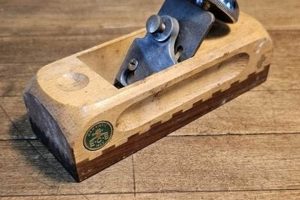
The endeavor to produce implements for shaping wood encompasses a range of activities, from forging metal components to crafting wooden handles and assembling the final product. This pursuit involves a combination of skills, including metalworking, woodworking, and a detailed understanding of tool design. A common example is the creation of a hand plane, which requires the fashioning of a blade, the construction of a wooden body, and the precise fitting of the two parts.
The significance of this process lies in several key areas. First, it allows for the customization of tools to meet specific needs, enabling craftspeople to create implements perfectly suited to their individual working styles and project requirements. Furthermore, it fosters a deeper understanding of tool mechanics and materials science, leading to improved craftsmanship and innovative designs. Historically, the ability to fabricate such implements was essential for communities to build shelter, create furniture, and develop infrastructure.
The subsequent discussion will explore the various aspects of this undertaking, including the selection of appropriate materials, the utilization of specific manufacturing techniques, and the consideration of ergonomic factors in tool design. The aim is to provide a practical guide to this skill, enabling individuals to create high-quality tools that enhance their woodworking capabilities.
Essential Considerations for Producing Woodworking Implements
The creation of woodworking implements necessitates meticulous attention to detail. Several critical aspects warrant careful consideration to ensure the production of tools that are both functional and durable.
Tip 1: Material Selection is Paramount: The choice of materials dictates the longevity and performance of the resulting tool. High-carbon steel is recommended for cutting edges due to its hardness and ability to maintain sharpness. For tool bodies, hardwoods such as maple or beech offer dimensional stability and resistance to wear.
Tip 2: Precision in Manufacturing is Essential: Accurate machining and fitting of components are crucial for optimal tool performance. Tolerances should be minimized to prevent play and ensure smooth operation. Consider employing jigs and fixtures to maintain consistency during the manufacturing process.
Tip 3: Heat Treatment Affects Performance: Proper heat treatment of metal components, particularly cutting edges, is vital to achieve the desired hardness and temper. Employ quenching and tempering processes to optimize the balance between hardness and toughness, preventing brittleness and premature failure.
Tip 4: Ergonomic Design Enhances Usability: Tool handles should be designed to fit comfortably in the hand and minimize fatigue during prolonged use. Consider the size, shape, and texture of the handle to ensure a secure and comfortable grip. Analyze various hand positions and grip styles to optimize the ergonomic design.
Tip 5: Careful Finishing Prevents Corrosion: A protective finish, such as oil or varnish, should be applied to the tool body to prevent moisture absorption and corrosion. This finish also enhances the aesthetic appeal and provides a more comfortable surface to grip. Regularly inspect and maintain the finish to ensure ongoing protection.
Tip 6: Sharpening and Maintenance are Indispensable: The ability to sharpen and maintain cutting edges is essential for ensuring the ongoing performance of woodworking implements. Develop a consistent sharpening routine using appropriate stones and techniques. Regularly inspect tools for wear and damage, and perform necessary repairs to prevent further deterioration.
These considerations are vital to the creation of high-quality woodworking implements. Adherence to these principles will result in tools that are both functional and durable, enhancing the overall woodworking experience.
The following section will delve into specific techniques used in the construction of various woodworking tools, providing a detailed guide to the practical aspects of the process.
1. Material Durability

The fabrication of woodworking tools necessitates careful consideration of material durability. Material choice directly influences the tool’s lifespan and its ability to withstand the forces encountered during regular use. Inferior materials quickly degrade, resulting in frequent replacements and reduced efficiency. For example, a plane made from low-quality steel will dull rapidly and may even chip or deform under moderate stress, rendering it ineffective. The selection of appropriate materials, therefore, is not merely a cosmetic consideration, but a fundamental determinant of the tool’s long-term value and utility. Durable materials such as high-carbon steel for blades and dense hardwoods for bodies are essential for creating tools that can endure the rigors of woodworking.
The effect of material durability is evident in the performance and longevity of various woodworking tools. A poorly constructed chisel, for example, using low-grade steel, will require frequent sharpening and is prone to bending or breaking. This not only interrupts workflow but also presents a safety hazard. Conversely, a well-made chisel employing high-quality steel can maintain its edge for extended periods and withstand significant impact forces. The practical application of this understanding means investing in materials designed for the demands of woodworking; this results in fewer repairs, replacements, and overall cost savings over time. Selecting appropriate materials reduces the frustration of dealing with substandard tools and ultimately increases productivity.
In summary, material durability is a cornerstone of successful tool creation for woodworking. By prioritizing high-quality materials, manufacturers and artisans can ensure the production of tools that are reliable, safe, and capable of delivering consistent performance throughout their operational lifespan. The initial investment in durable materials translates to long-term value, reduced maintenance, and enhanced woodworking outcomes. While challenges may arise in sourcing appropriate materials, the benefits far outweigh the difficulties involved. Consequently, the understanding of material durability is vital for anyone engaged in making woodworking tools.
2. Edge Retention

Edge retention, the ability of a cutting tool’s edge to resist wear and maintain sharpness during use, is fundamentally linked to the endeavor of creating woodworking tools. It is not merely a desirable characteristic but a critical performance parameter. The quality of a woodworking tool is directly proportional to its edge retention; tools that rapidly dull require frequent sharpening, disrupting workflow and diminishing precision. The selection of appropriate materials and the application of proper heat treatment techniques are primary determinants of a tool’s ability to hold an edge. For instance, a poorly hardened plane iron will lose its keenness after only a short period of use, necessitating constant re-sharpening, while a properly treated blade will retain its sharpness for significantly longer. Thus, the process of making woodworking tools inherently involves strategies to maximize edge retention.
The interplay between material science, heat treatment, and manufacturing precision directly influences edge retention. High-carbon steel alloys, when properly heat-treated to achieve the correct hardness and temper, exhibit superior edge retention compared to softer, less-refined materials. The manufacturing process also plays a vital role. A precisely ground and honed edge, free from imperfections, will resist wear better than a carelessly prepared edge. Consider the difference between a factory-produced chisel, hastily manufactured with minimal attention to edge preparation, and a hand-forged chisel, meticulously crafted with careful attention to the hardening, tempering, and grinding processes. The latter will invariably exhibit superior edge retention and deliver a more satisfying user experience. Furthermore, the design of the tool itself, including the blade angle and overall geometry, can impact its ability to maintain a sharp edge under stress.
In conclusion, edge retention is an indispensable consideration when involved in creating woodworking tools. It directly affects efficiency, precision, and overall user satisfaction. Addressing the challenge of maximizing edge retention requires a comprehensive understanding of material properties, heat treatment techniques, and manufacturing processes. The integration of these elements is essential for producing high-quality woodworking implements that offer enduring performance and represent a worthwhile investment. The pursuit of superior edge retention remains a central objective in the ongoing development and refinement of woodworking tools.
3. Handle Ergonomics

Handle ergonomics, a critical facet of tool design, directly impacts the functionality and usability of woodworking implements. The design and construction of handles significantly influence user comfort, control, and the potential for long-term strain or injury. Therefore, when constructing woodworking tools, ergonomic principles must be thoughtfully integrated.
- Grip Diameter and Shape
The diameter and shape of a tool handle profoundly affect the user’s ability to maintain a secure grip. Handles that are too large or too small can lead to hand fatigue and reduced control. A cylindrical handle is common, but elliptical or contoured shapes may better fit the natural curvature of the hand, distributing pressure more evenly. An adze, for example, requires a handle diameter that allows for a firm, controlled swing, while a smaller carving knife benefits from a thinner handle that enables precise finger movements. Incorrect diameter and shape can lead to carpal tunnel syndrome.
- Material Selection and Texture
The material used in handle construction and its surface texture are important ergonomic considerations. Wood, particularly hardwoods like ash or maple, is a common choice due to its shock-absorbing properties and natural grain. The surface texture can be enhanced through carving or texturing to improve grip, especially in damp or sweaty conditions. The surface should be smooth enough to avoid causing blisters or chafing. A well-executed example is a drawknife with handles turned from a hardwood with a slightly rough texture, providing a secure grip without causing discomfort during prolonged use. Using metal or plastic, can cause blisters and slipping.
- Handle Length and Balance
The length of the handle, in relation to the tool’s head or blade, affects the tool’s balance and leverage. A longer handle provides more leverage for tasks requiring significant force, while a shorter handle offers greater maneuverability for intricate work. The tool’s balance should be such that it feels natural and comfortable in the hand, minimizing the effort required to maintain control. An axe used for felling trees, for instance, will have a significantly longer handle than a hatchet used for splitting kindling, reflecting the differing forces and control requirements. A tool that isn’t properly balanced will cause user fatigue and inaccuracy.
- Handle Angle and Offset
The angle at which the handle is attached to the tool’s head or blade, and any offset in the handle’s design, can significantly affect the user’s wrist and arm position. A properly angled or offset handle can reduce strain and improve comfort, particularly for repetitive tasks. A carving gouge with a cranked handle allows the user to maintain a more natural wrist position, reducing the risk of wrist pain. If a handles angle is improper the tool will not function as it should and could be dangerous.
The careful consideration of grip diameter, material selection, handle length, and handle angle when constructing woodworking tools is essential for ensuring both the tool’s effectiveness and the user’s long-term comfort and safety. Neglecting these ergonomic factors can lead to reduced productivity, increased risk of injury, and overall dissatisfaction with the tool. Implementing ergonomic principles allows users to produce quality work more comfortably. Tools should conform to the user, not the other way around.
4. Manufacturing Precision

Manufacturing precision constitutes a cornerstone in the fabrication of functional and reliable woodworking tools. The degree to which individual components are accurately formed and assembled dictates the overall performance, longevity, and safety of the finished implement. Achieving a high level of manufacturing precision necessitates rigorous quality control measures throughout the production process.
- Dimensional Accuracy of Components
Dimensional accuracy ensures that each part conforms to specified measurements and tolerances. In the context of woodworking tools, this is critical for achieving proper fit and function. For example, the dovetail joint on a hand plane requires precise angles and dimensions to ensure the sole is perfectly aligned with the body. Deviation from specified dimensions leads to instability, reduced performance, and potential failure of the tool. Failure to achieve correct dimensionality can make a tool unusable.
- Surface Finish and Tolerance
The surface finish and adherence to tolerance specifications are fundamental to the smooth operation of moving parts. A precisely machined blade, for instance, will minimize friction when in contact with the wood, resulting in cleaner cuts and reduced effort. Inadequate surface finishing or exceeding tolerance limits introduces friction and wear, affecting the tool’s efficiency and lifespan. A rough surface on a plane sole will hinder smooth operation across the wood. Meeting the required tolerances ensures functionality and ease of use.
- Material Integrity and Consistency
Consistent material properties are paramount for predicting tool behavior under stress. Manufacturing processes must control for variations in material hardness, grain orientation, and density. A chisel blade made from inconsistent steel may develop weak spots or exhibit uneven wear, compromising its performance and safety. Material variations affect the predictability of tool performance and can be very dangerous.
- Assembly and Alignment
Proper assembly and alignment of components are essential for achieving optimal tool performance. All parts must be precisely aligned and securely fastened to prevent movement or instability. For example, the blade of a hand saw must be perfectly aligned with the handle to ensure straight cuts. Misalignment leads to inaccurate results, increased effort, and potential damage to the tool. Precise assembly allows tools to function as intended.
The aforementioned facets of manufacturing precision are intrinsically linked to the successful production of woodworking tools. Compromising any aspect diminishes the tool’s overall value, utility, and safety. Continuous refinement of manufacturing techniques and stringent adherence to quality standards are essential for creating instruments that meet the demands of skilled woodworkers.
5. Sharpening Technique

Sharpening technique constitutes a critical skill for any craftsperson engaged in creating woodworking tools. The ability to properly sharpen and maintain cutting edges directly influences the tool’s performance, longevity, and overall utility. It is an indispensable component of the tool-making process, impacting the final quality and effectiveness of the finished product.
- Angle Consistency and Edge Geometry
Maintaining a consistent angle during the sharpening process is essential for establishing and preserving the correct edge geometry. The bevel angle of a chisel or plane iron, for instance, directly affects its cutting performance. An inconsistent angle results in a rounded or skewed edge, reducing sharpness and increasing the effort required to cut wood. Furthermore, the back of the tool needs to be flat and polished to ensure a keen cutting edge. Precision in angle consistency ensures efficient and accurate material removal. Deviations from the optimal angle compromise the tool’s functionality.
- Abrasive Selection and Progression
The choice of abrasive materials, ranging from coarse grinding wheels to fine honing stones, dictates the speed and effectiveness of the sharpening process. Abrasive selection should correspond to the tool’s steel type and the extent of edge damage. Progressing through progressively finer grits refines the cutting edge, eliminating scratches and achieving a mirror-like polish. Failure to use appropriate abrasives or to progress systematically can result in a poorly sharpened edge or damage to the tool. Coarse stones are used for repairing damage, and fine stones and strops polish the edge.
- Pressure Control and Stroke Technique
Applying appropriate pressure during sharpening prevents overheating and deformation of the cutting edge. Excessive pressure can lead to bluing or burning of the steel, altering its temper and reducing its hardness. Similarly, the stroke technique employed whether push stroke, pull stroke, or circular motion influences the uniformity of the sharpened edge. Consistent pressure and controlled strokes yield a sharper, more durable cutting edge. Varying pressure can create an uneven edge, affecting tool performance.
- Maintenance and Edge Preservation
Regular maintenance, including honing and stropping, preserves the sharpness of a cutting edge between sharpening sessions. Honing realigns the microscopic teeth on the edge, while stropping polishes and refines the cutting surface. Neglecting regular maintenance necessitates more frequent and aggressive sharpening, shortening the tool’s lifespan. Proper maintenance ensures that the tool is always ready for use and reduces the need for extensive sharpening procedures. Consistent maintenance maximizes tool performance.
These facets of sharpening technique are integral to the creation and upkeep of woodworking tools. Proficiency in these skills ensures that tools perform optimally, providing accurate and efficient material removal. Mastering the art of sharpening is essential for anyone involved in making or using woodworking implements, as it directly impacts the quality of craftsmanship and the longevity of the tools themselves.
6. Rust Prevention
Rust prevention is a fundamental consideration in the creation and maintenance of woodworking tools. The metallic components of these tools, particularly those fabricated from steel or iron, are susceptible to corrosion when exposed to moisture and oxygen. Neglecting rust prevention measures can lead to rapid degradation, diminished performance, and ultimately, the functional failure of the tool. Incorporating rust prevention strategies into the fabrication process and establishing routine maintenance procedures are essential for ensuring the longevity and reliability of woodworking implements.
- Material Selection and Alloy Composition
The choice of materials significantly influences a tool’s susceptibility to rust. Alloys with higher chromium content, such as stainless steel, exhibit superior corrosion resistance compared to plain carbon steel. While stainless steel is not always practical for cutting edges due to hardness limitations, its use in non-critical components, such as fasteners and hardware, can mitigate rust formation. In carbon steel tools, the presence of impurities and variations in alloy composition can create localized corrosion cells, accelerating rust development. Forging and heat-treating processes can also affect the material’s resistance to corrosion. Thus, selecting appropriate materials and controlling alloy composition are crucial first steps in rust prevention.
- Protective Coatings and Finishes
Applying protective coatings and finishes creates a barrier between the metal surface and the corrosive environment. Common coating methods include oiling, waxing, and the application of paints or varnishes. Oiling with a light mineral oil displaces moisture and forms a thin protective layer, while waxing provides a more durable and water-repellent barrier. Paints and varnishes offer a thicker, more robust coating but can obscure details and require careful application to avoid interfering with the tool’s function. The choice of coating depends on the tool’s intended use, the environmental conditions, and the desired aesthetic. Regular reapplication of these coatings is necessary to maintain their effectiveness.
- Proper Storage and Handling Procedures
Storage and handling practices significantly impact the rate of rust formation. Storing tools in a dry, well-ventilated environment minimizes exposure to moisture. Avoid storing tools in damp basements or uninsulated sheds where condensation is likely to occur. Wrapping tools in moisture-absorbing materials, such as silica gel packets, can further reduce humidity levels. Additionally, cleaning tools after each use to remove sawdust, fingerprints, and other contaminants prevents the accumulation of corrosive agents. Avoid touching metal surfaces with bare hands as skin oils and salts can accelerate corrosion. Proper storage and handling habits extend the life of woodworking tools.
- Electrochemical Protection Methods
Electrochemical methods, such as sacrificial anodes, offer a more advanced approach to rust prevention. A sacrificial anode, typically made of a more reactive metal like zinc or magnesium, corrodes preferentially, protecting the steel tool from rust. While less common in woodworking tool fabrication, this technique finds application in preventing corrosion in larger metal structures or tools subjected to harsh environments. Another electrochemical method is passivation, where the metal surface is treated to form a thin, stable oxide layer that inhibits further corrosion. Understanding the principles of electrochemical protection allows for more informed decisions regarding tool material selection and maintenance strategies.
The connection between rust prevention and the endeavor of fabricating woodworking tools is multifaceted. These tools are built to last and function properly and it requires the application of appropriate materials, coatings, storage practices, and, in some cases, advanced electrochemical methods. The neglect of these elements can result in substantial financial losses due to tool replacement and decreased performance. A comprehensive approach to rust prevention is, therefore, an essential aspect of the woodworking trade, ensuring the longevity and reliability of essential instruments.
7. Blade Geometry

Blade geometry, encompassing angles, profiles, and overall shape, directly dictates the functionality and performance of woodworking tools. The selection and execution of appropriate blade geometry are crucial considerations in the manufacturing process. Improper blade geometry leads to inefficient material removal, increased effort, and potentially unsafe operating conditions. For instance, a chisel with an excessively steep bevel angle requires greater force to drive through wood, while an insufficient angle results in a weak, easily damaged cutting edge. Similarly, the rake angle of a saw tooth influences its aggressiveness and ability to clear chips. Therefore, understanding and implementing correct blade geometry is paramount to successfully creating effective woodworking tools.
The practical implications of blade geometry are evident in various woodworking applications. A hand plane designed for smoothing requires a low cutting angle to shear wood fibers cleanly, minimizing tear-out. Conversely, a scrub plane, intended for aggressive stock removal, employs a higher cutting angle and a curved blade profile. The difference in blade geometry reflects the specific task each tool is designed to perform. Further, the geometry of drill bits varies according to the material being drilled and the desired hole characteristics. Wood drill bits, for example, incorporate brad points and spurs to create clean, accurate holes, while metal drill bits feature different point angles and flute designs. Precise execution of blade geometry enables the tool to interact effectively with wood.
In summary, blade geometry is an indispensable component of creating effective woodworking tools. It directly influences cutting efficiency, surface finish, and overall tool performance. Challenges in achieving optimal blade geometry stem from material limitations, manufacturing complexities, and the need to balance competing factors, such as sharpness, durability, and ease of sharpening. However, a thorough understanding of these principles, combined with meticulous execution, is essential for producing high-quality woodworking implements that meet the demands of skilled craftspeople.
Frequently Asked Questions
This section addresses common inquiries regarding the construction of woodworking tools, providing concise and informative responses.
Question 1: What are the primary considerations when selecting steel for a chisel blade?
High-carbon steel is favored due to its capacity to achieve and maintain a sharp edge. Alloys such as O1, A2, and CPM steels offer a balance of hardness, toughness, and wear resistance. The specific choice depends on the intended use and sharpening preferences.
Question 2: Why is heat treatment a critical step in making woodworking tools?
Heat treatment, including hardening and tempering, optimizes the steel’s mechanical properties. Hardening increases the steel’s resistance to wear, while tempering reduces brittleness, preventing chipping and breakage. Correct heat treatment is essential for achieving a durable and functional cutting edge.
Question 3: What factors should influence the design of a tool handle?
Ergonomic considerations are paramount. The handle’s shape, size, and material affect user comfort, control, and the potential for repetitive strain injuries. Handles should fit comfortably in the hand and provide a secure grip, even in damp conditions.
Question 4: How can manufacturing precision be ensured when crafting woodworking tools?
Close adherence to dimensional tolerances is crucial. Accurate machining, precise fitting of components, and rigorous quality control measures minimize play, reduce friction, and ensure smooth operation. Jigs and fixtures facilitate consistent and repeatable results.
Question 5: What is the significance of blade geometry in tool performance?
Blade angles, profiles, and overall shape directly impact cutting efficiency and surface finish. Appropriate blade geometry enables clean, accurate cuts with minimal effort. Optimizing blade geometry requires understanding the tool’s intended use and the properties of the wood being worked.
Question 6: What methods are effective for preventing rust on woodworking tools?
Regular cleaning, oiling, and proper storage are essential. Applying a thin coat of oil or wax to exposed metal surfaces displaces moisture and creates a protective barrier. Tools should be stored in a dry, well-ventilated environment to minimize exposure to corrosive elements.
These FAQs offer a foundational understanding of key aspects in woodworking tool creation. A commitment to these principles will enhance the quality and usability of the resulting implements.
The next section will offer insight into the economics and business opportunities associated with the production of woodworking tools.
Conclusion
The preceding discussion has examined critical facets inherent to going make woodworking tools. Material selection, precision manufacturing, ergonomic handle design, rust prevention, and optimal blade geometry were all explored. The attainment of proficient craftsmanship in this field hinges on a thorough comprehension and application of these principles.
A dedication to quality in tool production yields tangible benefits, not only for individual craftspeople but also for the broader woodworking community. The pursuit of excellence in this area is encouraged, as robust and well-designed tools elevate the standards of the craft and contribute to the enduring legacy of woodworking. This dedication is essential for ensuring future generations have access to high-quality tools.