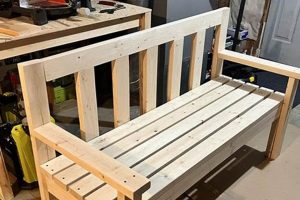
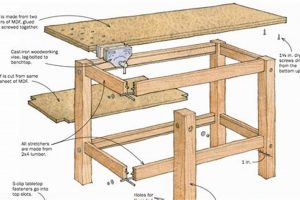
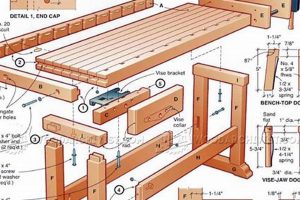
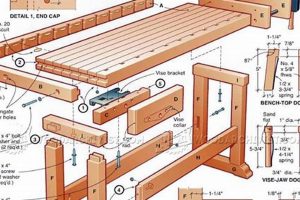
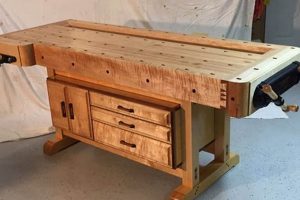
Detailed schematics and instructions for constructing a portable workstation designed for woodworking activities. These resources provide guidance on building a stable, movable surface suitable for tasks such as sawing, sanding, and assembly. The finished product typically incorporates features like vises, storage, and a robust work surface.
The availability of easily relocated woodworking platforms offers several advantages, including optimized workspace utilization, enhanced project versatility, and improved convenience for woodworkers with limited space. Historically, woodworking benches were stationary fixtures, but the need for adaptability has driven the evolution towards mobile designs, enabling craftsmen to work in diverse locations and easily reconfigure their workshops.
The subsequent sections will delve into various aspects of creating this type of woodworking platform, encompassing design considerations, material selection, construction techniques, and essential features that contribute to a functional and efficient movable woodworking station.
Essential Construction Guidance
The following provides practical guidance to enhance the utility and longevity of a user-built, transportable woodworking base.
Tip 1: Prioritize Stability: Implement a robust locking mechanism for the casters to prevent unwanted movement during operation. Consider incorporating adjustable leveling feet to compensate for uneven surfaces.
Tip 2: Optimize Work Surface Material: Select a durable material such as butcher block, hardwood plywood, or a solid core door. This provides a stable, flat surface resistant to dents and scratches.
Tip 3: Integrate Vise Mounts: Plan for the installation of one or more woodworking vises. Consider the type of vise appropriate for anticipated projects and ensure adequate reinforcement of the bench top at the mounting locations.
Tip 4: Incorporate Storage Solutions: Include drawers, shelves, or cabinets for tool and material organization. Maximize space utilization by designing compartments for specific items, such as hand tools, power tools, and fasteners.
Tip 5: Address Edge Protection: Apply edge banding or construct a solid wood edging around the perimeter of the work surface to prevent damage from impacts and moisture. This also enhances the overall appearance.
Tip 6: Ensure Proper Casters Selection: Choose heavy-duty casters with a load rating exceeding the anticipated weight of the station and its contents. Opt for swivel casters with brakes for maneuverability and secure positioning.
Tip 7: Design for Ergonomics: Determine an appropriate work surface height based on the user’s stature and typical woodworking tasks. This minimizes strain and promotes efficient workflow.
Adhering to these guidelines during fabrication will contribute to a reliable, versatile, and long-lasting movable platform for various woodworking endeavors.
The subsequent sections will provide further details on specific design choices and construction methods.
1. Stability and Safety

Stability and safety represent paramount concerns when designing and constructing a movable platform intended for woodworking. The inherent risks associated with woodworking tools and materials necessitate a stable and secure work environment. A lack of stability introduces potential hazards that can compromise user safety and project integrity.
- Caster Selection and Locking Mechanisms
The choice of casters directly impacts stability. Heavy-duty casters with integrated locking mechanisms are essential. The locking mechanism prevents unintended movement during operation, mitigating the risk of the structure shifting or rolling, especially when applying force with hand tools or operating power tools. Failure to properly secure casters can result in workpiece slippage, tool accidents, or even bench tipping.
- Weight Distribution and Center of Gravity
The distribution of weight across the surface and the overall center of gravity are critical factors. A high center of gravity increases the likelihood of tipping, particularly when working with heavy materials or applying uneven pressure. Optimizing weight distribution by strategically placing heavy items low within the structure and widening the base enhances stability.
- Work Surface Rigidity and Load Capacity
The rigidity of the work surface contributes to overall stability. A flexible or insufficiently supported work surface can deflect under load, leading to inaccurate cuts or unstable tool placement. The load capacity must be adequate for the anticipated weight of tools, materials, and applied forces. Exceeding the load capacity can compromise structural integrity and increase the risk of collapse.
- Material Selection and Joint Construction
The choice of materials and the quality of joint construction directly influence the structural integrity and stability. Robust materials, such as hardwood or high-quality plywood, are preferable. Strong, well-executed joints, such as mortise and tenon, dovetail, or properly reinforced screw joints, are essential for resisting racking forces and preventing structural failure. Weak or poorly constructed joints can lead to instability and compromise safety.
These interconnected facets underscore the critical role of stability in ensuring a safe woodworking environment. Careful attention to caster selection, weight distribution, work surface rigidity, and material selection is essential for mitigating potential hazards and maximizing the utility of a movable woodworking station.
2. Maneuverability
Maneuverability is a defining characteristic of a portable woodworking base, directly influencing its utility and integration within a workspace. The ability to readily reposition the station allows for flexible workspace configuration, accommodating varying project demands and spatial limitations. Reduced mobility negates a key benefit.
- Caster Selection and Configuration
The type, size, and arrangement of casters are pivotal factors in determining ease of movement. Swivel casters offer multidirectional mobility, while fixed casters limit movement to a straight line. A combination of both can provide a balance between maneuverability and stability. The diameter and material of the caster wheels impact rolling resistance, with larger diameters and harder materials generally offering easier movement across diverse surfaces.
- Bench Size and Weight Distribution
The overall dimensions and weight distribution of the workstation influence the effort required for relocation. A larger surface area increases resistance to movement, while uneven weight distribution can create instability and make steering difficult. Optimizing the bench size and carefully distributing weight can improve maneuverability.
- Workspace Constraints and Obstacles
The characteristics of the workspace, including floor surface, available space, and presence of obstacles, directly affect maneuverability. Smooth, level floors facilitate easy movement, while uneven or cluttered surfaces impede it. Tight spaces require precise maneuvering capabilities, necessitating smaller bench dimensions or specialized caster configurations. Consideration of workspace constraints is essential for selecting an appropriate design.
- Ergonomic Considerations
The design of handles or gripping points influences the ease and comfort of moving the platform. Strategically positioned handles allow for balanced force application and reduced strain on the user. Ergonomic handle designs can further enhance comfort and control during maneuvering. Proper handle placement and design contribute to safe and efficient relocation.
These facets underscore the interconnectedness of design elements and environmental factors in determining maneuverability. A well-designed, portable carpentry station balances stability with ease of movement, optimizing its adaptability within the workspace and enhancing overall woodworking efficiency.
3. Work Surface Durability
In the context of movable woodworking platforms, work surface durability is a critical determinant of the structure’s longevity and utility. The work surface endures direct contact with tools, materials, and forces generated during woodworking processes. Insufficient durability leads to premature degradation, requiring repair or replacement, thereby negating the benefits of a mobile setup intended for long-term use. A resilient surface withstands impacts, resists abrasion, and maintains dimensional stability under varying environmental conditions.
Materials selected for the work surface directly correlate with its ability to withstand the rigors of woodworking. Hardwoods, such as maple or beech, offer excellent impact resistance and dimensional stability, making them suitable choices for demanding applications. Laminated materials, such as butcher block or high-density fiberboard (HDF), provide a durable, flat surface that resists warping. Conversely, softer materials, such as softwood or particleboard, are prone to damage and may not provide adequate support for heavy tools or workpieces. For example, a portable platform intended for heavy joinery benefits from a thick, hardwood surface to resist racking forces, while a station primarily used for light assembly might suffice with a durable plywood surface. Neglecting this relationship between application and material compromises the overall effectiveness of the mobile setup.
Ultimately, the durability of the work surface directly impacts the efficiency and safety of woodworking operations conducted on a transportable platform. A stable, damage-resistant surface provides a secure foundation for tool placement and workpiece support, minimizing the risk of accidents and improving the accuracy of woodworking tasks. Prioritizing work surface durability through careful material selection and construction techniques is essential for maximizing the value and lifespan of a mobile woodworking station.
4. Integrated Storage
Incorporating storage solutions within a movable woodworking platform directly addresses the challenge of optimizing workspace and enhancing efficiency. The integration of storage maximizes the utility of the limited footprint inherent in mobile designs. By providing dedicated compartments for tools and materials, integrated storage minimizes clutter and streamlines workflow.
- Tool Organization and Accessibility
Integrated storage facilitates systematic organization of tools, allowing for rapid retrieval and minimizing downtime. Drawers, shelves, and pegboards, when incorporated into the design, provide dedicated locations for hand tools, power tools, and measuring devices. This organized system reduces the time spent searching for necessary implements, thereby improving overall productivity and efficiency during woodworking operations. For instance, a portable station with designated drawers for chisels, saws, and planes ensures tools are readily accessible and protected from damage.
- Material Containment and Protection
Storage solutions extend beyond tools to encompass the containment and protection of woodworking materials. Bins, cabinets, and drawers provide secure locations for lumber, hardware, and fasteners, preventing damage and minimizing loss. Proper material storage also contributes to a safer working environment by reducing the risk of tripping hazards or accidental contact with sharp objects. Consider a mobile bench with built-in storage for sandpaper, screws, and glue, ensuring that essential supplies are always readily available and protected from dust and moisture.
- Space Optimization and Footprint Reduction
A primary benefit of integrated storage is the efficient utilization of space within a limited workshop or jobsite. By consolidating tools and materials within the platform’s footprint, integrated storage minimizes the need for additional storage units, thereby maximizing available workspace. This is particularly advantageous in small shops or on job sites where space is at a premium. For example, a portable platform with drawers beneath the work surface and shelves along the sides effectively contains the necessary implements without increasing its overall size.
- Enhanced Portability and Convenience
The integration of storage contributes to the overall portability and convenience of the woodworking platform. By consolidating tools and materials within a single, mobile unit, the need for multiple trips to fetch supplies is minimized. This enhanced portability allows the user to readily relocate the entire workstation, including all necessary equipment, to different areas of the shop or job site. A station with integrated storage effectively becomes a self-contained woodworking hub, streamlining workflow and maximizing efficiency.
In summary, the strategic integration of storage within a portable woodworking platform provides numerous benefits, including enhanced organization, improved accessibility, space optimization, and increased portability. These advantages contribute to a more efficient, productive, and safe woodworking environment. Designs effectively incorporate these advantages into the structure and use.
5. Vise Compatibility
The capacity to securely mount and effectively utilize woodworking vises is a critical design consideration for mobile woodworking platforms. The integration of vises significantly expands the utility of such platforms, enabling a wider range of woodworking tasks to be performed with precision and stability.
- Vise Selection and Mounting Surface Integration
The type of vise selected influences the structural requirements of the mobile woodworking station. Face vises, leg vises, and quick-release vises each necessitate different mounting considerations. The bench top must be of sufficient thickness and rigidity to withstand the forces applied during vise operation. Reinforcement of the mounting area may be required to prevent racking or deformation. For example, a heavy-duty leg vise requires a substantial apron and leg assembly to distribute the clamping force effectively. The integration of appropriate mounting points is paramount to ensuring vise stability and functionality.
- Work Surface Thickness and Material Considerations
The thickness and material composition of the bench top directly impact its suitability for vise mounting. Thicker surfaces provide greater resistance to deflection under load, enhancing vise performance. Hardwoods, such as maple or beech, offer superior screw retention and overall stability compared to softer materials like pine. A laminated construction, such as butcher block or multi-layered plywood, can provide a stable and durable mounting surface. The bench top material must also be resistant to cracking or splitting under the stress of clamping forces. For instance, a thin, softwood bench top may be prone to damage or instability when a vise is subjected to heavy use.
- Vise Placement and Ergonomics
The positioning of the vise on the mobile platform influences user ergonomics and overall efficiency. The vise should be located at a height that allows for comfortable and efficient working posture. The distance between the vise and the user should be optimized to minimize reach and strain. Consider the dominant hand of the user when determining vise placement. Adequate clearance around the vise is essential to facilitate workpiece manipulation and tool access. For example, placing the vise too close to an edge or obstruction can limit its functionality and reduce user comfort.
- Mobility Considerations and Vise Security
The mobile nature of the platform introduces specific challenges related to vise security and stability during transit. The vise must be securely fastened to the bench top to prevent accidental dislodgement during movement. Locking mechanisms or transport restraints may be necessary to ensure the vise remains in place. Consider the weight distribution of the vise and its impact on the overall stability of the mobile platform. A heavy vise can significantly shift the center of gravity, potentially affecting maneuverability and stability. For instance, removing the vise or securing it during transport can mitigate these risks.
The integration of these facets ensures a functional and stable platform that enables efficient and safe vise utilization, maximizing the versatility of the mobile woodworking station.
Frequently Asked Questions
The following addresses common inquiries regarding the design, construction, and application of portable woodworking platforms. These questions aim to provide clarity on key aspects of these workstations.
Question 1: What are the primary advantages of a portable woodworking platform compared to a stationary bench?
A portable design provides enhanced workspace flexibility, allowing for relocation to accommodate project needs or spatial constraints. A stationary bench lacks this adaptability.
Question 2: What factors should be considered when selecting casters for a portable woodworking platform?
Load capacity, wheel diameter, swivel functionality, and locking mechanisms are essential considerations. The casters must support the weight of the bench and its contents while providing smooth maneuverability and secure positioning.
Question 3: What are suitable materials for constructing the work surface of a portable woodworking platform?
Hardwoods, such as maple or beech, and laminated materials, such as butcher block or high-density fiberboard, provide durable and stable work surfaces. The material should resist warping, scratching, and impact damage.
Question 4: How can stability be ensured in a portable woodworking platform design?
A low center of gravity, robust caster locking mechanisms, and a rigid frame contribute to stability. Weight distribution should be carefully considered to prevent tipping or unintended movement.
Question 5: What are effective strategies for integrating storage into a portable woodworking platform?
Drawers, shelves, and cabinets can be incorporated to provide organized storage for tools and materials. The storage design should maximize space utilization and accessibility.
Question 6: How should vise mounting be addressed when designing a portable woodworking platform?
The bench top must be of sufficient thickness and rigidity to support the vise. Reinforcement of the mounting area may be necessary. Consider the type of vise and its intended use when determining mounting location and method.
Careful consideration of these questions contributes to a successful and functional design. A well-designed portable woodworking platform enhances efficiency and flexibility in woodworking endeavors.
The subsequent section will delve into cost considerations associated with these projects.
Conclusion
The preceding sections have detailed crucial aspects of portable woodworking platforms, encompassing design principles, material selections, construction techniques, and functional considerations. Comprehension of these elements contributes to the development of adaptable and efficient woodworking solutions.
Effective mobile woodworking bench plans empower craftsmen with enhanced workspace flexibility and productivity. Prioritizing stability, maneuverability, durability, integrated storage, and vise compatibility is essential for maximizing the utility and longevity of these essential shop additions. Thoughtful execution of these plans yields a practical and valuable tool for any woodworking environment.