![Best Handmade Woodworking Tools [Guide] & More!](data:image/svg+xml;base64,PHN2ZyB4bWxucz0iaHR0cDovL3d3dy53My5vcmcvMjAwMC9zdmciIHdpZHRoPSI0NzQiIGhlaWdodD0iNjYiIHZpZXdCb3g9IjAgMCA0NzQgNjYiPjxyZWN0IHdpZHRoPSIxMDAlIiBoZWlnaHQ9IjEwMCUiIHN0eWxlPSJmaWxsOiNjZmQ0ZGI7ZmlsbC1vcGFjaXR5OiAwLjE7Ii8+PC9zdmc+ "Best Handmade Woodworking Tools [Guide] & More! Step-by-Step Guides, Tools & Inspiration to Build Beautiful Wooden Decor on a Budget")
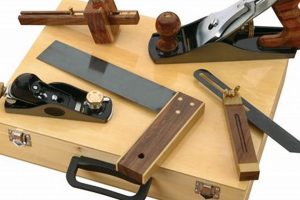
Implements crafted by artisans for shaping and manipulating wood are central to the craft of woodworking. These instruments, often fashioned with meticulous attention to detail, stand in contrast to mass-produced alternatives. Examples include hand planes, chisels, saws, and marking gauges, each reflecting the skill and aesthetic sensibilities of its creator.
The value of these artisan-created implements extends beyond mere functionality. They offer enhanced control and precision, allowing for nuanced shaping and detailing. Furthermore, possessing such tools connects users to a rich historical tradition, preserving methods employed by generations of craftspeople. The durability and customizability often associated with these items also contribute to their appeal.
Subsequent sections will examine specific types of these crafted instruments, exploring the materials, techniques, and considerations involved in their creation and proper usage. Further discussion will address the selection and maintenance of quality examples, and the ways that those examples contribute to both efficiency and satisfaction in a wide range of woodworking projects.
Essential Considerations for Acquiring Handcrafted Woodworking Instruments
The selection of artisan-created implements requires careful deliberation to ensure optimal performance and longevity. Attention to detail during the acquisition process can significantly enhance the woodworking experience.
Tip 1: Material Selection: Prioritize tools constructed from high-carbon steel for blades and durable hardwoods like rosewood or ebony for handles. These materials offer a balance of strength, edge retention, and aesthetic appeal.
Tip 2: Inspect Joinery: Examine the points where different components join. Tight, seamless connections indicate quality craftsmanship and minimize the risk of failure under stress.
Tip 3: Evaluate Blade Geometry: Assess the angles and bevels of cutting edges. Precise geometry contributes to efficient material removal and clean, accurate cuts.
Tip 4: Handle Ergonomics: Ensure that the handle conforms comfortably to the hand. A well-designed handle reduces fatigue and improves control during extended use.
Tip 5: Consider the Maker’s Reputation: Research the artisan or workshop responsible for the tool’s creation. Established makers often have a track record of producing reliable and high-quality items.
Tip 6: Sharpening and Maintenance: Inquire about the best methods for sharpening and maintaining the specific type of instrument. Proper care is essential for preserving its performance and extending its lifespan.
Tip 7: Test Before Purchase: When possible, test the tool on a scrap piece of wood to assess its balance, cutting action, and overall feel. This allows for a more informed purchasing decision.
Careful assessment of material quality, construction, ergonomics, and maintenance requirements ensures that handcrafted implements will perform reliably, enabling the user to achieve greater precision and satisfaction in woodworking projects.
The following section will explore the practical application of specific types of these instruments, detailing techniques for achieving optimal results in various woodworking tasks.
1. Blade Sharpness

Blade sharpness is paramount in the effective utilization of artisan-crafted woodworking implements. The ability of a cutting edge to cleanly sever wood fibers directly influences the precision, efficiency, and overall quality of woodworking projects. Hand-forged blades, in particular, require meticulous attention to sharpening and maintenance to achieve and retain optimal cutting performance.
- Cutting Efficiency and Reduced Force
A keen edge minimizes the force required to cut wood. This translates to less physical exertion on the part of the user and reduces the likelihood of errors caused by excessive pressure. For example, a finely honed hand plane blade allows for the effortless creation of smooth, flat surfaces, while a dull blade necessitates increased force, resulting in uneven cuts and potential tear-out.
- Precision and Detail Work
Sharpness directly affects the ability to execute precise cuts and intricate details. Carving chisels with razor-sharp edges enable the creation of delicate shapes and fine lines, unattainable with dull tools. Similarly, a sharp marking knife creates clean, crisp lines for accurate joinery, ensuring tight-fitting and aesthetically pleasing results.
- Minimized Tear-Out and Clean Surfaces
A dull blade tends to crush and tear wood fibers rather than cleanly severing them, leading to ragged edges and surface imperfections. Sharpness minimizes tear-out, producing smooth, clean surfaces that require less sanding and finishing. This is especially critical when working with figured woods or delicate veneers.
- Safety and Control
Counterintuitively, a sharp tool is often safer than a dull one. A sharp blade engages the wood more readily and requires less force, reducing the risk of slippage and uncontrolled movements. This enhanced control is essential for preventing accidents and ensuring safe woodworking practices. Sharpness creates the intended effect.
The above aspects collectively underscore the fundamental importance of maintaining blade sharpness in artisan-crafted woodworking instruments. The inherent qualities of these instruments, often forged from high-carbon steel and meticulously shaped, are only fully realized through consistent and skilled sharpening practices. Blade sharpness enables the user to harness the full potential of the tool, achieving superior results in woodworking projects.
2. Handle Comfort

Handle comfort is a critical, though often underestimated, component of artisan-crafted woodworking instruments. The direct interface between the user and the tool, the handle’s design profoundly influences the efficiency, accuracy, and safety of woodworking tasks. Discomfort or poor ergonomics can lead to fatigue, reduced control, and an increased risk of injury. The connection between handle comfort and tool performance is one of direct cause and effect; a comfortable handle allows for extended use without strain, resulting in more precise and consistent outcomes. For example, a hand plane with a well-shaped handle allows the user to maintain a consistent angle and pressure, resulting in a smoother, more even surface. Conversely, a handle that is too small, too large, or poorly contoured can cause hand cramps, wrist pain, and ultimately, inaccuracies in the finished product.
The significance of handle comfort is further highlighted in specialized tools requiring prolonged or repetitive use, such as carving chisels and marking knives. In carving, the ability to maintain a steady grip and exert precise pressure is paramount for achieving intricate details. A comfortable handle minimizes hand fatigue, allowing the artisan to focus on the nuances of the design rather than the discomfort of the tool. Similarly, in marking and joinery, accurate layout is essential for the structural integrity and aesthetic appeal of the finished piece. A handle that promotes a secure and comfortable grip enables the user to create crisp, precise lines, ensuring tight-fitting joints and minimizing the need for corrective measures. The choice of materials, such as hardwoods like rosewood or beech, also contributes to comfort through their natural warmth and ability to absorb vibrations.
In summary, handle comfort is not merely a superficial consideration but a fundamental aspect of artisan-crafted woodworking instruments. Its impact extends beyond mere user experience to directly influence the quality, precision, and safety of woodworking projects. The ergonomic design, material selection, and overall shape of the handle are critical factors that must be carefully considered to ensure optimal performance and minimize the risk of fatigue and injury. While aesthetic appeal may be a factor in the tool’s overall value, a comfortable and ergonomic handle serves as the foundation for its long-term usability and effectiveness.
3. Joint Integrity

Joint integrity, the capacity of a woodworking joint to withstand stress and maintain structural stability over time, is intrinsically linked to the quality and construction of artisan-crafted implements. The precision and reliability of tools used to create these joints directly influence their long-term performance. A poorly constructed mortise gauge, for example, will yield inaccurate markings, leading to a loose or misaligned joint. Similarly, a chisel with a poorly sharpened or improperly angled blade will produce rough or uneven surfaces, compromising the glue bond and structural strength of the joint. The tools serve as the means to create the desired result, and their deficiencies directly translate into compromised joints. The connection between the tool and the outcome is thus a cause-and-effect relationship, where tool quality determines joint quality.
The importance of joint integrity in artisan-crafted furniture and structures cannot be overstated. These pieces are often intended to last for generations, necessitating joints that are both aesthetically pleasing and structurally sound. Dovetail joints, known for their strength and resistance to pulling forces, are a prime example. Creating precise dovetails requires sharp chisels, accurate saws, and well-calibrated marking gauges. A slight inaccuracy in the layout or execution of the dovetails can weaken the joint, leading to eventual failure under stress. The longevity and value of artisan-crafted pieces are thus directly dependent on the skill with which the joints are formed and the integrity of the tools used in their construction. The quality of the joint ultimately dictates the lifespan of the product.
In summary, joint integrity is a critical attribute in the realm of handmade woodworking, inextricably linked to the tools employed in its creation. The precision and quality of artisan-crafted implements directly influence the strength and durability of woodworking joints. Understanding this connection is essential for producing pieces that are not only aesthetically pleasing but also capable of withstanding the test of time. Challenges arise in maintaining consistent tool quality and mastering the techniques required for precise joint creation. The link between tool quality and joint integrity underscores the necessity of investing in quality implements and honing the skills required for their effective use. While modern adhesives can improve structural integrity, traditional joinery techniques are still essential.
4. Material Quality

Material quality is a foundational element determining the performance, longevity, and overall value of artisan-crafted woodworking implements. The selection of specific materials, such as high-carbon steel for blades and dense hardwoods for handles, directly influences a tool’s ability to perform its intended function effectively. The grade of steel affects sharpness, edge retention, and resistance to deformation, while the properties of handle wood dictate comfort, grip, and resilience to wear. Inferior materials will compromise these attributes, resulting in tools that are less precise, less durable, and ultimately, less satisfactory to use. For instance, a hand plane with a blade made from low-quality steel will require frequent sharpening and may be prone to chipping or bending, diminishing its accuracy and efficiency. In contrast, a plane crafted with a high-carbon steel blade, properly heat-treated, will maintain a sharp edge for longer and provide superior control over the cut.
The choice of materials also affects the long-term maintenance and repair of artisan-crafted instruments. Hardwoods such as rosewood, ebony, or maple, commonly used for handles, provide both aesthetic appeal and structural integrity. These woods are resistant to cracking, splitting, and warping, ensuring that the handle remains comfortable and secure over time. Conversely, handles made from softer or less stable woods are more susceptible to damage and may require frequent replacement. Similarly, the quality of fasteners, such as screws and rivets, is crucial for maintaining the integrity of the tool. High-quality fasteners will resist corrosion and loosening, while inferior fasteners can lead to instability and eventual failure. Practical application of this understanding involves meticulous examination of the materials used in a tool’s construction prior to purchase, evaluating the reputation of the manufacturer or artisan, and considering the intended use and expected lifespan of the tool.
In summary, material quality is an indispensable consideration in the evaluation and selection of artisan-crafted woodworking instruments. The choice of materials directly impacts a tool’s performance, durability, and long-term value. Challenges in sourcing high-quality materials and ensuring consistent manufacturing processes can affect the availability and cost of these tools. However, the investment in implements made from superior materials yields significant returns in terms of precision, efficiency, and user satisfaction, contributing to the preservation of traditional woodworking techniques and the creation of enduring, high-quality pieces. The quality of the material has a direct impact and determines the usability.
5. Balance Control

Balance control, referring to the equilibrium and stability of a woodworking implement during use, is a critical yet often subtle characteristic of artisan-crafted tools. The distribution of mass, the shape and weight of the handle, and the overall design contribute significantly to how a tool feels and performs in the hand. For example, a poorly balanced chisel might require excessive force to maintain a straight cutting path, leading to fatigue and potential inaccuracy. Conversely, a well-balanced chisel allows the craftsman to apply force precisely, resulting in clean, controlled cuts and reduced risk of error. The correlation between tool balance and user control is thus a direct causal relationship; improved balance begets enhanced control and precision.
The importance of balance control becomes particularly evident when working on intricate or delicate tasks. A hand plane, for example, relies on a combination of weight, blade angle, and user input to achieve a smooth, even surface. If the plane is poorly balanced, the craftsman must exert more effort to compensate for the imbalance, potentially leading to uneven planing or tear-out. Similarly, a marking gauge with an unstable or poorly balanced beam may produce inaccurate layout lines, compromising the precision of subsequent cuts. The selection of materials also plays a role, as denser woods and heavier metals contribute to overall weight and balance. Therefore, artisans often carefully consider these factors when designing and constructing tools to optimize balance control and minimize user fatigue.
In conclusion, balance control represents a crucial, albeit often overlooked, aspect of artisan-crafted woodworking implements. The careful distribution of mass and the ergonomic design of handles directly contribute to enhanced user control, precision, and reduced fatigue. Challenges lie in achieving optimal balance for various tool types and woodworking techniques. Understanding and appreciating the significance of balance control is essential for both toolmakers and woodworkers seeking to achieve superior results and preserve the art of traditional woodworking. While advanced techniques may offer alternative solutions, quality craftsmanship remains at the heart of balance control.
6. Edge Retention

Edge retention, the ability of a cutting tool to maintain a sharp cutting edge during use, is a critical factor determining the performance and longevity of handcrafted woodworking implements. The quality of the steel, the heat treatment processes employed, and the geometry of the cutting edge directly influence the tool’s ability to resist wear and deformation. Edge retention dictates the efficiency, precision, and overall user satisfaction derived from the tool.
- Steel Composition and Hardness
The type of steel used in the blade significantly impacts edge retention. High-carbon steels, often preferred for their hardness and ability to hold a sharp edge, are commonly employed in quality tools. Hardness, typically measured on the Rockwell scale, indicates the steel’s resistance to indentation. Higher hardness values generally correlate with improved edge retention. For instance, a plane blade made from A2 tool steel (Rockwell hardness of 60-62 HRC) will retain its edge longer than a blade made from lower-carbon steel. However, increased hardness can also make the steel more brittle and prone to chipping.
- Heat Treatment and Tempering
Proper heat treatment is essential for optimizing the properties of the steel. This process involves heating the steel to a specific temperature and then rapidly cooling it (quenching) to harden it. Tempering, a subsequent heating process at a lower temperature, reduces brittleness and increases toughness. The specific heat treatment methods employed significantly impact edge retention. A blade that is improperly heat-treated may be too soft and wear quickly, or too brittle and prone to breakage. Skillful heat treatment is a hallmark of high-quality, artisan-crafted tools.
- Cutting Edge Geometry
The angle and shape of the cutting edge also play a critical role in edge retention. A steeper bevel angle, while providing a stronger cutting edge, requires more force to push through the wood. A shallower angle, while requiring less force, is more prone to dulling or chipping. The optimal angle depends on the type of wood being worked and the specific task being performed. A well-designed and precisely ground cutting edge will maximize both sharpness and edge retention. Careful edge shaping is vital.
- Sharpening Techniques and Maintenance
Even the highest-quality steel will eventually require sharpening. The techniques used to sharpen and maintain the cutting edge directly affect edge retention. Using appropriate sharpening stones, honing guides, and polishing compounds helps to maintain the correct bevel angle and create a keen, durable edge. Frequent honing, a light sharpening process, can significantly extend the time between more aggressive sharpening sessions. Proper storage and handling practices also contribute to edge retention by preventing accidental damage.
Edge retention is a complex interplay of material science, manufacturing processes, and user maintenance. Handcrafted woodworking implements, often made with careful attention to these details, offer superior performance and longevity compared to mass-produced alternatives. Selecting tools with high-quality steel, proper heat treatment, and appropriate edge geometry, coupled with diligent sharpening and maintenance, ensures that these implements will retain their sharp edges and provide years of reliable service. The lasting usability contributes to the tool’s value.
Frequently Asked Questions
The following addresses common inquiries regarding artisan-crafted woodworking tools, providing clarification on their characteristics, usage, and maintenance.
Question 1: What distinguishes a handcrafted woodworking tool from a mass-produced counterpart?
Artisan-crafted implements typically feature higher-quality materials, meticulous attention to detail in construction, and a degree of customization not found in mass-produced items. The emphasis is often on durability, precision, and user-specific ergonomics.
Question 2: Are artisan-crafted tools necessarily superior to modern power tools?
Superiority depends on the specific application. Power tools offer efficiency and speed for certain tasks, while handcrafted tools excel in precision, detail work, and the ability to achieve specific aesthetic qualities. Each has distinct advantages.
Question 3: What are the key considerations when selecting a handcrafted woodworking tool?
Material quality, joint integrity, blade geometry (for cutting tools), handle ergonomics, and the reputation of the maker are primary factors to consider. A thorough inspection and, if possible, a trial use are recommended.
Question 4: How does one properly maintain handcrafted woodworking tools?
Maintenance protocols vary depending on the tool and materials used. Generally, cleaning after each use, regular sharpening (for cutting tools), oiling wooden handles, and proper storage are essential for preserving their condition.
Question 5: Are artisan-crafted tools suitable for beginners in woodworking?
While handcrafted tools can be used by beginners, a basic understanding of woodworking techniques and tool maintenance is recommended. Learning to sharpen and properly handle these tools is crucial for achieving desired results and preventing damage.
Question 6: What is the typical cost associated with artisan-crafted woodworking tools?
The cost varies widely depending on the type of tool, materials used, complexity of construction, and the maker’s reputation. Expect to pay a premium compared to mass-produced tools, reflecting the higher quality and craftsmanship involved.
In conclusion, artisan-crafted woodworking instruments offer unique advantages in terms of quality, precision, and user experience. However, informed selection, proper maintenance, and a degree of skill are necessary to fully realize their potential.
The subsequent section will delve into specific techniques for achieving optimal results with these instruments in various woodworking applications.
Conclusion
This exploration has demonstrated that implements of a specific artisanal origin offer demonstrable utility. Discussion encompassed construction materials, precision, ergonomics, and maintenance, each contributing to the overall value proposition. Understanding the nuances of these factors facilitates the selection and application of tools appropriate for demanding tasks. The emphasis on long-term usability and performance remains paramount when considering investment into quality woodworking implements.
Continued research and engagement with traditional woodworking techniques are necessary for fully realizing the potential of these crafted instruments. Preservation of the knowledge and skills associated with creating and utilizing these tools will ensure the continued availability of high-quality implements for future generations of woodworkers. Therefore, the commitment to understanding and utilizing these instruments is beneficial.