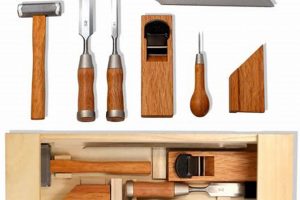
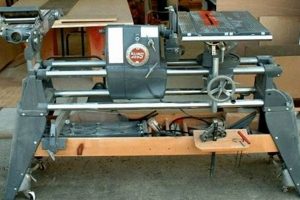
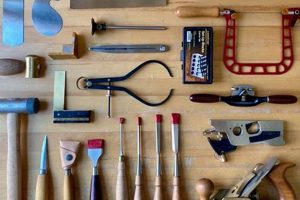
Compact, electrically-operated implements designed for shaping, cutting, and refining wood are instrumental in various crafts. These instruments, characterized by their reduced size and weight, offer enhanced maneuverability and control in detailed woodworking projects. Examples encompass miniature rotary tools, small-scale saws, and diminutive sanders, each purposed for tasks where precision and accessibility are paramount.
The significance of these instruments lies in their capacity to facilitate intricate designs and modifications in woodworking. Their benefits span from enabling work in confined spaces to reducing user fatigue during prolonged operation. Historically, the evolution of these tools reflects a growing demand for specialized implements catering to hobbyists, artisans, and professionals involved in fine woodworking and model making.
The subsequent discussion will address the diverse types available, examining their individual applications and advantages. Furthermore, safety considerations and best practices for optimal performance will be detailed, providing a comprehensive overview of these woodworking aids.
Essential Usage Guidance
The following guidance provides actionable advice for maximizing the effectiveness and lifespan of these compact instruments. Attention to these points will contribute to improved project outcomes and user safety.
Tip 1: Secure Workpiece Fixation: Prior to operation, ensure the workpiece is firmly secured using clamps or a vise. This measure prevents movement during cutting or shaping, improving precision and reducing the risk of injury.
Tip 2: Appropriate Speed Selection: Select the appropriate speed setting for the specific material and task. Higher speeds are generally suitable for softer woods, while lower speeds are preferable for denser materials to prevent burning or tool damage.
Tip 3: Controlled Tool Advancement: Advance the tool steadily and deliberately into the workpiece. Applying excessive force can lead to binding, kickback, or damage to the tool and material.
Tip 4: Regular Bit and Blade Inspection: Regularly inspect bits and blades for sharpness and damage. Dull or damaged cutting edges compromise performance and increase the risk of accidents. Replace worn components promptly.
Tip 5: Dust and Debris Management: Utilize dust collection systems or wear appropriate respiratory protection to mitigate exposure to airborne particles. Wood dust can pose respiratory health risks with prolonged inhalation.
Tip 6: Implement Consistent Maintenance: Proper cleaning and lubrication of these instruments after each use will extend the lifespan and maintain performance. Refer to the manufacturer’s instructions for recommended maintenance procedures.
Tip 7: Prioritize Personal Protective Equipment (PPE): Eye protection is mandatory to safeguard against flying debris. The use of hearing protection is recommended, especially during prolonged operation, to minimize noise-induced hearing loss.
Adherence to these guidelines fosters proficient and safe operation. By focusing on workpiece stability, appropriate settings, and consistent maintenance, the user can maximize the utility and longevity of these woodworking instruments.
The subsequent section will synthesize the information presented, offering concluding remarks regarding the effective implementation of these compact tools within the scope of woodworking projects.
1. Precision

The efficacy of compact, electrically-powered woodworking implements is intrinsically linked to the degree of precision attainable. These tools, by their inherent design and scale, are optimized for tasks requiring a higher level of accuracy than typically achievable with larger, more robust machinery. The correlation between tool size and control contributes directly to the execution of intricate detailing and fine adjustments on workpieces.
For example, the creation of fine joinery, such as dovetails or mortise-and-tenon joints in scale models or small furniture, relies heavily on the precise manipulation afforded by these instruments. The ability to accurately shape and refine minute components significantly influences the overall structural integrity and aesthetic quality of the final product. The controlled removal of material, essential in tasks like inlay work or carving intricate designs, necessitates the use of these precision-oriented tools. Without such instruments, these complex woodworking techniques would be exceedingly difficult to execute with consistent, high-quality results. The reduction of error margins, vital in crafting projects with tight tolerances, stems directly from the enhanced handling and control granted by their compact nature.
In summary, the concept of precision underpins the value proposition of these woodworking aids. Their small size enables a level of accuracy that is often unattainable with larger, less-refined tools. The significance of this link extends beyond mere aesthetics, impacting structural integrity and overall project quality. Therefore, a comprehensive understanding of this precision-driven advantage is crucial for effective utilization and optimization of these instruments in a broad range of woodworking endeavors.
2. Portability
The portability of compact, electrically-powered woodworking implements is a defining characteristic that expands their range of applications beyond the confines of a traditional workshop. The reduced size and weight facilitate ease of transport, enabling woodworking tasks to be performed in diverse locations, including job sites, remote areas, and smaller living spaces. This inherent mobility directly addresses the limitations imposed by larger, stationary equipment, offering greater flexibility to the user.
The advantages of portability are evident in scenarios such as on-site repairs, installations, and modifications. Consider a carpenter needing to make adjustments to trim work within a finished home; the use of a full-sized power saw would be impractical, if not impossible, due to space constraints and potential damage to surrounding structures. In contrast, a compact circular saw or rotary tool can be easily maneuvered within tight spaces, enabling precise cuts and adjustments with minimal disruption. Similarly, artisans participating in craft fairs or demonstrations benefit from the ability to transport their essential tools with ease, setting up temporary workspaces with minimal effort. Model makers and hobbyists, often working in confined home environments, find the portability aspect particularly valuable for storage and workspace optimization.
In conclusion, the enhanced mobility associated with these woodworking tools is not merely a convenience but a strategic advantage. It empowers users to perform tasks efficiently and effectively in various environments, broadening the scope of woodworking applications. The development and refinement of these portable implements directly addresses the growing demand for versatility and accessibility within the woodworking field, while minimizing the barriers imposed by space and location.
3. Versatility

Versatility, as a characteristic of compact woodworking implements, is a direct consequence of their design and the availability of diverse attachments. These instruments are not limited to a single function but can be adapted to perform a range of tasks, including cutting, sanding, carving, polishing, and drilling. This adaptability stems from the interchangeability of tool heads, bits, and accessories, transforming a single power unit into a multi-functional system.
The practical significance of this versatility is considerable. A woodworker might use a miniature rotary tool with a cutting disk to shape small components, then switch to a sanding drum for smoothing the surface, and finally employ a polishing tip for finishing. This sequence, achievable with a single device, reduces the need for multiple specialized tools, saving space and investment. Furthermore, the capacity to execute a wide spectrum of tasks within a single project streamlines workflow and enhances efficiency. Scale model building, jewelry making, and intricate woodworking projects all benefit significantly from the adaptability afforded by these instruments.
In summary, the versatility of compact woodworking tools is not simply a feature; it is a core attribute that enhances their value and utility. The ability to perform numerous functions with a single tool increases efficiency, reduces equipment costs, and expands the range of possible projects. Understanding this versatility enables woodworkers to maximize the potential of these instruments, leading to more creative and efficient woodworking practices.
4. Control
The degree of control afforded by compact, electrically-operated woodworking implements is a primary determinant of their utility, influencing both precision and safety during operation. The reduced size and weight of these tools, relative to their larger counterparts, directly correlate with increased maneuverability and responsiveness. This enhanced handling facilitates intricate shaping, detailed carving, and precise material removal, essential for specialized woodworking applications. The operator’s capacity to modulate speed, pressure, and trajectory with greater accuracy minimizes the risk of error and enhances the quality of the finished product. A lack of control can lead to irreversible damage to delicate workpieces, rendering the instrument ineffective and potentially hazardous.
Consider the task of crafting intricate inlays or carving fine details into delicate wood surfaces. The user’s ability to maintain consistent speed and pressure, coupled with precise directional control, is paramount. A momentary lapse in control, such as a sudden jerk or unintended acceleration, can result in gouges, splintering, or complete destruction of the workpiece. Conversely, a controlled approach, facilitated by the tool’s ergonomic design and manageable size, allows for gradual and deliberate material removal, yielding clean lines and intricate patterns. Model making, jewelry fabrication, and instrument repair are examples where exacting control is critical to the success of the project.
In summary, the element of control is indispensable to the effective application of these woodworking tools. It is not merely a desirable attribute but a fundamental requirement for achieving precision, ensuring safety, and maximizing the potential of these instruments. Proper training, adherence to safety protocols, and a thorough understanding of the tool’s capabilities are essential for cultivating the necessary level of control. The benefits of mastered control extend beyond improved aesthetics, impacting the structural integrity and longevity of the final product.
5. Efficiency
Efficiency, in the context of compact electrically-powered woodworking implements, denotes the optimized use of time, energy, and resources to achieve desired results. The inherent design characteristics of these tools, coupled with appropriate usage techniques, contribute significantly to enhanced productivity and reduced waste within woodworking projects.
- Reduced Setup Time
Compact tools typically require minimal setup compared to larger, stationary equipment. The ease of deployment and immediate availability for use translate to reduced non-productive time. For example, a small rotary tool can be readily deployed for a quick sanding or carving task without the extensive preparation needed for a full-sized sander or carving station. This reduction in setup time is particularly valuable in projects involving numerous small tasks or intermittent operations.
- Targeted Material Removal
The precision and control afforded by these instruments allow for highly targeted material removal, minimizing waste and rework. A miniature detail sander, for example, can be used to smooth specific areas without affecting adjacent surfaces. This contrasts with larger sanding equipment, which may require masking or lead to unintended material removal. The ability to focus operations on specific areas contributes to increased efficiency by reducing the amount of material used and the need for corrective measures.
- Optimized Energy Consumption
Compact, electrically-powered woodworking tools generally consume less energy than their larger counterparts. This reduced energy footprint translates to lower operating costs and a smaller environmental impact. The efficiency of these tools is particularly relevant in situations where power sources are limited or when operating for extended periods. The reduced energy consumption contributes to overall cost savings and sustainability in woodworking operations.
- Enhanced Task Completion Speed
While not always the case, in certain applications, compact tools can enhance task completion speed. Their maneuverability and ease of handling in tight spaces can often expedite operations compared to using larger, less-agile equipment. Consider the task of installing trim in a confined area; a compact trim router can often navigate the space more efficiently than a full-sized router, leading to faster installation times. This enhancement in task completion speed directly contributes to increased overall project efficiency.
The facets outlined above illustrate the multidimensional nature of efficiency as it pertains to compact woodworking tools. From reduced setup times and targeted material removal to optimized energy consumption and enhanced task completion speed, these instruments offer distinct advantages in terms of resource utilization and productivity. The strategic application of these tools can significantly improve the overall efficiency of a wide range of woodworking projects.
6. Safety

The operational safety of compact, electrically-powered woodworking implements is paramount, necessitating a comprehensive understanding of potential hazards and the implementation of preventive measures. The reduced size of these tools does not diminish the potential for injury; rather, it presents a distinct set of safety considerations that must be addressed for responsible and effective use.
- Eye Protection
The generation of airborne particles, including wood dust and debris, is an inherent consequence of woodworking activities. These particles pose a significant risk to ocular health, potentially causing irritation, abrasions, or more severe injuries. The consistent use of appropriate eye protection, such as safety glasses or goggles, is therefore essential to shield the eyes from these hazards. Furthermore, the high-speed operation of these tools can propel small projectiles, such as broken bits or material fragments, towards the user’s face. Eye protection serves as a critical barrier against these impacts, preventing potentially sight-threatening injuries. The failure to utilize proper eye protection while operating woodworking tools is a leading cause of preventable eye injuries.
- Respiratory Protection
The inhalation of wood dust generated during sanding, cutting, and carving operations presents a well-documented respiratory health risk. Prolonged exposure to wood dust can lead to respiratory irritation, allergic reactions, and, in some cases, more severe conditions such as occupational asthma or nasal cancer. The implementation of effective respiratory protection measures, such as the use of properly fitted dust masks or respirators, is crucial to mitigate these risks. Furthermore, adequate ventilation of the workspace is essential to minimize the concentration of airborne particles. The selection of appropriate respiratory protection should be based on the type of wood being worked, the duration of exposure, and the individual’s respiratory health. The consistent use of respiratory protection is a fundamental aspect of safe woodworking practices.
- Secure Workpiece Fixation
The stability of the workpiece is a critical determinant of operational safety during woodworking activities. An unsecured workpiece is prone to shifting or dislodging during cutting, sanding, or shaping operations, increasing the risk of tool slippage, kickback, and subsequent injury. The consistent use of clamps, vises, or other appropriate work-holding devices is essential to ensure that the workpiece remains firmly in place. The selection of suitable work-holding devices should be based on the size, shape, and material of the workpiece, as well as the forces exerted during the woodworking operation. Furthermore, the proper placement and tightening of clamps are crucial to prevent movement and maintain stability. The failure to secure the workpiece adequately is a significant contributor to accidents and injuries in woodworking.
- Tool Maintenance and Inspection
The safe and effective operation of woodworking implements is contingent upon regular maintenance and thorough inspection. Damaged or improperly maintained tools pose a significant risk of malfunction, leading to accidents and injuries. Regular inspection of blades, bits, cords, and other components is essential to identify signs of wear, damage, or defects. Worn or damaged components should be promptly repaired or replaced. Furthermore, proper cleaning and lubrication of tools are crucial to ensure smooth operation and prevent premature wear. Adherence to the manufacturer’s recommended maintenance schedule and procedures is essential to maintain tool safety and performance. Neglecting tool maintenance and inspection can compromise operational safety and increase the risk of accidents.
These facets underscore the importance of proactive safety measures when utilizing compact woodworking tools. A comprehensive understanding of these risks, coupled with the consistent implementation of preventive strategies, is crucial for ensuring a safe and productive woodworking environment. Responsible and informed tool use is essential to minimize the potential for injury and maximize the benefits of these versatile instruments.
Frequently Asked Questions
This section addresses commonly encountered inquiries concerning the application, maintenance, and safety protocols associated with reduced-scale, electrically-powered woodworking instruments. The information provided aims to offer clarity and guidance for both novice and experienced users.
Question 1: What distinguishes implements of this scale from standard-sized alternatives?
Reduced dimensions and lower weight are the primary distinguishing factors. This translates to enhanced maneuverability, particularly in confined spaces and during intricate detail work. Power output is often lower, making them suited for smaller-scale projects and tasks requiring finesse rather than brute force.
Question 2: What are the primary applications for woodworking implements of this type?
Applications are diverse and encompass model making, jewelry crafting, fine woodworking, detail sanding, carving, and projects involving limited workspace. They are frequently employed in scenarios where precision and control are paramount.
Question 3: What safety precautions are particularly pertinent when utilizing these instruments?
Secure workpiece fixation, eye and respiratory protection, and awareness of bit/blade speed are crucial. Due to their size, the potential for accidental contact with moving parts is elevated. Consistent adherence to recommended safety protocols is non-negotiable.
Question 4: How should these instruments be properly maintained to ensure longevity and performance?
Regular cleaning, lubrication, and inspection of components are essential. Dull or damaged bits/blades should be promptly replaced. Adherence to manufacturer-specified maintenance schedules is recommended to prevent premature wear and ensure optimal operation.
Question 5: Is specialized training required for the effective and safe operation of these instruments?
While formal training is not always mandatory, a solid understanding of woodworking principles and tool-specific operation is highly recommended. Familiarization with safety guidelines and proper techniques is crucial to minimize risks and maximize performance.
Question 6: What is the anticipated lifespan of a typical compact woodworking implement?
Lifespan is contingent upon usage frequency, maintenance practices, and the quality of the instrument itself. With proper care, a well-constructed tool can provide years of reliable service. Conversely, neglect or misuse can significantly shorten its operational life.
In summary, the application of compact woodworking implements necessitates a nuanced understanding of their capabilities, limitations, and associated safety considerations. Proper maintenance, adherence to safety protocols, and a commitment to continuous learning are crucial for achieving optimal results and maximizing the lifespan of these instruments.
The next section will consist of a concluding synthesis of the information presented, reiterating the key advantages and best practices associated with compact woodworking implements.
Mini Power Tools for Woodworking
The preceding discussion has explored the multifaceted nature of compact, electrically-powered woodworking implements. Their distinct advantages, including enhanced precision, portability, and versatility, have been examined in detail. The significance of proper maintenance, adherence to safety protocols, and a comprehensive understanding of operational techniques has been emphasized throughout. These implements represent a valuable asset for a diverse range of woodworking applications, from intricate detailing to on-site repairs.
Ultimately, the effective utilization of mini power tools for woodworking hinges upon a commitment to informed and responsible practice. A thorough comprehension of their capabilities and limitations, coupled with a dedication to safety, will ensure optimal performance and long-term value. Continued advancements in tool design and materials promise further enhancements in efficiency and precision, solidifying their role as indispensable aids in the pursuit of woodworking excellence.