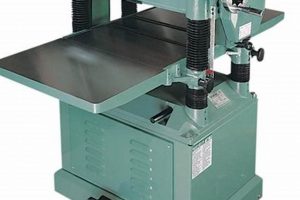
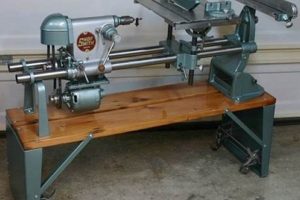
Specialized compounds formulated to reduce friction on woodworking implements without leaving a wet or oily residue are crucial for maintaining optimal performance and preventing damage. Examples include products containing PTFE (Teflon), graphite, or molybdenum disulfide, often available in spray or paste form. These substances create a thin, low-friction barrier between surfaces.
The utilization of friction-reducing agents provides several advantages in woodworking. It minimizes binding and sticking, leading to smoother cuts and improved precision. Furthermore, it helps to protect tools from wear and tear, extending their lifespan and reducing the need for frequent sharpening or replacement. Historically, woodworkers relied on waxes and oils, but modern formulations offer superior dryness and longevity.
The subsequent sections will delve into the specific types of these friction-reducing compounds, application techniques, appropriate use cases for various woodworking tools, and strategies for selecting the ideal product for individual needs.
Application Guidance for Woodworking Implements
Proper application of friction-reducing substances is crucial for maximizing benefits and preventing unintended consequences. Adherence to the following guidelines will ensure optimal tool performance and longevity.
Tip 1: Surface Preparation: Ensure the tool surface is clean and free of debris before application. Remove any existing rust, pitch, or old lubricant using appropriate solvents and a non-abrasive cloth. A clean surface promotes optimal adhesion and prevents contamination of the new application.
Tip 2: Thin, Even Coating: Apply the compound in a thin, even layer. Over-application can lead to build-up and reduced effectiveness. Sprays are generally easier to apply uniformly, while pastes require careful spreading.
Tip 3: Target Critical Areas: Focus application on areas prone to friction, such as saw blades, planer beds, jointer fences, and threaded components. Consult the tool’s manual for specific recommendations regarding lubrication points.
Tip 4: Allow Sufficient Drying Time: Allow the substance to dry completely before using the tool. This allows the carrier solvents to evaporate and the friction-reducing particles to bond to the surface. Refer to the product’s instructions for recommended drying times.
Tip 5: Regular Reapplication: Reapply the substance periodically, depending on tool usage and environmental conditions. Heavy use or exposure to moisture may necessitate more frequent reapplication. Monitor tool performance for signs of increased friction.
Tip 6: Compatibility Considerations: Verify the compound’s compatibility with the tool’s materials. Some lubricants may react negatively with certain plastics or coatings. Consult the product’s technical data sheet for compatibility information.
Tip 7: Safe Handling Practices: Employ appropriate safety measures during application, including adequate ventilation and the use of gloves and eye protection. Refer to the product’s safety data sheet (SDS) for specific handling precautions.
Following these application tips will ensure effective reduction of friction, leading to improved tool performance, extended tool life, and enhanced woodworking precision.
The following sections will address selection criteria and specific product recommendations based on tool type and application requirements.
1. Residue-Free
The characteristic of being residue-free is paramount in the context of lubricants for woodworking tools. The primary function of any lubricant is to reduce friction between moving parts, facilitating smoother operation and minimizing wear. However, in woodworking, the presence of a wet or oily residue presents significant challenges. Such residues attract sawdust and debris, forming an abrasive paste that counteracts the lubricant’s intended effect, accelerating wear instead of mitigating it. Further, these residues can transfer to the wood being worked, interfering with finishing processes, requiring additional cleaning steps, and potentially compromising the aesthetic quality of the final product. Therefore, a formulation designed to be residue-free eliminates these problems by providing lubrication without leaving any substance that could attract contaminants or interfere with downstream processes.
The causal link between residue and negative outcomes in woodworking is direct. An example is observed with planer beds. Applying a traditional oil-based lubricant can initially improve the wood’s passage. However, accumulated sawdust quickly adheres to the oil, creating a sticky surface that impedes movement and degrades the quality of the planed surface. In contrast, a residue-free option, like a PTFE spray, allows the wood to glide smoothly without attracting debris, preserving the finish quality and the tool’s operational efficiency. Similarly, on saw blades, residue-free options prevent pitch build-up, maintaining cutting speed and accuracy.
In summary, the “residue-free” property is not merely a desirable attribute, but an essential component of effective lubricants for woodworking tools. It prevents the formation of abrasive compounds, maintains the cleanliness of both the tool and the workpiece, and ultimately contributes to more efficient and higher-quality woodworking. The absence of residue directly correlates with improved tool performance, reduced maintenance requirements, and superior finishing outcomes, underscoring its critical importance within the woodworking process.
2. Material Compatibility

The selection of lubricants for woodworking implements necessitates a meticulous evaluation of material compatibility. Incompatibility between lubricant and tool materials can result in degradation of tool components, reduced performance, and potential safety hazards. The following points detail critical facets of material compatibility in this context.
- Plastics and Polymers
Many woodworking tools incorporate plastic or polymer components such as handles, knobs, or housings. Certain solvents or additives present in lubricants can cause these materials to swell, crack, or dissolve. The use of petroleum-based lubricants on tools with polycarbonate or acrylic parts, for instance, can lead to irreversible damage. Therefore, water-based or specifically formulated synthetic options may be more appropriate.
- Metals and Alloys
The composition of metal components, including blades, bearings, and fasteners, must be considered. Certain lubricants can promote corrosion or galvanic reactions with specific metals. For example, lubricants containing chloride ions can accelerate corrosion in stainless steel. The choice of lubricant should align with the metal type to prevent premature wear and failure.
- Adhesives and Coatings
Adhesives and coatings used on tools, such as paint, powder coatings, or protective films, can be susceptible to chemical attack from lubricants. Certain solvents can dissolve or weaken these coatings, compromising their protective function and potentially affecting tool aesthetics. Testing lubricant compatibility with coatings is essential before widespread application.
- Rubber and Elastomers
Rubber O-rings, seals, and other elastomeric components are often used in woodworking tools to provide sealing and vibration dampening. Exposure to incompatible lubricants can cause these materials to swell, shrink, or degrade, leading to leaks and reduced tool performance. Silicone-based lubricants are generally compatible with a wider range of elastomers compared to petroleum-based options, but specific compatibility should be verified.
In summary, ensuring material compatibility is integral to the effective use of specialized friction-reducing agents. By considering the interaction between lubricant chemistry and tool construction materials, woodworkers can optimize tool performance, extend tool lifespan, and maintain safety. Thoroughly reviewing product specifications and conducting compatibility testing are recommended practices.
3. Application Precision
The efficacy of friction-reducing compounds in woodworking is significantly contingent upon application precision. The controlled and targeted delivery of these substances is critical for maximizing their benefits and preventing unintended consequences. Over-application or misapplication can lead to diminished tool performance and potential workpiece contamination.
- Targeted Delivery to Friction Points
Effective friction reduction necessitates the precise delivery of the compound to areas experiencing the highest degree of friction. This includes saw blades, planer beds, jointer fences, and other moving parts. Broad, indiscriminate application wastes material and can lead to undesirable build-up in non-critical areas. For instance, a small, directed spray of PTFE onto a saw blades surface is more effective than saturating the entire blade.
- Controlled Dosage
The optimal quantity of friction-reducing substance is often minimal. Over-application can result in a sticky residue attracting dust and debris, negating the intended lubrication benefits. Precise application methods, such as using applicators with fine nozzles or brushes, enable controlled dispensing, ensuring that only the necessary amount is applied. This precision minimizes waste and prevents surface contamination.
- Consistent Coverage
Achieving uniform coverage across the target surface is essential for consistent friction reduction. Irregular application can lead to uneven tool performance and potential workpiece defects. Spray applicators, when used correctly, facilitate consistent coating. For paste formulations, careful and even spreading is required to ensure uniform distribution.
- Prevention of Contamination
Precise application minimizes the risk of contaminating adjacent surfaces or materials. This is particularly important when working with porous wood species or when applying finishes. Avoiding overspray or run-off prevents unintended transfer of the compound, preserving the integrity of the workpiece and preventing finishing issues. Using masking techniques during application can further enhance precision and control.
In conclusion, the effectiveness of friction-reducing compounds hinges on application precision. By targeting critical friction points, controlling dosage, ensuring consistent coverage, and preventing contamination, woodworkers can optimize tool performance, extend tool life, and maintain the quality of their finished products. Techniques and tools facilitating precise application are therefore indispensable for achieving optimal results.
4. Friction Reduction

Friction reduction is the fundamental purpose underlying the use of specialized compounds on woodworking tools. These formulations are engineered to minimize the resistance encountered when tools interact with wood, thereby improving efficiency, precision, and tool longevity. The inherent abrasiveness of wood, coupled with the high forces involved in cutting, planing, and shaping operations, necessitates effective friction management. These compounds achieve this by creating a low-shear interface between the tool and the workpiece, enabling smoother movement and reducing energy expenditure. A direct example is observed when using a hand plane; the application of a friction-reducing agent to the sole allows the plane to glide across the wood surface with less effort, resulting in a cleaner and more consistent cut.
The practical significance of understanding friction reduction in woodworking extends beyond mere convenience. Reduced friction translates directly into increased tool life. Less force is required to perform the same task, which means less stress on the tool’s cutting edges and moving parts. This, in turn, minimizes wear and tear, reducing the frequency of sharpening, repair, and replacement. Furthermore, effective friction reduction improves the quality of the finished product. Smoother tool movement results in cleaner cuts, reduced tear-out, and improved surface finishes, all of which contribute to a more refined and professional outcome. For example, the application of a PTFE-based substance to a table saw blade can significantly reduce friction, minimizing burning and blade deflection, ultimately leading to cleaner and more accurate cuts.
In summary, friction reduction is not merely a beneficial side effect, but the core principle driving the utilization of specialized compounds in woodworking. These compounds serve as an essential component to maximizing the performance, lifespan, and output quality of woodworking tools. Overcoming the challenges of friction ensures optimal tool function, and by extension, professional quality woodworking. Its strategic implementation directly translates into greater efficiency, reduced costs, and superior craftsmanship.
5. Tool Longevity
The operational lifespan of woodworking implements is intrinsically linked to friction management. Premature tool failure, stemming from excessive wear and tear, represents a significant expense and impediment to productivity. Utilizing appropriate strategies, particularly the application of specialized friction-reducing agents, is crucial for extending the service life of these tools.
- Minimizing Abrasive Wear
Woodworking processes inherently involve abrasive interactions between the tool’s cutting surfaces and the wood fibers. This constant abrasion gradually dulls blades, wears down bearings, and damages other critical components. Properly applied, a compound creates a barrier that reduces direct contact, minimizing the rate of abrasive wear. For example, a jointer knife treated with a compound will maintain its sharpness for a longer duration compared to an untreated knife, directly extending its usable lifespan.
- Preventing Corrosion and Oxidation
The environment in which woodworking tools operate often exposes them to moisture and corrosive substances, leading to rust and oxidation. These processes weaken metal components and degrade tool performance. Certain compounds contain corrosion inhibitors that protect tool surfaces from these environmental factors, preventing premature failure. A saw blade stored in a damp environment, but treated with a compound containing corrosion inhibitors, will exhibit significantly less rust damage than an untreated blade.
- Reducing Heat Buildup
Friction generates heat, which can cause thermal stress and deformation in tool components. Excessive heat can also accelerate the degradation of cutting edges. Friction-reducing compounds minimize heat generation, preventing these detrimental effects and contributing to increased tool longevity. Planer blades, for instance, operating at high speeds, benefit substantially from reduced heat buildup, which preserves their temper and sharpness.
- Mitigating Binding and Stress
Excessive friction can cause tools to bind or seize, placing undue stress on their components. This stress can lead to fractures, cracks, and other forms of structural failure. By minimizing friction, a compound reduces the likelihood of binding and stress, thereby extending the tool’s operational lifespan. The threads of lead screws in woodworking vises, when properly lubricated with a compound, experience reduced binding, leading to smoother operation and reduced wear.
These protective mechanisms collectively contribute to the overall enhancement of tool longevity. By mitigating wear, preventing corrosion, reducing heat buildup, and minimizing binding, specialized friction-reducing agents play a vital role in maximizing the return on investment in woodworking tools and ensuring consistent performance over an extended period.
Frequently Asked Questions Regarding Friction-Reducing Compounds for Woodworking Tools
The following section addresses common inquiries and clarifies key aspects related to the application and selection of friction-reducing compounds used in woodworking. These answers aim to provide a concise and informative overview of the topic.
Question 1: What constitutes a “dry lubricant” in the context of woodworking tools?
A friction-reducing compound suitable for woodworking leaves minimal residue after application. Unlike traditional oils or greases, it forms a thin, non-tacky film that reduces friction without attracting sawdust or contaminating wood surfaces. Examples include PTFE (Teflon), graphite, and molybdenum disulfide formulations.
Question 2: Why is “dry lubrication” preferred over traditional oil-based lubricants for woodworking tools?
Oil-based lubricants attract and retain sawdust, creating an abrasive paste that accelerates tool wear and contaminates the wood surface. Compounds avoid this issue, maintaining a cleaner working environment and preventing interference with finishing processes.
Question 3: On what types of woodworking tools should friction-reducing compounds be applied?
These compounds are beneficial on a wide range of tools, including saw blades, planer beds, jointer fences, drill bits, and threaded components. Any surface experiencing friction during operation can benefit from the application of a suitable compound.
Question 4: How frequently should these compounds be reapplied to woodworking tools?
The frequency of reapplication depends on tool usage and environmental conditions. Tools used heavily or exposed to moisture may require more frequent application. Regular inspection for signs of increased friction is recommended to determine optimal reapplication intervals.
Question 5: Are there any safety precautions to observe when applying these compounds?
Yes. Adequate ventilation is essential. Use gloves and eye protection to prevent skin and eye contact. Consult the product’s Safety Data Sheet (SDS) for specific handling precautions and first aid measures.
Question 6: Can any compound marketed as a “dry lubricant” be safely used on woodworking tools?
No. It is crucial to select a compound specifically formulated for woodworking applications. Verify compatibility with the tool’s materials and ensure the compound will not interfere with subsequent finishing processes. Read product labels and technical data sheets carefully.
These FAQs offer a foundational understanding of this topic. Proper selection and application are critical for achieving optimal results and maintaining tool integrity.
The subsequent section will provide product recommendations and considerations for specific woodworking applications.
Conclusion
The preceding discussion has detailed the crucial role of dry lubricant for woodworking tools in maintaining efficiency, accuracy, and longevity. The selection and application of these compounds, predicated on factors such as residue minimization, material compatibility, and application precision, directly influence the performance and lifespan of valuable woodworking equipment. Without the appropriate implementation of these specialized substances, woodworkers risk compromised results, increased maintenance costs, and potential tool failure.
Therefore, a thorough understanding of these principles is paramount for any serious practitioner of woodworking. Continued research and adherence to best practices in lubrication will undoubtedly contribute to enhanced woodworking outcomes and the preservation of valuable tools for generations to come.
![Essential Woodworking Tools Japanese Guide [2024] | Step-by-Step Guides, Tools & Inspiration to Build Beautiful Wooden Decor on a Budget](https://woodfromhome.com/wp-content/uploads/2026/04/th-364-300x200.jpg "Essential Woodworking Tools Japanese Guide [2024] Step-by-Step Guides, Tools & Inspiration to Build Beautiful Wooden Decor on a Budget")