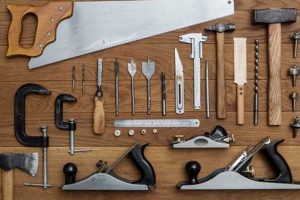
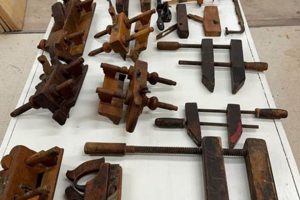
A core collection of implements is essential for shaping, cutting, joining, and finishing wood. These instruments facilitate a wide range of operations, from rough shaping to fine detailing. Examples include saws for creating accurate cuts, planes for smoothing surfaces, chisels for detailed carving, and measuring tools for precision.
Possessing a fundamental set of such devices allows craftspeople to execute diverse projects with efficiency and accuracy. Historically, access to reliable versions of these instruments has been a cornerstone of skilled trades, contributing to both functional construction and artistic creation. Mastery of their use enhances productivity and allows for greater control over the final product.
Subsequent sections will delve into specific categories of these implements, examining their individual functions and the techniques required for their effective employment. This will include detailed considerations of hand tools versus power tools, and guidelines for selection and maintenance.
Effective Utilization of Essential Woodworking Implements
The following guidelines are presented to optimize the application and longevity of fundamental implements used in woodcraft.
Tip 1: Tool Selection: Choose implements based on project requirements and material hardness. High-carbon steel tools are preferable for hardwoods due to their superior edge retention.
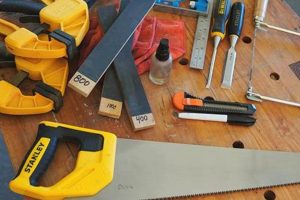
Tip 2: Sharpening Protocols: Maintain sharp cutting edges through consistent sharpening. Utilize honing guides to ensure consistent bevel angles, extending the lifespan and improving the efficiency of each implement.
Tip 3: Safe Operation: Always use appropriate personal protective equipment (PPE), including safety glasses and hearing protection. Secure workpieces firmly to prevent slippage during cutting or shaping operations.
Tip 4: Calibration and Adjustment: Regularly calibrate measuring tools such as squares and rulers to maintain dimensional accuracy. Ensure planes are properly adjusted for consistent shaving thickness.
Tip 5: Material Compatibility: Select appropriate cutting tools for different wood species. Fine-toothed saws are better suited for hardwoods to minimize tear-out, while coarser saws are adequate for softer woods.
Tip 6: Ergonomic Considerations: Employ implements with comfortable handles to reduce fatigue and improve control. Consider using jigs and fixtures to improve safety and accuracy during repetitive tasks.
Tip 7: Proper Storage: Store implements in a dry environment to prevent rust and corrosion. Utilize tool rolls or cabinets to protect cutting edges from damage.
Adherence to these recommendations will enhance the precision, safety, and longevity of essential implements employed in woodworking practices.
The subsequent section will provide a detailed examination of specific advanced techniques related to wood joinery and finishing.
1. Cutting

The process of dividing wood, referred to as cutting, forms a fundamental aspect of woodworking and necessitates specialized tools. A direct correlation exists between the efficiency and precision of cutting and the selection and maintenance of the relevant implements. Improperly sharpened or incorrectly chosen saws, for example, can result in inaccurate dimensions, splintering, and increased physical exertion. Successful execution of joinery and overall project quality depend directly on the initial cutting phase. The act of sawing boards to specific lengths for a table, or creating precise dovetails for a drawer, demonstrates this dependency in practical terms. A dull saw, or an incorrect type like a rip saw used to crosscut, would hinder these processes significantly.
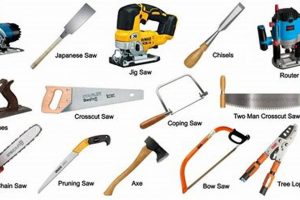
The diverse tools utilized for cutting encompass both manual and powered options. Hand saws, including crosscut, rip, and back saws, offer control and are suitable for intricate tasks. Power saws, such as table saws, miter saws, and band saws, facilitate efficient cutting of larger pieces or repeated cuts. The application dictates the optimal selection; for instance, a band saw’s narrow blade allows curved cuts impractical for a table saw. Conversely, a table saw excels at producing straight, consistent cuts along the grain, whereas a coping saw is designed to create curved cuts in thinner materials.
In summary, cutting is a critical component of woodworking, with the choice and condition of tools directly affecting outcomes. Precision and efficiency in this phase are paramount for subsequent steps in the construction or artistic rendering process. Challenges include selecting the appropriate tool for the task, maintaining sharpness, and ensuring operator safety. The quality of the cutting stage ultimately influences the structural integrity and aesthetic appeal of the final product.
2. Shaping
Shaping, a critical phase in woodworking, relies directly on the proper application of specialized instruments. It involves refining the rough forms created during the cutting stage into precise profiles and smooth surfaces. The selection of instruments determines the degree of control and the ultimate aesthetic quality of the finished piece. Instruments such as hand planes, rasps, spokeshaves, and chisels are instrumental in achieving desired contours and textures. For instance, a hand plane meticulously removes thin layers of wood to create a flawlessly flat surface, while a spokeshave excels at shaping curved elements like chair legs. The ability to manipulate these instruments accurately defines the artisan’s skill and the integrity of the design.
Power tools such as routers, sanders, and spindle sanders also contribute significantly to the shaping process, often accelerating the work and enabling complex profiles. A router, equipped with various bits, can produce decorative edges or replicate intricate designs. Sanders, ranging from belt sanders for rapid material removal to orbital sanders for fine surface preparation, ensure surfaces are smooth and ready for finishing. The effectiveness of these power tools, however, relies on a thorough understanding of their capabilities and limitations, as well as the material properties of the wood being shaped. Example: the correct selection of sandpaper grit minimizes scratching.
In summation, shaping is a fundamental aspect of woodworking, directly linked to the skillful application of varied instruments, both manual and powered. Challenges include understanding the grain direction of the wood, selecting appropriate cutting techniques, and maintaining sharp tool edges. Precise shaping, facilitated by the correct instruments, is paramount for achieving structural integrity, aesthetic refinement, and overall project success. This phase bridges rough components to finalized artistic rendering or structural construction.
3. Measuring

Dimensional accuracy is paramount in woodworking; thus, precision measurement forms an indispensable part of the craft. The selection and use of measuring instruments directly impact the success and functionality of any woodworking project. Accurate measurements ensure proper fit, structural integrity, and aesthetic harmony. Without precise measuring tools and techniques, inconsistencies will accumulate, leading to ill-fitting joints, unstable structures, and visually displeasing results.
- Linear Measurement
Linear measurement involves determining length, width, and height. Essential tools for linear measurement include rulers, tape measures, and yardsticks. These instruments provide the foundation for accurate layouts and cuts. For example, when constructing a cabinet, precise linear measurements are necessary to ensure that the sides, top, bottom, and shelves fit together correctly. Deviation from accurate linear measurement results in gaps, misalignment, and compromised structural stability.
- Angular Measurement
Angular measurement deals with determining angles and ensuring accurate corners. Tools used for angular measurement include squares, bevel gauges, and protractors. Squares are critical for ensuring right angles in construction, while bevel gauges are used to transfer angles from one piece to another. Accurate angular measurements are essential for creating tight joints, such as dovetails and miters. Improper angular measurement leads to weak joints and aesthetically unappealing results.
- Depth and Thickness Measurement
Measuring depth and thickness is vital for creating uniform parts and consistent joinery. Calipers and depth gauges are primary instruments for these measurements. Calipers allow for precise measurement of the thickness of wood, while depth gauges measure the depth of mortises or grooves. Consistent thickness and depth measurements are crucial for creating seamless joints and ensuring that parts fit together correctly. Deviations in depth or thickness lead to uneven surfaces and compromised joint strength.
- Marking and Layout
Marking and layout are processes of transferring measurements onto the wood before cutting or shaping. Tools include marking gauges, pencils, and knives. A marking gauge creates a precise line parallel to the edge of the wood, while a sharp knife can be used to scribe accurate lines for fine joinery. Proper marking and layout ensure accurate cuts and minimize errors. Poorly marked lines lead to miscuts, waste of material, and compromised project quality.
Precise measurement serves as the bedrock upon which quality woodworking is built. Each of the above facets demonstrates how accurate measurement ensures the final product meets functional and aesthetic requirements. From the foundational elements of linear and angular measurement to the finer details of depth and marking, meticulous attention to these principles elevates woodworking from a simple craft to a precision-based art form.
4. Fastening

The realm of fastening is a core domain in woodworking, dictating the permanence and structural integrity of constructed assemblies. The effective application of joining techniques necessitates a range of tools, the selection of which is intrinsically linked to the desired strength, aesthetic, and longevity of the finished piece. Inadequacies in the fastening phase, whether through inappropriate tool selection or incorrect technique, can compromise the entire project, resulting in structural failure or premature degradation. Examples include the use of insufficient screw lengths for joining thick stock, leading to joint weakness, or the incorrect application of adhesives, resulting in delamination over time. The mastery of fastening techniques, therefore, hinges on a comprehensive understanding of tool capabilities and limitations.
The instruments used in fastening span a broad spectrum, from manually operated devices to power-driven systems. Hand tools such as hammers, screwdrivers, and clamps offer precise control and are suited for delicate or intricate assemblies. Power tools, including nail guns, impact drivers, and pneumatic clamps, increase efficiency in large-scale or repetitive operations. The selection should align with the specific demands of the project; for instance, a countersinking drill bit ensures that screw heads sit flush with the surface, preventing protrusion and potential damage. Similarly, the appropriate clamping pressure and glue type are critical to creating a solid bond when using adhesives. The interplay between the selection of fastening methods and the relevant implements critically affects the final outcome.
In conclusion, fastening represents a crucial juncture in the woodworking process, wherein the successful integration of components directly influences the structural soundness and visual appeal of the project. Challenges in this area involve selecting appropriate tools for the materials and joinery techniques employed, ensuring proper alignment and tension during the fastening process, and understanding the long-term behavior of different fasteners under varying environmental conditions. A meticulous approach to fastening, supported by a comprehensive understanding of available implements and methodologies, is paramount for achieving enduring and aesthetically pleasing results.
5. Finishing
The application of finishes is a crucial stage in woodworking, directly impacting the durability, aesthetics, and longevity of the project. The effectiveness of any finish depends significantly on the proper preparation of the wood surface, often accomplished using implements considered fundamental to the craft. Understanding the interrelationship between surface preparation, tool selection, and finish application is paramount for achieving professional results.
- Surface Preparation
Surface preparation involves smoothing, cleaning, and preparing the wood to receive the finish. Instruments such as sanders, scrapers, and planes are essential for removing imperfections and creating a uniform texture. Proper sanding, for example, ensures that the finish adheres evenly and enhances the natural grain of the wood. Skipping this step can result in uneven color absorption, visible scratches, and a compromised aesthetic. In practice, the choice of sanding grit and technique is critical to preventing swirl marks and achieving a consistently smooth substrate for subsequent finishing.
- Application Methods
The method of finish application influences the final appearance and protective qualities of the coating. Brushes, spray guns, and cloths are common tools for applying finishes such as varnish, lacquer, and oil. The selection of the appropriate application tool depends on the type of finish, the size and complexity of the piece, and the desired level of control. For instance, spraying lacquer onto a large surface offers speed and uniformity, while applying oil with a cloth allows for greater control and penetration. Technique and environmental controls are essential to ensure optimal finish performance.
- Sanding Between Coats
Sanding between coats is a common practice that enhances the smoothness and adhesion of subsequent layers. Fine-grit sandpaper or steel wool is typically used to lightly abrade the surface, removing any imperfections or dust particles that may have settled during the drying process. This step creates a mechanical key for the next coat of finish, improving its bond and resulting in a smoother, more durable surface. A failure to sand between coats can lead to a rough, uneven finish that is more susceptible to chipping and wear.
- Buffing and Polishing
The final steps in finishing often involve buffing and polishing to achieve a desired sheen and tactile quality. Buffing wheels, polishing compounds, and soft cloths are used to smooth the surface and enhance its reflectivity. This process can range from a matte finish achieved with fine abrasives to a high-gloss finish created through multiple stages of polishing. These final steps enhance both the visual appeal and the protective qualities of the finish, contributing to the overall value and longevity of the woodworking project.
The connection between finishing and implements lies in the essential preparatory and applicatory processes. The quality of the finish is inextricably linked to the appropriate selection and skillful manipulation of tools that prepare the surface, apply the coating, and refine the final appearance. Mastering these techniques is crucial for any woodworker seeking to create durable, aesthetically pleasing pieces that stand the test of time.
6. Safety

The responsible operation of implements for woodworking is directly linked to personal safety and the prevention of workplace incidents. Understanding and adhering to safety protocols is not merely advisable but an integral component of proficient woodworking practice. The relationship between safety measures and such implements is not abstract; rather, it is defined by practical applications that mitigate risk and promote a secure working environment.
- Personal Protective Equipment (PPE)
The use of personal protective equipment forms the first line of defense against potential injury. Safety glasses shield eyes from flying debris, while hearing protection mitigates the risk of auditory damage from prolonged exposure to loud machinery. Respiratory protection, such as dust masks or respirators, guards against the inhalation of harmful particulates. Practical examples include wearing safety glasses when using a lathe to prevent eye injuries from wood chips and utilizing a respirator when sanding to avoid respiratory issues. The absence of PPE increases the likelihood of immediate and long-term health consequences.
- Machine Guarding and Operational Procedures
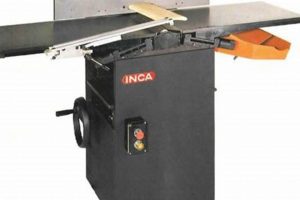
The presence and proper utilization of machine guards are essential for preventing contact with moving parts. Table saws, jointers, and routers are equipped with guards designed to minimize the risk of accidental contact with blades or cutters. Adhering to established operational procedures, such as using push sticks and feather boards, further reduces the potential for injury. An example is using a push stick to guide wood past a saw blade, keeping hands safely away from the cutting edge. Deviating from these protocols significantly elevates the risk of serious injury.
- Tool Maintenance and Inspection
Regular inspection and maintenance of implements are crucial for ensuring their safe operation. Dull blades require more force, increasing the likelihood of slippage and injury. Damaged power cords pose a risk of electrical shock. Routine maintenance, such as sharpening blades and replacing worn-out cords, prevents accidents and prolongs the lifespan of the implements. Prior to operation, a visual inspection for defects can prevent catastrophic failures. This proactive approach minimizes unforeseen hazards.
- Workspace Organization and Ergonomics
A well-organized workspace minimizes tripping hazards and allows for efficient and safe movement. Adequate lighting reduces eye strain and enhances visibility. Ergonomic considerations, such as adjustable workbenches and anti-fatigue mats, reduce physical stress and prevent repetitive strain injuries. A cluttered workspace increases the likelihood of accidents, while poor ergonomics contribute to long-term musculoskeletal problems. The organization and layout of the workspace directly correlate with overall safety.
These safety facets underscore the necessity of integrating safe practices into every aspect of woodworking, ultimately promoting a culture of responsibility and minimizing risks associated with woodworking implements. The proactive application of these principles safeguards individuals and contributes to the sustainability of the craft.
Frequently Asked Questions About Core Woodworking Implements
This section addresses common inquiries related to fundamental woodworking instruments, their selection, application, and maintenance.
Question 1: What constitutes a foundational set of implements for initiating woodworking projects?
A basic assemblage typically comprises a crosscut saw, rip saw, smoothing plane, chisel set, combination square, measuring tape, marking gauge, and a selection of clamps. This collection facilitates initial shaping, cutting, and joining operations.
Question 2: What distinctions exist between hand tools and power tools, and when is each category most appropriate?
Hand tools offer greater control and are suitable for detail work and situations where noise reduction is a priority. Power tools increase efficiency and are advantageous for larger-scale projects and repetitive tasks. Selection depends on project scope and desired precision.
Question 3: How often should cutting edges of woodworking implements be sharpened to maintain optimal performance?
Sharpening frequency depends on usage and material hardness. As a general guideline, edges should be sharpened whenever a noticeable decrease in cutting efficiency or increased effort is required. Regular honing can extend intervals between full sharpening.
Question 4: What measures should be taken to ensure the longevity and prevent corrosion of implements?
Store implements in a dry environment, ideally in a tool cabinet or roll to protect cutting edges. Regularly apply a light coating of oil or wax to prevent rust. Promptly clean off any sap or residue after each use.
Question 5: How are wood species hardness and grain orientation considerations affecting tool selection?
Harder woods require implements with high-carbon steel blades to maintain sharpness. Understanding grain direction is essential to minimize tear-out. A low cutting angle, or skew angle, is appropriate when working against the grain.
Question 6: Is it essential to adhere to safety protocols when using woodworking implements, and which practices minimize potential hazards?
Adherence to safety protocols is non-negotiable. Essential practices include wearing appropriate personal protective equipment, such as safety glasses and hearing protection, securing workpieces, and maintaining sharp cutting edges to reduce the risk of accidents.
This overview provides insights into common questions concerning core woodworking instruments. Implementing this ensures efficient and safe woodworking practices.
Subsequent discussions will focus on specific joinery techniques and advanced finishing methods.
Conclusion
The preceding discourse has methodically addressed the essential facets of general woodworking tools. From their selection and effective employment to critical maintenance and safety considerations, a comprehensive understanding of these instruments is paramount for successful woodworking endeavors. The careful consideration of tool types, application techniques, and material properties significantly impacts the precision, efficiency, and overall quality of any project.
Therefore, a commitment to ongoing learning, diligent practice, and unwavering adherence to safety protocols is not merely recommended but essential for all practitioners. Mastering general woodworking tools serves as a foundation for both functional craftsmanship and artistic expression, enabling the creation of durable, aesthetically pleasing, and structurally sound objects that can endure for generations.