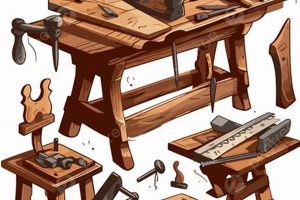
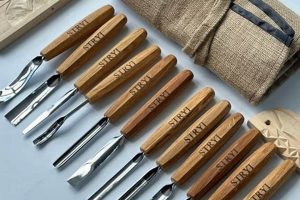
Devices designed to securely store and organize implements used in shaping and assembling wood are essential for efficient and safe operation within a workshop environment. These organizational aids come in various forms, ranging from simple wall-mounted racks to complex, multi-tiered cabinets, each offering specific advantages for different tool types and workshop layouts. An example includes a French cleat system used to hang frequently accessed items for immediate retrieval.
The implementation of effective organization contributes significantly to enhanced productivity and reduced risk of accidents. When implements are readily accessible and properly stored, time spent searching for needed items decreases substantially. Historically, artisans have employed rudimentary storage methods, evolving into more sophisticated systems as workshops grew in size and complexity, reflecting an increasing awareness of the value of efficient spatial management. Secure storage solutions also protect delicate instruments from damage, preserving their functionality and extending their lifespan.
The subsequent discussion will delve into the diverse range of configurations available, analyzing the materials used in their construction, and exploring best practices for implementing an optimal organization strategy within a dedicated workspace.
Optimizing Workshop Organization
Efficient organization is paramount for a safe and productive woodworking environment. The following recommendations provide guidance on maximizing spatial efficiency and ensuring implement readiness within a workshop.
Tip 1: Prioritize Accessibility Based on Frequency of Use. Tools used daily should be located within immediate reach, while less frequently used implements can be stored further away. Consider a tiered system or strategically placed racks.
Tip 2: Implement a Visual Organization System. Employ labeling, color-coding, or shadow boards to facilitate quick identification and retrieval. This reduces the time spent searching for specific items.
Tip 3: Maximize Vertical Space. Utilize wall-mounted solutions and overhead storage to free up valuable floor space. Pegboards, French cleats, and shelving systems are effective options.
Tip 4: Consider Mobility for Frequently Used Sets. Utilize rolling carts or portable units to bring specific implement sets directly to the work area. This minimizes unnecessary movement around the workshop.
Tip 5: Ensure Adequate Support and Weight Distribution. When designing or selecting storage solutions, verify that they can adequately support the weight of the implements being stored. Improper support can lead to damage or accidents.
Tip 6: Establish a Designated Return Location. Train oneself and others to consistently return tools to their designated locations after each use. This prevents misplaced items and maintains order.
Tip 7: Regular Maintenance and Inspection. Periodically inspect storage solutions for wear, damage, or loose hardware. Address any issues promptly to ensure continued safety and functionality.
Effective implementation of these strategies will result in a more organized, efficient, and safe workshop. By adopting a systematic approach to organization, woodworkers can dedicate more time to their craft and less time searching for misplaced implements.
The subsequent section will explore the diverse materials used in crafting storage solutions, providing insights into their durability, suitability, and aesthetic considerations.
1. Accessibility

The principle of accessibility dictates the ease and speed with which a woodworking implement can be retrieved from its designated storage location. It is a core design consideration for any organizational system, with poorly implemented systems directly impeding workflow and increasing the risk of accidents. A rack located at an inconvenient height, or obscured behind other items, diminishes the effectiveness of the tool and creates a bottleneck in the woodworking process. The selection and strategic placement of organizational methods directly influences the user’s ability to efficiently transition between tasks.
Effective designs must consider the frequency of use of particular implements. Commonly used tools require a location that minimizes physical effort, such as a wall-mounted rack directly above the workbench. Less frequently used instruments can be stored in drawers or cabinets further away. A well-designed layout prioritizes immediate availability, thereby streamlining workflow and minimizing unproductive downtime. The choice of hanger, drawer, or cabinet must be tailored to the size, weight, and specific access needs of the instrument.
In conclusion, accessibility is a crucial attribute of effective organization for woodworking implements. Prioritizing ease of retrieval minimizes wasted time, reduces the risk of workplace accidents, and enhances overall productivity. A well-designed system is a reflection of thoughtful consideration of the woodworker’s specific needs and workflow.
2. Spatial Efficiency

Spatial efficiency, in the context of implement storage, directly correlates to the maximization of usable workspace within a woodworking environment. The inherent relationship between storage systems and spatial optimization dictates that appropriately designed solutions contribute to a more organized and functional area. Conversely, inefficient storage systems can consume excessive floor space, hinder maneuverability, and impede overall productivity. As a component of woodworking implement storage, spatial efficiency influences the organization and accessibility of tools, impacting both the workflow and the safety of the work area. For example, a wall-mounted rack or overhead system minimizes footprint compared to a sprawling floor-based setup, thus enhancing spatial efficiency.
The benefits derived from a space-efficient organization extend beyond mere storage capacity. Efficient placement allows for the demarcation of specific work zones, separating cutting areas from assembly points, thereby minimizing cross-contamination and improving overall workflow. Utilizing vertical space through the implementation of shelving or pegboard systems further enhances efficiency, enabling the storage of a greater number of implements within the same footprint. A strategic arrangement minimizes clutter, preventing the accumulation of unnecessary items, and creating a safer, more ergonomically sound environment. The adoption of such systems allows for the streamlining of processes and improved utilization of the total area.
In conclusion, spatial efficiency represents a core objective in the design and implementation of effective systems. Achieving optimal utilization requires a deliberate and planned approach, considering both the types of implements being stored and the configuration of the workspace. Challenges inherent in older, smaller areas or limited budgets can often be mitigated through strategic planning and innovative implementation of existing organizational aids, linking the importance of efficiency with the tangible aspects of improved workflow and workspace optimization.
3. Material Durability

Material durability is a critical factor in the design and selection of woodworking implement storage, influencing lifespan, performance, and overall value. The ability of a storage solution to withstand the weight, use, and environmental conditions to which it is subjected directly impacts its effectiveness and long-term cost-efficiency.
- Load-Bearing Capacity
The load-bearing capacity of a material dictates its ability to support the weight of implements without deformation or failure. For instance, a heavy-duty steel rack is suitable for holding metal tools, while a lightweight plastic organizer may only accommodate smaller hand tools. Exceeding a material’s load-bearing capacity compromises structural integrity, leading to potential damage and safety hazards.
- Resistance to Environmental Factors
Woodworking shops often experience fluctuations in humidity and temperature, which can degrade certain materials over time. Wood can warp or crack, while metal can rust or corrode. Selecting materials resistant to these factors, such as treated wood, powder-coated steel, or durable plastics, extends the lifespan of the storage system and prevents premature failure. The material’s resistance to environmental conditions has an impact on long-term durability.
- Impact and Abrasion Resistance
Woodworking tools can be heavy and cumbersome, leading to accidental impacts and abrasions. Materials with high impact and abrasion resistance, such as hardened steel or reinforced polymers, withstand these stresses without significant damage. Surfaces must be able to tolerate the movement of tools without succumbing to chipping, scratching, or breakage, ensuring both the safety and longevity of the structure.
- Chemical Resistance
Woodworking often involves the use of solvents, finishes, and adhesives, which can degrade certain materials upon contact. Selecting materials resistant to these chemicals, such as epoxy-coated surfaces or chemically inert plastics, prevents damage and maintains the integrity of the storage system. Chemical resistance is of particular importance in locations where spills or splashes are likely to occur.
The interplay of these factors determines the overall durability of woodworking implement storage. Selecting appropriate materials based on anticipated loads, environmental conditions, potential impacts, and chemical exposure is essential for maximizing the lifespan and effectiveness of the system. Investing in high-quality, durable materials translates to reduced replacement costs, enhanced safety, and a more organized and efficient woodworking environment.
4. Mounting Security

Mounting security is an indispensable characteristic of woodworking implement organization. The secure attachment of storage solutions to walls, ceilings, or workbenches directly influences the safety, stability, and long-term reliability of the entire system. Compromised mounting integrity presents significant risks, including structural failure, implement damage, and potential injury to the user.
- Fastener Selection
The appropriate selection of fasteners screws, bolts, anchors is paramount. Fasteners must be rated to withstand the combined weight of the storage unit and the stored implements, considering factors such as shear strength, tensile strength, and material compatibility. The fastener type must also be suitable for the substrate material to which the storage unit is being attached, such as wood, concrete, or metal. Overlooking fastener selection can lead to catastrophic failure.
- Load Distribution
Proper load distribution is vital to prevent localized stress concentrations that can compromise mounting integrity. Distributing weight across multiple attachment points, rather than concentrating it on a single point, minimizes stress on individual fasteners and the supporting structure. Designs incorporating wider mounting plates or support brackets enhance load distribution, contributing to a more secure and stable installation.
- Substrate Integrity
The integrity of the mounting surface is as crucial as the fastener itself. Attaching storage units to damaged, deteriorated, or structurally unsound substrates compromises mounting security. Before installation, assess the substrate for signs of weakness, such as rot, cracking, or corrosion. Reinforcement or remediation of the substrate may be necessary to ensure adequate support. Ignoring substrate integrity can lead to premature failure and potential hazards.
- Installation Technique
Correct installation technique is essential for realizing the full potential of fasteners and mounting hardware. Over-tightening fasteners can strip threads or damage the substrate, while under-tightening can result in loose connections that gradually weaken over time. Following manufacturer’s instructions and using appropriate tools, such as torque wrenches, ensures proper installation and optimal mounting security. Improper installation negates the benefits of high-quality fasteners and robust designs.
The aforementioned elements collectively ensure secure integration of woodworking implement arrangements. Ignoring them could pose both an immediate hazard and create future complications. A meticulous and proactive approach regarding mounting is paramount for safeguarding the physical well-being of the woodworker and protecting the collection of stored implements. Such mounting should never be an afterthought but an integral part of the planning.
5. Tool Protection

Woodworking implements, frequently representing a significant financial investment and embodying specialized functionality, necessitate safeguarding against damage, corrosion, and degradation. Organizational systems directly contribute to implement preservation, mitigating potential risks associated with improper storage or handling. The design and implementation of dedicated storage solutions are, therefore, inseparable from the objective of extending implement lifespan and maintaining optimal performance. Without proper safeguards, implements are susceptible to dulling of cutting edges, rust formation, and structural damage, all of which compromise their effectiveness and necessitate costly repairs or replacements. Properly designed organizational structures are a key aspect of any shop.
Protective attributes within organizational systems take diverse forms. Individual sheaths or sleeves shield delicate blades and cutting edges from impact and abrasion. Enclosed cabinets or drawers protect implements from dust, moisture, and airborne contaminants. Specialized racks and holders prevent tools from rubbing against each other, minimizing the risk of scratches and dents. The selection of appropriate organizational solutions should be guided by an assessment of the specific implements being stored and the environmental conditions within the workshop. Consider, for example, a cabinet with desiccant packs to mitigate corrosion on precision measuring instruments in humid environments.
In conclusion, the integration of protective measures within organizational systems represents a fundamental aspect of responsible implement ownership and workshop management. The systematic application of safeguarding strategies translates to reduced maintenance costs, extended implement lifespans, and enhanced operational efficiency. The implementation of tool protection elements reinforces the value of an efficient and mindful approach to organizing workshop instruments. A comprehensive understanding recognizes this necessity.
6. System Customization

The capacity to tailor organizational strategies to specific woodworking needs is crucial for optimizing efficiency and safety. “System customization,” in the context of organizational devices, refers to the ability to adapt configurations to accommodate unique tool collections, spatial constraints, and individual preferences. This adaptability ensures that the storage solution effectively addresses the distinct demands of each workshop.
- Scalability and Modularity
Scalability refers to the ability to expand or contract the organizational system as implement collections evolve over time. Modularity complements scalability by allowing individual components to be added, removed, or rearranged to accommodate changing needs. A modular pegboard system, for example, offers the flexibility to adjust hook and shelf placement as necessary. The user can, therefore, dynamically manage changes to their instrument collection.
- Adjustable Dimensions and Configurations
Adjustable dimensions and configurations enable the adaptation of organizational devices to fit varying implement sizes and shapes. Adjustable shelves, sliding drawers with customizable dividers, and racks with variable spacing cater to the diverse dimensions inherent in instrument collections. A cabinet with adjustable shelving, for example, can accommodate both small hand tools and larger power tools, maximizing spatial efficiency. By adapting sizes, a higher density of storage can be achieved.
- Personalized Layouts and Workflows
Customizing layouts to align with individual workflows enhances productivity and minimizes wasted motion. Positioning frequently used tools within immediate reach, while storing less frequently accessed items in more remote locations, optimizes efficiency. A custom-built workbench with integrated storage tailored to specific tasks, such as carving or joinery, exemplifies this principle. It allows the user to prioritize what is important to them.
- Material Selection and Finish Options
Selecting materials and finishes that align with the workshop environment and aesthetic preferences enhances both functionality and visual appeal. Durable materials, such as hardwoods or powder-coated steel, withstand the rigors of heavy use, while corrosion-resistant finishes protect against moisture and chemicals. A custom-built cabinet constructed from locally sourced lumber and finished with a durable lacquer exemplifies the integration of material selection and personal aesthetic. This extends product life.
These customizable facets converge to create organizational solutions that are not only functional but also seamlessly integrated into the individual woodworker’s practice. The ability to adapt systems to specific requirements ensures that organizational devices remain effective and relevant over time, maximizing efficiency and promoting a safe and productive working environment. Furthermore, a tailored system instills a sense of ownership, which encourages consistent utilization. System customization can, therefore, be regarded as an iterative process of refinement.
7. Workshop layout

The configuration of a dedicated workspace directly influences the selection, placement, and functionality of implement storage. Efficient designs are predicated on the interrelationship between spatial constraints, workflow patterns, and the characteristics of the implements themselves. A well-conceived arrangement optimizes accessibility, minimizes movement, and enhances overall productivity. Conversely, a poorly planned workspace can lead to congestion, inefficiency, and potential safety hazards. Therefore, understanding the inherent connection is essential for creating a functional and safe environment.
Effective incorporation of organizational devices into a layout necessitates a comprehensive analysis of workflow. For instance, a woodworker who frequently uses a specific set of implements for joinery would benefit from an easily accessible storage solution located near the assembly area. A mobile cart could be positioned near the workbench, enabling the woodworker to transport necessary implements without traversing the shop. Conversely, implements used less frequently could be stored in a more remote location, such as a wall-mounted cabinet. Prioritizing accessibility for frequently used implements, alongside the proper utilization of spatial dimensions, maximizes productivity.
Ultimately, the arrangement should be viewed as an integral component of a comprehensive system designed to promote efficiency and safety. A thorough assessment of spatial dimensions, workflow patterns, and implement characteristics is essential for achieving an optimal integration. Challenges associated with limited space or irregular workshop configurations can often be mitigated through creative organizational solutions and the strategic utilization of vertical space. An understanding of the dynamic interplay is essential for establishing a functional and productive environment.
Frequently Asked Questions About Woodworking Tool Holders
The following section addresses common inquiries regarding storage solutions, providing clarity on their selection, implementation, and maintenance.
Question 1: What factors should be considered when selecting material for woodworking tool holders?
The material should exhibit sufficient load-bearing capacity, resistance to environmental factors (e.g., humidity, temperature), and durability to withstand frequent use. Wood, metal, and certain plastics are common choices, each offering varying levels of performance and aesthetic appeal. Consider the weight and nature of the implements being stored, as well as the workshop environment, when making a selection.
Question 2: How can workshop layout influence the type of storage chosen?
Spatial constraints, workflow patterns, and the location of workbenches and machinery dictate optimal placement and design. Smaller workshops may benefit from wall-mounted solutions or overhead systems, while larger workshops may accommodate mobile carts or freestanding cabinets. The goal is to minimize unnecessary movement and maximize accessibility.
Question 3: What strategies can be implemented to ensure mounting security?
Selecting appropriate fasteners for the substrate material, distributing weight evenly across multiple attachment points, and verifying the integrity of the mounting surface are critical. Over-tightening or under-tightening fasteners can compromise stability, so following manufacturer’s instructions is essential. Periodic inspection of mounting hardware is recommended to identify and address potential issues.
Question 4: How can organizational methods contribute to tool protection?
Individual sheaths or sleeves can protect delicate blades and cutting edges from damage. Enclosed cabinets or drawers can shield implements from dust, moisture, and airborne contaminants. Specialized racks and holders can prevent tools from rubbing against each other. The selection of appropriate solutions should be guided by the specific implements being stored and the prevailing environmental conditions.
Question 5: To what extent can systems be customized?
Scalability, modularity, adjustable dimensions, and personalized layouts all contribute to the ability to customize systems. Adjustable shelves, sliding drawers with customizable dividers, and racks with variable spacing cater to the diverse dimensions of implement collections. A tailored solution optimizes efficiency and promotes a safe working environment.
Question 6: What is the importance of regular maintenance of woodworking tool holders?
Periodic inspection of structures is recommended to identify signs of wear, damage, or loose hardware. Addressing issues promptly can prevent structural failure, extend lifespan, and ensure continued safety and functionality. Cleaning and lubrication of moving parts, such as hinges and drawer slides, may also be necessary.
Effective planning and implementation are crucial to guarantee an organized, efficient, and safe woodworking environment.
Woodworking Tool Holders
This exploration has underscored the critical role of woodworking tool holders in fostering a productive and secure workshop. From optimizing spatial efficiency to ensuring mounting security and providing crucial implement protection, carefully chosen organizational solutions directly impact workflow and the longevity of valuable implements. The degree of customization offered by various systems allows for precise adaptation to individual needs and workshop constraints.
The informed selection and diligent maintenance of woodworking tool holders represent a tangible investment in both the craft and the craftsman. Consistent application of these principles ensures not only an organized workspace but also a commitment to safety and the preservation of essential instruments. Woodworkers must prioritize a mindful approach in their implementation to fully reap the benefits and optimize their working environment.
![Top-Rated: Best Brand of Woodworking Tools Guide [2024] | Step-by-Step Guides, Tools & Inspiration to Build Beautiful Wooden Decor on a Budget](https://woodfromhome.com/wp-content/uploads/2026/05/th-69-300x200.jpg "Top-Rated: Best Brand of Woodworking Tools Guide [2024] Step-by-Step Guides, Tools & Inspiration to Build Beautiful Wooden Decor on a Budget")