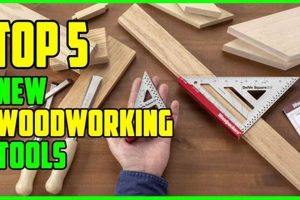
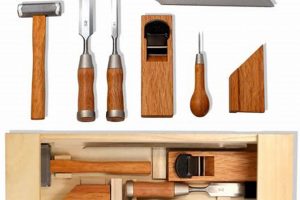
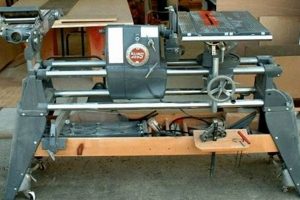
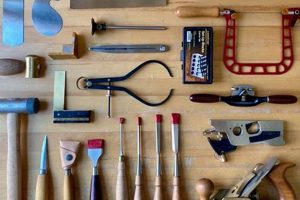
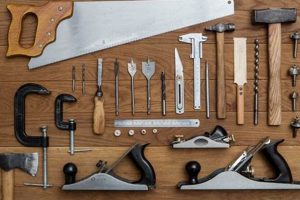
The implements required for woodworking encompass a wide array of devices, both hand-operated and powered, that facilitate the shaping, cutting, joining, and finishing of wood. For example, a basic set often includes hand saws, chisels, a hand plane, measuring tools, and a mallet. Advanced setups might incorporate power saws (table saw, miter saw, bandsaw), routers, sanders, and specialized joinery jigs.
The availability of appropriate instruments is fundamental to the successful execution of woodworking projects. Their proper selection and use ensure accuracy, efficiency, and safety. Historically, skilled craftspeople relied solely on hand tools, developing techniques refined over generations. Modern technology offers increased precision and speed, but understanding the fundamentals of hand tool usage remains invaluable. The right collection can significantly enhance the quality and longevity of finished pieces, while also improving the woodworker’s safety.
The following sections will detail specific categories of essential equipment, from measuring and marking implements to cutting, shaping, joining, and finishing devices, providing a comprehensive overview of the equipment necessary for a well-equipped workshop.
Guidance on Acquiring Essential Woodworking Instruments
The careful selection of woodworking instruments is crucial for both aspiring and experienced craftspeople. The following guidelines offer insights into building a functional and versatile toolkit.
Tip 1: Prioritize Foundational Instruments: Commence with essential hand tools such as a high-quality hand saw (both crosscut and rip), a set of chisels in varying sizes, a smoothing plane, a combination square, and measuring tape. These form the core of any woodworking setup.
Tip 2: Invest in Precision Measuring Devices: Accurate measurements are paramount. Obtain a reliable combination square, a marking gauge, and a set of precision rulers to ensure dimensional accuracy in all projects.
Tip 3: Gradually Expand Power Tool Collection: Introduce power tools judiciously, beginning with a versatile table saw for ripping and crosscutting. A random orbital sander can significantly improve finishing efficiency. Prioritize safety features when purchasing power equipment.
Tip 4: Focus on Quality over Quantity: It is often more advantageous to acquire fewer, higher-quality instruments than numerous inferior ones. Premium tools tend to hold their edge better, offer greater precision, and provide enhanced durability, resulting in a superior finished product.
Tip 5: Explore Used Tool Market: Consider exploring the used tool market for vintage or professionally refurbished equipment. High-quality vintage tools can often be acquired at a fraction of the cost of new models, and are frequently of comparable or superior quality.
Tip 6: Secure Appropriate Sharpening Equipment: Sharp tools are safer and more efficient. Invest in a quality sharpening system, such as sharpening stones or a honing guide, and learn proper sharpening techniques to maintain optimal cutting performance.
Tip 7: Do Your Research: Before purchasing any instrument, research brands, read reviews, and compare specifications to ensure it meets your specific needs and budget. Consult woodworking forums and online resources for informed opinions.
The strategic acquisition of appropriate woodworking instruments, based on project requirements, budget constraints, and skill level, will provide a solid foundation for successful woodworking endeavors. Focusing on quality, precision, and safety, craftspeople can create a versatile and reliable toolkit capable of tackling a wide range of projects.
The next step involves applying this knowledge to choose specific instruments and understand how to use them effectively.
1. Measuring Accuracy

Measuring accuracy constitutes a foundational pillar of woodworking practice. The direct correlation between precise measurements and the successful execution of woodworking projects is undeniable. Deviations from intended dimensions, stemming from inaccurate measuring instruments or techniques, propagate errors throughout the entire process, culminating in misaligned joinery, structural instability, or aesthetically unpleasing outcomes. A carpenter constructing a cabinet, for example, must ensure that all component parts adhere to exact dimensions. A discrepancy of even a fraction of an inch can result in doors that do not fit properly, drawers that bind, or an overall skewed appearance. Therefore, high-quality measuring equipment is crucial for producing accurate work.
The range of instruments utilized for precise measurement is extensive, encompassing devices such as precision squares, measuring tapes, combination squares, marking gauges, and digital calipers. Each instrument serves a specific purpose and provides a varying degree of accuracy. For instance, a digital caliper is ideal for measuring the thickness of materials with extreme precision, while a combination square is indispensable for marking accurate 90-degree angles and parallel lines. The selection and proper utilization of these instruments are essential for translating design specifications into physical reality. Without this capability, even the most skilled woodworker cannot achieve consistently professional results. It can make or break the furniture project.
In conclusion, measuring accuracy is not merely a desirable attribute but a fundamental requirement in woodworking. A craftsman’s ability to produce high-quality, functional, and aesthetically pleasing pieces is inextricably linked to the precision of the measuring instruments employed and the techniques utilized. By investing in high-quality measuring equipment and adhering to rigorous measurement protocols, woodworkers can mitigate the risk of errors, enhance the quality of their work, and achieve predictable, reliable results.
2. Cutting Precision

Cutting precision, a critical facet of woodworking, relies directly on the availability and proper use of specific implements. Inaccurate cuts compromise the structural integrity and aesthetic appeal of finished pieces. The selection of appropriate cutting instruments is paramount, ranging from hand saws and chisels to power tools like table saws, band saws, and miter saws. Each tool, when correctly applied, contributes to the overall accuracy and neatness of the cuts. For example, a dovetail joint, renowned for its strength and visual appeal, requires precise cuts using a dovetail saw and chisels. Similarly, creating accurate miters for picture frames necessitates a high-quality miter saw capable of repeatable and precise angle cuts.
The relationship between cutting precision and necessary instruments extends beyond mere possession. Maintenance and proper setup of these tools are equally vital. A dull saw blade or a poorly calibrated table saw fence inevitably leads to inaccurate cuts, regardless of the operator’s skill. Consistent sharpening of hand tools and regular maintenance of power tools are therefore essential practices. Further, auxiliary instruments like marking gauges and squares play a crucial role in ensuring cutting accuracy. Precise marking before cutting guides the saw and helps to achieve the intended dimensions. Skillful execution using these instruments, combined with proper material support and cutting techniques, determines the final outcome.
In summary, cutting precision in woodworking is inextricably linked to the arsenal of tools available and the knowledge required to use them effectively. Investing in high-quality cutting instruments, maintaining them diligently, and employing accurate marking and cutting techniques are essential for achieving professional-level results. The ability to make precise cuts minimizes waste, improves the fit and finish of projects, and ultimately contributes to the longevity and value of the finished product. A lack of focus on cutting precision can result in wasted time, materials, and ultimately, a product of diminished quality.
3. Shaping Versatility

Shaping versatility, a cornerstone of skilled woodworking, hinges significantly on the specific instruments a craftsperson has at their disposal. The ability to manipulate wood into diverse forms and contours requires a range of specialized equipment that permits both coarse material removal and delicate refinement. A limited instrument selection restricts potential design complexity and often compromises the quality of the final product.
- Hand Planes and Spoke Shaves
Hand planes, in their various forms (smoothing, jack, block), facilitate the creation of flat, even surfaces and the refinement of curves. Spoke shaves are indispensable for shaping complex curves, such as those found in chair spindles or musical instruments. The availability of these tools allows for the creation of intricate profiles and smooth transitions, enabling a higher degree of aesthetic and functional shaping. A skilled craftsman uses these tools to add fine finishing touches.
- Wood Rasps and Files
Wood rasps and files are essential for removing material quickly while still maintaining a degree of control, particularly when working with irregular shapes or creating gradual transitions. They are frequently employed in sculpting or shaping components where precision power tools might be unsuitable. These tools allow for creating flowing lines and contours for detailed work.
- Power Routers and Carving Tools
Power routers, equipped with a diverse range of bits, enable the creation of decorative edges, grooves, and complex profiles. Carving tools allow for detailed three-dimensional shaping, which is key when completing complex designs. The presence of such equipment allows woodworkers to mass produce pieces by standardizing shaping processes and increasing the complexity of design.
- Sanders and Abrasives
While technically a finishing tool, sanders (belt, orbital, spindle) and a selection of abrasives contribute significantly to shaping versatility by allowing for the refining and blending of surfaces after initial shaping operations. They facilitate the removal of tool marks and the creation of smooth, flowing transitions between different elements of a design. Sanding to achieve a smooth surface before staining or painting is also a key component to shaping versatility.
In conclusion, the capacity to shape wood into a multitude of forms is directly proportional to the variety and quality of tools available to the woodworker. From the coarse shaping capabilities of rasps to the delicate refinement possible with hand planes and carving tools, each instrument expands the range of creative possibilities and contributes to the creation of unique and aesthetically refined pieces. A comprehensive tool set enhances shaping versatility, making a significant difference in project quality.
4. Joining Strength
The structural integrity and longevity of woodworking projects depend significantly on the strength of the joinery. Achieving robust connections between wooden components necessitates the application of specific tools and techniques, thereby establishing a direct link between joining strength and the requisite equipment.
- Clamps and Fasteners
Clamps exert pressure to maintain alignment during glue-up, allowing adhesives to cure properly and maximize bond strength. Various types of clamps, including bar clamps, pipe clamps, and spring clamps, cater to different project sizes and configurations. Fasteners, such as screws, nails, and dowels, provide mechanical reinforcement to joints, particularly in situations where adhesive bonding alone is insufficient. The appropriate selection and application of clamps and fasteners directly impact the stability and durability of the joined components.
- Joinery Planes and Saws
Specialized planes, such as rabbet planes and shoulder planes, facilitate the creation of precise joinery surfaces, ensuring tight-fitting connections. Saws designed for specific joinery tasks, like dovetail saws and tenon saws, enable accurate and clean cuts, crucial for achieving optimal glue surface area and mechanical interlock. The geometry of a joint is determined by the design; the appropriate use of instruments allows this design to function correctly. The quality of the tools can impact how well the joint performs over time.
- Mortise and Tenon Tools
The mortise and tenon joint, a classic woodworking connection, requires specialized tools for its creation. Mortise chisels and mortising machines are employed to create precise mortises (recesses), while tenon saws and shoulder planes are used to shape the corresponding tenons (projections). The accuracy and fit of the mortise and tenon directly influence the joint’s strength and resistance to racking forces. A joint that is too loose can cause issues down the line.
- Adhesives and Application Tools
Wood adhesives play a vital role in achieving strong and durable joints. Different types of adhesives, such as PVA glue, epoxy, and polyurethane glue, offer varying degrees of strength, water resistance, and open time. Proper application of adhesive, using brushes, rollers, or glue syringes, ensures adequate coverage and penetration into the wood fibers. The compatibility of the adhesive with the wood species and the intended application is crucial for maximizing bond strength.
The interplay between suitable tools and appropriate techniques is fundamental to achieving adequate joining strength in woodworking projects. The utilization of clamps, fasteners, specialized planes, saws, and high-quality adhesives enables the creation of robust connections that withstand stress and contribute to the overall structural integrity and longevity of the finished product. Disregarding these instruments or neglecting proper joinery techniques can lead to weakened joints, premature failure, and compromised project outcomes. The correct assembly will produce a structurally sound finished product.
5. Finishing Quality

Achieving a high-quality finish in woodworking is intrinsically linked to the specific instruments employed and the skill in their application. The aesthetic appeal and protective qualities of a finished piece depend significantly on the tools used to prepare the surface, apply the finish, and achieve the desired level of smoothness and luster. A deficient selection of instruments can compromise the final appearance and durability of a woodworking project.
- Surface Preparation Tools
Achieving a flawless finish necessitates meticulous surface preparation. Instruments such as hand planes, scrapers, and sanding blocks, in conjunction with progressively finer grits of sandpaper, are essential for creating a smooth, even substrate. Power sanders, including orbital and belt sanders, can expedite the process but require careful control to avoid uneven material removal. The quality of the surface preparation directly impacts the adhesion and uniformity of the applied finish. Inadequate preparation results in visible imperfections, such as scratches, swirl marks, or uneven color absorption.
- Application Implements
The method by which a finish is applied significantly influences its final appearance and protective properties. Brushes, spray guns, and wiping cloths each offer distinct advantages and limitations. Brushes are suitable for applying finishes to detailed surfaces, while spray guns provide a more even and consistent coating on larger, flat areas. Wiping cloths are ideal for applying penetrating oils and stains, allowing for precise control over color saturation. The choice of application implement depends on the type of finish being used and the desired aesthetic outcome. An inappropriate tool can lead to brush marks, drips, or uneven color distribution.
- Rubbing and Polishing Compounds
Achieving a high-gloss or satin finish often requires the use of rubbing and polishing compounds. These abrasive substances, applied with cloths or power buffers, gently remove surface imperfections and enhance the clarity and luster of the finish. Abrasive compounds range in grit size, from coarse compounds for leveling the surface to ultra-fine polishes for achieving a mirror-like sheen. Improper use of rubbing and polishing compounds can result in swirl marks, haze, or damage to the finish.
- Spraying Equipment
Spraying equipment facilitates the even and efficient application of various finishes. Airless sprayers and HVLP (High Volume Low Pressure) systems atomize the finish, creating fine droplets that adhere uniformly to the surface. Spraying equipment is advantageous for large projects, intricate designs, and achieving a professional-looking finish. The skill required to use spray finishing can take a long time to master, but the result is worth the effort.
In essence, the quality of the final finish in woodworking is inextricably linked to the selection and skillful application of appropriate instruments. From surface preparation to finish application and refinement, each tool contributes to the overall aesthetic appeal, durability, and protective qualities of the finished piece. Neglecting the importance of suitable finishing instruments can compromise the integrity of the entire project, diminishing its value and longevity. The proper selection of tools combined with technique create the perfect finish.
6. Safety Adherence

Adherence to safety protocols in woodworking is inextricably linked to the equipment used and the knowledge required for their proper and safe operation. The inherent risks associated with woodworking instruments, both hand-operated and powered, necessitate a comprehensive understanding of safety procedures and the consistent use of appropriate protective measures. Neglecting safety protocols can result in severe injuries, highlighting the critical connection between safety adherence and the implements a woodworker utilizes.
- Personal Protective Equipment (PPE)
PPE forms the first line of defense against potential hazards. Safety glasses or face shields protect the eyes from flying debris, a common occurrence when using saws, routers, and sanders. Hearing protection, such as earplugs or earmuffs, mitigates the risk of noise-induced hearing loss, particularly when operating power tools for extended periods. Dust masks or respirators prevent the inhalation of wood dust, which can cause respiratory problems over time. Gloves protect the hands from cuts, splinters, and chemical exposure. The selection and consistent use of appropriate PPE are essential for minimizing the risk of injury in the woodworking environment.
- Machine Guarding and Safety Devices
Power tools are equipped with safety guards and devices designed to prevent accidental contact with moving parts. Table saws typically have blade guards and anti-kickback pawls to reduce the risk of injury from kickback. Band saws feature blade guides and guards to protect the user from blade contact. Routers and shapers often have fences and jigs to guide the workpiece and minimize the risk of hand contact with the cutter. Regular inspection and maintenance of machine guards and safety devices are crucial for ensuring their proper functioning. Removing or disabling safety guards significantly increases the risk of accidents.
- Tool Maintenance and Condition
The condition of woodworking tools directly affects their safety. Dull blades require more force to cut, increasing the risk of slippage and injury. Loose or damaged power cords pose a shock hazard. Improperly adjusted fences and guides can lead to inaccurate cuts and potential kickback. Regular inspection and maintenance of tools are essential for identifying and correcting potential safety hazards. Sharp tools are safer than dull tools, as they require less force and provide better control. Keeping tools clean and well-lubricated ensures smooth operation and reduces the risk of malfunction.
- Workshop Layout and Organization
The layout and organization of a woodworking workshop can significantly impact safety. Adequate lighting is essential for clear visibility. Sufficient space around machines allows for safe movement and operation. Proper ventilation removes dust and fumes, reducing the risk of respiratory problems. Clear pathways prevent tripping hazards. Designated storage areas for tools and materials minimize clutter and the risk of accidents. A well-organized and well-lit workshop promotes a safer and more efficient working environment.
The connection between safety adherence and woodworking tools is paramount. Consistent implementation of safety protocols, encompassing PPE usage, machine guarding, tool maintenance, and workshop organization, is crucial for mitigating the inherent risks associated with woodworking activities. A comprehensive approach to safety ensures a safer and more productive working environment, minimizing the potential for injuries and promoting the longevity of the craft.
7. Maintenance Readiness

Maintenance readiness forms a crucial yet often overlooked aspect of woodworking practice, directly impacting the longevity, accuracy, and safety of woodworking equipment. Neglecting maintenance can lead to diminished performance, increased risk of injury, and premature tool failure, undermining the investment in these essential instruments. The ability to properly maintain equipment is a critical skill.
- Sharpening Equipment and Techniques
Sharp cutting edges are paramount for efficient and safe woodworking. Maintenance readiness necessitates the possession and skillful application of sharpening equipment, including sharpening stones (oil, water, or diamond), honing guides, and strops. The ability to consistently sharpen blades ensures clean cuts, reduces the force required to operate tools, and minimizes the risk of kickback or slippage. A dull chisel, for instance, requires significantly more force to pare wood, increasing the likelihood of losing control and causing injury. Consistent sharpening allows instruments to continue to perform.
- Cleaning Supplies and Lubricants
Wood dust and debris accumulate on tools, hindering their performance and accelerating wear. Maintenance readiness requires the availability of cleaning supplies, such as brushes, cloths, and compressed air, for removing dust and grime. Lubricants, including oil and grease, reduce friction in moving parts, preventing premature wear and ensuring smooth operation. Regular cleaning and lubrication of tools, such as table saws, jointers, and planers, are essential for maintaining their accuracy and extending their lifespan.
- Calibration and Adjustment Tools
Woodworking tools, particularly power equipment, require periodic calibration and adjustment to maintain their accuracy and precision. Maintenance readiness necessitates the possession of calibration tools, such as squares, levels, and dial indicators, for verifying and adjusting tool settings. Misaligned fences, blades, or tables can lead to inaccurate cuts and compromised joint quality. The ability to accurately calibrate and adjust tools ensures consistent results and minimizes the risk of errors.
- Repair Parts and Diagnostic Tools
Despite diligent maintenance, woodworking tools may occasionally require repair. Maintenance readiness involves having access to common replacement parts, such as belts, blades, and bearings, for quick repairs. Diagnostic tools, such as multimeters and circuit testers, can aid in troubleshooting electrical problems. The ability to diagnose and repair minor equipment malfunctions minimizes downtime and prevents costly repairs.
In conclusion, maintenance readiness is not merely a supplementary activity but an integral component of responsible woodworking practice. By investing in sharpening equipment, cleaning supplies, calibration tools, and repair parts, woodworkers can ensure the longevity, accuracy, and safety of their equipment, maximizing their investment and promoting a more efficient and productive working environment. Neglecting maintenance can lead to diminished tool performance, increased risk of injury, and premature equipment failure, ultimately hindering the craft.
Frequently Asked Questions
The following addresses frequently encountered inquiries regarding the requisite implements for woodworking.
Question 1: What constitutes the minimum essential instrument set for a novice woodworker?
A foundational set should include a crosscut saw, a rip saw, a set of chisels, a smoothing plane, a combination square, a measuring tape, and a sharpening stone. These instruments provide the capability to perform basic cutting, shaping, and measuring tasks.
Question 2: How does one determine the quality of a hand plane?
Factors influencing hand plane quality include the type of metal used (e.g., ductile iron versus gray iron), the precision of the sole, the adjustability of the blade, and the overall fit and finish. A heavier plane with a well-machined sole and a readily adjustable blade generally indicates higher quality.
Question 3: What are the key safety considerations when operating a table saw?
Operating a table saw necessitates adherence to specific safety protocols. These include wearing safety glasses, using push sticks to keep hands away from the blade, ensuring the blade guard is in place, and understanding the potential for kickback. Kickback can result in serious injury and is preventable.
Question 4: Is it more advantageous to purchase a new or used instrument?
The decision to purchase new or used instruments depends on budget constraints, desired quality, and availability. High-quality used instruments, particularly vintage hand tools, can often be acquired at a lower cost than new equivalents, but may require refurbishment or repair. New instruments offer the advantage of being in pristine condition and typically come with warranties.
Question 5: What is the appropriate method for sharpening a chisel?
Sharpening a chisel involves using a series of progressively finer abrasive stones to create a keen edge. The process typically begins with a coarser stone to remove imperfections, followed by finer stones to refine the edge. A strop is then used to polish the edge to a razor sharpness. Maintaining a consistent angle is essential.
Question 6: What are the benefits of investing in high-quality instruments versus lower-priced alternatives?
High-quality instruments generally offer improved accuracy, durability, and ease of use. They tend to hold their edge longer, require less frequent sharpening, and provide a more consistent and predictable performance. While the initial investment may be higher, high-quality instruments often provide better value over the long term. The quality makes a difference in the longevity of the tools.
The selection of woodworking instruments should be guided by project requirements, skill level, and budget considerations. Prioritizing quality and safety will ensure a more rewarding and productive woodworking experience.
The next section will explore specific instrument recommendations based on skill level and project type.
What Tools Does a Woodworker Need
The preceding exploration elucidates that possessing an appropriate assemblage is not merely a matter of convenience; rather, it directly impacts the precision, efficiency, safety, and ultimately, the quality of the finished product. From the foundational hand tools used for initial cuts and shaping to the specialized power equipment that enables complex joinery and finishing techniques, each instrument plays a distinct role in the woodworking process. The careful selection, proper maintenance, and skillful application of these tools determine the viability of project outcomes.
Therefore, woodworkers are encouraged to approach equipment acquisition strategically, prioritizing quality and versatility while remaining cognizant of budgetary constraints. Continual refinement of skills and a commitment to safety are paramount. Embracing technological advancements and upholding the value of handcraftsmanship ensure the ongoing evolution and enduring legacy of woodworking practice.