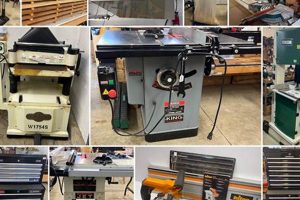
Essential instruments utilized in the shaping, cutting, and joining of wood are fundamental to the craft. These implements range from manually operated devices to sophisticated power equipment, each serving a distinct purpose in the creation of wooden objects. A hand saw, for example, allows for precise manual cuts, while an electric router facilitates shaping edges with efficiency.
The efficacy of woodworking projects relies heavily on the proper selection and skillful application of the appropriate implements. Their use enables the transformation of raw lumber into functional and aesthetically pleasing products. Historically, advancements in tool technology have significantly impacted woodworking techniques, enabling greater precision, speed, and complexity in construction.
The subsequent sections will detail specific implements critical to successful woodworking, categorized by their primary functions, such as measuring, cutting, shaping, joining, and finishing. This overview will provide a foundational understanding of the core devices employed in this craft.
Guidance on Implements for Woodworking
The selection and proper utilization of woodworking implements significantly impact project outcomes. Adhering to the following guidelines can enhance efficiency and precision.
Tip 1: Prioritize Quality: Opt for durable, well-crafted implements. Higher-quality tools offer superior performance and longevity, reducing the need for frequent replacements.
Tip 2: Maintain Sharpness: Regularly sharpen cutting edges. Dull tools require more force, increasing the risk of errors and potential injury. A sharpening stone or honing steel are essential for upkeep.
Tip 3: Understand Tool Functionality: Familiarize oneself with the intended use of each implement. Using a chisel as a screwdriver, for instance, can damage both the tool and the workpiece.
Tip 4: Invest in Accurate Measuring Devices: Precise measurements are crucial for accurate construction. A high-quality measuring tape, combination square, and calipers are vital for ensuring proper dimensions.
Tip 5: Utilize Appropriate Safety Gear: Protect oneself from potential hazards. Safety glasses, ear protection, and a dust mask are crucial for preventing injuries and minimizing exposure to airborne particles.
Tip 6: Organize Implement Storage: Store implements in a systematic manner. A well-organized workspace promotes efficiency and prevents damage to tools.
Tip 7: Practice Proper Techniques: Develop and refine woodworking skills through practice. Experiment with different techniques to improve precision and efficiency.
The application of these principles will contribute to enhanced accuracy, safety, and overall proficiency in woodworking endeavors. Skillful utilization of these implements, combined with diligent maintenance and continuous learning, empowers woodworkers to achieve superior results.
The subsequent section will explore specific categories of woodworking implements in greater detail, providing comprehensive insights into their operation and application.
1. Precision Measurement

Accurate dimensional control is paramount in woodworking. The fidelity of cuts, joinery, and overall structural integrity are directly dependent on the precision of measurement instruments and their correct application. Measurement therefore forms a critical juncture within the array of devices essential to the craft.
- Calipers and Dividers
These implements provide the ability to transfer measurements and establish precise dimensions for curves and arcs, as well as measuring the thickness of wood stock. In cabinetmaking, calipers are instrumental in ensuring consistent drawer face sizes, contributing to the overall aesthetic and functional harmony of the piece.
- Measuring Tapes and Rules
Fundamental for determining lengths and widths, these devices facilitate the accurate layout of cuts and the overall scaling of projects. Incorrect measurements with these tools can result in misaligned joints and structurally unsound constructions. Using high-quality measuring tapes with clear markings and durable construction are therefore of utmost importance.
- Squares and Bevels
These devices are critical for establishing and replicating angles, ensuring that joints are square and accurate. A combination square, for instance, allows for the marking of 90-degree angles, while a bevel gauge enables the transfer and duplication of arbitrary angles. Applications extend from frame construction to intricate joinery requiring exacting angular accuracy.
- Levels and Plumbs
These ensure the verticality and horizontality of structures, crucial for stability and aesthetic appeal. The accurate use of these tools guarantees level surfaces for furniture and plumb walls for built-in cabinetry. A spirit level or laser level is thus essential in any woodworking context where structural integrity and visual balance are paramount.
The effectiveness of any woodworking endeavor hinges on the proper selection and skillful deployment of accurate measurement devices. Each of these elements contributes uniquely to the overall precision required for crafting high-quality wood products.
2. Sharp Cutting

Effective material removal constitutes a core element of woodworking. The precision and cleanliness of cuts directly influence the quality of joinery, the smoothness of surfaces, and the overall aesthetic of the finished piece. Therefore, implements designed for material separation, and the maintenance of their cutting edges, are indispensable. Dull blades or inadequate sharpness can lead to tear-out, splintering, and imprecise cuts, demanding additional corrective work and potentially compromising structural integrity.
Examples of implements directly related to this function include saws (hand saws, backsaws, table saws, band saws), chisels, planes, and knives. Each of these requires periodic sharpening and honing to achieve optimal performance. A dull chisel, for instance, used for creating a mortise, can crush wood fibers instead of cleanly severing them, resulting in a weak and poorly fitted joint. Similarly, a saw with dull teeth necessitates excessive force and can lead to inaccurate cuts that deviate from the intended line. Therefore, sharpening stones, honing steels, and specialized sharpening jigs form an integral part of the toolkit.
The correlation between the sharpness of cutting devices and the success of a woodworking project is undeniably strong. Consistent attention to maintaining the sharpness of all cutting edges reduces the likelihood of errors, improves efficiency, and ultimately enhances the quality of the finished product. The ability to achieve clean, precise cuts relies directly on the condition of implements and their operator. Without sharp cutting edges, even the most skilled woodworker faces significant challenges in producing high-quality work. The emphasis on sharp cutting is thus not merely a matter of convenience, but a fundamental principle underpinning the craft.
3. Efficient Shaping

Efficient shaping, a crucial aspect of woodworking, necessitates the application of specific implements designed to remove material quickly and accurately. The selection and proper usage of these devices directly influence the speed, precision, and complexity of achievable forms. The consequence of employing inadequate shaping implements includes increased labor, reduced accuracy, and limitations in design possibilities. For example, attempting to create a complex curved profile with a coarse rasp instead of a router equipped with a profile bit would result in significant time expenditure and diminished surface quality. Thus, understanding the attributes and applications of shaping devices is essential for optimizing workflow.
Shaping implements encompass a range of manually operated and power-driven devices. Hand planes, spokeshaves, and rasps allow for controlled material removal, offering tactile feedback and refined adjustments. Conversely, routers, sanders, and spindle sanders facilitate rapid stock removal and surface smoothing. The appropriateness of each implement depends on the scope of the project, the complexity of the intended form, and the desired surface finish. Cabinetmakers, for instance, routinely employ routers to create decorative edges and molding profiles on doors and drawer fronts, enhancing the aesthetic appeal and value of their pieces. Similarly, luthiers utilize specialized carving implements to shape the intricate curves of stringed instruments, where precision and artistic expression are paramount.
In conclusion, efficient shaping in woodworking relies on the judicious selection and skillful application of appropriate devices. The capacity to rapidly and accurately transform raw stock into desired forms is a defining characteristic of expertise in the craft. While the choice of device varies based on project specifics, the underlying principle remains constant: optimizing material removal to achieve desired shapes with minimal effort and maximum precision. The development of competence in using various shaping devices is a crucial stepping stone toward advanced woodworking and the production of high-quality, visually appealing objects.
4. Secure Joining

The integrity of any woodworking project fundamentally relies on the strength and durability of its joints. Secure joining, therefore, represents a critical function within the spectrum of woodworking activities. The effectiveness of any joining method hinges on the proper selection and application of appropriate implements. Inadequate joint construction inevitably leads to structural failure, compromising the functionality and longevity of the finished product. The consequences of poorly executed joints range from wobbly furniture to complete structural collapse in larger constructions. Selecting correct fasteners and adhesives based on material characteristics and load requirements is therefore vital.
Various implements facilitate secure joining, each suited to specific applications and joint types. Clamps, for example, exert pressure to maintain alignment and ensure tight glue bonds during assembly. Specialized jigs and fixtures aid in the precise cutting of joinery elements like mortise-and-tenons or dovetails, maximizing surface contact and mechanical strength. Dowel centers assist in accurate alignment when joining boards edge-to-edge. For example, in constructing a cabinet carcass, proper clamping and accurate dowel placement guarantee squareness and prevent racking. The use of appropriate screws and nails, combined with pilot holes to prevent splitting, further enhances joint strength, particularly in load-bearing applications. The selection must also account for wood movement due to environmental changes.
In summary, secure joining forms an essential element of reliable woodworking. The appropriate implements, ranging from clamps to specialized jigs, facilitate the creation of strong, durable joints that withstand stress and contribute to the overall stability and longevity of the project. Careful consideration of material properties, load requirements, and environmental factors, coupled with the skillful application of implements designed for secure joining, are prerequisites for successful woodworking outcomes. Improper construction can make tools useless and a waste of time and money.
5. Protective Finishing

Protective finishing represents a critical phase in woodworking, demanding specific tools and techniques to safeguard the wood substrate from environmental degradation and enhance its aesthetic qualities. The absence of appropriate finishing techniques and inadequate implements directly correlates with reduced longevity and diminished visual appeal. Water damage, ultraviolet light exposure, and physical abrasion represent significant threats to unfinished wood, leading to warping, cracking, discoloration, and eventual decay. Applying a protective finish acts as a barrier against these destructive elements, extending the lifespan of the wooden object. Effective finishing, furthermore, can highlight the wood grain, deepen its color, and impart a desired sheen, elevating the overall visual impact.
Implements essential for protective finishing encompass a range of application and preparation devices. Sandpaper, in varying grits, prepares the surface by removing imperfections and creating a smooth, uniform substrate. Brushes, spray guns, and rags facilitate the application of finishes such as varnishes, lacquers, oils, and waxes. Each finish type offers specific protective properties and aesthetic characteristics, necessitating careful selection based on the intended use of the object and the desired appearance. For instance, outdoor furniture requires a weather-resistant finish, such as marine varnish, applied with a high-quality brush to ensure even coverage and penetration. Conversely, a delicate musical instrument might benefit from a thin, flexible lacquer applied with a spray gun to preserve its acoustic properties and enhance its visual allure.
In summary, protective finishing is an integral component of comprehensive woodworking. The utilization of appropriate implements and techniques directly impacts the durability and aesthetic value of the completed project. By selecting appropriate tools and applying finishes meticulously, woodworkers can ensure that their creations withstand the test of time while showcasing the inherent beauty of the wood itself. Lack of proper finish selection and execution leads to deterioration of finished products, thus negating the time and skill invested during the woodworking process.
6. Regular Maintenance
The prolonged functionality and operational efficacy of implements utilized in woodworking are contingent upon consistent and diligent maintenance. A direct correlation exists between the state of repair of devices and the quality of output achieved in woodworking projects. The neglect of maintenance procedures precipitates a decline in implement performance, leading to diminished accuracy, reduced efficiency, and potential safety hazards. The financial implications of inadequate maintenance include premature tool replacement, increased material wastage due to inaccurate cuts, and potential project failures resulting from equipment malfunction. Failure to adhere to standard maintenance protocols fundamentally undermines the capabilities of even the most advanced equipment. For example, neglecting to sharpen a plane iron results in rough cuts, tear-out, and increased effort, while failure to lubricate moving parts on a power tool increases friction, leading to overheating and potential motor failure.
Effective maintenance strategies encompass several key practices. Sharpening cutting edges on chisels, planes, and saws ensures clean and precise material removal. Cleaning and lubricating moving parts on power tools reduces friction and prevents corrosion. Inspecting power cords for damage mitigates electrical hazards. Aligning blades and fences on saws ensures accurate cuts. Replacing worn-out parts, such as belts and bearings, maintains optimal performance. Regular calibration of measuring implements preserves accuracy. Proper storage protects devices from environmental damage. Each maintenance action contributes directly to the sustained operational integrity of each implement, thus impacting the overall quality and efficiency of woodworking processes. For instance, routinely cleaning saw blades prevents resin buildup, maintaining cutting efficiency and reducing the risk of kickback.
In conclusion, regular maintenance is not an ancillary activity but an essential element in maximizing the performance and lifespan of woodworking implements. Investing time in these practices yields significant returns in terms of improved accuracy, reduced waste, enhanced safety, and prolonged equipment functionality. Addressing maintenance proactively minimizes the occurrence of costly repairs and replacements, ensuring the continued viability and productivity of woodworking endeavors. The sustained investment of maintenance can save time, money, and effort in woodworking processes.
Frequently Asked Questions About Implements for Woodworking
The following addresses common inquiries regarding devices utilized in the craft, providing guidance on selection, usage, and maintenance.
Question 1: What constitutes the essential criteria for evaluating the quality of hand saws?
The quality of hand saws is determined by blade steel composition, tooth geometry, handle ergonomics, and overall balance. High-carbon steel blades maintain sharpness longer. Properly set and sharpened teeth ensure efficient cutting. A comfortable handle reduces fatigue. Balanced weight distribution improves control.
Question 2: How frequently should cutting edges on chisels and plane irons undergo sharpening?
Sharpening frequency depends on usage intensity and wood hardness. High-volume use or working with hardwoods necessitates more frequent honing. The presence of dulling, tearing, or increased resistance during cutting indicates the need for sharpening.
Question 3: What are the safety precautions when operating power routers?
Safety precautions include wearing eye and ear protection, securing workpieces with clamps, using sharp router bits, maintaining a firm grip, feeding the router in the correct direction, and unplugging the router before changing bits or making adjustments. Risk mitigation is paramount.
Question 4: What is the optimal method for preventing wood splitting when driving screws?
The most effective method involves drilling pilot holes that match the screw’s core diameter and countersinking for the screw head. Selecting appropriate screw lengths and avoiding over-tightening further reduces the risk of splitting.
Question 5: What are the differences between various types of wood finishes (e.g., varnish, lacquer, oil, wax)?
Varnishes provide durable, protective coatings with varying sheens. Lacquers dry rapidly, offering a hard, solvent-resistant finish. Oils penetrate the wood, enhancing grain and providing a natural look with limited protection. Waxes offer minimal protection and primarily enhance sheen.
Question 6: How does environmental control impact the longevity of wooden objects?
Maintaining stable humidity levels minimizes expansion and contraction, reducing the likelihood of cracking, warping, and joint failure. Avoiding direct sunlight prevents discoloration and surface degradation. Proper ventilation inhibits mold and mildew growth.
Selecting high-quality implements, adhering to safe operating procedures, and implementing diligent maintenance practices are crucial for achieving optimal results in woodworking.
The subsequent sections will provide supplemental information on sourcing devices and developing woodworking competencies.
Key Tools for Woodworking
The preceding exploration has detailed essential implements and techniques integral to the craft. The emphasis has been placed on precision measurement, sharp cutting, efficient shaping, secure joining, protective finishing, and regular maintenancecore competencies that define effective woodworking practice. The successful execution of any woodworking project hinges on the appropriate selection, skillful application, and diligent upkeep of these essential devices.
The mastery of these fundamental skills and the informed selection of the correct tools represents a continuing pursuit. As technology advances and material science evolves, it is incumbent upon practitioners to adapt, innovate, and refine their approaches. The commitment to continuous learning and the unwavering pursuit of excellence serve as the hallmarks of a dedicated and accomplished woodworker. The ultimate reward lies in the creation of enduring, functional, and aesthetically compelling objects that stand as testaments to skill and dedication.
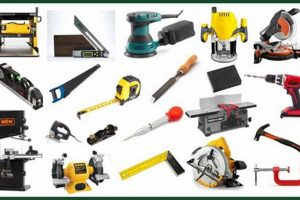
![Mastering the Care & Use of Japanese Woodworking Tools [Tips] | Step-by-Step Guides, Tools & Inspiration to Build Beautiful Wooden Decor on a Budget](https://woodfromhome.com/wp-content/uploads/2026/05/th-83-300x200.jpg "Mastering the Care & Use of Japanese Woodworking Tools [Tips] Step-by-Step Guides, Tools & Inspiration to Build Beautiful Wooden Decor on a Budget")