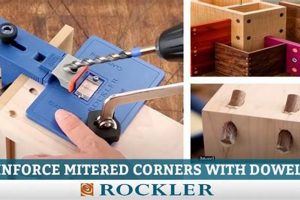
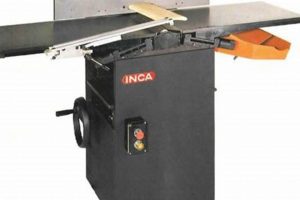
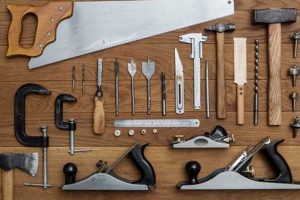
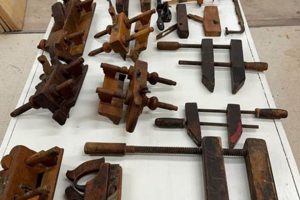
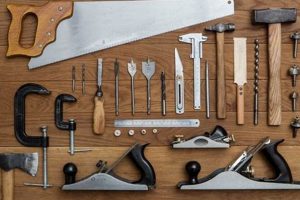
Essential implements for shaping, cutting, joining, and finishing wood form the basis of the craft. This encompasses a range of equipment, from hand-operated saws and chisels to power-driven routers and planers. For instance, a simple mallet and chisel can execute intricate carving, while a powered lathe enables the creation of symmetrical forms like table legs.
The appropriate selection of implements directly influences project quality, efficiency, and safety. Historically, skilled artisans relied on a limited set of hand-operated devices. Modern advancements have expanded the available options, allowing for increased precision, speed, and complexity in woodworking projects. Mastering fundamental techniques with basic equipment remains a crucial foundation, regardless of later specialization or the incorporation of advanced technology.
The following sections will detail specific categories of equipment necessary for undertaking various woodworking tasks. This exploration will cover measuring and marking instruments, cutting implements, shaping and joining devices, and finishing tools, offering guidance on selection and application within the craft.
Essential Guidance
Acquiring the correct implements significantly impacts the success and safety of any woodworking endeavor. Careful consideration should be given to the specific needs of planned projects and the skill level of the user.
Tip 1: Prioritize Safety Equipment. Protective eyewear, hearing protection, and dust masks are non-negotiable. Consistent use minimizes risks associated with noise, debris, and airborne particles.
Tip 2: Invest in Quality Measuring Instruments. Accurate measurements are fundamental to precise joinery and overall project success. A reliable measuring tape, square, and marking gauge are essential.
Tip 3: Sharpen Cutting Edges Regularly. Dull blades require more force, increasing the risk of accidents and producing inferior results. Consistent sharpening improves cutting efficiency and control.
Tip 4: Select the Right Tool for the Job. Using an implement for a purpose other than its intended design can compromise safety and damage the equipment. Research appropriate applications before use.
Tip 5: Practice Proper Maintenance. Regular cleaning, lubrication, and inspection extend the lifespan of implements and ensure safe operation. Follow manufacturer guidelines for maintenance procedures.
Tip 6: Research Wood Characteristics. Different wood species require different approaches and equipment. Hardwoods often need more robust options than softwoods. Understanding how different woods react to cutting, shaping, and finishing influences tool selection and technique.
Tip 7: Consider Ergonomics. Extended work periods with ill-suited or poorly-designed equipment can cause fatigue and injury. Ergonomically designed handles and features improve comfort and reduce strain.
Adhering to these guidelines enhances both the quality of the finished product and the overall safety of the woodworking process. A strategic approach to equipment selection and utilization maximizes efficiency and minimizes potential hazards.
The concluding section will provide a consolidated overview of the most critical aspects discussed, solidifying the importance of proper equipment in the pursuit of woodworking mastery.
1. Precision Measurement

The connection between precision measurement and implements for woodworking is fundamental. Accurate dimensions are the causal factor in achieving structural soundness and aesthetic harmony in any project. The instruments employed measuring tapes, squares, marking gauges, calipers directly influence the dimensional accuracy of each component. A discrepancy introduced at the measurement stage propagates throughout the entire process, potentially leading to misaligned joinery, instability, or visual imbalance. For example, a cabinet door that is not precisely square will not sit flush within its frame, compromising both function and appearance. Precision measurement is therefore not merely a preliminary step but an integral component of the overall skillset.
The practical application of precise measurement extends beyond the initial layout. Throughout the woodworking process, frequent verification of dimensions is essential. When cutting a tenon, repeated checks against the mortise dimensions ensure a snug fit. Similarly, when planing a surface, continual use of a straightedge guarantees flatness and prevents uneven material removal. This iterative process of measuring, cutting, and checking minimizes cumulative errors and allows for immediate corrections, thereby optimizing the final product. The selection of tools capable of delivering consistent and reliable readings is paramount to this ongoing quality control.
In conclusion, precision measurement and the implements that facilitate it are inseparable from successful woodworking. While challenges may arise from the inherent variability of wood or limitations of specific instruments, a commitment to accurate measurement, coupled with the appropriate devices, mitigates potential errors and elevates the quality of the finished product. The understanding and application of this principle underpin all aspects of the craft, from basic joinery to complex constructions.
2. Effective Cutting

Effective cutting, a cornerstone of woodworking, fundamentally relies on the selection and skillful application of appropriate implements. The causal relationship is direct: optimized performance hinges on choosing tools designed for the specific material and desired outcome. For instance, a fine-toothed saw ensures a clean, splinter-free cut when working with delicate veneers, whereas a coarser saw facilitates rapid material removal during rough shaping. The absence of appropriate tools inevitably leads to compromised results, increased material waste, and potential safety hazards.
The criticality of effective cutting is further exemplified by its influence on subsequent woodworking processes. Precisely cut components simplify joinery, minimizing gaps and inaccuracies that would otherwise necessitate extensive correction. Consider the creation of dovetail joints. Accurate sawing of the dovetails and pins is paramount; imprecise cuts result in weak or ill-fitting joints, undermining the structural integrity of the project. Power tools, like table saws and band saws, offer enhanced precision and efficiency for repetitive or complex cuts, but their effectiveness is contingent on proper setup, blade selection, and operator expertise. Hand tools, conversely, provide greater control for intricate work or situations where maneuverability is paramount. This understanding allows for the right decisions regarding implement selection for various woodworking tasks.
In conclusion, the correlation between effective cutting and the implements used is undeniable. Investing in quality equipment and cultivating proficiency in its use are critical for achieving precise, safe, and aesthetically pleasing woodworking outcomes. While challenges may arise from material variations or the complexity of certain cuts, a strategic approach to implement selection and consistent focus on technique ensures superior results. The pursuit of effective cutting is, therefore, an essential aspect of mastering the craft.
3. Secure Fastening

The integrity of any woodworking project is fundamentally linked to the effectiveness of its joints, and this effectiveness hinges directly on secure fastening techniques. The implements employed to achieve secure fastening are therefore an indispensable component of the tools required for woodworking. The cause-and-effect relationship is clear: inadequate fastening leads to structural weakness and eventual failure. Whether joining two boards to create a tabletop or assembling a complex cabinet carcass, the choice of fastening method and its proper execution directly determine the longevity and functionality of the finished piece. Examples abound; a poorly glued joint will separate under stress, a screw driven at an improper angle will strip and lose its holding power, and a nail hammered without pilot holes can split the wood.
Different woodworking applications necessitate different fastening solutions, which, in turn, require specific implements. For instance, constructing a frame often relies on screws for their superior holding power and ease of adjustability, necessitating screwdrivers or power drills with appropriate bits. Cabinet backs might be secured with nails, requiring a hammer or pneumatic nailer. Dovetail joints, prized for their strength and aesthetic appeal, demand precise hand-tool skills or specialized router jigs. Furthermore, adhesives play a crucial role, often used in conjunction with mechanical fasteners to create bonds that are stronger than the wood itself, and their effective application requires spreaders, clamps, and appropriate mixing tools. These implements, ranging from simple hand tools to sophisticated power equipment, are all vital to secure fastening.
In conclusion, secure fastening represents a critical element within the larger context of the tools required for woodworking. The careful selection and proper application of implements designed for this purpose are essential for achieving durable, structurally sound, and aesthetically pleasing results. While challenges may arise due to material variations or the complexity of specific joinery techniques, a strategic approach to tool selection and a commitment to precise execution will minimize the risk of failure and ensure the long-term integrity of the finished product.
4. Smooth Finishing

The attainment of a flawless surface on wood is inextricably linked to the appropriate selection and skillful application of implements designed for smooth finishing. The causal relationship is evident: the final appearance of a woodworking project is directly determined by the effectiveness of the smoothing process. This process is not merely cosmetic; a smooth finish enhances the wood’s natural beauty, provides a protective barrier against moisture and wear, and creates a tactile appeal. The specific implements required for achieving this goal vary depending on the wood species, project size, and desired level of smoothness. Hand planes, scrapers, and sanding tools are central to this process, each serving a distinct purpose in refining the wood’s surface.
The impact of smooth finishing extends beyond aesthetics. A well-prepared surface accepts finishes more readily, resulting in improved adhesion and uniformity of color. For example, a table that is not thoroughly sanded will exhibit uneven stain absorption, leading to a blotchy appearance. Similarly, the application of varnish or lacquer onto a rough surface will result in a texture that detracts from the overall quality. The selection of abrasive grits, the correct sanding technique, and the proper use of finishing materials are essential components of the process. Furthermore, consideration should be given to the grain direction of the wood, as sanding against the grain can create unsightly scratches. Effective smooth finishing requires a systematic approach, utilizing progressively finer abrasives to eliminate imperfections and create a glass-like surface.
In conclusion, the ability to achieve a smooth finish is paramount in woodworking, and this ability is directly dependent on the appropriate use of specialized implements. A strategic approach to surface preparation, coupled with a thorough understanding of finishing materials and techniques, ensures a result that enhances both the aesthetic appeal and the longevity of the finished product. While challenges may arise from the inherent properties of wood or the complexities of specific finishing methods, a commitment to careful execution and the skillful use of appropriate tools will yield a superior outcome.
5. Essential Safety

The integration of essential safety practices is not merely an adjunct to the utilization of implements for woodworking; it is an intrinsic and indispensable component. A clear causal relationship exists between adherence to safety protocols and the prevention of injuries. Implements designed for shaping, cutting, and joining wood inherently pose risks if mishandled or used without proper safeguards. For example, failure to wear eye protection while operating a lathe can result in projectile wood fragments causing severe ocular damage. Similarly, neglecting to use hearing protection when operating a router can lead to irreversible hearing loss. The presence of safety measures, such as blade guards on saws or dust collection systems, directly mitigates these potential hazards. The correct selection and consistent employment of personal protective equipment, coupled with a comprehensive understanding of safe operating procedures, are paramount.
The practical significance of this understanding extends beyond the immediate well-being of the woodworker. A safe working environment fosters greater focus and precision, leading to improved quality and reduced errors. Conversely, a disregard for safety can result in distractions caused by near-misses or minor injuries, ultimately compromising the final product. Furthermore, implementing safety protocols minimizes the potential for equipment damage. Overloading a machine or forcing a dull blade can cause the implement to malfunction, potentially resulting in costly repairs or replacements. Regular maintenance and adherence to manufacturer guidelines contribute to both safety and equipment longevity. The investment in safety training and the provision of appropriate protective equipment demonstrate a commitment to responsible woodworking practices.
In conclusion, essential safety is not an optional consideration but an integral element within the broader context of implements for woodworking. While challenges may arise from complacency or time constraints, a steadfast commitment to safe practices minimizes risks, promotes efficiency, and contributes to the creation of high-quality woodworking projects. Recognizing and addressing potential hazards, implementing appropriate safeguards, and fostering a culture of safety are paramount for ensuring a sustainable and rewarding woodworking experience.
Frequently Asked Questions
This section addresses common inquiries regarding the necessary implements for engaging in woodworking projects. The information presented aims to clarify misconceptions and provide guidance for tool selection and usage.
Question 1: Is specialized, expensive equipment necessary for beginners?
Commencing woodworking endeavors does not mandate an extensive collection of high-cost devices. A foundational set of hand implements, including saws, chisels, measuring instruments, and safety gear, is sufficient for acquiring fundamental skills. Progressing to more complex projects may necessitate the acquisition of specialized power tools.
Question 2: What constitutes essential safety equipment?
Protection against potential hazards necessitates specific protective gear. Eye protection, such as safety glasses or goggles, is paramount. Hearing protection, in the form of earplugs or earmuffs, mitigates noise-related risks. Respiratory protection, such as dust masks or respirators, safeguards against airborne particulate matter.
Question 3: How frequently should cutting edges be sharpened?
The maintenance of sharp cutting edges is critical for both safety and efficiency. Dull implements require increased force, elevating the risk of accidents and producing inferior results. Sharpening frequency depends on usage and the type of material being worked, but regular honing is recommended.
Question 4: Is there a single implement suitable for all woodworking tasks?
The diversity of woodworking tasks necessitates a variety of specialized implements. Attempting to utilize a single device for all applications compromises safety and results in suboptimal outcomes. Selecting the appropriate implement for the task at hand is essential.
Question 5: What factors should be considered when selecting a specific woodworking device?
Selection criteria should include project requirements, material characteristics, the user’s skill level, and safety considerations. Ergonomics and build quality are also important factors to assess to ensure comfortable and reliable performance.
Question 6: How does one ensure the longevity of woodworking implements?
Proper maintenance extends the lifespan of implements. This includes regular cleaning, lubrication, and inspection for damage. Adhering to manufacturer guidelines for maintenance procedures is crucial.
Acquiring a foundational understanding of woodworking implements is a continuous process. Consistent learning and application of best practices are essential for mastering the craft.
The subsequent section will provide a detailed examination of specific categories of woodworking devices, offering guidance on their selection and application.
Conclusion
The preceding exploration has delineated the critical role of “tools required for woodworking” in the successful execution of diverse projects. Precision measurement, effective cutting, secure fastening, and smooth finishing have been established as essential elements, each reliant on the proper implements and techniques. Essential safety protocols, inextricably linked to tool usage, are paramount for mitigating potential hazards.
Mastery of woodworking demands a continual pursuit of knowledge and skill refinement in the application of these implements. While challenges may arise, a dedication to precision, safety, and informed selection of “tools required for woodworking” will ultimately determine the quality and longevity of the crafted result. The value of such an understanding cannot be overstated in the pursuit of enduring craftsmanship.