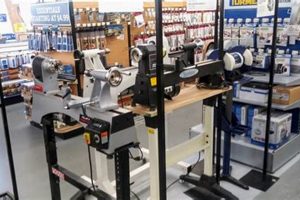
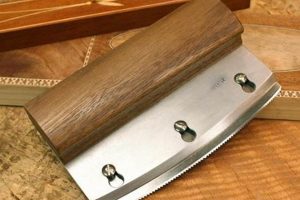
These machines, often dating back to the early 20th century and beyond, represent a significant advancement in woodworking technology. Characterized by robust construction, often featuring cast iron components and powerful motors, they enabled woodworkers to achieve greater precision and efficiency compared to hand tools. A vintage Delta Unisaw, for instance, exemplifies the durable construction and functional design typical of this era.
The significance lies not only in their functional capabilities but also in their historical context. They played a crucial role in the industrialization of woodworking, enabling mass production of furniture and other wooden goods. Their restoration and preservation provide valuable insight into the engineering and manufacturing practices of the past, offering a tangible link to a bygone era of craftsmanship. Furthermore, many hobbyists and professionals appreciate their durability and unique operational characteristics, finding them superior to some modern alternatives.
The following sections will delve into the various types of such equipment, common manufacturers, restoration techniques, safety considerations, and the factors influencing their collectibility and value. This exploration aims to provide a comprehensive understanding for both enthusiasts and those interested in preserving this important aspect of industrial history.
Tips for Acquiring and Maintaining Vintage Woodworking Equipment
This section provides guidance on the acquisition, restoration, and safe operation of vintage woodworking machinery. Adhering to these recommendations will enhance the longevity and utility of such equipment.
Tip 1: Conduct Thorough Pre-Purchase Inspection: Examine potential acquisitions meticulously for signs of damage, excessive wear, or missing components. Pay particular attention to critical areas such as bearings, motors, and blade alignment mechanisms. A comprehensive inspection can prevent costly repairs and ensure safe operation.
Tip 2: Prioritize Safety Mechanisms: Ensure all original safety features, such as blade guards and anti-kickback pawls, are present and functional. If safety devices are missing or damaged, source replacements or fabricate substitutes that meet or exceed original specifications. Do not operate equipment without adequate safety measures in place.
Tip 3: Restore with Respect for Originality: While modernization may seem appealing, preserve the original design and functionality whenever possible. Use replacement parts that match the original specifications and avoid irreversible modifications that could diminish the equipment’s historical value.
Tip 4: Employ Correct Lubrication Procedures: Adhere to the manufacturer’s recommended lubrication schedule and use appropriate lubricants for each component. Proper lubrication reduces friction, minimizes wear, and extends the lifespan of moving parts.
Tip 5: Address Rust Promptly: Remove rust immediately upon detection to prevent further corrosion. Utilize non-abrasive methods, such as chemical rust removers or electrolysis, to minimize damage to the original finish. Protect cleaned surfaces with a rust-inhibiting coating.
Tip 6: Verify Electrical Wiring and Grounding: Inspect all electrical wiring for signs of damage or deterioration. Ensure proper grounding to prevent electrical shock. Consult a qualified electrician to address any electrical issues and ensure compliance with current safety codes.
Tip 7: Seek Expert Consultation: When undertaking complex repairs or restorations, consult with experienced machinists or woodworking equipment specialists. Their expertise can prevent costly mistakes and ensure the equipment is restored to its original operating condition.
Proper acquisition and diligent maintenance practices are paramount for ensuring the safe and effective utilization of vintage woodworking power tools. These steps not only preserve their historical value but also maximize their functional lifespan, providing years of reliable service.
The following sections will explore specific aspects of these machines, providing a more detailed understanding of their operation and maintenance.
1. Cast Iron Construction

Cast iron construction is a defining characteristic of vintage woodworking power tools, profoundly influencing their durability, performance, and longevity. Its prevalence reflects the manufacturing capabilities and material science of the era, offering distinct advantages for machine tool design.
- Vibration Dampening
Cast iron exhibits exceptional vibration dampening properties, a crucial attribute for machinery requiring precision. This inherent characteristic minimizes chatter and vibration during operation, contributing to smoother cuts and improved accuracy. For instance, a cast iron tablesaw trunnion absorbs vibrations that would otherwise translate to imperfections in the workpiece. This dampening effect is significantly more pronounced compared to modern tools utilizing lighter materials.
- Mass and Stability
The high density of cast iron imparts significant mass to the machine, enhancing stability during operation. This mass resists movement and deflection, particularly under heavy loads or when processing large workpieces. The robust base and table of vintage planers, often constructed entirely of cast iron, exemplify this principle, maintaining alignment and preventing distortion even when subjected to substantial cutting forces.
- Durability and Longevity
Cast iron’s inherent resistance to wear and corrosion contributes to the extended lifespan of these tools. Properly maintained cast iron components can withstand decades of use, demonstrating exceptional durability compared to modern alternatives that often incorporate lighter, less resilient materials. Many vintage woodworking machines continue to operate reliably after over a century of service, a testament to the enduring quality of cast iron construction.
- Machinability and Precision
Cast iron’s favorable machinability allows for precise shaping and finishing, essential for critical components such as dovetail ways and bearing surfaces. This facilitates the creation of tight tolerances and accurate alignments, contributing to the overall precision and performance of the tool. The meticulously machined surfaces of vintage jointers and shapers demonstrate the capabilities of cast iron in achieving exacting dimensional control.
These attributes underscore the significance of cast iron construction in vintage woodworking machinery. Its contributions to vibration dampening, stability, durability, and machinability have resulted in tools that remain valued for their performance and longevity, offering a tangible link to a historical era of manufacturing excellence. The robustness of these machines often surpasses their modern counterparts, making them a preferred choice for woodworkers seeking reliability and precision.
2. Motor Horsepower

Motor horsepower is a critical determinant of the capabilities of antique woodworking power tools. The available horsepower directly correlates with the size and type of workpiece that can be processed, the depth of cut achievable, and the overall efficiency of the machine. A lower horsepower motor restricts the tool’s ability to handle dense hardwoods or perform heavy-duty operations such as thick resawing. Conversely, a higher horsepower motor provides the necessary torque and sustained power to tackle demanding tasks without stalling or overheating. For instance, a vintage 10-inch tablesaw with a 1.5 horsepower motor would be suitable for hobbyist use and lighter woodworking tasks, while a similar saw equipped with a 3 horsepower motor would be better suited for professional applications involving thicker stock and more frequent use. Consequently, understanding the original motor horsepower rating is essential for assessing the suitability of a tool for a specific purpose.
The design and construction of vintage motors also differ significantly from modern counterparts. Older motors often feature robust, open-frame designs that facilitate cooling but are more susceptible to dust and debris. Furthermore, they may operate at different voltages and frequencies than current standards, requiring careful attention to electrical compatibility. The use of capacitor-start or repulsion-induction motors was common, each with distinct performance characteristics. For example, capacitor-start motors provide high starting torque, beneficial for applications requiring immediate power, while repulsion-induction motors offer smoother operation and greater efficiency at lower speeds. Therefore, when restoring vintage equipment, it is crucial to retain or replace the motor with one that matches the original specifications to maintain optimal performance and prevent damage to other components.
In summary, motor horsepower is a fundamental parameter dictating the functionality and limitations of vintage woodworking power tools. Its proper understanding aids in selecting appropriate equipment for specific tasks, ensuring safe and efficient operation. While increasing motor horsepower might seem advantageous, it is vital to consider the tool’s original design and structural limitations. Exceeding the machine’s intended capacity can lead to premature wear, component failure, and potential safety hazards. Thus, maintaining or restoring the original motor configuration is generally the most prudent approach for preserving the tool’s value and ensuring reliable performance over the long term.
3. Blade Sharpening Methods

The effective operation of antique woodworking power tools hinges significantly on the proper execution of blade sharpening methods. The sharpness and geometry of the cutting edge directly influence the quality of the finished workpiece, the power required to perform the cut, and the overall safety of the operation. Dull or improperly sharpened blades necessitate increased force, leading to potential kickback, tear-out, and motor strain. Methods employed in the era of these tools often involved manual techniques utilizing files, sharpening stones (both natural and synthetic), and specialized jigs to maintain consistent bevel angles. For instance, a saw blade would be sharpened by carefully filing each tooth to a precise angle, followed by setting the teeth to create the necessary kerf. This process, while labor-intensive, was essential for achieving clean, accurate cuts. Neglecting these methods renders even the most robust antique machinery functionally impaired.
Different blade types necessitated specific sharpening approaches. Circular saw blades required specialized jigs to ensure uniform sharpening of each tooth, considering the rake angle, gullet depth, and tooth geometry. Planer blades, typically straight and relatively simple, were sharpened using honing stones and stropping techniques to achieve a razor-sharp edge. Bandsaw blades, due to their narrow width and fine tooth pitch, demanded meticulous attention to detail and specialized equipment. The selection of the appropriate abrasive grit and sharpening technique was crucial for preserving the blade’s integrity and maximizing its cutting performance. An improperly sharpened blade not only compromises the cut quality but also accelerates wear on the machine’s bearings and motor, contributing to increased maintenance requirements.
In conclusion, the mastery of blade sharpening methods is inextricably linked to the successful utilization of antique woodworking power tools. Understanding the nuances of each technique, coupled with the appropriate tools and abrasives, is essential for maintaining optimal performance and ensuring safe operation. While modern sharpening technologies exist, a thorough grounding in traditional methods provides a deeper appreciation for the craftsmanship and operational requirements of these historical machines. The ability to properly sharpen blades ensures the continued viability and value of these tools, allowing them to produce results comparable to, or even exceeding, those achieved by contemporary equipment.
4. Operational Safety Concerns

The operation of antique woodworking power tools presents distinct safety challenges compared to contemporary machinery. These concerns stem primarily from design differences, the absence of modern safety features, and the potential for mechanical degradation over time. A primary cause for concern is the lack of readily available safety guards and interlocks, common on modern equipment, that prevent accidental contact with moving parts. For example, many vintage tablesaws lack effective blade guards or anti-kickback pawls, increasing the risk of severe injury. The absence of these features necessitates heightened operator awareness and adherence to strict safety protocols.
Mechanical wear and material fatigue in older equipment also contribute significantly to operational safety concerns. Bearings may be worn, leading to excessive vibration and potential component failure. Electrical wiring can deteriorate over time, increasing the risk of electrical shock. Cast iron components, while durable, are susceptible to cracking or fracturing under stress, potentially resulting in catastrophic failure. Therefore, thorough inspection, maintenance, and restoration are crucial for mitigating these risks. Replacing worn or damaged parts with appropriately specified replacements is essential for ensuring safe operation. Furthermore, adopting modern safety practices, such as wearing appropriate personal protective equipment (PPE) and implementing lockout/tagout procedures during maintenance, is paramount.
In summary, addressing operational safety concerns is indispensable for the responsible use of antique woodworking power tools. The absence of modern safety features, coupled with the potential for mechanical degradation, necessitates a proactive approach to risk mitigation. Comprehensive inspection, diligent maintenance, and the adoption of modern safety practices are essential for ensuring a safe working environment. Prioritizing these measures not only protects the operator but also preserves the historical value and functionality of these machines, allowing them to be used safely and effectively for years to come. The user must understand operational safety concerns to minimize potential harm when using antique woodworking power tools.
5. Historical Manufacturer Marks

Historical manufacturer marks on antique woodworking power tools serve as vital identifiers, providing crucial information about their origin, age, and quality. These marks, often stamped or cast into the machine’s frame, motor housing, or nameplates, offer a direct link to the company responsible for its manufacture. They are not merely decorative elements but represent a tangible record of industrial history. The presence and legibility of these marks significantly impact the tool’s value and authenticity, as they enable collectors and restorers to accurately trace its provenance. For example, the “Delta” logo, prevalent on many vintage woodworking machines, instantly signifies a product of the Delta Manufacturing Company, a prominent manufacturer of the 20th century. The style and variations of this logo can further pinpoint the machine’s era of production.
The significance of historical manufacturer marks extends beyond simple identification. They often provide clues to the tool’s intended use and the technological advancements of its time. Studying the markings can reveal details about the manufacturer’s reputation for quality, innovation, and the specific market segments they targeted. A tool bearing the mark of “Oliver Machinery Company,” known for its high-end industrial equipment, suggests superior construction and design compared to a tool from a lesser-known or budget-oriented manufacturer. Moreover, comparing marks across different machines and manufacturers offers insights into the evolution of woodworking technology and industrial design trends. Patent dates frequently accompany these marks, providing valuable information about the specific technological innovations incorporated into the tool’s design.
In conclusion, historical manufacturer marks are indispensable components of antique woodworking power tools, providing essential information about their origin, age, and quality. Their presence and condition significantly influence the tool’s value and historical significance. Proper identification and interpretation of these marks are crucial for collectors, restorers, and anyone interested in preserving this important aspect of industrial history. Recognizing these marks enables a deeper understanding and appreciation of the craftsmanship and technological advancements represented by these vintage machines. The preservation of these markings, therefore, is integral to maintaining the historical narrative associated with these tools.
Frequently Asked Questions
The following section addresses common inquiries regarding these machines, providing factual information for informed decision-making.
Question 1: What distinguishes woodworking power tools of past times from contemporary equipment?
Past woodworking power tools often feature robust cast iron construction, prioritizing durability and vibration dampening. Modern counterparts may utilize lighter materials for increased portability, potentially compromising stability and longevity. Older machines frequently lack advanced safety features prevalent in modern designs, requiring greater operator vigilance.
Question 2: Where can one locate reliable sources for replacement parts?
Sourcing replacement components can be challenging. Established vintage machinery dealers, online marketplaces specializing in antique tools, and custom machining services represent viable options. Thorough research and careful verification of part compatibility are crucial to ensure proper fit and function.
Question 3: How often should maintenance be performed on vintage equipment?
Maintenance frequency depends on usage intensity. However, regular inspection and lubrication are essential. Critical areas, such as bearings, motors, and drive belts, warrant examination at least quarterly. Annual servicing by a qualified technician is recommended to address potential issues proactively.
Question 4: What are the primary safety concerns associated with operating antique machinery?
The absence of modern safety features, such as blade guards and automatic shut-off mechanisms, poses significant risks. Potential electrical hazards due to outdated wiring and insulation also warrant careful attention. Thorough understanding of the machine’s operation and strict adherence to safety protocols are imperative.
Question 5: How does one determine the historical value of old woodworking tools?
Factors influencing historical value include the manufacturer, rarity, condition, and presence of original components. Documented provenance and historical significance can further enhance value. Consultation with knowledgeable appraisers or collectors is advisable for accurate valuation.
Question 6: Is converting old machines to modern power systems advisable?
While modernization may improve efficiency or convenience, it can compromise the machine’s historical integrity and value. Prior to undertaking such modifications, carefully weigh the potential benefits against the potential loss of authenticity. Reversible modifications are generally preferable to irreversible alterations.
Diligent attention to these aspects enhances both the operational safety and historical value. Careful planning and execution of these strategies are essential.
The following sections will further cover the machine and their type.
Conclusion
The preceding sections have explored various facets of antique woodworking power tools, ranging from their construction and operation to their maintenance and historical significance. These machines represent a crucial chapter in the evolution of woodworking technology, bridging the gap between hand tools and modern automation. Their durable construction, often exemplified by cast iron components and robust motor designs, stands in contrast to contemporary equipment, offering a tangible link to a bygone era of industrial manufacturing. An understanding of their unique characteristics, including motor horsepower, blade sharpening methods, and inherent operational safety concerns, is vital for responsible ownership and utilization.
The preservation and restoration of antique woodworking power tools require a commitment to both historical accuracy and operational safety. These machines offer not only a functional means of woodworking but also a valuable connection to the past. Continued efforts to document, preserve, and safely operate these tools will ensure that their legacy endures for future generations, offering insights into the ingenuity and craftsmanship of those who designed and built them. Understanding and preserving them preserves a rich history.