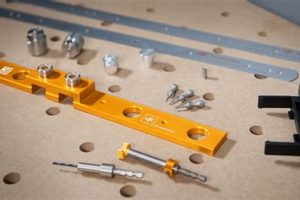
Implements designed to facilitate introductory experiences with woodworking for children typically aged three to five are characterized by their emphasis on safety, simplicity, and developmentally appropriate usage. These implements often include items such as small wooden mallets, hand drills with large handles, child-safe saws with blunted teeth, and workbenches designed to be at a comfortable height for young users. For instance, a small wooden hammer and soft pine wood allow a child to practice hammering nails without excessive force or risk of injury.
Introducing young children to the basics of working with wood fosters several beneficial skills, including fine motor development, hand-eye coordination, problem-solving abilities, and creative expression. Historically, opportunities to engage with tangible materials like wood have been recognized as valuable for holistic childhood development, contributing to a sense of accomplishment and self-efficacy. Providing appropriately sized and safe tools allows children to explore their capabilities within a structured and supervised environment.
The subsequent discussion will delve into the specific types of tools suitable for this age group, focusing on safety considerations, project ideas, and guidance for educators and parents on how to effectively introduce these activities. Furthermore, this exploration includes information on tool maintenance, storage, and age-appropriate project design to ensure a positive and enriching learning experience.
Essential Guidance for Introducing Woodworking
The following recommendations are designed to facilitate a safe and enriching woodworking experience for preschool-aged children. Prioritization of safety and developmentally appropriate activities is paramount.
Tip 1: Supervise Closely: Continuous adult supervision is mandatory. Young children require constant monitoring to ensure safe tool handling and prevent accidents.
Tip 2: Select Appropriate Materials: Opt for softwoods like pine or balsa. These materials are easier for young children to manipulate and reduce the risk of splintering. Avoid hardwoods or treated lumber.
Tip 3: Use Child-Safe Tools: Ensure all tools are specifically designed for young children. These tools should feature rounded edges, secure grips, and safety mechanisms where applicable. A small, sturdy mallet is preferable to a full-sized hammer.
Tip 4: Start with Simple Projects: Begin with basic activities such as hammering nails into wood or assembling pre-cut shapes. Complex projects should be avoided to prevent frustration and maintain engagement.
Tip 5: Emphasize Safety Rules: Clearly communicate and consistently enforce safety rules. These rules should include wearing safety glasses, using tools only for their intended purpose, and keeping the work area clear of obstructions.
Tip 6: Provide Clear Instructions: Offer simple, step-by-step instructions for each activity. Visual aids, such as diagrams or demonstrations, can be particularly helpful for this age group.
Tip 7: Encourage Creativity: Allow children the freedom to experiment and express their creativity within safe boundaries. Provide a variety of materials, such as paint, markers, and glue, to enhance their projects.
Tip 8: Maintain Tools Properly: Regularly inspect and maintain tools to ensure they are in good working condition. Sharpening blades, cleaning surfaces, and storing tools safely are essential for long-term use and safety.
Adherence to these guidelines promotes a positive and developmentally enriching introduction to woodworking, fostering essential skills and cultivating a lifelong appreciation for craftsmanship.
The subsequent section provides further insights into advanced project ideas and adaptation strategies for varied learning environments.
1. Safety First

The principle of “Safety First” is paramount when introducing woodworking activities to preschool-aged children. The selection, usage, and maintenance of implements must adhere to stringent safety protocols to mitigate potential risks and ensure a positive learning experience.
- Tool Design and Suitability
Tools designed specifically for preschoolers incorporate safety features such as rounded edges, blunted blades, and non-slip grips. A standard adult-sized hammer, for example, poses a significant risk due to its weight and size, while a child-safe mallet made of lightweight wood minimizes the potential for injury. The design must prioritize ease of use and reduce the possibility of accidental harm.
- Material Selection and Preparation
The type of wood used directly impacts safety. Softwoods, such as pine or balsa, are preferable due to their ease of manipulation and reduced splintering risk. The wood should be thoroughly inspected for knots, cracks, or other imperfections that could compromise its integrity. Pre-cut shapes and projects can further minimize the need for potentially hazardous sawing activities.
- Supervision and Instruction
Constant adult supervision is non-negotiable. Educators and parents must provide clear and concise instructions on proper tool usage and safety procedures. Demonstrations, visual aids, and verbal reinforcement are crucial for ensuring that children understand and adhere to safety rules. A zero-tolerance policy for unsafe behavior must be consistently enforced.
- Work Environment and Organization
The workspace should be well-lit, free of clutter, and designed to minimize distractions. Tools should be stored in an organized manner and readily accessible to adults but out of reach of children when not in use. A designated area for woodworking activities helps to contain debris and promotes a sense of order and responsibility.
The interconnectedness of these facets underscores the holistic approach required for prioritizing “Safety First.” Selecting appropriate tools, preparing safe materials, providing vigilant supervision, and maintaining a well-organized work environment are all essential components of a successful and safe woodworking program for preschoolers. The long-term benefits of introducing woodworking to young children are significant, but they must always be balanced against the potential risks, emphasizing the critical importance of safety protocols.
2. Tool Appropriateness

The concept of “Tool Appropriateness” is foundational within the context of “woodworking tools for preschoolers,” directly influencing both the safety and efficacy of early woodworking experiences. When tools are appropriately sized, designed, and weighted for the physical capabilities of preschoolers, the risk of injury is significantly reduced, and the potential for successful project completion increases. The converse is equally true: tools that are too large, heavy, or complex can lead to frustration, accidents, and a negative association with woodworking. For example, providing a preschooler with a full-sized hand saw designed for adult use would be inappropriate; the child would struggle to control the tool, increasing the likelihood of losing control and causing harm. However, a small, lightweight saw with blunted teeth and a comfortable grip, specifically engineered for young children, allows for safe and controlled sawing activities under supervision.
The impact of “Tool Appropriateness” extends beyond immediate safety concerns to encompass skill development and engagement. Using tools that are well-suited to their abilities allows preschoolers to develop fine motor skills, hand-eye coordination, and problem-solving capabilities more effectively. A child using an appropriately sized hand drill with a large handle, for example, can more easily learn to apply consistent pressure and maintain control, resulting in successful drilling. In contrast, a drill that is too heavy or difficult to grip can lead to fatigue, frustration, and a decreased interest in the activity. The selection of suitable materials, such as softwoods like balsa or pine, complements the appropriateness of the tools. Softwoods are easier to manipulate and require less force to cut or shape, making them ideal for young children learning basic woodworking techniques.
In summary, “Tool Appropriateness” is not merely a consideration but a cornerstone of safe and effective woodworking programs for preschoolers. Careful evaluation and selection of tools that are designed with the physical capabilities and developmental needs of young children in mind are essential for fostering a positive and enriching learning experience. Ignoring this critical aspect can lead to increased risks, decreased engagement, and a diminished potential for skill development. Therefore, educators and parents must prioritize the selection of appropriate tools as the primary step in introducing preschoolers to the craft of woodworking.
3. Material Selection

The selection of materials in woodworking activities for preschoolers is inextricably linked to the tools employed, influencing safety, ease of use, and the overall learning experience. Careful consideration of material properties is crucial for optimizing the interaction between the child, the tool, and the project.
- Wood Softness and Tool Efficiency
The hardness of the wood directly affects the effort required to manipulate it with child-safe tools. Softwoods, such as pine or balsa, offer less resistance and allow for easier sawing, hammering, and drilling. Utilizing hardwoods with tools designed for preschoolers can lead to frustration and potential injury due to the excessive force required. For instance, a small wooden mallet is significantly more effective and safer when used with balsa wood than with oak.
- Wood Grain and Splintering Potential
The grain structure of the wood influences its tendency to splinter when worked. Straight-grained woods are less prone to splintering than those with irregular or knotty grain. This consideration is particularly important when using child-safe saws, as the blunted teeth may cause splintering if the grain is not conducive to clean cuts. Proper sanding and preparation of the wood surface can further minimize the risk of splinters, regardless of grain pattern. For example, sanding the edges of pine before giving it to preschoolers reduces the chance of them getting splinters.
- Wood Toxicity and Safety Standards
The chemical composition of the wood must be safe for children to handle. Treated lumber, often containing preservatives and pesticides, should be strictly avoided. Untreated, natural woods are preferable, and those certified as non-toxic are ideal. Some wood species may cause allergic reactions in sensitive individuals, necessitating careful selection and awareness of potential sensitivities. For example, only non-toxic stains should be applied to the woods used in preschooler woodworking activities.
- Material Size and Project Scalability
The dimensions of the wood pieces should be proportionate to the size of the child and the scope of the project. Large, unwieldy pieces can be difficult for preschoolers to manage safely, while excessively small pieces may present a choking hazard. Pre-cut shapes and appropriately sized planks allow children to focus on tool manipulation and project assembly, rather than struggling with material handling. For example, having precut blocks of wood in manageable sizes for preschoolers helps them concentrate on hammering nails into them.
These facets illustrate the interdependent relationship between material selection and tool appropriateness. By carefully considering the properties of the wood, educators and parents can create a safer, more engaging, and ultimately more rewarding woodworking experience for preschoolers. The selection of materials must align with the capabilities of the tools and the developmental needs of the children to foster a positive and enriching learning environment.
4. Supervision Required

Effective adult supervision is a non-negotiable element when integrating woodworking tools into a preschool environment. The inherent nature of tools, irrespective of their child-safe design, presents potential risks requiring constant vigilance. Supervision transcends merely observing; it encompasses proactive guidance, intervention when necessary, and the enforcement of established safety protocols. The causality is direct: inadequate supervision elevates the likelihood of accidents, misuse of tools, and ultimately, potential injury. The deliberate integration of child-appropriate woodworking tools necessitates a corresponding commitment to stringent supervisory practices. For instance, even with blunted-edge saws designed for preschoolers, continuous monitoring ensures correct usage and prevents unintended contact with fingers or other body parts. Another example is the use of a wood mallet, and the potential for misuse, especially if unsupervised.
The importance of “Supervision Required” stems from the developmental stage of preschoolers. Their limited understanding of cause and effect, coupled with their developing motor skills, necessitates external guidance to mitigate potential hazards. Active supervision involves demonstrating proper tool handling techniques, providing clear instructions, and immediately correcting any unsafe behaviors. This level of engagement transforms the woodworking experience from a potentially dangerous activity into a valuable learning opportunity. Furthermore, the practical significance of understanding this principle lies in its direct impact on creating a safe and enriching environment where preschoolers can explore their creativity and develop essential skills without undue risk. Regular tool inspection, ensuring a clear workspace, and maintaining a low student-to-supervisor ratio are crucial components of a robust supervision strategy.
In conclusion, the relationship between “Supervision Required” and “woodworking tools for preschoolers” is symbiotic and indispensable. The absence of adequate supervision negates the benefits of child-safe tool designs, transforming a potentially rewarding experience into a hazardous one. While challenges may arise in maintaining constant vigilance, prioritizing supervision is paramount for creating a secure and developmentally appropriate woodworking program. The practical significance of this understanding extends beyond immediate safety concerns, shaping a lasting appreciation for responsible tool usage and fostering a lifelong interest in craftsmanship.
5. Project Simplicity

The principle of “Project Simplicity” constitutes a fundamental element in the effective and safe implementation of woodworking activities for preschoolers. It directly influences the children’s engagement, skill development, and overall experience, acting as a critical determinant of success when integrating woodworking tools into early childhood education.
- Cognitive Load Management
Preschoolers possess limited attention spans and developing cognitive abilities. Projects characterized by multiple steps, intricate designs, or abstract concepts can overwhelm their cognitive processing capacity, leading to frustration and disengagement. Simplified projects with clear, concise instructions minimize cognitive load, allowing children to focus on the fundamental aspects of tool manipulation and material interaction. For instance, rather than attempting to construct a complex structure with multiple components, a project involving hammering nails into a pre-cut block of wood provides a focused and manageable task.
- Skill Acquisition Sequencing
Woodworking involves a series of discrete skills, such as sawing, hammering, and drilling. “Project Simplicity” allows for the systematic introduction and practice of these skills in a sequential manner. Starting with basic tasks provides a foundation for more complex activities as children gain proficiency and confidence. A project involving gluing pre-cut wooden shapes together serves as an initial step before introducing more challenging construction techniques.
- Safety Considerations and Risk Mitigation
Complex projects inherently involve increased opportunities for errors and potential accidents. Simplifying projects reduces the number of steps, tool changes, and material manipulations required, thereby minimizing the risk of injury. A project involving decorating a pre-made wooden birdhouse with paint and glue is safer than a project requiring children to cut and assemble the birdhouse themselves.
- Engagement and Motivation Enhancement
Successful completion of a project provides a sense of accomplishment and reinforces positive associations with woodworking. Simplified projects increase the likelihood of successful outcomes, boosting children’s self-esteem and motivation to engage in future activities. Completing a simple project, like hammering nails into a board to make a design, can motivate preschoolers to explore other woodwork techniques in the future.
The various facets of “Project Simplicity” collectively emphasize its critical role in maximizing the benefits and minimizing the risks associated with introducing woodworking tools to preschoolers. The judicious selection and design of simple, manageable projects are essential for fostering a positive, engaging, and developmentally appropriate learning experience.
6. Maintenance Matters

The longevity and safety of implements designed for preschool woodworking activities are directly contingent upon consistent and appropriate maintenance. The correlation between “Maintenance Matters” and “woodworking tools for preschoolers” is not merely a practical consideration; it is a fundamental determinant of both the effectiveness of the tools and the safety of the children using them. For instance, the accumulation of wood shavings on saw blades can diminish their cutting efficiency, leading to increased exertion by the child and a heightened risk of slippage. Similarly, loose hammerheads pose a significant safety hazard, potentially dislodging during use and causing injury.
The scope of maintenance extends beyond mere cleaning; it encompasses regular inspection for wear and tear, prompt repair of any damage, and proper storage to prevent deterioration. Blades must be kept sharp, wooden handles should be checked for splinters, and metal components require protection against rust. The application of non-toxic finishes to wooden handles not only enhances their durability but also provides a more comfortable and secure grip. Furthermore, implements should be stored in a designated area, protected from moisture and extreme temperatures, to prevent warping, cracking, or corrosion. These precautions are not optional; they are essential for preserving the integrity of the tools and safeguarding the well-being of the children who utilize them. Demonstrating and involving children in simple maintenance tasks, like wiping down tools, helps instill a sense of responsibility and respect for equipment.
In summary, diligent attention to “Maintenance Matters” is an integral component of a safe and effective woodworking program for preschoolers. The long-term benefits of proper tool care extend beyond mere cost savings; they contribute to a culture of safety, responsibility, and respect for craftsmanship. Addressing this aspect proactively mitigates potential risks, ensures the reliable functionality of implements, and fosters a positive and enriching learning experience for young children. The failure to prioritize maintenance not only jeopardizes the safety of the participants but also undermines the potential educational value of woodworking activities.
Frequently Asked Questions
The following addresses common inquiries and concerns regarding the introduction of woodworking tools to preschool-aged children, emphasizing safety, developmental appropriateness, and effective implementation strategies.
Question 1: At what age is it generally considered safe to introduce woodworking tools to children?
While individual developmental milestones vary, children aged three to five years may be introduced to woodworking activities under strict supervision. The critical factor is not age alone, but rather the child’s demonstrated ability to follow instructions and exhibit a degree of fine motor control.
Question 2: What are the essential safety precautions when using woodworking tools with preschoolers?
Constant adult supervision, the use of child-safe tools, appropriate personal protective equipment (e.g., safety glasses), clear communication of safety rules, and a well-organized workspace are all indispensable elements of a safe woodworking environment.
Question 3: What types of wood are most suitable for preschool woodworking projects?
Softwoods, such as pine or balsa, are preferred due to their ease of manipulation and reduced splintering risk. Treated lumber should be strictly avoided due to potential toxicity.
Question 4: How should woodworking tools be stored when not in use to ensure child safety?
Tools should be stored in a designated area, out of reach of children, and ideally in a locked cabinet or container. This prevents unsupervised access and potential misuse.
Question 5: What are some examples of age-appropriate woodworking projects for preschoolers?
Simple projects, such as hammering nails into wood, gluing pre-cut shapes together, or decorating wooden surfaces with paint, are well-suited for this age group. Complex projects should be avoided to prevent frustration and potential hazards.
Question 6: How can educators and parents effectively teach preschoolers to use woodworking tools safely?
Clear demonstrations, concise instructions, and consistent reinforcement of safety rules are essential. Emphasize proper tool handling techniques and provide ample opportunities for practice under close supervision.
These frequently asked questions address common concerns, underscoring the need for informed decision-making and adherence to established safety protocols when introducing woodworking to young children.
The subsequent segment provides additional insights into tool selection and project design, further enhancing the knowledge base for effective implementation.
Conclusion
The preceding discourse has comprehensively explored the selection, application, and maintenance of woodworking tools for preschoolers. Key considerations encompass safety protocols, appropriate tool design, material selection, stringent supervision, project simplification, and the imperative of consistent tool maintenance. Each element is inextricably linked, forming a framework designed to facilitate a secure and enriching introduction to woodworking for young children.
The successful integration of woodworking activities within a preschool setting necessitates a committed adherence to the principles outlined herein. Prioritizing safety and developmental appropriateness ensures not only the physical well-being of the children but also cultivates a lasting appreciation for craftsmanship and responsible tool usage. Further research and continued vigilance are essential to optimize the learning experience and mitigate potential risks effectively, maximizing the beneficial impact of woodworking on early childhood development.