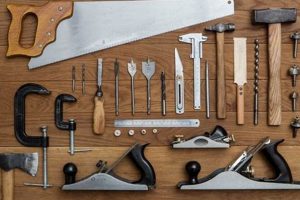
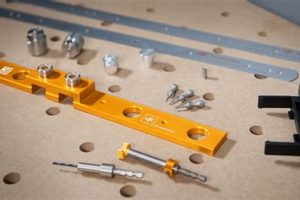
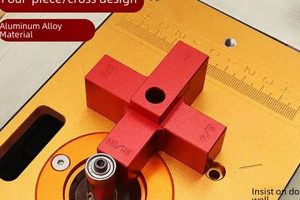
Miniature implements designed for shaping and manipulating wood on a smaller scale are essential for crafting scaled-down replicas, prototypes, and intricate wooden designs. These scaled-down instruments, often mirroring their full-sized counterparts, facilitate precision work in delicate and detailed projects. A tiny hand plane, for instance, allows for smoothing small surfaces, while diminutive saws permit intricate cuts in thin stock.
The use of these specialized instruments offers significant advantages in terms of manageability, precision, and control, particularly when working with fine details or limited space. Historically, such tools have been employed by hobbyists, architects, and engineers to visualize and refine designs before committing to larger-scale construction. Their application allows for cost-effective experimentation and the creation of complex forms with greater accuracy than is possible with general-purpose equipment.
The subsequent sections will delve into the various types of these implements, their selection criteria, safe operation, and practical applications in crafting miniature projects. Furthermore, the information will cover care and maintenance for optimal performance and longevity.
Guidance for Precision Miniature Woodworking
The following guidelines are intended to assist individuals in maximizing the utility and safety associated with miniature woodworking implements.
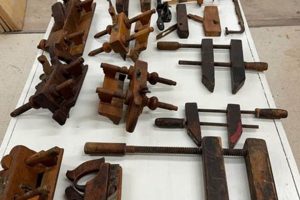
Tip 1: Secure Workpiece Stability: Employ clamps or vises designed for small-scale components. This ensures the material remains stationary, mitigating the risk of slippage and promoting accuracy during the cutting or shaping process.
Tip 2: Implement Appropriate Safety Measures: Safety glasses are mandatory, even when working with smaller, less powerful devices. Wood dust poses a respiratory hazard, necessitating a dust mask or respirator.
Tip 3: Prioritize Sharp Cutting Edges: Maintain the sharpness of blades and chisels using appropriate honing and sharpening equipment. Dull instruments require more force, increasing the likelihood of errors and potential injury.
Tip 4: Select Instruments Based on Material Thickness: Match the gauge of the blade or chisel to the thickness of the wood. Overly large implements may cause splintering or cracking, while excessively thin ones may bend or break.
Tip 5: Practice Controlled Movements: Execute deliberate and controlled movements when operating any cutting or shaping device. Avoid rushing the process, as this can lead to inaccurate results and potential mishaps.
Tip 6: Regularly Clean and Maintain Instruments: After each use, clean any instruments by using a soft brush and appropriate cleaning solution. This ensures that instruments perform well and last a long time.
Tip 7: Store Instruments Properly: Utilize dedicated storage solutions, such as toolboxes or organizers, to protect instruments from damage and ensure their accessibility. Proper storage also prevents accidental injury from exposed blades or points.
Adherence to these guidelines will contribute to improved precision, enhanced safety, and the longevity of equipment used in miniature woodworking projects.
The succeeding sections will offer an in-depth analysis of specific applications and advanced techniques, providing a comprehensive understanding of miniature woodworking principles.
1. Precision

Precision is paramount in the realm of miniature woodworking. The inherent nature of crafting scaled-down replicas and intricate designs necessitates tools that allow for minute adjustments and unwavering accuracy. Deviations, even slight ones, can disproportionately impact the final product’s fidelity and aesthetic appeal.
- Dimensional Accuracy
Miniature woodworking demands that tools facilitate precise cuts and shapes according to pre-determined dimensions. For instance, a miniature saw used to create a perfectly square frame must maintain consistent blade alignment. Inaccuracies in blade angle or kerf width lead to misaligned joints and structural instability. This also plays an essential role in the quality of your models.
- Material Control
Precise material removal is essential. A miniature plane, for example, must allow for fine adjustments to shaving thickness. The ability to remove minuscule amounts of material is crucial to achieving desired contours and surface finishes without over-cutting or damaging the workpiece. A mistake in this process can affect the value of your models.
- Alignment and Calibration
Miniature miter saws or similar devices must be properly aligned and calibrated. A misalignment, however minor, results in angled cuts that compromise the accuracy of assembled structures. Regular verification and adjustment of tool settings are essential to maintaining precision across all operations.
- Stability and Control
The tool itself must be stable and provide adequate control during operation. A miniature lathe, for example, should minimize vibration and allow for precise hand positioning. Unstable tools lead to inconsistent cuts, surface imperfections, and increased risk of error, reducing your model value.
In summary, precision with these implements is not merely desirable; it is a prerequisite for achieving high-quality results in miniature woodworking. The accuracy afforded by well-designed and maintained implements directly translates to the overall fidelity, aesthetic appeal, and structural integrity of the finished piece.
2. Sharpness

Sharpness constitutes a critical attribute in instruments used for miniature woodworking, directly influencing the efficiency, precision, and safety of operations. The degree to which a cutting edge is honed dictates the quality of the resulting cut and the ease with which material is removed.
- Clean Cuts and Reduced Tear-Out
A keen cutting edge severs wood fibers cleanly, minimizing the occurrence of splintering or tear-out. This is particularly important when working with delicate or brittle wood species common in miniature projects, such as balsa or basswood. A dull edge, conversely, crushes the wood fibers, resulting in ragged edges and increased sanding requirements.
- Effortless Operation and Control
Sharp instruments require less force to operate, granting the user greater control over the cutting process. This reduced effort translates to improved accuracy, especially during intricate tasks such as carving miniature moldings or shaping complex curves. Increased control also minimizes the risk of slippage, thereby enhancing user safety.
- Prolonged Tool Longevity
Maintaining a sharp edge reduces wear and tear on instruments. A sharp blade or chisel glides through the wood, minimizing friction and heat build-up. This, in turn, prolongs the lifespan of the instrument, reducing the frequency of sharpening or replacement.
- Enhanced Safety
Counterintuitively, sharp instruments are often safer than dull ones. A sharp blade is more predictable and requires less force, minimizing the risk of sudden slips or uncontrolled movements. A dull blade, requiring excessive force, increases the likelihood of losing control and sustaining an injury.
The preceding discussion highlights the inextricable link between sharpness and the effectiveness of miniature woodworking tools. Prioritizing the maintenance of keen cutting edges is essential for achieving high-quality results, ensuring user safety, and maximizing the longevity of valuable instruments. Therefore, the acquisition of appropriate sharpening tools and the consistent application of proper sharpening techniques are crucial investments for any practitioner of miniature woodworking.
3. Scale

The concept of scale dictates the utility and appropriateness of implements employed in miniature woodworking. These instruments are, by definition, designed to operate on a reduced dimensional level compared to their full-sized counterparts. The relationship between the tool’s physical size and the size of the workpiece is paramount; an improperly scaled tool compromises precision, control, and the final aesthetic of the project. For instance, attempting to use a full-sized chisel on a delicate piece of balsa wood intended for a model airplane wing would inevitably result in crushing the material rather than shaping it. Similarly, a saw with overly large teeth would produce a rough and splintered cut, unacceptable for fine detailing.
The correlation between scale and instrument selection extends beyond simple dimensional compatibility. Smaller instruments offer improved maneuverability in confined spaces, allowing for intricate cuts and shaping that would be impossible with larger tools. Consider the construction of a miniature dollhouse. A small, specialized coping saw enables the creation of curved window frames and ornate trim work, while a miniature plane allows for the precise fitting of tiny doors and drawers. The selection of these implements must also consider the scale of fasteners like miniature screws or nails; oversized instruments would easily damage or split the surrounding material. The size of these instruments impacts the quality of construction and the appearance of your final product. The use of too large an instrument would produce the wrong results and the wrong output.
In summary, the careful consideration of scale is not merely a superficial aspect of miniature woodworking but a fundamental principle governing tool selection and operational success. Understanding the relationship between tool size and workpiece dimensions enables the practitioner to achieve the necessary precision and control for creating high-quality miniatures. Failure to account for scale results in compromised accuracy, damaged materials, and ultimately, a diminished final product. Proper adherence to scale considerations results in better instruments being applied and will allow for superior results to be obtained.
4. Durability

The longevity and reliability of implements employed in miniature woodworking are intrinsically linked to their durability. The inherent precision required in such tasks necessitates instruments capable of withstanding repeated use and resisting deformation or failure under stress. The premature degradation of components directly compromises accuracy and operational safety. The selection of high-quality materials and robust construction techniques are paramount for ensuring the durability of these specialized tools. For instance, a miniature hand plane with a body constructed from inferior metal is prone to warping, rendering it incapable of producing flat, consistent surfaces. Similarly, a miniature saw with a blade crafted from low-grade steel will quickly dull or break, negating its utility.
The practical significance of durability manifests in several key areas. First, it translates to reduced replacement costs. Durable instruments, though potentially more expensive initially, offer long-term cost savings by minimizing the need for frequent replacements. Second, durability ensures consistent performance over time. A well-constructed tool maintains its accuracy and operational characteristics, allowing the user to develop a reliable workflow. Third, durable instruments enhance user safety. Tools that are prone to failure, such as chisels with brittle shanks or saws with poorly secured blades, pose a significant risk of injury. A practical application of this understanding would be to invest in miniature screwdrivers with hardened steel tips, resistant to deformation, ensuring precise and secure fastening of small hardware components without rounding the screw heads.
In conclusion, durability represents a cornerstone attribute for any tool intended for miniature woodworking. The interplay between material selection, construction quality, and long-term performance directly impacts the precision, safety, and cost-effectiveness of miniature woodworking endeavors. While the initial investment in durable implements may be higher, the long-term benefits, in terms of reliability, safety, and reduced replacement costs, far outweigh the perceived cost savings of choosing inferior alternatives. The challenge lies in discerning quality construction and material choices during the tool selection process, often requiring careful examination and research.
5. Ergonomics
Ergonomics, concerning the interaction between humans and equipment, significantly impacts the efficiency and safety associated with implements used in miniature woodworking. The physically demanding nature of precision work, often involving repetitive motions and sustained postures, necessitates tools designed to minimize strain and fatigue. Poorly designed instruments can lead to musculoskeletal disorders, diminished accuracy, and compromised safety. The diminutive size of tools intended for scale woodworking further exacerbates these issues, requiring careful attention to grip geometry, weight distribution, and overall handling characteristics. If ergonomics is ignored, the users are likely to get the wrong results or hurt themselves.
The practical implications of ergonomic design in miniature woodworking are readily apparent. For example, a miniature carving knife with an inadequately sized handle necessitates a tight grip, leading to hand fatigue and potential carpal tunnel syndrome. Conversely, a knife with a contoured, non-slip handle, designed to fit comfortably within the user’s hand, promotes a relaxed grip and enhances control. Similarly, miniature pliers with spring-loaded mechanisms reduce hand strain during repetitive tasks such as wire bending or component assembly. The application of ergonomic principles extends to the overall workspace design, including proper lighting, seating, and tool placement, all of which contribute to a more comfortable and productive working environment. The better instruments are used, the better models you will make.
In summary, ergonomics constitutes an indispensable aspect of instruments used in miniature woodworking. The strategic incorporation of ergonomic design principles mitigates the risk of musculoskeletal disorders, enhances precision, and promotes a safer, more efficient workflow. Despite the challenges associated with designing for miniature applications, prioritizing ergonomic considerations is essential for maximizing the performance and well-being of individuals engaged in intricate woodworking endeavors. Overcoming ergonomic design challenges will lead to improved instruments and, therefore, better model creation overall.
6. Material

The selection of materials for implements used in miniature woodworking exerts a profound influence on their performance, longevity, and overall suitability for delicate tasks. The inherent properties of the constituent substances, such as hardness, density, and grain structure, directly impact the precision, control, and final aesthetic achievable in miniature projects.
- Blade Hardness and Edge Retention
The material composition of cutting edges, such as those found in miniature saws or chisels, dictates their hardness and ability to retain a sharp edge. High-carbon steel alloys, for instance, offer superior hardness compared to softer metals, enabling cleaner cuts and reducing the frequency of sharpening. However, increased hardness may also lead to increased brittleness, necessitating careful selection based on the intended application and wood species being worked. Lower end materials may fail and be a detriment to your model and woodworking project.
- Handle Material and Ergonomics
Handle materials, such as hardwood, polymers, or composites, determine the comfort and grip afforded to the user. Wood offers a traditional aesthetic and inherent tactile qualities, while polymers provide enhanced durability and resistance to moisture. The selected material must also facilitate ergonomic design, allowing for prolonged use without causing undue fatigue or strain. The materials impact the length the instruments can be used for and on your output.
- Body Material and Stability
The materials used in the body of miniature planes, vises, and other supporting implements influence their structural stability and resistance to deformation. Cast iron, steel, or aluminum alloys provide a rigid foundation, ensuring accurate and consistent operation. Materials that are prone to warping or flexing compromise the tool’s ability to perform precise tasks. Therefore, it is essential to select materials that exhibit dimensional stability under load and environmental variations, so the model’s integrity is maintained.
- Fastener Material and Corrosion Resistance
Miniature woodworking implements often incorporate small fasteners, such as screws or rivets, to secure components. The material composition of these fasteners, typically steel or brass, influences their strength and resistance to corrosion. The selection of appropriate fastener materials is crucial for ensuring the long-term structural integrity of the tool, particularly in environments with high humidity or exposure to corrosive substances. Corrosion and material flaws can influence and alter your model quality.
In summary, the careful consideration of material properties represents a fundamental aspect of selecting instruments for miniature woodworking. The choice of materials for blades, handles, bodies, and fasteners directly influences the precision, durability, ergonomics, and overall suitability of tools for the delicate and demanding nature of miniature projects. Neglecting these considerations leads to compromised performance, reduced longevity, and potentially hazardous working conditions. The right choice leads to model output being achieved.
7. Safety

The inherent risks associated with woodworking, regardless of scale, necessitate a comprehensive understanding and implementation of safety protocols. Miniature woodworking, while involving smaller implements, presents unique hazards that demand careful consideration. The following outlines key safety facets within the context of instruments designed for reduced-scale woodworking.
- Eye Protection
The potential for projectiles, such as wood splinters or adhesive particles, necessitates the mandatory use of appropriate eye protection. Safety glasses or goggles provide a barrier against these hazards, preventing potential injury to the eyes. The confined workspaces often associated with miniature woodworking increase the likelihood of such projectiles reaching the eyes, underscoring the importance of consistent eye protection.
- Respiratory Protection
The generation of fine particulate matter during sanding, cutting, and shaping operations poses a respiratory hazard. Wood dust, regardless of the species, can irritate the respiratory system and, with prolonged exposure, contribute to chronic respiratory ailments. The utilization of dust masks or respirators effectively filters airborne particles, mitigating the risk of respiratory irritation or disease. The selection of an appropriate respirator should align with the type and concentration of particulate matter generated.
- Sharp Instrument Handling
The use of miniature saws, knives, and chisels necessitates meticulous attention to handling procedures. Sharp implements, while essential for precision, present a laceration hazard. Proper grip techniques, controlled movements, and a clear understanding of cutting angles are crucial for minimizing the risk of accidental cuts. Furthermore, maintaining sharp edges reduces the force required for cutting, thereby enhancing control and reducing the likelihood of slippage.
- Workpiece Stabilization
Securing the workpiece during cutting or shaping operations is paramount for preventing uncontrolled movements and potential injuries. Miniature vises, clamps, and specialized jigs provide stable platforms, allowing for precise and safe tool operation. An unsecured workpiece can shift unexpectedly, leading to inaccurate cuts and an increased risk of the instrument slipping and causing injury. Stable and secure tools and output is what is desired in a model-making endeavor.
The aforementioned facets underscore the multifaceted nature of safety within the realm of miniature woodworking. The consistent application of these safety measures is essential for mitigating potential hazards and ensuring a safe and productive working environment. Furthermore, ongoing education and adherence to manufacturer’s safety guidelines contribute to a culture of safety that promotes both well-being and superior craftsmanship.
Frequently Asked Questions about Miniature Woodworking Implements
This section addresses common inquiries regarding the selection, application, and maintenance of instruments designed for precision woodworking on a reduced scale.
Question 1: What constitutes a “miniature” woodworking instrument?
Miniature woodworking instruments are scaled-down versions of standard woodworking tools, designed for manipulating wood components significantly smaller than those typically encountered in conventional woodworking projects. Their dimensions are generally calibrated for precision work on projects ranging from dollhouses and model airplanes to intricate carvings and fine detailing.
Question 2: Are specialized implements necessary, or can standard tools be adapted?
While adaptation of standard-sized tools is theoretically possible, the precision and control afforded by specialized instruments are often essential for achieving high-quality results in miniature woodworking. Modified tools may lack the necessary maneuverability and sensitivity for delicate tasks, potentially leading to inaccuracies and material damage.
Question 3: What are the primary considerations when selecting instruments for a specific miniature woodworking project?
Key considerations include the scale of the project, the type of wood being used, the complexity of the cuts required, and the user’s skill level. Selecting appropriate cutting edges, grip ergonomics, and material compatibility are also critical factors. In addition, determine a source of funding that you can stick with.
Question 4: How can the lifespan of miniature woodworking tools be extended?
Regular cleaning, proper storage, and consistent maintenance of sharp cutting edges are crucial for maximizing tool longevity. Protecting instruments from moisture and preventing exposure to extreme temperatures also contribute to their preservation. Using the instruments for only their intended use is also crucial.
Question 5: Are there inherent safety risks associated with the use of small-scale implements?
Despite their smaller size, miniature woodworking tools pose safety risks comparable to those associated with standard woodworking equipment. The risk of lacerations, eye injuries, and respiratory irritation from wood dust necessitates the consistent application of safety protocols, including the use of eye protection, dust masks, and proper handling techniques.
Question 6: What are the recommended methods for sharpening miniature cutting tools?
Sharpening miniature cutting tools requires specialized honing stones or diamond files designed for fine edges. Microscopic examination of the edge during honing is essential. Maintaining the correct angle and applying consistent pressure are crucial for achieving optimal sharpness and preserving the tool’s geometry.
In summary, meticulous tool selection, diligent maintenance, and unwavering adherence to safety protocols are essential for successful and safe engagement in miniature woodworking.
The succeeding section will present an in-depth guide to specific projects, offering practical insights into the application of miniature woodworking instruments in various contexts.
Conclusion
This exposition has detailed the essential aspects of instruments designed for miniature woodworking. The emphasis has been placed on facets such as precision, sharpness, scale, durability, ergonomics, material selection, and safety protocols. A thorough understanding of these parameters is paramount for effective and responsible utilization of these specialized implements. Successful application of this information promotes precision, reduces risk, and maximizes the potential for achieving high-quality results.
The continuous refinement of these instruments and the techniques employed in their use promises further advancements in the art of miniature woodworking. Individuals engaged in this pursuit are encouraged to prioritize safety, pursue ongoing education, and rigorously apply the principles outlined herein to foster innovation and excellence within the field. The commitment to best practices ensures both the integrity of the craft and the well-being of its practitioners.