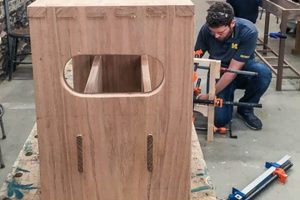
Introductory woodworking endeavors represent the initial steps in acquiring skills associated with manipulating lumber to create functional or decorative items. These activities are typically simplified in design and construction to facilitate learning fundamental techniques, such as measuring, cutting, joining, and finishing. A basic birdhouse, a small shelf, or a simple picture frame serve as common examples.
Engaging in introductory woodworking fosters the development of fine motor skills, spatial reasoning, and problem-solving abilities. Historically, these activities were integral to apprenticeships and vocational training, imparting essential competencies for numerous trades. Furthermore, these projects can offer a sense of accomplishment and serve as a gateway to more advanced woodworking practices, promoting creativity and self-reliance.
The subsequent discussion will outline several achievable and rewarding activities tailored for individuals with limited or no prior experience in lumber crafting. These endeavors aim to provide a foundation for future exploration and mastery of the craft.
Essential Guidance for Initial Lumber Crafting Endeavors
Successful navigation of initial lumber crafting requires careful planning, preparation, and adherence to established best practices. The following recommendations aim to mitigate common challenges and maximize the learning experience.
Tip 1: Prioritize Safety: Wear appropriate personal protective equipment, including safety glasses and hearing protection. Ensure the work area is well-ventilated, and utilize dust collection systems when operating power tools.
Tip 2: Select Simple Designs: Opt for projects with straight cuts and minimal joinery. Avoid complex curves or intricate details until foundational skills are established.
Tip 3: Start with Softwoods: Pine and fir are typically less expensive and easier to work with than hardwoods. These species are more forgiving of minor errors and require less force to cut and shape.
Tip 4: Accurate Measurement and Marking: Utilize a high-quality measuring tape and a sharp pencil. Double-check all measurements before cutting to minimize waste and ensure proper fit.
Tip 5: Practice Cutting Techniques: Before committing to the final cuts, practice on scrap lumber to develop proficiency with saws and other cutting tools. Maintain a steady hand and consistent pressure.
Tip 6: Secure Workholding: Employ clamps or vises to firmly secure the lumber while cutting, drilling, or sanding. This enhances safety and improves the accuracy of the work.
Tip 7: Gradual Sanding Progression: Begin with a coarse-grit sandpaper to remove imperfections and then progress to finer grits for a smooth finish. Sand with the grain to avoid creating scratches.
Tip 8: Patience and Persistence: Lumber crafting requires patience and attention to detail. Do not be discouraged by initial mistakes; view them as learning opportunities.
Adherence to these guidelines will facilitate a smoother learning curve and contribute to the creation of well-crafted and satisfying projects. The acquisition of these fundamental skills provides a solid base for progressing to more advanced woodworking techniques.
The subsequent sections will explore specific project ideas suitable for novice lumber crafters, providing step-by-step instructions and further guidance.
1. Safety Protocols

The integration of rigorous safety protocols into introductory lumber crafting endeavors is not merely advisory but rather a foundational prerequisite. The inherent risks associated with woodworking tools, such as lacerations from sharp blades, projectile hazards from power tools, and inhalation of wood dust, necessitate a comprehensive approach to risk mitigation. Failure to adhere to established safety guidelines can result in severe injury, thereby negating the intended benefits of skill acquisition and creative expression. For instance, neglecting to wear safety glasses while operating a saw can lead to irreversible eye damage from flying debris. Similarly, inadequate dust collection can contribute to respiratory problems over time.
Consequently, any exploration of lumber crafting for novices must prioritize the establishment and consistent enforcement of safety protocols. This encompasses the provision of adequate personal protective equipment, including safety glasses, hearing protection, and dust masks or respirators. Furthermore, it requires the thorough instruction and demonstration of safe operating procedures for all tools and equipment. The implementation of a structured training program, supplemented by readily accessible safety resources, serves to cultivate a culture of safety awareness among participants. For example, a well-defined set of guidelines for using a power saw, coupled with practical demonstrations, can significantly reduce the risk of accidental injury.
In summary, the inextricable link between safety protocols and introductory lumber crafting underscores the importance of prioritizing preventative measures to safeguard participants from potential harm. Effective implementation of these protocols not only minimizes the risk of injury but also fosters a learning environment conducive to skill development and sustained engagement with the craft. The adoption of such practices represents a fundamental commitment to responsible craftsmanship and the well-being of those involved.
2. Simple Designs

The deliberate selection and execution of uncomplicated designs are paramount when introducing individuals to lumber crafting. Complexity in initial projects can overwhelm novices, leading to frustration and hindering the acquisition of fundamental skills. The emphasis on straightforward construction methods ensures a positive and productive learning experience.
- Reduced Cognitive Load
Simple designs minimize the cognitive demands placed on beginners. Fewer steps and less intricate joinery translate to a more manageable learning curve. For example, constructing a basic box requires only straight cuts and minimal assembly, allowing the focus to remain on mastering accurate measurement and secure fastening. This approach reduces the potential for errors and enhances the likelihood of successful project completion.
- Enhanced Skill Development
Focusing on simple designs allows for the concentrated development of core woodworking skills. Instead of grappling with complex shapes or intricate embellishments, beginners can dedicate their attention to refining essential techniques such as sawing straight lines, sanding surfaces smoothly, and assembling components accurately. This focused practice promotes the rapid acquisition of fundamental competencies, which form the foundation for more advanced projects.
- Increased Project Completion Rates
Simpler projects are inherently more likely to be completed successfully. This sense of accomplishment is crucial for maintaining motivation and fostering continued interest in lumber crafting. A beginner who successfully builds a small shelf is more likely to be encouraged to tackle more challenging projects in the future than someone who becomes discouraged by a complex and unfinished piece.
- Minimized Material Waste
Elementary designs, characterized by their straightforward nature, reduce material wastage. Simpler cuts and fewer intricate elements translate to less scrap and a more efficient use of resources. The efficient use of lumber also instills an appreciation for material conservation, which is a valuable attribute in the craft.
The integration of simple designs into introductory woodworking is not merely a matter of convenience but a strategic approach to fostering skill development, maintaining motivation, and promoting resource efficiency. The focused practice and enhanced project completion rates associated with these designs lay the groundwork for a more comprehensive and rewarding exploration of lumber crafting.
3. Softwood Choice

The selection of appropriate materials is fundamental to the success of any lumber crafting endeavor, and for novices, the deliberate choice of softwoods offers distinct advantages that enhance the learning experience and increase the likelihood of positive outcomes. Softwood species possess properties that render them more amenable to introductory woodworking techniques, thereby facilitating the acquisition of essential skills.
- Workability
Softwoods, such as pine, fir, and cedar, exhibit a lower density and less complex grain structure compared to hardwoods. This characteristic translates to ease of cutting, shaping, and fastening, making them ideal for beginners. For example, a novice using a hand saw will find it significantly easier to cut a straight line through a piece of pine than through a piece of oak. The reduced effort required allows the learner to focus on technique rather than struggling with the material’s resistance.
- Cost-Effectiveness
Softwoods are generally more affordable than hardwoods, which can be a significant factor for individuals initiating their woodworking journey. The lower cost allows for experimentation and the acceptance of errors without undue financial burden. A beginner may feel more comfortable attempting a challenging cut on a piece of inexpensive pine than on a more valuable hardwood. The reduced financial risk encourages exploration and skill development.
- Finishing Properties
While softwoods may require more care in preparation, they readily accept a variety of finishes, including stains, paints, and varnishes. This allows beginners to experiment with different aesthetic treatments and learn about the impact of finishes on the wood’s appearance and durability. For instance, a novice can practice applying different stain colors to scrap pieces of pine to understand how the wood’s grain affects the final result.
- Tool Friendliness
Softwoods are less likely to dull the edges of cutting tools compared to hardwoods. This is particularly beneficial for beginners who may not yet have mastered sharpening techniques. Using softwoods reduces the frequency of tool maintenance, allowing the learner to spend more time practicing woodworking skills. Less frequent sharpening also contributes to a safer working environment, as sharp tools are essential for controlled and predictable cuts.
In summation, the strategic choice of softwoods for introductory woodworking projects represents a pragmatic approach to fostering skill development and ensuring a positive learning experience. The workability, cost-effectiveness, finishing properties, and tool friendliness of softwoods collectively contribute to a more accessible and rewarding entry point into the world of lumber crafting.
4. Accurate Measurement
Accurate measurement constitutes a foundational principle in all lumber crafting activities, and its importance is amplified for individuals embarking on introductory woodworking endeavors. The precision with which dimensions are determined and transferred directly impacts the final outcome of a project, influencing structural integrity, aesthetic appeal, and overall functionality.
- Dimensional Stability
Dimensional stability, referring to the adherence to prescribed measurements throughout the construction process, is paramount. Deviations from specified dimensions, even minor ones, can accumulate and lead to significant discrepancies in the assembled project. For example, if each piece of a box is even slightly off in length, the final box may be warped or fail to close properly. In the context of projects designed for novices, even a small error can lead to frustration and discourage further exploration of the craft.
- Joint Integrity
The integrity of joints, the points where individual pieces of lumber are connected, hinges on accurate measurement. Whether using simple butt joints or more complex joinery techniques, precise dimensions are essential for creating strong and durable connections. A joint that is too loose will be weak and prone to failure, while a joint that is too tight may be impossible to assemble or may cause the wood to split. Novices must grasp the significance of precise cuts when creating these joints to facilitate easier assembly and strengthen the final product.
- Material Optimization
Accurate measurement promotes the efficient use of materials by minimizing waste. When lumber is measured and cut precisely, the amount of scrap is reduced, and the project can be completed with less material. This is particularly important for beginners who may be working with limited resources or who are concerned about minimizing costs. Careful planning and execution, guided by accurate measurement, contribute to both economic and environmental sustainability within the woodworking craft.
- Project Replication and Scalability
Accurate measurement enables the replication of successful projects and allows for the scaling of designs to different sizes. Once a project has been completed successfully, the dimensions can be recorded and used to recreate the project or to adapt it to different applications. This is a valuable skill for novices who wish to build upon their initial successes and explore more advanced woodworking techniques. It also reinforces the importance of documenting the construction process for future reference.
The facets of dimensional stability, joint integrity, material optimization, and project replication underscore the critical role of accurate measurement in introductory woodworking. By mastering this fundamental skill, beginners can ensure the success of their projects, develop a sense of confidence, and lay a solid foundation for continued exploration of the craft. The emphasis on precision not only contributes to the quality of the finished product but also cultivates a mindset of careful planning and execution, which are essential for success in all areas of woodworking.
5. Proper Tools

The successful completion of introductory lumber crafting endeavors hinges significantly on the utilization of appropriate tools. The connection between proper tools and beginner woodworking projects is one of direct cause and effect. Employing tools designed for the task enhances accuracy, efficiency, and safety, directly impacting the quality of the finished product and the overall learning experience. The availability of the right tools minimizes frustration, allowing novices to focus on developing fundamental skills rather than struggling with inadequate equipment. For instance, attempting to cut a straight line with a dull or inappropriate saw can lead to inaccurate cuts, material waste, and potentially, injury. Conversely, using a sharp, well-maintained saw specifically designed for woodworking facilitates a clean, precise cut, promoting success and confidence.
Beyond basic functionality, understanding the purpose and limitations of various tools is essential. A beginner should grasp the distinction between a hand saw and a power saw, a chisel and a plane, and the specific applications for each. The selection of tools must align with the project’s complexity and the wood’s properties. Choosing the correct drill bit for the type of screw being used, for example, ensures a secure and stable joint. Similarly, employing a sanding block with appropriate grit sandpaper is crucial for achieving a smooth, even finish. These examples highlight the practical significance of tool selection in achieving desired results. Lack of appropriate tools or misunderstanding their application will almost always have a negative outcome on the project.
In conclusion, the connection between proper tools and beginner woodworking projects is undeniable. The selection and appropriate use of tools directly influence the ease of learning, the quality of workmanship, and the overall safety of the process. As novices gain experience, they will develop a deeper appreciation for the nuances of tool selection and maintenance. This understanding will serve as a cornerstone for continued growth and mastery of the craft, highlighting the need to focus on the right tools during these critical initial stages. It underscores the importance of investing in quality tools and of receiving adequate instruction on their safe and effective use, even if it means starting with fewer tools and developing one’s tool collection over time.
6. Finishing Techniques
The application of appropriate finishing techniques represents a crucial final step in beginner lumber crafting endeavors. While initial efforts focus on construction, surface treatment significantly enhances both the aesthetic appeal and protective qualities of completed projects, thereby contributing to their longevity and overall value.
- Surface Preparation
Adequate surface preparation is a prerequisite for any successful finish. This involves sanding the wood to a smooth, uniform texture, removing imperfections, and ensuring optimal adhesion for subsequent coatings. For example, a beginner creating a small wooden box must meticulously sand all surfaces, starting with a coarser grit sandpaper and progressing to finer grits, before applying any stain or sealant. Failure to adequately prepare the surface will result in an uneven or flawed finish, detracting from the overall appearance.
- Staining and Coloring
Staining allows for the alteration of the wood’s natural color, enhancing its grain patterns and achieving a desired aesthetic. Beginners can experiment with different stain colors to achieve specific looks. However, it’s important to understand that different wood species absorb stain differently, so testing on scrap pieces is essential. Improper staining can lead to blotchy or uneven color distribution, requiring correction and potentially damaging the project.
- Protective Coatings
Protective coatings, such as varnishes, lacquers, and polyurethanes, provide a barrier against moisture, scratches, and other environmental factors. These coatings enhance the durability of the project and prolong its lifespan. Beginners should learn to apply these finishes in thin, even coats, allowing ample drying time between applications. A poorly applied protective coating can result in drips, runs, or bubbles, compromising the project’s appearance and protective qualities.
- Application Methods
The method of application, whether brushing, spraying, or wiping, significantly impacts the final result. Beginners should practice each method to determine which is best suited for a particular project and finish. Improper application techniques can lead to uneven coverage, brush marks, or other imperfections. Understanding the properties of different finishes and their optimal application methods is critical for achieving a professional-looking result.
These facets of surface treatment are integral to maximizing the value of introductory lumber crafting. The investment in proper finishing techniques elevates beginner projects from simple constructions to aesthetically pleasing and durable items. Mastery of these skills not only enhances the finished product but also instills a sense of accomplishment and encourages continued exploration of woodworking.
7. Step-by-Step Guidance

The implementation of structured, sequential instructions is a critical determinant in the successful completion of introductory lumber crafting projects. The provision of detailed, step-by-step guidance serves to mitigate the challenges faced by novices, fostering skill development and enhancing the likelihood of project completion.
- Clarity and Comprehension
Detailed, sequential instructions enhance clarity and comprehension. Novices benefit from a structured approach that breaks down complex tasks into manageable segments. Each step should be explicitly defined, leaving minimal room for ambiguity or misinterpretation. Clear, concise language and accompanying visuals, such as diagrams or photographs, further contribute to improved understanding. For instance, constructing a birdhouse might be segmented into distinct steps, including measuring lumber, cutting pieces, assembling the body, and attaching the roof. Each step should be thoroughly explained and illustrated to ensure clarity.
- Error Reduction
Step-by-step guidance aids in error reduction by providing a framework for systematic execution. By following a predefined sequence of actions, novices are less likely to skip crucial steps or make critical mistakes. The guidance should incorporate checkpoints to verify accuracy and provide opportunities for correction. For example, instructions for assembling a simple shelf should include checks to ensure that all pieces are properly aligned and securely fastened before proceeding to the next step. This proactive approach minimizes the risk of errors that can compromise the integrity of the project.
- Skill Development
Structured instruction facilitates the development of fundamental woodworking skills. Each step provides an opportunity for practice and reinforcement, allowing novices to progressively acquire proficiency. The guidance should incorporate best practices and safety precautions to ensure proper technique and minimize the risk of injury. For example, instructions for using a hand saw should emphasize proper stance, grip, and cutting motion. Repeated practice under structured guidance promotes the development of muscle memory and enhances overall skill development.
- Motivation and Confidence
The successful completion of each step fosters a sense of accomplishment and builds confidence, thereby sustaining motivation and encouraging continued engagement. A well-structured project with clear milestones provides a tangible measure of progress. This positive reinforcement motivates novices to persevere through challenges and to tackle increasingly complex projects. For instance, successfully assembling a simple picture frame can instill a sense of pride and inspire the individual to explore more advanced framing techniques.
The facets of clarity, error reduction, skill development, and motivation underscore the indispensable role of step-by-step guidance in introductory lumber crafting. The provision of structured, sequential instructions empowers novices to acquire fundamental skills, complete projects successfully, and cultivate a sustained interest in the craft. The emphasis on clear communication, error prevention, and positive reinforcement contributes to a more rewarding and effective learning experience.
Frequently Asked Questions
The following addresses frequently encountered queries and misconceptions concerning initial forays into lumber crafting, providing concise and authoritative responses to guide prospective practitioners.
Question 1: What constitutes a suitable initial project for a complete novice?
A suitable initial project is characterized by geometric simplicity, minimal joinery, and limited material requirements. Examples include small shelves, basic boxes, or simple picture frames, facilitating the acquisition of fundamental skills without undue complexity.
Question 2: Is specialized equipment necessary to commence lumber crafting?
While specialized equipment enhances efficiency and precision, basic projects can be undertaken with minimal tools. Essential items include a hand saw, measuring tape, square, sandpaper, and appropriate fasteners. The gradual acquisition of more advanced tools is advisable as skills progress.
Question 3: What are the principal safety precautions to observe during lumber crafting activities?
The preservation of personal safety mandates adherence to stringent protocols. Essential measures encompass the consistent use of personal protective equipment, including safety glasses, hearing protection, and dust masks. A well-ventilated workspace and proper tool handling are equally critical.
Question 4: What type of lumber is recommended for novice projects?
Softwoods, such as pine, fir, or cedar, are generally preferred due to their relative affordability and ease of workability. These species exhibit less resistance to cutting and shaping, facilitating the acquisition of fundamental skills without excessive exertion.
Question 5: How critical is precision in measurement and cutting?
Dimensional accuracy is paramount to the structural integrity and aesthetic appeal of any lumber crafting project. Diligent measurement, precise cutting techniques, and the verification of dimensions prior to assembly are essential for minimizing errors and ensuring a satisfactory outcome.
Question 6: What is the purpose of applying finishes to completed lumber crafting projects?
Finishes serve a dual function: enhancing aesthetic appeal and providing protection against environmental factors. Stains alter color and highlight grain patterns, while varnishes, lacquers, and polyurethanes create a durable barrier against moisture, scratches, and ultraviolet radiation.
In summary, a deliberate approach to project selection, adherence to safety protocols, and a focus on precision are crucial for a successful initiation into lumber crafting. The consistent application of these principles will lay a solid foundation for continued exploration and skill development.
The subsequent discussion will explore advanced techniques, incorporating feedback from this FAQ section to guide progression and foster expertise.
Conclusion
The preceding examination of “woodwork projects for beginners” has delineated essential principles for successful entry into the craft. Emphasis has been placed on safety protocols, simplified designs, the selection of appropriate materials, precise measurement, the utilization of proper tools, the application of finishing techniques, and adherence to structured guidance. These elements collectively contribute to the acquisition of fundamental skills and the development of a solid foundation for further exploration.
Mastery of these introductory concepts provides a pathway to more complex endeavors and a lifelong pursuit of craftsmanship. The principles outlined are not merely a starting point, but a continuing guide for cultivating skill and excellence in woodworking. Future engagement with the craft should prioritize continuous learning and refinement, building upon the foundation established through these essential techniques, thus enriching the practitioners skill set and deepening their understanding of the art of woodworking.