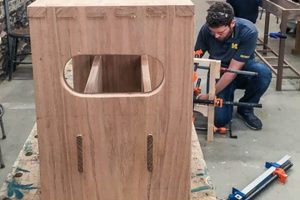
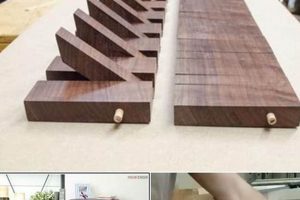
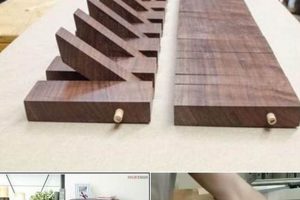
This area of craftsmanship represents an accessible entry point into traditional Japanese woodworking techniques. Characterized by its unique tools, joinery, and emphasis on working with the natural properties of wood, this approach offers a distinct alternative to Western methods for creating functional and aesthetically pleasing objects. As an example, individuals might begin by crafting a small box using hand planes and chisels, learning to create precise joints without relying heavily on nails or screws.
Adopting these skills fosters a deep understanding of wood grain and material behavior, resulting in stronger, more durable constructions. Furthermore, it promotes resourcefulness and mindful engagement with the craft, encouraging efficiency and minimizing waste. Historically, these techniques developed in response to the limited availability of resources in Japan, leading to methods that prioritize careful planning and precise execution. This approach also reflects cultural values emphasizing harmony, balance, and respect for natural materials.
The following sections will explore the essential tools, fundamental techniques, and key concepts needed to embark on this journey. Attention will be given to material selection, sharpening methods, and basic joinery, providing a solid foundation for further exploration and skill development in the realm of woodcraft.
Fundamental Guidance for Novice Woodworkers
The following guidelines serve as an introduction to essential principles when commencing engagement with Japanese woodworking. Adherence to these points will promote efficiency, safety, and an improved understanding of the craft.
Tip 1: Tool Selection: Begin with a limited set of high-quality tools. A sharp chisel, a versatile hand plane, and a marking gauge are preferable to a larger collection of inferior implements. Prioritize tools known for their edge retention and overall durability.
Tip 2: Sharpening Proficiency: Consistent sharpening is paramount. Dull tools are both inefficient and dangerous. Invest time in learning proper sharpening techniques using water stones or other suitable methods. Aim for a razor-sharp edge before each project.
Tip 3: Wood Grain Awareness: Pay close attention to the direction of the wood grain. Planing or chiseling against the grain can result in tear-out and damage to the workpiece. Observe the grain pattern carefully before making any cuts.
Tip 4: Precise Measurement and Marking: Accuracy is crucial for successful joinery. Utilize precise measuring tools and marking techniques to ensure components fit together seamlessly. A sharp marking knife and a well-maintained marking gauge are essential.
Tip 5: Practice Joinery Techniques: Start with simple joinery methods, such as a basic lap joint or a mortise and tenon. Practice these joints repeatedly to develop proficiency and understanding. Focus on achieving tight, clean fits.
Tip 6: Respect for Material: Wood is a valuable resource. Avoid waste by carefully planning each project and utilizing cutoffs whenever possible. Consider the environmental impact of timber selection.
Tip 7: Incremental Refinement: Japanese woodworking emphasizes precision and incremental refinement. Avoid rushing the process. Take small, controlled steps and constantly assess the progress. This methodical approach leads to superior results.
By implementing these strategies, individuals can establish a solid foundation for engaging with Japanese woodworking techniques. The emphasis on quality tools, meticulous sharpening, and precise execution will contribute to improved project outcomes and a deeper appreciation for the craft.
The subsequent stages of study involve progressing to more complex joinery techniques and exploring the aesthetic principles that characterize Japanese woodwork.
1. Sharp Tools

The utilization of meticulously sharpened implements is not merely a preference, but a foundational necessity within the discipline of Japanese woodworking. For individuals new to these techniques, the acquisition and maintenance of sharp tools directly influences project outcomes and skill development.
- Enhanced Precision
Sharp tools facilitate accurate cuts, an essential element in Japanese joinery. The creation of precise joints, characteristic of this woodworking tradition, requires clean, controlled removal of material. Dull tools compromise this precision, leading to gaps, misalignments, and structural weaknesses in completed projects.
- Reduced Physical Exertion
When implements are properly honed, less force is required to cut or shape wood. This is particularly important for beginners, as excessive exertion can lead to fatigue, errors, and potential injuries. Sharp tools enable a smoother, more controlled workflow, minimizing strain on the user.
- Improved Wood Surface Quality
Sharp edges produce a cleaner, smoother surface finish. This minimizes the need for extensive sanding or other post-processing techniques. In Japanese woodworking, the emphasis on revealing the natural beauty of the wood necessitates achieving a high-quality surface directly from the cutting tool.
- Safety Considerations
Counterintuitively, sharp tools are safer than dull tools. Dull tools require increased force to operate, increasing the likelihood of slippage and uncontrolled movements. A sharp tool bites into the wood predictably, allowing for greater control and reducing the risk of accidents. Consistent sharpening practices are therefore an integral aspect of safe woodworking practice.
The connection between sharp tools and successful engagement with Japanese woodworking is undeniable. Proficiency in sharpening techniques is therefore a critical skill for any beginner. Investing in quality sharpening equipment and dedicating time to mastering its use will yield significant returns in terms of project quality, efficiency, and safety.
2. Grain Awareness

Grain awareness forms a cornerstone of proficiency when approaching traditional Japanese woodworking techniques. The anisotropic nature of wood dictates that its properties vary significantly depending on grain direction. Novice practitioners who fail to recognize and adapt to these variations frequently encounter challenges such as tear-out during planing, weakened joints, and dimensional instability in finished projects. Understanding grain direction allows woodworkers to anticipate the material’s response to cutting and shaping, thus enabling more controlled and predictable results. As an example, planing with the grain results in a smooth, clean surface, while planing against the grain often causes splintering. Similarly, aligning the grain correctly during joinery maximizes the glue surface and creates stronger bonds.
The ability to “read” the grain is not merely theoretical; it possesses significant practical implications in all facets of Japanese woodworking. Choosing appropriately oriented stock for specific components, for instance, is crucial in preventing warping or cracking. When creating a mortise and tenon joint, aligning the tenon with the grain’s long axis enhances its resistance to bending forces. In contrast, a poorly oriented tenon is more susceptible to snapping under stress. Moreover, grain direction informs decisions regarding tool selection and technique. Certain planes or chisels are better suited for working with or against the grain, and varying the angle of attack can minimize tear-out in challenging areas. The visual characteristics of the grain are intentionally highlighted in many Japanese woodworking projects, emphasizing the beauty of the natural material.
Mastering grain awareness presents an initial hurdle for beginners, but it unlocks the potential to create structurally sound and aesthetically pleasing woodwork. Overcoming this hurdle requires a commitment to observation, experimentation, and continuous learning. By carefully studying the grain patterns of each piece of wood, woodworkers can develop an intuitive understanding of its behavior and adapt their techniques accordingly. This understanding is paramount to avoiding common pitfalls and achieving the precision and finesse characteristic of Japanese woodworking. Ultimately, this knowledge enables the creation of joinery that is not only functional but also enhances the natural beauty of the wood itself.
3. Precise Marking

Accuracy in marking serves as a foundational element for individuals commencing engagement with Japanese woodworking. The techniques employed in this discipline place a premium on exacting measurements and meticulously transferred dimensions, influencing the structural integrity and aesthetic quality of the final product. Without precise marking, the execution of complex joinery, a hallmark of Japanese woodworking, becomes exceedingly challenging, if not impossible.
- Component Interdependence
In Japanese woodworking, components are often interconnected through intricate joinery, negating the necessity for fasteners like screws or nails. This approach necessitates precise marking to ensure that each element integrates seamlessly with its counterparts. Deviations from accuracy during the marking process propagate throughout the assembly, leading to cumulative errors that undermine the structural integrity and visual harmony of the piece. For instance, in creating a dovetail joint, even a minor miscalculation in marking the dovetail pins or tails results in a loose or ill-fitting joint, compromising its strength and appearance.
- Tool Registration
Precise marking serves as a guide for subsequent tool operations, dictating the location and extent of cuts made with saws, chisels, and planes. In Japanese woodworking, tools are often used to create specific geometric forms or profiles, and the accuracy of these forms depends directly on the precision of the initial markings. A well-defined and accurate marking line provides a clear visual reference for the woodworker, enabling them to maintain control and achieve the desired result. For example, when creating a mortise, a precisely marked outline ensures that the mortise is of the correct size and shape to accommodate the tenon, leading to a tight and secure joint.
- Efficient Material Utilization
Careful planning and marking of stock minimizes waste and maximizes the utilization of valuable materials. In Japanese woodworking, efficiency is a virtue, and skilled practitioners strive to extract the maximum yield from each piece of wood. Precise marking allows woodworkers to optimize the placement of components within a given board, reducing the amount of waste generated during the cutting process. Furthermore, accurate marking reduces the likelihood of errors that necessitate remaking components, thereby conserving both time and material resources. Consider the layout of multiple smaller components on a single board: precise marking facilitates tight nesting of the components, minimizing the amount of waste material between them.
- Aesthetic Considerations
Beyond its functional implications, precise marking contributes to the aesthetic quality of Japanese woodwork. Clean, crisp lines and perfectly aligned components reflect a commitment to precision and craftsmanship. In many traditional Japanese designs, the joinery itself is an integral part of the aesthetic, and the accuracy of the joinery reflects the skill and attention to detail of the woodworker. Even subtle discrepancies in marking or execution can detract from the overall visual impact of the piece. Therefore, precise marking is not merely a technical requirement but also an expression of the woodworker’s artistic vision.
In summary, the emphasis placed on meticulous marking within Japanese woodworking stems from its direct influence on structural integrity, material efficiency, tool control, and aesthetic outcome. The novice woodworker must, from the outset, recognize precise marking as an indispensable skill, integrating it into their fundamental practice. Diligence in measurement and marking serves as a foundational element, facilitating progression to more advanced techniques and fostering a deeper appreciation for the craft.
4. Basic Joinery

Basic joinery serves as the elemental building block for individuals initiating engagement with Japanese woodworking techniques. These fundamental connections between pieces of wood, executed without modern fasteners, establish the structural framework upon which more complex designs are built. A comprehension of basic joinery methods is not merely a preliminary step, but an indispensable component for accessing the broader realm of Japanese woodworking. Examples of basic joinery include the lap joint, mortise and tenon (a simplified version), and rabbet joint. Proficiency in these methods enables beginners to understand material behavior, tool control, and the importance of precise execution, which are essential for more intricate techniques.
The mastery of these joints directly affects the success of subsequent projects. For instance, a carefully executed lap joint demonstrates the principle of creating a strong bond by maximizing surface area, a concept that underlies more complex joinery like dovetails or intricate interlocking systems. Learning the mortise and tenon, even in a basic form, introduces the concept of structural integrity and load bearing, influencing the choice of materials and construction methods in later endeavors. Furthermore, the process of creating these joints provides valuable practice in essential skills, such as accurate measurement, precise cutting with hand tools, and the importance of grain direction, skills directly transferable to more advanced projects. An understanding of wood movement, a critical aspect of woodworking, is also reinforced when constructing basic joinery.
In summary, basic joinery represents an essential gateway into Japanese woodworking for beginners. The challenges encountered and skills acquired during the practice of these joints contribute significantly to the development of a solid foundation in the discipline. Mastering these fundamental techniques ensures increased success in more ambitious projects, as well as a deeper appreciation for the craftsmanship inherent in Japanese woodworking traditions.
5. Hand Skills
Proficiency in hand skills represents an indispensable facet of engaging with Japanese woodworking techniques, particularly for beginners. These skills, encompassing the precise control and manipulation of hand tools, directly impact the accuracy, efficiency, and quality of finished projects. The absence of adept hand skills impedes the successful execution of intricate joinery and the attainment of smooth, unblemished surfaces that are characteristic of this woodworking tradition. For example, the ability to accurately plane a surface flat and square relies heavily on the development of a consistent and controlled hand motion. Similarly, the creation of precise dovetail joints requires the skilled use of chisels to remove waste material with minimal disruption to the surrounding wood fibers.
The cultivation of hand skills necessitates consistent practice and focused attention. Beginners typically commence by mastering fundamental techniques, such as sharpening hand planes and chisels to achieve optimal cutting performance. Subsequently, they progress to more complex tasks, like planing end grain without tear-out or creating clean, crisp lines with a marking knife. Each of these activities reinforces the connection between hand movement, tool behavior, and material response. The use of pull saws, known as nokogiri, requires a different set of hand skills than Western push saws, emphasizing a smooth, controlled pulling motion. Similarly, specialized Japanese hand planes, such as the kanna, demand precise adjustments and techniques to achieve the desired surface quality. The inherent control offered by hand tools allows for a closer connection to the material, enabling the woodworker to adapt to variations in grain and density. This intimate understanding is crucial for achieving the nuanced results that define Japanese woodworking.
In summary, the development of robust hand skills is not merely a supplementary aspect of Japanese woodworking for beginners; it is a fundamental prerequisite. Consistent practice, focused attention, and a willingness to refine technique are essential for mastering the use of hand tools and achieving the precision and quality associated with this craft. Successfully navigating the challenges inherent in hand tool work lays a solid foundation for continued exploration and skill development in the field of Japanese woodworking.
6. Material Selection

Material selection holds a position of paramount importance when embarking on Japanese woodworking, particularly for novice practitioners. The inherent characteristics of chosen wood species directly influence workability, structural integrity, and aesthetic outcome. Therefore, thoughtful consideration of material selection streamlines the learning process and contributes significantly to the success of initial projects.
- Workability and Grain Structure
Certain wood species exhibit properties more conducive to hand tool work, a defining characteristic of Japanese woodworking. Softer woods, such as Paulownia (Kiri) or Cedar (Sugi), offer a reduced resistance to cutting tools, allowing beginners to develop their skills with greater ease. Conversely, hardwoods like Oak or Maple, while possessing superior strength, demand greater precision and control, presenting a steeper learning curve for the uninitiated. Grain structure also plays a crucial role. Straight-grained woods minimize the risk of tear-out when planing, while highly figured or knotty woods pose significant challenges. Selecting a species with a manageable grain structure facilitates the development of fundamental techniques.
- Dimensional Stability and Movement
Wood, being a hygroscopic material, expands and contracts in response to changes in humidity. The degree of this dimensional movement varies significantly among different species. Woods prone to excessive movement can compromise the integrity of joinery, particularly in traditional Japanese woodworking where mechanical fasteners are often eschewed. Beginners should prioritize species known for their dimensional stability, such as Cypress (Hinoki) or Redwood, to minimize the risk of warping, cracking, or joint failure in completed projects. Understanding the wood’s response to environmental changes is crucial for ensuring long-term durability.
- Aesthetic Considerations and Cultural Significance
Material selection extends beyond functional requirements to encompass aesthetic preferences and cultural significance. Certain wood species are traditionally associated with Japanese woodworking and carry inherent aesthetic qualities valued within this tradition. For instance, Hinoki Cypress is prized for its pale color, fine grain, and aromatic properties, making it a favored choice for temple construction and fine furniture. Similarly, Japanese Black Pine (Kuro-matsu) is often used in structural applications due to its strength and durability. Beginners can enhance their understanding of the cultural context of Japanese woodworking by exploring these traditional species and incorporating them into their projects when appropriate.
- Sourcing and Sustainability
Responsible material selection involves considering the sourcing and sustainability of chosen wood species. Beginners should prioritize locally sourced materials whenever possible to reduce their environmental impact. Furthermore, they should seek out wood that is certified by organizations like the Forest Stewardship Council (FSC) to ensure that it has been harvested in a sustainable and responsible manner. Avoiding the use of endangered or overexploited species demonstrates a commitment to ethical woodworking practices and contributes to the long-term health of forest ecosystems.
The intersection of material selection and fundamental Japanese woodworking emphasizes informed decision-making. By considering workability, stability, aesthetics, and sustainability, novice woodworkers can enhance the likelihood of project success, cultivate a deeper appreciation for the properties of wood, and contribute to responsible woodworking practices. The knowledge gained through thoughtful material selection lays a solid foundation for more advanced techniques and projects in the future.
Frequently Asked Questions
The following represents a compilation of inquiries commonly posed by individuals commencing their exploration of Japanese woodworking techniques. These answers aim to clarify misconceptions and provide actionable guidance.
Question 1: Are specialized tools absolutely necessary to begin Japanese woodworking?
While specialized tools, such as kanna planes and nokogiri saws, are integral to achieving traditional results, initial exploration can commence with high-quality Western equivalents. However, the unique cutting action of Japanese tools necessitates eventual adoption for authentic replication of techniques and joinery.
Question 2: What is the most crucial skill to develop for successful Japanese woodworking?
Consistent and precise sharpening of tools transcends all other considerations. Dull tools render techniques inefficient, compromise accuracy, and increase the risk of injury. Mastery of sharpening is, therefore, paramount.
Question 3: Is Japanese woodworking inherently more difficult than Western woodworking?
Difficulty is subjective and dependent on prior experience. The emphasis on hand tool work and precise joinery can present challenges. However, the methodical approach and focus on understanding material properties can render the process rewarding.
Question 4: What type of wood is best suited for beginners?
Softwoods, such as cedar or pine, offer reduced resistance to cutting tools, facilitating the development of fundamental skills. Straight-grained stock minimizes the risk of tear-out during planing. Avoid highly figured woods until a base level of proficiency is achieved.
Question 5: How important is it to understand traditional Japanese design principles?
While strict adherence to traditional designs is not mandatory, understanding fundamental principles, such as wabi-sabi (embracing imperfection) and the integration of natural elements, can enhance the aesthetic outcome of projects.
Question 6: Can Japanese woodworking techniques be effectively combined with modern power tools?
While purists may eschew power tools, judicious incorporation can enhance efficiency. However, reliance on power tools must not supplant the development of fundamental hand skills, which remain essential for achieving the precision and finesse characteristic of Japanese woodworking.
In summary, initial engagement with Japanese woodworking requires a focus on tool sharpening, material selection, and the development of fundamental hand skills. While specialized tools and knowledge of design principles enhance the experience, they are not prerequisites for commencing exploration.
The following sections will explore resources and learning pathways for individuals seeking further immersion in this discipline.
Japanese Woodworking for Beginners
The preceding sections have explored the fundamental elements of entering the domain of Japanese woodworking. Emphasis has been placed on the acquisition of essential hand skills, the importance of selecting appropriate materials, and the necessity of meticulous tool maintenance and sharpening. Core joinery techniques and the crucial awareness of wood grain orientation have been underscored as vital components for successful execution. These elements, when methodically addressed, provide a foundation upon which novice practitioners can build proficiency.
The pursuit of competence within this discipline represents a commitment to precision, patience, and a deep appreciation for the inherent properties of wood. Continued study and dedicated practice are essential for achieving mastery. Aspiring woodworkers are encouraged to seek out experienced mentors and to immerse themselves in the rich history and traditions that underpin this exacting craft. The journey into Japanese woodworking offers not only the acquisition of technical skills, but also the cultivation of a mindful approach to craftsmanship and a profound respect for natural materials.