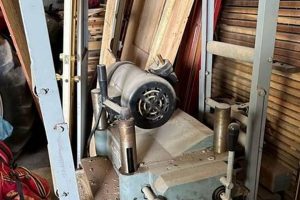
The maintenance and repair of equipment utilized in shaping and cutting wood constitutes a specialized field. This encompasses activities such as lubrication, parts replacement, calibration, and troubleshooting to ensure optimal operational condition. For example, a bandsaw requiring blade sharpening and guide alignment falls under this category of specialized care.
Regular attention to these machines yields numerous advantages. Downtime is minimized due to proactive identification and correction of potential issues. Consistent performance enhances the quality of finished products and extends the lifespan of significant capital investments. Historically, skilled tradespeople managed these tasks; however, the increasing complexity of modern equipment often necessitates specialized expertise.
The following discussion will delve into the specific types of equipment requiring routine care, the critical aspects of preventative maintenance schedules, and the diagnostic procedures employed to address malfunctions. Furthermore, the availability of training and qualified technicians in this domain will be examined.
Essential Considerations for Equipment Care
Maintaining optimal performance and extending the lifespan of woodworking machines requires diligent attention. The following guidelines outline critical considerations for effective equipment management.
Tip 1: Implement a Scheduled Lubrication Program. Adherence to manufacturer-specified lubrication intervals prevents premature wear and reduces friction, crucial for components such as bearings and gears.
Tip 2: Conduct Regular Blade and Bit Inspections. Examine cutting tools for sharpness, damage, and proper alignment. Dull or damaged tools compromise cut quality and increase stress on the machinery.
Tip 3: Calibrate Measurement Systems Frequently. Precision is paramount in woodworking. Verify the accuracy of fences, scales, and digital readouts to ensure dimensional consistency.
Tip 4: Clean Dust Collection Systems Thoroughly. Accumulated dust and debris impede airflow, reducing the efficiency of dust collection and potentially creating fire hazards. Empty collection bags and filters regularly.
Tip 5: Monitor Motor Performance. Observe motor amperage draw and temperature. Elevated readings may indicate overloading, bearing issues, or inadequate ventilation.
Tip 6: Verify Safety Guard Functionality. Ensure all safety guards and interlocks are operational and correctly positioned. Do not operate equipment with compromised safety mechanisms.
Tip 7: Maintain Accurate Records. Detailed logs of maintenance activities, repairs, and parts replacements facilitate proactive problem identification and informed decision-making.
Consistent application of these principles contributes significantly to equipment reliability, production efficiency, and operator safety.
The subsequent sections of this article will explore advanced diagnostic techniques and specialized repair procedures.
1. Preventative maintenance

Preventative maintenance forms a cornerstone of effective woodworking machinery care. It is a systematic approach designed to minimize downtime, extend equipment lifespan, and ensure consistent performance through scheduled inspections, adjustments, and component replacements.
- Scheduled Lubrication
Regular lubrication of moving parts, such as bearings, gears, and slides, reduces friction and wear. Adherence to manufacturer-specified lubrication schedules using appropriate lubricants prevents premature failure and maintains optimal operational efficiency. Neglecting this aspect can lead to increased energy consumption, overheating, and ultimately, component seizure.
- Filter Replacement
Air and hydraulic filters protect critical systems from contamination. Replacing these filters at recommended intervals prevents the build-up of debris that can impede airflow, reduce hydraulic pressure, and cause damage to sensitive components. Clogged filters can result in decreased performance and increased energy consumption.
- Belt and Chain Inspection and Adjustment
Drive belts and chains transmit power from the motor to the cutting tools. Regular inspection for wear, cracks, or looseness ensures efficient power transfer and prevents slippage. Proper tensioning and alignment are crucial for preventing premature wear and maintaining accurate cutting speeds. Misaligned or worn belts/chains can lead to inconsistent cuts and increased motor strain.
- Electrical System Check
Electrical components are vital for machine operation. Regular inspection of wiring, connections, and control panels can identify potential problems before they lead to equipment failure. Checking for loose connections, frayed wires, and signs of overheating can prevent electrical fires and ensure reliable machine operation. Neglecting electrical system maintenance can result in unexpected downtime and safety hazards.
These preventative measures, consistently applied, contribute significantly to the overall reliability and longevity of woodworking machinery. Integrating these practices into a comprehensive maintenance program ensures consistent performance, reduces costly repairs, and maximizes the return on investment in woodworking equipment.
2. Diagnostic evaluations

Diagnostic evaluations are intrinsically linked to effective woodworking machinery upkeep. They represent the systematic process of identifying the root cause of malfunctions or performance degradation in equipment. Without thorough assessment, attempts at repair risk addressing symptoms rather than the underlying problems, leading to recurring issues and increased downtime. For instance, a bandsaw exhibiting inconsistent cut depths might suffer from blade misalignment, worn guides, or insufficient tension. A diagnostic evaluation, involving precise measurements and operational testing, is essential to pinpoint the actual source of the problem before any corrective actions are undertaken.
The importance of diagnostic evaluations within the broader context of servicing is amplified by the complexity of modern woodworking machinery. Computer Numerical Control (CNC) routers, for example, integrate intricate electronic controls, servo motors, and sophisticated software. Troubleshooting malfunctions in these systems necessitates specialized diagnostic tools, such as oscilloscopes and software diagnostic packages, as well as a deep understanding of machine operation. A technician merely replacing parts without proper diagnosis may inadvertently introduce new problems or fail to resolve the original issue. Accurate diagnostics minimizes unnecessary repairs and ensures efficient resource allocation.
In summary, diagnostic evaluations are not merely a preliminary step in servicing; they form a critical component integral to the long-term health and operational efficiency of woodworking machinery. Addressing the root causes of malfunctions, supported by methodical assessment, leads to more effective repairs, reduced downtime, and prolonged equipment lifespan. Accurate diagnostics minimizes unnecessary expenses and enhances the overall value of woodworking equipment servicing. The challenge lies in ensuring that technicians possess the necessary skills and access to appropriate diagnostic tools to conduct evaluations effectively.
3. Component replacement

Component replacement is an integral facet of comprehensive woodworking machinery servicing. This involves the identification and substitution of worn, damaged, or obsolete parts to maintain optimal equipment performance and extend operational lifespan.
- Wear and Tear Mitigation
Many components within woodworking machines, such as bearings, belts, blades, and electrical contacts, are subject to significant wear due to continuous operation and exposure to dust and debris. Regular inspection and timely replacement of these components prevent catastrophic failures and maintain machining accuracy. For example, replacing worn bearings in a spindle reduces vibration and ensures smoother, more precise cuts.
- Safety Enhancement
Certain components, particularly those related to safety mechanisms like emergency stops, limit switches, and safety guards, must be fully functional to protect operators. Malfunctioning safety components pose a direct risk of injury. Replacing these components proactively or upon identification of a defect is a critical aspect of responsible machinery maintenance. For example, a faulty limit switch on a sliding table saw can lead to uncontrolled movement and potential accidents.
- Performance Optimization
Replacing components with upgraded or enhanced versions can improve machine performance beyond its original specifications. This may involve installing higher-quality blades, more efficient motors, or more responsive control systems. Such upgrades can lead to increased cutting speeds, improved surface finishes, and reduced energy consumption. For instance, upgrading to a variable frequency drive (VFD) for a motor allows for precise speed control and energy savings.
- Obsolescence Management
As technology advances, some components become obsolete and difficult to source. In such cases, component replacement may involve retrofitting the machine with newer, compatible parts or systems to extend its useful life. This approach requires careful planning and execution to ensure compatibility and maintain machine functionality. For example, replacing an outdated control panel with a modern programmable logic controller (PLC) can enhance machine capabilities and improve reliability.
In conclusion, component replacement is not merely a reactive measure but a proactive strategy for maintaining the integrity, safety, and performance of woodworking machinery. A comprehensive servicing program incorporates scheduled component inspections, timely replacements, and strategic upgrades to maximize the return on investment and ensure safe and efficient operation.
4. Calibration accuracy

Calibration accuracy stands as a fundamental pillar in woodworking machinery maintenance. The precision with which these machines operate directly impacts the quality of finished products, material utilization, and overall operational efficiency. Accurate calibration ensures that the machines perform according to their intended specifications, minimizing errors and waste.
- Dimensional Precision
Calibration ensures accurate dimensional control in woodworking operations. Components such as fences, stops, and digital readouts on saws, routers, and planers must be calibrated regularly to guarantee that cuts and profiles are produced to the specified dimensions. Deviations from calibrated settings lead to inaccurate parts, increased scrap rates, and the need for rework. For example, a table saw with an uncalibrated fence can produce cuts that are consistently off by a fraction of an inch, leading to misaligned joinery and structural weaknesses in finished products.
- Angular Accuracy
Many woodworking operations require precise angular cuts and joints. Miter saws, beveling machines, and tilting spindle shapers rely on accurate angular settings to produce precise angles. Calibration ensures that these machines are cutting at the intended angle, minimizing gaps, and ensuring strong, visually appealing joints. An uncalibrated miter saw, for instance, may produce angles that are consistently off by a degree or two, resulting in visible gaps in picture frames or furniture assemblies.
- Feed Rate and Speed Control
Machines with variable feed rates and spindle speeds, such as CNC routers and edge banders, require calibration to maintain consistent material removal rates and optimal cutting speeds. Accurate calibration ensures that the machine operates at the programmed feed rate, preventing excessive material removal, chatter marks, and premature tool wear. An uncalibrated CNC router, for instance, may feed at a rate that is either too slow, leading to extended machining times, or too fast, resulting in poor surface finishes and broken tools.
- Leveling and Alignment
Proper leveling and alignment are critical for the accurate operation of planers, jointers, and sanders. Calibration ensures that the machine surfaces are perfectly flat and parallel, preventing uneven material removal and ensuring consistent thickness. An uncalibrated planer, for example, may produce boards that are thicker on one side than the other, requiring additional sanding and potentially compromising the structural integrity of the finished product.
The maintenance process of woodworking machinery necessitates adherence to calibration protocols as a proactive measure, reducing the likelihood of inaccuracies that impact production quality and overall efficiency. Neglecting this fundamental element compromises the reliability of the equipment and the integrity of the woodworking processes.
5. Safety inspections
Safety inspections represent a critical component of woodworking machinery servicing, ensuring that equipment operates within established safety parameters. Their rigorous execution minimizes the risk of accidents, promotes a safer working environment, and complies with regulatory standards. These inspections are not merely cursory checks; they are detailed evaluations of the machine’s safety features and overall condition.
- Guard Functionality and Integrity
The physical safeguarding devices integrated into woodworking machinery are designed to prevent operator contact with hazardous moving parts. Safety inspections meticulously verify the presence, proper adjustment, and operational integrity of these guards. For instance, a blade guard on a table saw must fully enclose the blade during non-operational phases and automatically adjust during cutting operations. Damaged, missing, or improperly adjusted guards are direct safety hazards necessitating immediate correction.
- Emergency Stop Systems
Emergency stop (E-stop) systems provide a rapid means of halting machine operation in critical situations. Safety inspections confirm the functionality and accessibility of E-stop buttons and switches. Testing involves activating the E-stop and verifying that all machine motion ceases immediately and completely. E-stop systems that are unresponsive or difficult to reach compromise operator safety and require urgent servicing.
- Electrical Safety Compliance
Electrical systems within woodworking machinery pose significant safety risks if not properly maintained. Safety inspections include visual examinations of wiring, connections, and grounding systems to identify potential hazards such as frayed wires, loose terminals, and inadequate grounding. Insulation resistance testing may be conducted to detect insulation breakdown. Electrical faults can lead to electrocution or fire, making thorough electrical safety checks essential.
- Dust Collection System Efficiency
Wood dust generated during machining operations presents both health and fire hazards. Safety inspections assess the effectiveness of dust collection systems in capturing and removing airborne particles. Evaluation includes checking filter condition, airflow rates, and ductwork integrity. Inadequate dust collection leads to increased exposure to harmful dust particles and an elevated risk of combustible dust explosions. Servicing may involve filter replacement, ductwork repairs, or system upgrades.
The facets detailed above underscore the crucial linkage between routine safety inspections and woodworking machinery servicing. Rigorous evaluations, coupled with timely repairs and component replacements, ensure that these machines operate safely and efficiently, safeguarding operators and mitigating workplace hazards. The integration of safety checks into regular servicing schedules fosters a culture of safety and promotes long-term equipment reliability.
6. Operational efficiency

Operational efficiency in woodworking directly correlates with the effectiveness of machinery servicing. Consistent and comprehensive maintenance programs optimize equipment performance, leading to increased output and reduced operational costs. Neglecting servicing diminishes equipment capacity, increases downtime, and negatively impacts overall productivity.
- Reduced Downtime
Preventative maintenance minimizes unexpected breakdowns, a primary cause of downtime. Scheduled servicing identifies potential issues before they escalate into major malfunctions. For example, replacing worn bearings during a routine inspection prevents motor seizure and the associated production delays. Reduced downtime translates directly into increased production capacity and revenue generation.
- Optimized Material Utilization
Properly calibrated machinery ensures accurate cuts and reduces material waste. Regular servicing maintains the precision of cutting tools, fences, and measurement systems. A jointer that is not accurately calibrated, for instance, can remove excessive material, rendering workpieces unusable and increasing material costs. Optimized material utilization reduces waste, lowers material expenses, and improves overall profitability.
- Enhanced Product Quality
Well-maintained machinery produces higher-quality finished products. Sharp blades, properly aligned components, and consistent machine performance contribute to smoother cuts, tighter joints, and improved surface finishes. A dull blade on a table saw, for example, can cause splintering and tear-out, requiring additional sanding and potentially compromising the structural integrity of the workpiece. Enhanced product quality reduces rejects, increases customer satisfaction, and strengthens brand reputation.
- Extended Equipment Lifespan
Regular servicing extends the operational lifespan of woodworking machinery, maximizing the return on investment. Proactive maintenance prevents premature wear and tear, reducing the need for costly repairs and replacements. Lubricating moving parts, replacing worn belts, and cleaning dust collection systems contribute to the longevity of the equipment. Extended equipment lifespan minimizes capital expenditures, lowers depreciation costs, and improves overall financial performance.
These interconnected elements illustrate the critical relationship between operational efficiency and woodworking machinery servicing. Investing in comprehensive servicing programs not only safeguards equipment but also optimizes production processes, enhances product quality, and strengthens the long-term financial health of woodworking operations.
Frequently Asked Questions
The following section addresses common inquiries concerning the maintenance and upkeep of woodworking equipment, providing detailed responses based on industry best practices.
Question 1: What constitutes a comprehensive woodworking machinery servicing schedule?
A comprehensive schedule typically includes daily inspections, weekly lubrication, monthly filter changes, quarterly component assessments, and annual professional evaluations. Specific intervals depend on machine usage and manufacturer recommendations.
Question 2: How frequently should cutting tools, such as saw blades and router bits, be sharpened?
Sharpening frequency is contingent upon material type, usage intensity, and observable dulling. Regular inspection for chipped teeth, burning marks, or reduced cutting efficiency indicates the need for immediate sharpening or replacement.
Question 3: What are the critical safety considerations during machinery maintenance?
Prior to commencing any maintenance, power lockout/tagout procedures must be implemented. Personal protective equipment, including eye protection and hearing protection, should be worn. Furthermore, familiarity with machine-specific safety protocols is mandatory.
Question 4: What are the warning signs of potential bearing failure in woodworking machinery?
Elevated operating temperatures, unusual noises (grinding, squealing), and excessive vibration are indicators of potential bearing failure. Prompt investigation and replacement prevent catastrophic equipment damage.
Question 5: How can dust collection system efficiency be optimized?
Regular filter cleaning or replacement is essential. Ductwork should be inspected for leaks and blockages. Ensure proper system grounding to prevent static electricity buildup and reduce fire hazards.
Question 6: What qualifications should be sought when hiring a woodworking machinery servicing technician?
Technicians should possess relevant certifications, demonstrable experience with specific machine types, and a thorough understanding of electrical, mechanical, and pneumatic systems. References and insurance verification are crucial.
The information presented herein underscores the significance of proactive maintenance and skilled servicing in ensuring the safe and efficient operation of woodworking machinery.
The subsequent article section will address emerging trends and technological advancements in woodworking machinery servicing.
Conclusion
The preceding analysis has elucidated the multifaceted nature of woodworking machinery servicing. From preventative maintenance schedules and diagnostic evaluations to component replacements and rigorous safety inspections, the diligent application of these principles is paramount. The operational efficiency and longevity of woodworking equipment hinge upon a commitment to comprehensive and skilled care.
As technological advancements continue to reshape the woodworking industry, the demand for specialized expertise in equipment maintenance will only intensify. Prioritizing regular, professional woodworking machinery servicing represents not merely a cost of operation, but a strategic investment in productivity, safety, and the enduring value of woodworking enterprises. A proactive stance ensures continued competitiveness in an evolving landscape.