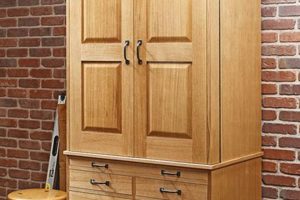
The construction of storage units from timber represents a common application of woodworking skills. These structures, typically affixed to walls or standing independently, serve to organize and display items within a given space. Examples range from simple, single-level platforms to complex, multi-tiered systems designed to accommodate a variety of objects.
Such endeavors offer practical solutions for space optimization and aesthetic enhancement within residential and commercial environments. Historically, handcrafted storage solutions have been integral to interior design, evolving from rudimentary constructions to sophisticated designs reflecting prevailing artistic styles and technological advancements in material processing.
The subsequent discussion will address essential considerations for planning and executing successful timber-based storage unit fabrication, including material selection, joinery techniques, finishing processes, and safety protocols. These elements are crucial for achieving durable, aesthetically pleasing, and functional results.
Essential Guidelines for Timber Storage Unit Construction
The creation of stable and visually appealing timber storage solutions requires careful planning and execution. The following guidelines offer critical insights to ensure project success.
Tip 1: Material Selection: Choose lumber appropriate for the intended load and environment. Hardwoods, such as oak or maple, provide superior strength and durability, while softwoods, like pine, offer a more economical option for lighter loads. Consider the wood’s moisture content to prevent warping or cracking after construction.
Tip 2: Accurate Measurement and Cutting: Precise measurements are paramount. Utilize a measuring tape, square, and marking gauge to ensure accurate cuts. A miter saw or table saw, properly configured, will facilitate consistent and clean cuts, vital for seamless joinery.
Tip 3: Robust Joinery Techniques: Select joinery methods that suit the design and load requirements. Options include mortise and tenon, dovetail, or dado joints for enhanced strength and stability. Employ wood glue and appropriate fasteners to reinforce the joints. Clamping during glue drying is crucial for a strong bond.
Tip 4: Secure Mounting: For wall-mounted units, locate wall studs to provide a secure anchor. Use appropriate hardware, such as lag screws or toggle bolts, to distribute the load evenly. Consider the weight of the stored items when determining mounting hardware requirements.
Tip 5: Surface Preparation and Finishing: Thoroughly sand all surfaces to create a smooth base for finishing. Apply a wood conditioner to ensure even stain absorption. Select a finish that protects the wood and enhances its appearance, such as varnish, lacquer, or polyurethane. Apply multiple coats for optimal protection and durability.
Tip 6: Load Distribution: Distribute weight evenly across the surfaces to prevent sagging or failure. Reinforce the center of longer spans with a center support or by using thicker material. Avoid overloading units beyond their designed capacity.
These guidelines promote the creation of resilient and aesthetically pleasing timber storage structures. Adhering to these principles ensures functionality and longevity.
The subsequent sections will delve into specific design considerations and advanced techniques for creating bespoke timber storage units tailored to individual needs and preferences.
1. Material Durability

Material durability is a foundational consideration in the creation of timber storage units, directly impacting the structure’s longevity, functionality, and overall value. The selection of an appropriate material ensures the unit can withstand the intended load, resist environmental factors, and maintain its aesthetic appeal over time. Inadequate material selection invariably leads to premature failure and reduced utility.
- Wood Species Selection
The choice of wood species significantly influences durability. Hardwoods, such as oak, maple, and walnut, exhibit superior resistance to wear, dents, and scratches compared to softwoods like pine or fir. This characteristic makes hardwoods ideal for high-traffic areas or units intended to support heavy objects. For example, a bookshelf constructed from oak is inherently more resistant to damage from books and daily use than one crafted from pine.
- Moisture Resistance
Wood’s susceptibility to moisture affects its dimensional stability and resistance to decay. High moisture content can lead to warping, swelling, and the growth of mold and fungi. Selecting wood species with natural resistance to moisture, such as cedar or redwood, or applying protective finishes, is crucial for projects in humid environments. A pantry unit constructed from untreated pine in a damp basement is likely to deteriorate rapidly.
- Impact Resistance
The ability of a material to withstand impact without damage is a key aspect of durability. Units in areas prone to accidental bumps or collisions benefit from materials with high impact resistance. Solid wood construction generally offers greater impact resistance than engineered wood products like particleboard or MDF. However, veneered surfaces are more susceptible to chipping and damage from impacts. A cabinet in a busy kitchen requires greater impact resistance than a decorative shelf in a low-traffic area.
- Finish Durability
The durability of the finish applied to the wood significantly impacts its resistance to scratches, stains, and moisture. Finishes such as varnish, lacquer, and polyurethane provide a protective barrier against these elements. Applying multiple coats and selecting a finish appropriate for the intended use can extend the lifespan of the unit. A bookshelf with a durable polyurethane finish is less likely to show wear and tear from handling books than one with a simple stain.
These facets of material durability collectively determine the long-term performance of timber storage solutions. Understanding the specific demands of the intended application and selecting materials accordingly is essential for creating units that provide lasting utility and aesthetic value. The economic and environmental implications of premature failure necessitate a careful evaluation of material properties during the planning phase of any construction.
2. Joint Integrity

Joint integrity is paramount in timber storage unit construction, directly influencing the structure’s stability, load-bearing capacity, and overall lifespan. The strength and durability of the joints determine the unit’s ability to withstand stress and maintain its form under load. Poorly executed joints compromise the integrity of the entire structure, leading to potential failure.
- Joint Selection and Load Requirements
The choice of jointing method must align with the intended load and structural demands. Mortise and tenon, dovetail, and dado joints offer superior strength compared to simpler butt joints or pocket screws. For example, a bookshelf designed to hold heavy books requires mortise and tenon joints to distribute the load effectively, whereas a decorative shelf for lightweight items might suffice with less robust joinery.
- Glue Application and Bonding
Proper glue application is critical for maximizing joint strength. Surfaces must be clean, dry, and properly prepared to ensure adequate adhesion. Apply glue evenly and in sufficient quantity to create a strong bond between the joining surfaces. Clamping during glue drying is essential to maintain pressure and ensure proper alignment. Insufficient glue or inadequate clamping results in weak joints prone to failure.
- Fastener Reinforcement
In addition to glue, fasteners such as screws or nails can reinforce joints and enhance their resistance to stress. The type and placement of fasteners should be carefully considered to avoid weakening the wood or compromising the joint’s integrity. For example, screws should be of sufficient length to penetrate both joining members and should be spaced appropriately to distribute the load evenly.
- Precision and Fit
Accurate cutting and fitting are essential for creating tight, secure joints. Gaps or misalignments weaken the joint and reduce its load-bearing capacity. Utilize precision tools and techniques to ensure that the joint members fit together snugly and seamlessly. Test the fit before applying glue or fasteners to identify and correct any imperfections. A well-fitted joint distributes stress evenly and minimizes the risk of failure.
In summary, joint integrity is a critical factor in the successful construction of storage units. The selection of appropriate jointing methods, proper glue application, fastener reinforcement, and precise fitting are all essential for ensuring that the unit can withstand the intended load and maintain its structural integrity over time. Neglecting these aspects compromises the stability and longevity of the entire structure, potentially leading to costly repairs or even complete failure. Careful attention to joint integrity is, therefore, a fundamental requirement for any high-quality timber storage solution.
3. Load Capacity

In the context of timber storage construction, load capacity refers to the maximum weight a structure can safely support without experiencing deformation or failure. This characteristic is paramount, as exceeding the designed load capacity can lead to structural damage, posing safety risks and rendering the unit unusable. The relationship between the intended use and the materials selected directly affects the load capacity; heavier items necessitate stronger materials and joinery.
Several factors influence load capacity in shelving units. Wood species, for instance, exhibit varying strengths; hardwoods generally provide greater support than softwoods. Shelf thickness also plays a crucial role, with thicker shelves capable of bearing more weight. Span, the distance between supports, inversely affects load capacity; longer spans require reinforcement to prevent sagging. The type and quality of joinery contribute significantly; robust joints like mortise and tenon enhance the overall strength. An example is a bookshelf intended to hold heavy textbooks, which demands thicker hardwood shelves with minimal span and reinforced joinery to prevent bowing or collapse over time.
Calculating and adhering to appropriate load capacities is essential for ensuring the longevity and safety of woodworking shelf projects. Understanding the interplay between material properties, design choices, and intended use allows for the construction of structures that meet specific needs. A failure to consider load capacity results in compromised structural integrity, rendering the shelving unit unsuitable for its intended purpose. Careful planning and execution are, therefore, necessary for successful projects.
4. Mounting Security
The secure attachment of timber storage units to supporting structures is a critical determinant of their stability, safety, and long-term performance. Adequate mounting prevents collapse, tipping, and other hazards, ensuring the unit functions as intended. Improper mounting compromises the structural integrity and poses a significant risk to property and individuals.
- Wall Stud Location and Utilization
Identifying and utilizing wall studs provides a stable anchor point for wall-mounted units. Studs offer significantly greater holding power than drywall alone. Employing a stud finder is essential to locate these structural members accurately. Fasteners, such as lag screws, must penetrate the stud deeply to ensure a secure connection. Mounting a heavy bookshelf solely to drywall without anchoring to studs is likely to result in failure.
- Appropriate Fastener Selection
The choice of fasteners must align with the weight and material of the unit and the supporting wall. Lag screws, toggle bolts, and molly bolts offer varying degrees of holding power. For heavy units, lag screws are recommended when attaching to studs. Toggle bolts and molly bolts provide a secure connection in drywall when stud attachment is not feasible. Selecting fasteners with insufficient load ratings compromises the mounting security and increases the risk of collapse.
- Load Distribution and Support
Distributing the weight evenly across multiple mounting points minimizes stress on individual fasteners. Using multiple fasteners spaced appropriately along the length of the unit distributes the load and prevents localized stress concentrations. For long shelves, adding intermediate support brackets further enhances stability and prevents sagging. A single fastener supporting a heavily loaded shelf creates a point of weakness and increases the likelihood of failure.
- Hardware Inspection and Maintenance
Regular inspection of mounting hardware is essential to identify and address any signs of loosening or corrosion. Tightening loose fasteners or replacing corroded hardware maintains the integrity of the mounting system. Neglecting maintenance can lead to gradual weakening and eventual failure of the mounting. An annual inspection of mounting hardware ensures the ongoing security of timber storage units.
These considerations underscore the importance of proper mounting techniques in timber storage unit projects. The selection of appropriate hardware, the accurate location of support structures, and the diligent application of installation procedures guarantee the safety and longevity of the construction. A robust mounting system prevents accidents, protects property, and provides lasting functionality for the unit.
5. Dimensional Accuracy

Dimensional accuracy, within the context of timber storage unit fabrication, refers to the precision with which components are manufactured to adhere to specified measurements and tolerances. This precision is not merely an aesthetic consideration; it forms the structural foundation upon which stability, functionality, and overall build quality depend. The consequences of dimensional inaccuracies range from compromised load-bearing capacity to aesthetically displeasing misalignments, ultimately diminishing the value and utility of the finished unit.
The interrelationship between dimensional accuracy and successful unit construction is direct. Inaccurate measurements during the initial cutting phase inevitably translate into ill-fitting joints, requiring corrective measures that compromise the integrity of the design. For example, if shelves are cut even slightly shorter than intended, they will not sit flush within their supports, potentially leading to sagging or instability. Similarly, if the overall dimensions of the unit are inaccurate, it may not fit within its intended space or align correctly with adjacent structures, rendering it impractical for its intended purpose. The use of precision measuring tools, such as calibrated measuring tapes and digital levels, coupled with meticulous cutting techniques, is therefore paramount. The application of these tools and techniques minimizes the likelihood of dimensional errors and promotes seamless assembly.
In conclusion, dimensional accuracy is a non-negotiable aspect of timber storage construction. Achieving and maintaining precision throughout the fabrication process is essential for producing stable, functional, and aesthetically pleasing units. The adoption of precise measurement techniques, the meticulous execution of cuts, and the constant verification of dimensions are integral to the success of these woodworking endeavors. Failing to prioritize dimensional accuracy compromises the structural integrity and diminishes the practical value of the finished product.
6. Surface Finish
The application of a surface finish represents a critical phase in the creation of timber storage solutions, directly influencing both the aesthetic appeal and the functional longevity of the unit. This finishing process goes beyond mere ornamentation; it acts as a protective barrier against environmental factors, physical wear, and biological degradation. The selection of an appropriate finish, tailored to the specific wood species and the intended use of the shelf unit, determines its resistance to moisture, scratches, and UV damage, ultimately impacting its lifespan and perceived value. A poorly chosen or improperly applied finish compromises the underlying timber, increasing its susceptibility to warping, cracking, or decay. For example, a storage unit constructed from softwood and intended for outdoor use requires a robust, weather-resistant finish to prevent moisture absorption and fungal growth.
Different types of surface finishes offer varying levels of protection and aesthetic properties. Varnishes and lacquers create a durable, glossy surface that resists scratches and spills, making them suitable for high-traffic areas or units intended to hold items prone to leakage. Oils and waxes, on the other hand, penetrate the wood, enhancing its natural grain and providing a softer, more tactile finish, albeit with less robust protection against surface damage. Stains alter the color of the wood, allowing for customization and matching to existing dcor, while sealers prepare the surface for subsequent finishing coats, improving adhesion and uniformity. Consider the practical application of a kitchen shelving unit. Here, a moisture-resistant finish such as polyurethane is almost essential to protect against splashes and spills that are common in this environment.
In conclusion, the surface finish is an integral component of successful woodworking shelf projects, acting as both a preservative and an aesthetic enhancer. Its selection requires careful consideration of the wood species, the intended use of the unit, and the desired visual effect. An informed choice ensures that the final product not only looks appealing but also withstands the rigors of daily use, maintaining its structural integrity and aesthetic qualities for years to come. The attention afforded to the surface finish directly reflects the overall quality and craftsmanship of the storage unit, contributing significantly to its perceived value and functional lifespan.
Frequently Asked Questions
The following addresses common inquiries regarding the planning, execution, and maintenance of structures built from timber. These responses provide factual information relevant to achieving successful outcomes.
Question 1: What factors determine the appropriate wood species for woodworking shelf projects?
The intended load, environmental conditions, and aesthetic requirements dictate the selection of wood species. Hardwoods, such as oak and maple, offer superior strength and durability for heavy loads and high-traffic areas. Softwoods, like pine, are more economical for lighter loads. Moisture resistance is a key consideration for environments prone to humidity.
Question 2: How can dimensional accuracy be ensured throughout the construction process?
Precise measurements are paramount. Utilize calibrated measuring tools and employ techniques such as squaring and marking gauge usage. Double-check all measurements before cutting. Implement jigs and fixtures to maintain consistent dimensions during repetitive cuts. Dry-fit components before final assembly to identify and correct discrepancies.
Question 3: What are the most reliable methods for securing wall-mounted timber storage units?
Locate wall studs using a stud finder. Utilize lag screws to anchor directly into the studs. For drywall mounting, toggle bolts or molly bolts offer enhanced holding power compared to standard screws. Distribute the load across multiple mounting points. Regularly inspect and tighten fasteners to prevent loosening over time.
Question 4: What considerations are essential when calculating load capacity?
Factor in the weight of the shelving material itself, in addition to the anticipated load. Account for the span between supports; longer spans require thicker shelves or additional reinforcement. Consult load-bearing charts for specific wood species. Distribute weight evenly to prevent concentrated stress on individual areas.
Question 5: How should wood be prepared prior to applying a surface finish?
Thoroughly sand the surface to create a smooth base. Begin with coarser grits and progressively refine to finer grits. Remove all sanding dust with a tack cloth or vacuum. Apply a wood conditioner to promote even stain absorption. Ensure the wood is dry and free from contaminants before applying the finish.
Question 6: What are the best practices for maintaining woodworking shelf projects?
Regularly dust surfaces to prevent buildup. Address spills promptly to prevent staining or water damage. Avoid placing excessive weight on shelves. Inspect mounting hardware periodically and tighten as needed. Apply a fresh coat of finish every few years to protect the wood and maintain its appearance.
Adherence to these guidelines contributes to the creation of stable, durable, and aesthetically pleasing storage units. A comprehensive understanding of these principles allows for effective project planning and execution.
The subsequent discussion will focus on advanced techniques for creating customized timber storage units that cater to specific requirements and preferences.
Conclusion
This exploration of timber storage fabrication has underscored the intricate interplay of material selection, precision joinery, secure mounting, and protective finishing. These considerations, when addressed with diligence and expertise, facilitate the creation of functional and enduring storage solutions. The principles outlined herein represent a foundation for successful project execution.
The ongoing refinement of woodworking techniques and the innovative application of materials promise to further enhance the capabilities of timber storage construction. A commitment to quality craftsmanship and a rigorous adherence to established best practices remain essential for achieving results that are both structurally sound and aesthetically compelling.