



Devices that apply pressure to hold wood components securely together during assembly are essential for achieving strong and accurate joinery in woodworking. These tools come in a wide array of forms, each designed for specific applications and offering distinct advantages. Selection depends on factors such as the size and shape of the workpiece, the type of joint being created, and the required clamping force.
The effective application of these holding devices is fundamental to the quality and longevity of woodworking projects. Proper utilization ensures tight-fitting joints, prevents movement during adhesive curing, and minimizes the risk of structural failure. Historically, simple wedges and ropes were employed, but advancements in materials and engineering have led to a proliferation of sophisticated and specialized options.
The subsequent discussion will explore various categories, examining their individual characteristics, appropriate uses, and practical considerations for optimal performance in a woodworking environment. This will include discussion of bar, parallel, hand screw, spring, and specialized variations.
Clamping Strategies for Woodworking
Effective clamping is crucial for achieving strong, precise, and aesthetically pleasing results in woodworking. Understanding the characteristics of different designs and employing correct techniques minimizes errors and maximizes the structural integrity of finished pieces.
Tip 1: Select Appropriately: Choose the design based on the task. Bar variations are suited for large surfaces, while hand screw models excel at conforming to non-parallel surfaces. Spring versions offer quick application for lighter tasks.
Tip 2: Protect Surfaces: Use cauls or protective pads between the jaws and the workpiece. This prevents marring, indentations, and adhesive contamination. Scrap wood works well.
Tip 3: Distribute Pressure Evenly: Apply equal pressure across the joint area to prevent warping or distortion. Employ multiple devices rather than relying on a single one to avoid stress concentrations.
Tip 4: Check for Square: Prior to tightening, verify that the assembly is square. Adjust as needed before applying full pressure, as it becomes more difficult to correct once fully tightened.
Tip 5: Avoid Over-Tightening: Excessive force can damage the wood fibers, weaken the joint, or even break the device. Tighten sufficiently to close the joint line and maintain consistent pressure, but avoid over-tightening.
Tip 6: Consider Adhesive Type: Different adhesives require different clamping times and pressures. Consult the adhesive manufacturer’s recommendations for optimal performance.
Tip 7: Clean Squeeze-Out: Remove excess adhesive immediately after tightening. This simplifies cleanup, prevents unwanted bonding, and improves the final appearance.
Mastering the selection and application leads to stronger, more accurate, and visually appealing finished products. Proper technique is as important as choosing the right tool.
The following section will cover specific applications.
1. Parallel Jaw Accuracy

Parallel jaw accuracy, a critical attribute of certain woodworking clamps, directly influences the quality of assembled joints. Clamps featuring parallel jaws ensure that force is applied evenly across the entire surface of the joint. Deviation from parallelism leads to uneven pressure distribution, resulting in weakened bonds, misaligned components, and potential gaps in the finished assembly. A real-world example illustrates this point: when assembling a tabletop using bar clamps with jaws that are not perfectly parallel, the resulting surface may exhibit unevenness or require significant post-assembly sanding to achieve a flat plane. This characteristic is particularly important when working with hardwoods or creating complex joinery, where precise alignment is paramount.
The practical significance of parallel jaw accuracy extends beyond aesthetics. Uneven pressure can compromise the structural integrity of the workpiece. In frame construction, for instance, non-parallel clamping can induce stress points that lead to premature failure under load. The use of parallel jaw clamps mitigates this risk by providing consistent, predictable pressure, thus ensuring a strong and durable bond. Furthermore, accurate clamping reduces the likelihood of introducing unwanted stress into the wood fibers, preventing warping or cracking during the curing process. This is particularly crucial when using adhesives that require close contact between surfaces for optimal bonding.
The pursuit of parallel jaw accuracy presents challenges, primarily in the manufacturing of clamps themselves. Maintaining tight tolerances requires precision machining and quality control. While higher-end clamp models typically prioritize this feature, it is important to assess this characteristic and its impact on overall construction before committing to a type. In summary, parallel jaw accuracy is essential for achieving strong, aesthetically pleasing joints in woodworking, minimizing stress, promoting consistent pressure, and ultimately ensuring the longevity of finished projects. Clamps with parallel jaws are often considered to provide improved functionality, though they will typically be sold at a higher price point, so careful considerations of the specific requirements of the task are often vital.
2. Clamping Force Range
Clamping force range represents a critical performance specification for woodworking devices, dictating the suitability of a particular type for a given application. Inadequate force compromises joint integrity, while excessive force can damage the workpiece or the clamping device itself. The selection of an appropriate force capacity is, therefore, essential for successful assembly and long-term durability.
- Spring Clamps
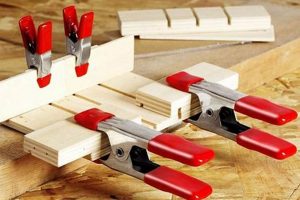
Spring clamps exhibit a limited clamping force range, typically measured in a few pounds. They are ideally suited for light-duty tasks such as holding small pieces during glue-up or securing fabric during upholstery. Examples include securing trim or holding edge banding in place. Their limited force makes them unsuitable for structural joints or large-scale assemblies.
- Hand Screw Clamps
Hand screw clamps offer a moderate clamping force range, adjustable via the tightening of their screws. They are versatile tools, applicable to a wide array of woodworking tasks. Cabinet makers use them for furniture construction and for tasks that require precise control over clamping pressure. Hand screw clamp’s adjustability allows for conforming to non-parallel surfaces. Excessive tightening risks damaging the wood, while insufficient pressure compromises the joint.
- Bar Clamps
Bar clamps, including both F-style and I-beam variations, possess a substantial clamping force range, capable of exerting hundreds or even thousands of pounds of pressure. They are employed in heavy-duty applications such as assembling large panels, constructing timber frames, and securing complex joinery. The substantial force they provide necessitates careful consideration to prevent damage to the workpiece. Protective cauls are often used to distribute the pressure evenly.
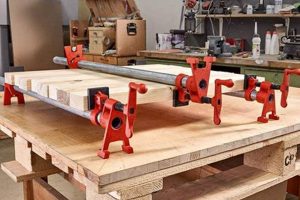
- Pipe Clamps
Pipe clamps utilize threaded pipes of varying lengths to achieve a customizable clamping span. Their clamping force range is similar to that of bar clamps, making them suitable for large projects. The force capacity is dependent on the pipe diameter and the strength of the clamp heads. They are frequently used in furniture making and for assembling large cabinets or bookshelves.
The selection of a type hinges on the required force to properly secure the joint without damaging the work pieces. Understanding these force range differences enables woodworkers to select the appropriate clamping method for the intended task. Consideration should be given to the material being clamped, the surface area of the joint, and the adhesive being used. Selecting a clamp with the proper force minimizes the risk of joint failure and ensures a strong, lasting bond.
3. Throat Depth Variance

Throat depth variance, the distance from the clamping bar or screw to the edge of the jaw, is a critical factor in woodworking. It dictates the reach and thus the suitability of a given clamping device for specific projects. This variability among woodworking clamps influences their applicability to tasks involving different work piece geometries.
- Shallow Throat Clamps
Shallow throat clamps, typically found in smaller hand screw or spring clamps, are designed for edge clamping or securing work pieces close to the edge. Their limited reach restricts their use to tasks where the clamping point is near the perimeter of the material. For example, securing trim or edge banding frequently utilizes shallow throat models due to accessibility requirements. They are less suitable for reaching deep into a work piece’s surface.
- Medium Throat Clamps
Medium throat clamps, common in F-style bar models, offer a balance between reach and overall size. These are often used for general-purpose clamping tasks, such as assembling frames or securing panels of moderate width. The F-style’s throat depth allows for reaching over edges without being excessively large or cumbersome. A furniture maker might use this type for assembling a chair frame or clamping a drawer box.
- Deep Throat Clamps
Deep throat clamps, characterized by their extended reach, are designed for applications where the clamping point is located far from the edge of the work piece. These are commonly found in specialized models such as C-clamps or some parallel jaw clamps. They enable access to areas that would be inaccessible to clamps with shallower throats. Cabinet making frequently employs deep throat clamps when assembling larger cabinets or reaching over protruding components.
- Pipe Clamps and Extensions
Pipe clamps offer a unique solution to throat depth limitations. While the clamp head itself has a minimal throat depth, the length of the pipe effectively extends the reach, allowing for clamping across very wide spans. By adding pipe extensions, the throat depth effectively becomes limitless. This design makes pipe clamps suitable for assembling large table tops or wide shelving units.
In conclusion, understanding throat depth variance is essential for selecting the appropriate type for a specific woodworking task. Shallow throats offer maneuverability for edge work, medium throats provide versatility, and deep throats enable access to recessed areas. Pipe clamps offer the ultimate flexibility in throat depth customization. Consideration of the work piece’s geometry and the clamping location is paramount for ensuring adequate reach and effective pressure application.
4. Jaw Width Capabilities
Jaw width capabilities, the surface area of the clamping faces, represent a key characteristic differentiating woodworking clamps. This specification directly influences the distribution of clamping force and, consequently, the suitability of a particular model for various applications. The ability to securely grip workpieces without damage depends significantly on matching the jaw width to the task at hand.
- Distribution of Force
Narrow jaws concentrate force over a small area. This may be desirable for specific tasks, such as edge gluing thin stock, but it risks damaging softer woods or leaving indentations on the surface. Wider jaws distribute force more evenly, reducing the likelihood of marring the work piece. An example is clamping delicate veneers, which require broad, even pressure to prevent crushing or distortion.
- Surface Area Engagement
The available clamping surface area directly affects the stability of the hold. Wider jaws provide more contact area, leading to a more secure grip, especially on irregular or non-parallel surfaces. For instance, when clamping a slightly warped board, a clamp with wider jaws can maintain contact across a greater portion of the surface, preventing slippage or misalignment during glue-up.
- Material Compatibility
The material used in the jaw faces, in conjunction with the jaw width, influences the clamp’s compatibility with different wood species. Metal jaws, regardless of width, may require protective pads to prevent discoloration or indentations on sensitive hardwoods. Clamps with wider wooden jaws offer a gentler clamping action suitable for softer woods, mitigating the risk of damage.
- Clamp Style and Jaw Width
Different clamp styles inherently offer different jaw width capabilities. Spring clamps typically have narrow jaws for quick, light-duty tasks, while parallel jaw clamps are designed with exceptionally wide jaws to ensure uniform pressure across large surfaces. Selecting the appropriate clamp style necessitates considering the typical jaw width requirements of the intended applications.
The diverse jaw width capabilities available across types, from narrow to extra-wide, enable woodworkers to select the optimal clamping solution for a given project. Matching jaw width to the material, surface area, and required force distribution is crucial for achieving strong, aesthetically pleasing results while minimizing the risk of damage. A thoughtful approach to this aspect enhances the overall effectiveness of the assembly process.
5. Material Composition

The selection of materials in woodworking clamps directly influences their strength, durability, and overall performance. Different materials offer varying degrees of resistance to deformation under load, corrosion, and wear, thereby affecting the lifespan and effectiveness of the device.
- Cast Iron
Cast iron is a common material for clamp jaws and frames due to its high compressive strength and ability to absorb vibration. This is seen in many traditional hand screw clamps, offering robust performance. However, cast iron is susceptible to corrosion and can be brittle, leading to fracture under excessive impact. Therefore, cast iron clamps require careful handling and maintenance to prevent damage.
- Steel
Steel alloys provide superior tensile strength and ductility compared to cast iron. They are frequently used in the construction of bar clamps, parallel jaw clamps, and quick-release mechanisms where high clamping force and resistance to bending are critical. While steel offers increased durability, it is also prone to corrosion, necessitating protective coatings or finishes to prevent rust.
- Aluminum
Aluminum alloys offer a lightweight alternative to steel and cast iron, making them suitable for clamps where portability is a concern. Aluminum is also highly resistant to corrosion, reducing the need for protective coatings. However, aluminum has lower strength and stiffness than steel, limiting its use to applications where high clamping force is not required. Some quick-action clamps utilize aluminum bodies to balance weight and durability.
- Wood
Wood, particularly hardwoods like maple or beech, is traditionally used for the jaws of hand screw clamps. Wooden jaws provide a soft clamping surface that minimizes the risk of marring delicate workpieces. Additionally, wood offers a degree of flexibility that allows the jaws to conform to non-parallel surfaces. However, wood is susceptible to moisture-induced warping and cracking, requiring careful selection and maintenance to ensure long-term performance.
In summary, the composition influences a clamp’s overall utility and longevity. The choice of material represents a trade-off between strength, weight, corrosion resistance, and cost, requiring woodworkers to carefully consider their specific needs and project requirements. Careful attention to material characteristics enhances the selection process, leading to appropriate and effective clamping solutions.
6. Handle Ergonomics
Handle ergonomics, a significant design aspect of woodworking clamps, directly impacts user comfort, efficiency, and safety. The handle design determines the force that can be applied and sustained, influencing the quality of the joint and the prevention of user fatigue. Ergonomically designed handles minimize strain, enhance grip, and optimize leverage, leading to more precise and controlled clamping.
The relationship between handle design and clamp type is particularly evident in several cases. Hand screw clamps, for instance, typically feature wooden handles shaped for a comfortable grip and efficient turning. Bar clamps often incorporate handles with a longer lever arm to generate substantial clamping force. Quick-release clamps may use a pistol-grip handle for rapid application and release. An ill-designed handle can lead to hand cramping, reduced clamping force, and an increased risk of slippage, potentially damaging the workpiece or causing injury. Conversely, a well-designed handle facilitates precise control and reduces the physical demands of the task.
Understanding the link between handle ergonomics and clamp type is crucial for selecting appropriate tools and employing safe working practices. Factors to consider include handle material, shape, size, and surface texture. Ergonomic handles reduce fatigue, enhance precision, and improve overall woodworking efficiency. A well-chosen and properly used handle is essential for optimal clamping and user safety. The long-term benefits of prioritizing handle ergonomics include reduced risk of repetitive strain injuries and improved productivity in woodworking projects.
7. Quick-Release Mechanisms

Quick-release mechanisms, integral components of certain woodworking clamps, significantly influence workflow efficiency and user experience. These mechanisms facilitate rapid application and removal, enabling swift adjustments and minimizing downtime during assembly processes. The presence and design of these mechanisms distinguish different types and directly affect their suitability for specific woodworking tasks.
- Lever-Action Release
Lever-action release mechanisms employ a cam or over-center linkage to rapidly disengage the clamping pressure. Found in many quick-action bar clamps, this design allows for one-handed operation, freeing the other hand to position or adjust the workpiece. Real-world applications include assembly line production, where speed is paramount. The implications of this design are reduced cycle times and improved productivity compared to traditional screw-tightened clamps.
- Push-Button Release
Push-button release mechanisms, commonly integrated into spring clamps and some specialized models, utilize a spring-loaded detent to secure the clamping force. Depressing the button disengages the detent, allowing for immediate release. Examples include securing small parts for gluing or holding materials in place for routing. The benefits include ease of use and suitability for repetitive tasks requiring frequent adjustments.
- Trigger-Activated Release
Trigger-activated release mechanisms offer a variation on the lever-action principle, employing a trigger to disengage the clamping force. Often found in pistol-grip style clamps, this design provides ergonomic advantages and enables precise control over the release process. Cabinet makers might use these clamps to quickly secure face frames or assemble drawers. The implications are improved comfort and reduced strain during prolonged use.
- Ratchet-Based Release
Ratchet-based release mechanisms utilize a ratchet pawl and gear system to gradually release the clamping pressure. This allows for controlled disassembly and prevents sudden jolts that could damage the workpiece. These are often employed in heavy-duty clamps used for assembling large panels or timber frames. This design is particularly beneficial when working with fragile materials or complex joinery.
The integration of quick-release mechanisms into various woodworking clamps provides tangible benefits in terms of speed, efficiency, and user comfort. The specific design of the mechanism dictates its suitability for different tasks and work environments. The selection of clamps incorporating these mechanisms reflects a consideration of workflow optimization and ergonomic principles within the woodworking process.
Frequently Asked Questions
This section addresses common inquiries and clarifies misconceptions related to workpiece holding devices, offering insights into their proper selection and application.
Question 1: What distinguishes a parallel jaw clamp from a standard bar clamp?
Parallel jaw clamps maintain consistent parallelism between the jaws throughout their clamping range, distributing force evenly. Standard bar clamps may exhibit slight deviations, potentially leading to uneven pressure distribution.
Question 2: Is clamping force always a primary consideration when selecting a woodworking clamp?
While clamping force is important, other factors such as jaw width, throat depth, and the material being clamped must also be considered. Excessive force can damage the workpiece.
Question 3: Can one type of clamp serve all woodworking needs?
No single type is universally suitable. Different projects necessitate specific characteristics. A diverse collection of clamps offers the greatest versatility.
Question 4: Are pipe clamps superior to bar clamps for large assemblies?
Pipe clamps offer customizable length, making them suitable for large assemblies. However, bar clamps may provide greater stability and rigidity, depending on their construction.
Question 5: How can one prevent clamp-induced damage to wood surfaces?
Employ protective cauls or pads between the clamp jaws and the workpiece. This distributes pressure and prevents indentations or marring.
Question 6: Do quick-release mechanisms compromise clamping force?
Not necessarily. Quality quick-release clamps maintain adequate force while offering the benefit of rapid adjustment and removal.
Proper selection and utilization are vital for achieving strong and aesthetically pleasing woodworking results. Consideration of the specifications of the different woodworking clamps will yield a great result.
The subsequent discussion will explore advanced techniques for applying clamping pressure effectively.
Woodworking Types of Clamps
This exploration has underscored the diverse range and specialized functions within workpiece holding devices. Key points encompassed the significance of clamping force, throat depth, jaw width, material composition, handle ergonomics, and quick-release mechanisms in relation to specific woodworking applications. An understanding of these variables facilitates informed decision-making in clamp selection, leading to enhanced precision and durability in woodworking projects.
The effective utilization of these devices extends beyond mere pressure application; it necessitates a strategic approach, incorporating protective measures and considering the unique properties of the materials being joined. Continued refinement of clamping techniques and a commitment to informed tool selection remain paramount for advancing woodworking practices and ensuring the enduring quality of craftsmanship. These devices will continue to evolve along with the materials used in woodworking projects.
![Top-Rated: Best Quick Clamps for Woodworking Projects [2024] | Step-by-Step Guides, Tools & Inspiration to Build Beautiful Wooden Decor on a Budget](https://woodfromhome.com/wp-content/uploads/2026/04/th-264-300x200.jpg "Top-Rated: Best Quick Clamps for Woodworking Projects [2024] Step-by-Step Guides, Tools & Inspiration to Build Beautiful Wooden Decor on a Budget")