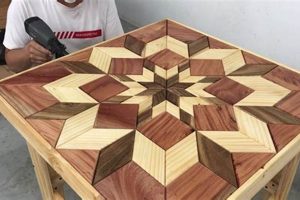
Simple projects crafted from wood, designed to appeal to a broad consumer base and generate revenue, represent a practical intersection of craftsmanship and commerce. These endeavors often prioritize affordability, ease of construction, and aesthetic appeal to ensure market viability. Examples include items like small decorative shelves, personalized cutting boards, and simple wooden toys.
The appeal of accessible woodwork lies in its potential for creating functional or decorative items with minimal investment in specialized tools or advanced techniques. This accessibility allows individuals to enter the craft with relative ease, fostering both personal creativity and entrepreneurial opportunities. Historically, woodworking has been a valued skill, and the modern interest in handmade goods continues to drive demand for well-executed, straightforward projects.
The subsequent sections will explore specific categories of these readily marketable wooden creations, examining design considerations, material selection, and potential sales avenues for individuals seeking to capitalize on the demand for easily produced, desirable wooden objects.
Crafting Success
This section offers actionable guidance for individuals seeking to create and market simple wooden goods effectively. Adherence to these principles can enhance the likelihood of commercial viability.
Tip 1: Emphasize Functionality: Prioritize items with practical applications in daily life. Examples include kitchen utensils, small organizers, or desk accessories. Functionality increases perceived value and utility.
Tip 2: Prioritize Material Selection: Opt for readily available and cost-effective wood types. Pine, poplar, and reclaimed wood are often suitable choices. Proper selection balances cost with aesthetic appeal.
Tip 3: Refine Finishing Techniques: A smooth, durable finish elevates the perceived quality of the product. Experiment with various stains, sealants, and paints to achieve a professional appearance. Consider food-safe finishes for kitchenware.
Tip 4: Develop a Consistent Brand Identity: Establish a recognizable aesthetic across all products. This might include a specific style, color palette, or unique design element. Brand consistency aids in customer recognition and loyalty.
Tip 5: Capture High-Quality Photography: Professional-looking product photos are essential for online marketing. Use adequate lighting, neutral backgrounds, and showcase the item from multiple angles. Invest in editing software to enhance image quality.
Tip 6: Research Market Trends: Stay informed about current design preferences and consumer demand. Analyze online marketplaces and social media platforms to identify popular styles and unmet needs. Adapt product offerings accordingly.
Tip 7: Optimize Online Listings: Craft detailed and informative product descriptions. Include dimensions, materials used, and care instructions. Utilize relevant keywords to improve search engine visibility.
These strategies collectively contribute to the creation of products that are both desirable and profitable. Attention to detail in design, material selection, and marketing is critical for sustained success.
The following sections will delve into methods for optimizing sales channels and managing production efficiency to maximize profitability in simple woodwork endeavors.
1. Simplicity

The core tenet of many commercially viable woodworking projects lies in their straightforward construction and design. A project’s ease of execution directly impacts production time and required skill level, influencing its potential profitability. Complex designs necessitate specialized tools, advanced techniques, and increased labor, thereby escalating production costs and potentially limiting accessibility for amateur woodworkers. Simpler projects, conversely, can be produced rapidly and with minimal investment, making them attractive for individuals seeking to generate income or supplement existing earnings.
Simplicity also contributes to broader market appeal. Intricate designs may cater to niche audiences, while readily understandable and functional items tend to resonate with a larger consumer base. For example, a basic wooden spice rack, easily assembled from a few pieces of lumber, offers immediate utility and fits seamlessly into various kitchen styles. In contrast, an elaborately carved decorative piece may require a specific aesthetic sensibility, limiting its potential buyers. The relative ease of producing simpler items also allows for greater flexibility in scaling production to meet market demand. The ability to efficiently manufacture multiple units of a popular item is a key factor in maximizing revenue potential.
In summary, simplicity functions as a critical enabler within the realm of commercially successful woodworking. Its influence extends from reducing production costs and skill requirements to broadening market appeal and facilitating scalability. This understanding highlights the importance of prioritizing functional designs that can be efficiently produced and readily integrated into diverse consumer lifestyles. The challenge lies in striking a balance between simplicity and aesthetic appeal, ensuring that projects are not only easy to create but also desirable to purchase.
2. Functionality

The success of readily marketable wooden projects hinges significantly on their inherent utility. Items that serve a practical purpose within daily life demonstrate immediate value to potential consumers, driving purchasing decisions. This emphasis on functionality elevates simple wooden creations from mere decorative objects to essential tools or organizers, increasing their desirability and marketability. Without a clear function, even aesthetically pleasing wooden items may struggle to find a sustained market, particularly when competing with mass-produced alternatives.
The connection between functionality and successful sales is evident in numerous examples. Wooden cutting boards, serving trays, and spice racks address fundamental needs within the kitchen environment. Similarly, small wooden organizers for desks or entryways provide practical storage solutions. The key is to identify common pain points or unmet needs within the domestic sphere and then develop simple wooden solutions that directly address these issues. Effective design integrates functionality seamlessly into the aesthetic form, ensuring that the item is both useful and visually appealing. A well-designed wooden phone stand, for instance, provides a convenient hands-free viewing experience while also adding a touch of natural warmth to a workspace.
Ultimately, prioritizing functionality in accessible woodwork not only increases the likelihood of sales but also fosters customer satisfaction and brand loyalty. Items that genuinely improve the user’s daily life are more likely to be valued and recommended to others. While aesthetic considerations are undoubtedly important, a focus on practicality provides a solid foundation for building a sustainable and profitable woodworking business. The challenge lies in continually identifying and addressing unmet needs through simple, well-crafted, and functional wooden creations.
3. Affordability

The price point of a product is a critical determinant of its market viability. In the realm of readily marketable wooden creations, affordability assumes paramount importance, directly influencing sales volume and overall revenue potential. The financial accessibility of a product significantly broadens its target demographic, increasing the likelihood of purchase.
- Material Costs and Sourcing
The selection of raw materials profoundly affects the final price. Utilizing locally sourced, readily available lumber, such as pine or poplar, minimizes transportation expenses and often lowers the overall material cost. Reclaimed wood presents another cost-effective option, provided it meets quality and safety standards. Strategic material sourcing is essential for maintaining affordability without compromising structural integrity or aesthetic appeal.
- Production Efficiency and Time Investment
Simplified designs that require minimal processing time translate directly into lower labor costs. Complex joinery techniques and intricate embellishments increase production time, necessitating a higher retail price. Streamlining the manufacturing process, utilizing jigs and templates, and optimizing workflow contribute to enhanced efficiency and, consequently, more competitive pricing.
- Pricing Strategy and Market Analysis
A well-defined pricing strategy is crucial for aligning product value with consumer expectations. Conducting thorough market research to assess competitor pricing and demand elasticity allows for informed decisions regarding profit margins. A tiered pricing approach, offering variations of a product at different price points, can cater to a wider range of customers.
- Packaging and Distribution Costs
Excessive packaging adds unnecessary expenses that are ultimately passed on to the consumer. Utilizing minimal, cost-effective packaging solutions is essential for maintaining affordability. Optimizing distribution channels, whether through direct sales, online marketplaces, or retail partnerships, can also minimize shipping and handling fees, further contributing to a competitive price point.
The confluence of these factors underscores the vital role of affordability in fostering the success of simple woodworking endeavors. A judicious approach to material selection, efficient production methods, strategic pricing, and streamlined distribution collectively contribute to the creation of products that are both desirable and financially accessible to a broad consumer base. This delicate balance between cost and value is a defining characteristic of readily marketable wooden items.
4. Marketability

Marketability is an indispensable component of readily marketable wooden creations. The ease of production and inherent qualities of a woodworking project are rendered commercially insignificant without a demonstrable consumer demand. Increased marketability enhances product visibility, promotes consumer engagement, and ultimately drives sales. Market demand must inform the selection, design, and presentation of projects to ensure that time and resources are invested wisely. For example, a simple wooden phone stands usefulness and prevalence in modern society make it more marketable than a complex geometric sculpture with limited appeal.
Effective marketing strategies play a crucial role in transforming accessible woodwork into profitable ventures. These strategies encompass several key elements. Firstly, compelling product photography visually showcases the items quality and functionality. Secondly, concise and informative descriptions emphasize the unique selling points and benefits to the consumer. Thirdly, strategic placement on online marketplaces such as Etsy or Amazon leverages existing consumer traffic. The creation of a brand identity through a logo and consistent aesthetic can also foster customer recognition and loyalty. Furthermore, engagement on social media platforms through visually appealing content and targeted advertising generates interest and encourages product discovery.
Understanding the dynamics of marketability is crucial for woodworkers seeking financial success. By diligently analyzing market trends, developing effective marketing strategies, and prioritizing projects with inherent consumer appeal, craftspeople can significantly enhance the prospects of their woodworking endeavors. Balancing creativity and practicality is essential, ensuring that artistic expression aligns with consumer demand. Thus, marketability serves as a critical bridge between a well-crafted product and a receptive customer base, transforming creative endeavor into a sustainable income stream.
5. Craftsmanship
The intersection of craftsmanship and readily marketable wooden items is defined by a paradox: while the projects are characterized by their simplicity, the quality of execution remains paramount to their commercial success. Craftsmanship, in this context, transcends intricate detailing and focuses on precision, durability, and a refined finish. Flaws in construction or a substandard finish can negate the appeal of even the most functional design, rendering it unsalable. The market values competence and attention to detail, regardless of the project’s complexity.
The demand for handmade goods, even those of a simple nature, stems in part from a desire for quality and uniqueness not readily found in mass-produced items. This presents an opportunity for woodworkers to distinguish their products through superior craftsmanship. For example, a simple wooden cutting board, when constructed from high-quality hardwood with precise joinery and a meticulously applied finish, commands a higher price point and generates greater customer satisfaction than a similar board of inferior quality. This emphasis on craftsmanship also informs material selection. Using appropriate wood types, selected for their durability, grain pattern, and workability, directly contributes to the long-term value and marketability of the finished product.
Therefore, while easy woodworking ideas provide the foundation for a business, craftsmanship serves as the cornerstone of its sustainability. Even straightforward projects must be executed with skill and precision to resonate with consumers and establish a reputation for quality. This principle underscores the importance of continuous learning, attention to detail, and a commitment to producing items that meet or exceed customer expectations. Failure to prioritize craftsmanship, even in seemingly simple projects, ultimately undermines the potential for long-term success in the marketplace.
6. Profitability

The ultimate objective of pursuing readily marketable wooden creations is the generation of financial profit. Profitability, in this context, is not merely revenue generation; it is the sustainable accumulation of capital exceeding the expenses incurred in production, marketing, and distribution. Therefore, the analysis of factors influencing profit margins is critical for individuals and businesses engaged in accessible woodworking endeavors.
- Cost of Goods Sold (COGS) Management
The cost of raw materials, direct labor, and manufacturing overhead collectively comprise the COGS. Efficient sourcing of materials, optimized production workflows, and minimizing waste are crucial for reducing this expense. Lowering COGS directly increases profit margins on each item sold. For instance, bulk purchasing of lumber or implementing jigs to expedite repetitive cuts can significantly reduce the per-unit cost.
- Pricing Strategy and Value Perception
Establishing a pricing strategy that accurately reflects the perceived value of the product is essential. This involves analyzing competitor pricing, assessing consumer demand, and factoring in brand reputation. A price point that is too low may undervalue the craftsmanship, while a price that is too high may deter potential buyers. Value perception can be enhanced through high-quality photography, detailed product descriptions, and positive customer reviews.
- Sales Volume and Market Reach
Profitability is directly correlated with the volume of sales. Expanding market reach through multiple sales channels, such as online marketplaces, craft fairs, and retail partnerships, increases the potential customer base. Targeted marketing campaigns, utilizing social media and search engine optimization (SEO), can also drive traffic to online listings and physical stores. Effective inventory management is crucial to meet demand without incurring excessive storage costs.
- Operational Efficiency and Scalability
Streamlining production processes, automating repetitive tasks, and investing in efficient tools contribute to operational efficiency. As sales volume increases, the ability to scale production becomes essential. This may involve hiring additional labor, expanding workspace, or investing in more sophisticated equipment. However, scalability must be carefully managed to avoid overextending resources and compromising quality control.
In summary, the profitability of accessible woodwork is contingent upon a multifaceted approach encompassing cost control, strategic pricing, expanded market reach, and operational efficiency. Successfully navigating these interconnected elements is paramount for transforming simple woodworking ideas into sustainable and financially rewarding ventures.
7. Materials

The selection of appropriate materials is inextricably linked to the viability of woodworking projects designed for commercial sale. Material properties, cost, and availability directly influence both production processes and product appeal, thereby impacting profitability. Strategic material choices are thus a cornerstone of accessible woodworking endeavors.
- Cost and Availability
The economic feasibility of a project is often dictated by the price and accessibility of the chosen wood. Common softwoods like pine and poplar offer cost-effective alternatives to hardwoods, enabling wider profit margins. Utilizing locally sourced lumber or reclaimed materials further reduces expenditure. The ease of procuring these materials ensures consistent production capabilities. For example, using readily available pine for simple shelves allows for lower retail prices and quicker turnaround times, facilitating broader market penetration.
- Workability and Tool Requirements
The ease with which a material can be cut, shaped, and finished directly impacts production efficiency. Materials that require specialized tools or complex techniques increase labor costs and production time. Softwoods, generally, are easier to work with using standard woodworking tools, reducing the barrier to entry for novice woodworkers. Choosing woods that require minimal specialized processing is critical for maintaining simplicity and affordability in accessible woodworking projects.
- Aesthetics and Perceived Value
While cost is a significant factor, the aesthetic qualities of the chosen material contribute to the perceived value of the finished product. Wood grain, color, and texture influence consumer appeal. Even inexpensive materials can be enhanced with appropriate staining and finishing techniques to create a visually appealing product. For instance, staining a simple pine box to resemble a more expensive hardwood can enhance its perceived value and marketability.
- Durability and Intended Use
The intended use of the finished product should inform the selection of a material with appropriate durability characteristics. Items designed for heavy use or exposure to moisture require more durable wood species. While cost considerations are important, selecting materials that are inadequate for the intended purpose can compromise product longevity and lead to customer dissatisfaction. Choosing a rot-resistant wood like cedar for outdoor planters exemplifies this principle.
These considerations underscore the crucial role of informed material selection in the creation of accessible and commercially viable woodwork. Striking a balance between cost, workability, aesthetics, and durability is essential for maximizing profitability and ensuring customer satisfaction. The strategic use of materials transforms basic woodworking ideas into valuable and marketable products, thus forming the base of successful craft endeavors.
Frequently Asked Questions
The following addresses commonly encountered questions regarding the development and commercialization of simple wooden creations, providing clarity and guidance for aspiring woodworkers.
Question 1: What constitutes a viable readily marketable woodworking project?
A commercially viable project balances simplicity of construction, broad consumer appeal, and demonstrable utility. It should be achievable with basic woodworking tools and techniques, address a common need, and be priced competitively within the existing market.
Question 2: What are the most critical factors influencing the profitability of these projects?
Profitability is primarily determined by material costs, production efficiency, pricing strategy, and sales volume. Efficient sourcing of materials, streamlined production, competitive pricing, and effective marketing all contribute to higher profit margins.
Question 3: Is specialized woodworking experience required to create commercially successful items?
No. Simplicity is a key attribute. Projects designed for broad market appeal often prioritize ease of construction over complex techniques. Basic woodworking skills and attention to detail are typically sufficient.
Question 4: How important is branding and marketing for simple woodworking items?
Branding and marketing are essential for establishing a market presence and differentiating products from competitors. High-quality product photography, informative descriptions, and strategic online placement are crucial for driving sales.
Question 5: What types of wood are most suitable for these projects?
Cost-effective and readily available woods like pine, poplar, and reclaimed lumber are often ideal. The selection should balance cost with aesthetic appeal and the intended use of the product. Hardwoods may be appropriate for items requiring increased durability.
Question 6: What legal considerations apply to selling wooden products?
Depending on the nature of the products, considerations may include business licensing, sales tax collection, and product liability insurance. Food-safe finishes are mandatory for items intended for kitchen use. Compliance with all applicable regulations is essential.
In summary, success in the realm of readily marketable woodworking projects requires a balanced approach encompassing practical design, efficient production, effective marketing, and adherence to all relevant legal and regulatory requirements.
The subsequent section will explore case studies of successful woodworking businesses, providing practical insights into the strategies and challenges associated with this field.
Conclusion
The preceding exploration of “easy woodworking ideas that sell” has illuminated the confluence of design, material science, and marketing strategy required for success. Simple projects that prioritize functionality, affordability, and craftsmanship are most likely to resonate with a broad consumer base and generate sustainable income. The strategic application of material selection, efficient production techniques, and targeted marketing efforts serves as the foundation for profitable ventures.
The principles outlined herein provide a framework for individuals seeking to transform readily available resources and basic skills into marketable products. The ongoing demand for handmade goods suggests continued opportunities within this sector, contingent upon a commitment to quality, innovation, and an understanding of evolving market trends. A diligent application of these principles will yield significant returns in the realm of woodworking and market expansion.