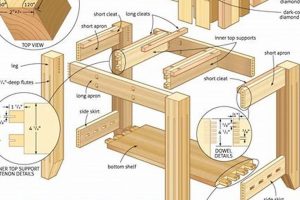
The creation of simple items from wood, suitable for beginners, presents a rewarding and accessible entry point into woodworking. These undertakings often involve basic tools, readily available materials, and straightforward instructions. Examples include building birdhouses, small shelves, or personalized wooden coasters. These beginner projects are distinguished by their manageable size, limited complexity, and potential for practical use or decorative display.
Engaging in accessible woodworking provides several key advantages. It fosters creativity, develops practical skills, and enhances problem-solving abilities. Historically, woodworking has been a fundamental craft, contributing to the development of civilization through the creation of shelter, tools, and essential household items. Even at a fundamental level, woodworking provides a tangible connection to this history and offers a sense of accomplishment through the creation of functional and aesthetically pleasing objects.
The following discussion explores specific examples, essential tools, material considerations, and valuable resources for those seeking to embark on the journey of crafting with wood. It provides a foundation for further exploration and development of woodworking skills, regardless of prior experience.
Guidance for Introductory Woodcrafting
The following tips aim to facilitate a successful and enjoyable experience for individuals initiating woodworking endeavors. Prioritizing safety, proper preparation, and manageable goals are essential for fostering confidence and skill development.
Tip 1: Begin with a Defined Plan: Select projects that align with skill level and available resources. A well-defined plan, including dimensions and material lists, minimizes errors and enhances efficiency.
Tip 2: Emphasize Safety Protocols: Wear appropriate safety gear, including eye protection and hearing protection, at all times. Ensure a clean and well-lit workspace to prevent accidents.
Tip 3: Master Fundamental Techniques: Practice basic cutting, joining, and finishing techniques on scrap wood before applying them to the project. Accurate measurements and precise cuts are critical for optimal results.
Tip 4: Select Appropriate Wood Species: Opt for softwood species like pine or fir for initial projects. These woods are generally more affordable and easier to work with than hardwoods.
Tip 5: Utilize Hand Tools Effectively: Prioritize hand tools for tasks that require precision and control. A sharp hand saw and well-maintained chisels are invaluable for detailed work.
Tip 6: Apply Finishes Methodically: Prepare the wood surface properly before applying any finish. Sanding, staining, and sealing enhance the appearance and durability of the finished piece.
Tip 7: Seek Guidance and Feedback: Consult with experienced woodworkers or online resources for advice and troubleshooting. Constructive criticism can accelerate skill development.
These guidelines, when diligently followed, contribute to the creation of aesthetically pleasing and structurally sound wooden items. A focus on safety, precision, and continuous learning is key.
The subsequent sections of this discourse delve deeper into specific project designs, resource recommendations, and advanced woodworking techniques.
1. Beginner-friendly designs
The inherent appeal of straightforward woodcrafting is intrinsically linked to the accessibility of initial designs. “Fun easy woodworking projects” necessitate plans that minimize complexity, mitigating potential frustration and encouraging continued engagement. A design’s accessibility directly influences the likelihood of successful completion for novice woodworkers. Failure to select appropriate designs can lead to discouragement, abandonment of the craft, and a perception of woodworking as an overly challenging activity. A simple birdhouse, for instance, offers a tangible sense of accomplishment; whereas an intricate puzzle box, attempted prematurely, risks overwhelming the beginner.
The selection of these designs also impacts the tools required and the skillset developed. Beginner-friendly options typically necessitate only basic hand tools and simplified joinery techniques, fostering a gradual acquisition of skills. Projects such as building a small wooden bench or a simple bookshelf allow for the practice of fundamental skills like measuring, cutting, sanding, and joining, all within a manageable scope. This approach not only builds confidence but also provides a solid foundation for tackling more complex projects in the future.
In summary, the connection between design accessibility and the perception of enjoyable woodworking is crucial. Prioritizing beginner-friendly designs ensures a positive and rewarding introduction to the craft, leading to sustained interest and the development of progressively advanced skills. Addressing this connection effectively remains paramount in promoting the accessibility and appeal of woodworking for novices.
2. Simple tool requirements

The ease and enjoyment associated with entry-level woodcrafting are directly correlated to the tools required. Reduced tool complexity translates to lower financial investment, decreased setup time, and a gentler learning curve. When a project necessitates an extensive array of specialized or expensive equipment, accessibility for beginners diminishes significantly. Conversely, projects achievable with a minimal set of hand tools become vastly more approachable. A rudimentary example is the construction of a wooden box, which can be accomplished with a saw, hammer, measuring tape, and sandpaper. This contrasts sharply with crafting a dovetail joint, which traditionally necessitates specialized chisels, saws, and a high degree of skill.
The impact of simplified tool requirements extends beyond mere affordability. Projects utilizing fewer tools inherently demand less space for execution. Apartment dwellers or individuals with limited workshop space benefit significantly from the ability to engage in woodcrafting without the need for substantial work areas or storage solutions. Moreover, a reduced toolset simplifies the learning process, allowing beginners to concentrate on mastering fundamental techniques rather than being overwhelmed by a multitude of tools and their associated intricacies. Consider the act of creating a simple wooden picture frame, requiring primarily a saw for cutting the frame pieces, glue for assembly, and sandpaper for finishing. This streamlined process promotes engagement and fosters a sense of accomplishment.
In conclusion, the correlation between simplified tool requirements and the realization of approachable woodworking experiences is undeniably significant. A focus on projects requiring only essential hand tools enhances accessibility, reduces the financial burden, and promotes a less intimidating introduction to the craft. This approach, therefore, is paramount in fostering interest and encouraging participation in introductory woodworking endeavors. By reducing reliance on complex or expensive equipment, woodworking becomes a more accessible and rewarding activity for individuals of all skill levels.
3. Affordable material options

The accessibility and appeal of introductory woodworking are inextricably linked to the availability of economical material choices. The expense associated with procuring suitable wood can serve as a significant deterrent for beginners. Therefore, the presence of budget-friendly alternatives directly impacts the feasibility and attractiveness of “fun easy woodworking projects.”
- Reclaimed Wood Utilization
Reclaimed wood, sourced from discarded furniture, pallets, or construction debris, presents a cost-effective and environmentally responsible material option. Its availability often circumvents the need for purchasing new lumber, reducing project expenses. For instance, the construction of a simple coffee table from reclaimed pallet wood offers both a cost-effective and aesthetically unique outcome. The use of reclaimed materials, however, requires careful inspection to ensure structural integrity and the absence of hazardous treatments.
- Common Softwood Lumber
Species such as pine, fir, and cedar are readily available at most lumberyards and hardware stores, often at a significantly lower cost compared to hardwoods like oak or maple. These softwoods are generally easier to cut, shape, and sand, making them ideal for beginner woodworking projects. A basic bookshelf crafted from pine demonstrates the practicality and affordability of this option. The inherent softness of these woods, however, necessitates careful handling to prevent denting or scratching.
- Plywood and MDF Alternatives
Plywood and medium-density fiberboard (MDF) provide stable and affordable sheet material options for various woodworking applications. These engineered wood products offer consistent dimensions and minimal warping, simplifying construction. The creation of a simple storage box from MDF exemplifies its suitability for projects requiring flat, stable surfaces. The edges of plywood and MDF, however, require finishing with edge banding or similar treatments to conceal the layered construction.
- Scrap Wood Optimization
The judicious utilization of scrap wood from previous projects or obtained from local woodworking shops allows for the creation of small-scale items at minimal cost. Small coasters, cutting boards, or decorative items can be fashioned from leftover pieces, minimizing material waste and reducing project expenses. The challenge lies in effectively planning and organizing projects to maximize the use of available scrap materials.
In summary, affordable material options are fundamental to lowering the barriers to entry in woodworking and promoting “fun easy woodworking projects.” By utilizing reclaimed wood, selecting common softwoods, employing plywood and MDF, and optimizing scrap wood, aspiring woodworkers can engage in the craft without incurring prohibitive costs. These approaches not only reduce expenses but also foster resourcefulness and environmental consciousness.
4. Quick project completion
A direct correlation exists between the time investment required for a woodworking endeavor and its perceived enjoyment, particularly for individuals new to the craft. Rapid project culmination yields immediate gratification, reinforcing positive associations with woodworking activities. Lengthy, complex projects, conversely, can lead to frustration and diminished enthusiasm, especially if unforeseen challenges arise. Thus, expedited completion serves as a crucial component in defining accessible and pleasurable woodworking endeavors.
The impact of timely project realization extends beyond mere psychological satisfaction. Shorter projects typically necessitate fewer specialized tools and less complex joinery techniques, further simplifying the undertaking. A small picture frame, requiring only basic cuts and glue, exemplifies this principle. Its quick assembly and visible result contribute to a sense of accomplishment and encourage further exploration of woodworking skills. Conversely, constructing a large cabinet with intricate inlays demands significant time, expertise, and specialized tools, potentially discouraging novice woodworkers. Efficiently designed, manageable projects provide a platform for skill development without the burden of prolonged commitment.
In summary, the expedience of project completion significantly influences the perceived accessibility and enjoyability of woodworking, particularly for beginners. By prioritizing designs that minimize time investment and maximize immediate results, practitioners can cultivate a positive and sustained engagement with the craft. While more complex, time-intensive projects hold merit, their introduction should follow the successful completion of simpler, more rapidly realized endeavors. The capacity to quickly generate tangible outcomes serves as a critical driver in fostering long-term interest and skill acquisition within the realm of woodworking.
5. Practical item creation

The production of useful objects serves as a strong motivator within introductory woodworking. “Fun easy woodworking projects” derive much of their appeal from the tangible utility of the final product. The creation of items such as small shelves, cutting boards, or simple tool organizers offers immediate practical value, fostering a sense of accomplishment that sustains interest in the craft. This contrasts with purely decorative projects, which, while potentially aesthetically pleasing, may lack the functional relevance that motivates many beginners. The ability to produce something useful is a key component in maintaining engagement and fostering skill development.
A direct consequence of creating practical items is the opportunity to learn and refine woodworking techniques within a relevant context. Building a simple wooden box, for example, provides practice in measuring, cutting, joining, and finishing, all skills that are directly applicable to a wide range of more complex projects. Furthermore, the experience gained from creating a functional object often leads to a deeper understanding of material properties, structural considerations, and design principles. This practical application of knowledge reinforces learning and promotes a more comprehensive grasp of the craft. The ongoing usefulness of the created item further enhances the learning experience by providing continuous feedback on its design and construction.
In summary, the creation of practical items forms a vital component of “fun easy woodworking projects.” The intrinsic motivation derived from producing a useful object, coupled with the opportunity to learn and refine essential woodworking skills, significantly contributes to the success and enjoyment of introductory projects. The emphasis on practicality not only enhances the learning experience but also fosters a deeper appreciation for the craft, encouraging continued exploration and skill development. Prioritizing useful outcomes is therefore a key factor in maximizing the appeal and effectiveness of entry-level woodworking endeavors.
6. Creative skill development

The engagement with accessible woodcrafting directly fosters creative aptitude. Initial undertakings in this domain often present opportunities for personalization and adaptation of existing designs, thereby encouraging innovative problem-solving. The selection of wood finishes, hardware choices, and minor dimensional adjustments all represent avenues for creative expression, even within relatively constrained project parameters. A simple birdhouse project, for instance, can be modified to incorporate unique rooflines, paint schemes, or entry port designs, facilitating the development of creative skills within a manageable framework. The ability to visualize and execute such modifications strengthens creative thinking and spatial reasoning abilities. A causal relationship exists: engaging in these adaptable projects leads directly to enhanced creative skills.
The significance of creative skill development within accessible woodworking lies in its transferable nature. The ability to conceive and implement novel solutions to design challenges translates readily to other domains, including engineering, architecture, and even abstract problem-solving in non-technical fields. Furthermore, the tactile nature of woodcrafting provides a unique channel for creative exploration, allowing individuals to translate abstract ideas into tangible forms. Consider the creation of a custom-designed wooden toy. This project not only necessitates technical skill but also demands creative input regarding form, function, and aesthetic appeal. The process of bringing such a design to fruition significantly enhances creative confidence and problem-solving abilities. This understanding allows projects to be designed with creative skill development in mind.
In summary, the cultivation of creative skills stands as a central, yet often understated, benefit derived from engaging in accessible woodworking. The capacity to personalize and adapt designs, coupled with the tangible nature of the medium, provides a fertile ground for fostering innovation and problem-solving abilities. While technical proficiency remains essential, the integration of creative elements elevates simple projects to vehicles for personal expression and skill development, offering benefits that extend far beyond the confines of the workshop. Overcoming the challenge of perceiving simple projects as merely technical exercises unlocks the full potential for creative growth within this craft.
7. Personalized customization

The ability to tailor designs to individual preferences significantly enhances the appeal of accessible woodworking. Personalized customization transforms elementary projects into expressions of personal style and functional requirements. This act of individualization is central to fostering a sense of ownership and accomplishment, thus augmenting the overall woodworking experience.
- Dimensional Adjustments
Modifying the size and scale of a project to suit specific needs represents a fundamental form of customization. Adapting the dimensions of a bookshelf to accommodate a particular collection of books, or altering the height of a small table to align with existing furniture, increases the practical utility of the finished piece. Dimensional adjustments require careful consideration of structural stability and material usage, presenting a valuable learning opportunity in design principles.
- Material Selection and Finish Application
The choice of wood species and the application of various finishes allows for significant personalization. Selecting a specific wood grain pattern or applying a stain that complements existing dcor transforms a generic project into a cohesive element within a given environment. Experimentation with different finishes, such as varnish, lacquer, or oil, can alter the appearance and durability of the wood, providing a means of expressing individual aesthetic preferences.
- Hardware Integration
The selection of knobs, hinges, and other hardware elements offers another avenue for personalization. Replacing standard hardware with decorative alternatives can significantly enhance the visual appeal of a project and reflect individual tastes. The integration of unique hardware requires careful consideration of functionality and compatibility, fostering problem-solving skills and attention to detail.
- Decorative Embellishments
Adding decorative elements, such as carvings, inlays, or painted designs, allows for the expression of artistic creativity. Incorporating personalized motifs or patterns transforms a functional object into a unique work of art. The execution of decorative embellishments requires a degree of skill and precision, providing an opportunity to develop advanced woodworking techniques and artistic abilities.
These facets of personalized customization demonstrate the potential for transforming basic woodworking projects into meaningful expressions of individual style and functional needs. The act of tailoring a design to specific requirements fosters a sense of ownership and accomplishment, thereby enhancing the overall appeal and enjoyment of accessible woodworking. By integrating these elements of personalization, aspiring woodworkers can elevate simple projects to works of craftsmanship that reflect their unique sensibilities.
Frequently Asked Questions
This section addresses common inquiries and clarifies prevalent misconceptions concerning beginner-level woodworking endeavors.
Question 1: What constitutes a suitable initial woodworking undertaking?
Projects involving straightforward construction, minimal joinery, and readily available materials are recommended. Examples encompass birdhouses, small shelves, and personalized coasters. Emphasis should be placed on designs that promote rapid completion and foster a sense of accomplishment.
Question 2: What essential tools are requisite for embarking on elementary woodworking projects?
A foundational toolkit typically comprises a hand saw, measuring tape, sandpaper, wood glue, and a basic set of screwdrivers. Power tools, such as drills and sanders, can enhance efficiency but are not strictly necessary for initial undertakings. Safety equipment, including eye protection and hearing protection, is paramount.
Question 3: Which wood species are optimal for novice woodworkers?
Softwood varieties, including pine, fir, and cedar, are generally more amenable to beginners due to their relative softness and affordability. These species are easier to cut, shape, and sand compared to hardwoods. Reclaimed wood presents an environmentally conscientious and cost-effective alternative, though its structural integrity should be thoroughly assessed.
Question 4: What safety precautions should be observed during woodworking activities?
Eye protection is mandatory to safeguard against flying debris. Hearing protection should be employed when operating power tools or engaging in prolonged sawing. A clean and well-lit workspace is essential to prevent accidents. Secure workpieces to prevent slippage during cutting or shaping. Adherence to manufacturer safety guidelines for all tools is imperative.
Question 5: How does one mitigate the risk of project failure?
Commence with well-defined plans, including precise dimensions and material lists. Practice fundamental techniques on scrap wood prior to applying them to the project. Measure accurately and cut precisely to minimize errors. Seek guidance from experienced woodworkers or online resources when encountering challenges. A methodical approach reduces the likelihood of setbacks.
Question 6: Where can one procure woodworking plans and instructional resources?
Numerous online repositories offer free and paid woodworking plans tailored to various skill levels. Local libraries and bookstores often stock woodworking guides and project books. Community woodworking groups and workshops provide opportunities for hands-on instruction and peer support. The internet offers a wealth of video tutorials demonstrating essential techniques and project builds.
In summary, prioritizing safety, meticulous planning, and the selection of appropriate materials and tools are critical for a successful introduction to woodcrafting. Continuous learning and seeking constructive feedback contribute to skill development and project satisfaction.
The following discourse transitions to an examination of advanced woodworking techniques and project designs.
Conclusion
This exploration has detailed the critical elements comprising accessible woodcrafting, often referred to as “fun easy woodworking projects.” The analysis encompasses the importance of beginner-friendly designs, simplified tool requirements, affordable material options, the value of quick project completion, the satisfaction derived from practical item creation, the fostering of creative skill development, and the potential for personalized customization. Each element contributes to creating an accessible entry point into woodworking, encouraging participation and skill acquisition.
The principles discussed herein serve as a foundation for further exploration within the craft. Individuals seeking to engage in woodworking are encouraged to consider these factors when selecting initial projects. By prioritizing accessibility and focusing on incremental skill development, a rewarding and enriching experience can be achieved. The mastery of basic techniques unlocks opportunities for more complex and creative endeavors, contributing to a lifelong engagement with the art and science of woodcrafting. The tangible results obtained from woodworking projects can bring lasting satisfaction.