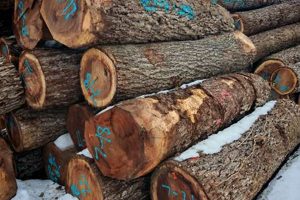
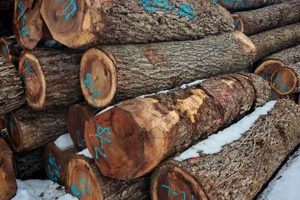
The practice of shaping freshly cut lumber, also known as unseasoned timber, requires specialized techniques due to the high moisture content inherent in the material. This approach to fabrication involves manipulating the wood while it is still pliable and relatively soft, allowing for certain processes that are more challenging or impossible with dried lumber. This method can be applied to furniture making, carving, and construction, resulting in unique properties in the finished product.
Using timber in its unseasoned state offers several advantages, including ease of shaping, reduced splitting during joinery, and the ability to create curved forms naturally as the wood dries. Historically, this approach was common due to the limited availability of kiln-dried lumber and remains relevant today for crafting rustic furniture, timber framing, and other specialized applications. The inherent properties of the wood at this stage of its life cycle lend themselves to strong, flexible structures.
The subsequent sections will delve into the specific tools and techniques employed when working with freshly felled timber, explore the considerations for wood selection and drying processes, and discuss the challenges associated with shrinkage and movement in the final piece. This exploration will provide a comprehensive understanding of the entire process, from forest to finished product.
Working with Unseasoned Timber
Achieving success with freshly cut lumber requires careful attention to detail and adaptation of traditional woodworking methods. The following guidelines are designed to enhance the quality and longevity of projects crafted from this material.
Tip 1: Select Appropriate Species: Certain wood types exhibit more predictable shrinkage and movement during drying. Species like willow, poplar, and basswood are often favored for their stability and workability in the green state.
Tip 2: Utilize Sharp Tools: Green wood’s high moisture content necessitates exceptionally sharp tools to achieve clean cuts and avoid tearing the fibers. Frequent honing is crucial for maintaining optimal performance.
Tip 3: Employ Appropriate Joinery Techniques: Dovetail joints and mortise-and-tenon joints are well-suited for projects that will undergo significant shrinkage. These joinery methods offer mechanical strength and accommodate wood movement.
Tip 4: Anticipate Wood Movement: Design considerations should account for potential shrinkage and warping as the material dries. Incorporating expansion gaps or floating panels can prevent stress build-up and structural failure.
Tip 5: Control Drying Rate: Gradual drying is essential to minimize cracking and checking. Techniques such as end-sealing with wax or paint and controlled air-drying in a shaded, well-ventilated environment are recommended.
Tip 6: Consider the Final Moisture Content: The intended use of the finished piece will dictate the target moisture content. Interior projects typically require lower moisture content than exterior applications. Allow sufficient drying time to reach the desired level.
Tip 7: Prepare for Surface Variations: As the wood dries, minor surface imperfections may become apparent. Sanding, planing, or other finishing techniques can be employed to address these irregularities after the drying process is complete.
Adherence to these guidelines will mitigate common issues associated with working with high-moisture content lumber and lead to durable and aesthetically pleasing results.
The subsequent section will explore the finishing options best suited for pieces fabricated using this approach, including treatments that protect the wood while allowing it to breathe and continue to acclimate to its environment.
1. Moisture content

The defining characteristic of woodworking with green wood is the exceptionally high moisture content present within the wood cells. This moisture significantly impacts the wood’s physical properties, influencing its weight, density, and pliability. Freshly felled timber can possess a moisture content exceeding 100% of its dry weight, depending on the species and environmental conditions. This saturation facilitates easier cutting and shaping compared to seasoned lumber, but it also necessitates careful consideration of the subsequent drying process. For instance, a green oak log, freshly cut, will weigh considerably more than a seasoned oak log of the same dimensions, directly affecting handling and processing techniques.
The presence of high moisture levels presents both advantages and challenges. While the wood is easier to work, the subsequent shrinkage and potential warping as the wood dries require specialized joinery techniques and design considerations. Failure to account for this movement can lead to structural instability and aesthetic imperfections in the finished piece. Examples include using mortise-and-tenon joints that allow for some movement or designing furniture with floating panels that can expand and contract without stressing the surrounding frame. The rate of moisture loss is also crucial; rapid drying can cause checks (small splits) and cracks, whereas controlled drying minimizes these defects. Slow drying methods such as air-drying or kiln-drying under controlled humidity levels are often employed.
Understanding and managing the moisture content in green wood is therefore fundamental to the success of any woodworking project using this material. The moisture content not only defines the wood’s immediate workability but also dictates its long-term stability and appearance. Practical applications of this understanding range from selecting appropriate wood species with predictable drying behavior to implementing controlled drying techniques that mitigate potential defects. The interplay between moisture and wood behavior forms the core of woodworking with freshly cut timber and necessitates a comprehensive approach to ensure lasting quality and structural integrity.
2. Shrinkage factors

The phenomenon of shrinkage is intrinsic to woodworking with unseasoned lumber. As green wood dries, it loses moisture from its cell walls, causing the wood to contract. This contraction is not uniform across all dimensions; it occurs primarily in the tangential and radial directions, with minimal shrinkage along the grain. The magnitude of shrinkage varies considerably among wood species, with some exhibiting significantly greater dimensional change than others. For example, walnut and cherry are known for moderate shrinkage, while species like beech and maple are prone to more substantial movement. This anisotropic behavior necessitates a thorough understanding of specific wood properties to predict and manage the effects of shrinkage on the final form and structural integrity of a woodworking project.
The impact of shrinkage is particularly critical when designing joinery. Joints that are appropriate for seasoned wood may fail when used with green wood due to differential shrinkage. Traditional mortise-and-tenon joints, if not properly sized and oriented, can become loose or even cause the surrounding wood to split as the tenon shrinks. Similarly, dovetail joints, while strong, can be stressed by tangential shrinkage of the tail, potentially leading to fracture. To mitigate these issues, woodworkers often employ strategies such as over-sizing tenons to account for shrinkage or incorporating sliding dovetails that allow for movement. The careful selection of joinery techniques, informed by the anticipated shrinkage characteristics of the chosen species, is essential for creating durable and stable structures.
In summary, shrinkage factors represent a fundamental consideration in all aspects of woodworking with green wood. Understanding the anisotropic nature of shrinkage, the variations among species, and the implications for joinery design is crucial for achieving successful and lasting results. The ability to predict and accommodate shrinkage is not merely a technical skill, but a foundational element of sound craftsmanship that bridges the gap between the raw material and the finished product. Failure to adequately address shrinkage will invariably lead to compromised structural integrity and aesthetic deficiencies, underscoring the importance of meticulous planning and execution in this specialized woodworking discipline.
3. Tool sharpness

The relationship between tool sharpness and woodworking with green wood is paramount, influencing both the efficiency of the process and the quality of the resulting work. Unlike working with dry wood, where sharpness is primarily a matter of ease and precision, when working with green wood, it becomes critical for preventing tearing and achieving clean cuts due to the high moisture content.
- Minimized Fiber Tear-Out
Green wood’s saturated cell structure is more susceptible to tearing rather than clean shearing, which a sharp edge is more likely to achieve. Dull tools tend to crush or rip the wood fibers, leading to a rough, uneven surface. This issue is particularly pronounced when working against the grain, where the fibers are most easily pulled out. Sharp tools, conversely, sever the fibers cleanly, resulting in a smoother finish and requiring less subsequent sanding or smoothing.
- Reduced Effort and Fatigue
The saturated nature of green wood can create significant friction against tool surfaces. A dull tool requires considerably more force to push through the wood, increasing physical exertion and leading to fatigue. A keen edge, however, minimizes friction, allowing the tool to glide through the wood with relative ease. This reduction in effort is especially important for larger projects or repetitive tasks, where accumulated fatigue can compromise accuracy and safety.
- Enhanced Control and Precision
Sharp tools offer superior control and precision when shaping green wood. This is particularly important for intricate joinery or carving details, where even slight deviations can affect the fit and appearance of the final piece. A dull tool can wander or skip across the surface, making it difficult to achieve the desired shape or dimension. Sharp tools, on the other hand, allow for precise control over the cut, enabling the creation of clean, accurate forms.
- Prevention of Tool Damage
Using dull tools on green wood not only compromises the wood itself but also increases the risk of damaging the tools. The increased force required to cut with a dull edge can put undue stress on the tool, potentially leading to chipping, bending, or even breakage. Maintaining sharp tools, therefore, is not only beneficial for the quality of the woodworking but also essential for prolonging the lifespan of the tools themselves.
The facets underscore the essential nature of sharp tools in achieving clean cuts, reduced effort, enhanced control, and preventing damage when working with the elevated moisture levels of green wood. This emphasis is not merely a matter of efficiency but an integral element in the success of shaping unseasoned lumber. Ensuring that chisels, knives, and saws are honed to a keen edge is a fundamental best practice for any craftsman engaged in this specialized woodworking discipline.
4. Joinery selection
Joinery selection occupies a position of paramount importance in the discipline of woodworking with green wood. The elevated moisture content and subsequent dimensional changes associated with unseasoned lumber demand that joinery methods not only provide structural integrity but also accommodate the inevitable shrinkage and movement of the material. The choice of joint significantly influences the longevity and stability of the finished piece.
- Accommodating Shrinkage
The primary function of joinery in green woodworking is to manage the dimensional changes that occur as the wood dries. Traditional joinery techniques, such as mortise-and-tenon joints, can be adapted to allow for controlled shrinkage. For instance, a tenon can be deliberately oversized to compensate for shrinkage, ensuring a tight fit even as the wood dries. Alternatively, the mortise can be widened to allow the tenon to move, preventing splitting. The selection of appropriate joint geometry is therefore crucial in mitigating the stresses induced by moisture loss.
- Mechanical Strength and Flexibility
Joinery must provide both mechanical strength and a degree of flexibility to withstand the forces exerted by shrinking wood. Joints that are overly rigid may be prone to failure, while those that are too weak may compromise the structural integrity of the piece. Dovetail joints, for example, offer excellent resistance to pulling forces, but may be susceptible to splitting if the tails are too tightly fitted. A balanced approach, considering both strength and flexibility, is essential. An example would be using pegged mortise and tenon joints which allow for movement but still provide robust support.
- Species-Specific Considerations
The selection of joinery techniques must also take into account the specific properties of the wood species being used. Some species, such as oak and maple, exhibit significant shrinkage, while others, like poplar and willow, are more stable. The degree of shrinkage will directly impact the choice of joint and the methods used to construct it. Denser woods might require different joinery than softer woods to achieve the same level of stability and longevity.
- Aesthetic Integration
Joinery serves not only a structural purpose but also an aesthetic one. The visible aspects of a joint can contribute significantly to the overall design of the piece. For example, exposed tenons can be used as a decorative element, showcasing the craftsmanship and highlighting the joinery technique. The selection of a joint should therefore consider both its functional and aesthetic implications, ensuring that it complements the design and enhances the overall visual appeal of the finished piece.
In summary, successful woodworking with green wood hinges on a thoughtful and informed approach to joinery selection. The chosen techniques must accommodate shrinkage, provide mechanical strength and flexibility, consider the specific properties of the wood species, and integrate seamlessly with the overall aesthetic design. Careful attention to these factors will ensure the creation of durable, stable, and visually pleasing pieces that stand the test of time.
5. Drying control

The systematic regulation of moisture loss from freshly cut timber constitutes a critical phase in woodworking with green wood. This process, if managed effectively, minimizes defects and enhances the dimensional stability and structural integrity of the finished product. Conversely, uncontrolled drying can lead to warping, cracking, and other undesirable outcomes, compromising both the aesthetic appeal and the longevity of the piece.
- Minimizing Cracking and Checking
Rapid moisture evaporation from the surface of green wood can create stress gradients, resulting in cracks (deep splits) and checks (surface splits). Controlled drying techniques, such as sealing the end grain with wax or paint to slow moisture loss, and maintaining a stable humidity environment, are employed to mitigate these issues. For example, air-drying timber under a shelter with adequate ventilation allows for gradual moisture release, reducing the likelihood of cracking compared to direct exposure to sunlight and wind. In the absence of such precautions, the wood may develop irreversible structural weaknesses.
- Preventing Warping and Twisting
Uneven drying can cause differential shrinkage, leading to warping (bending along the length) and twisting (distortion around the longitudinal axis) of the timber. Stacking lumber with spacers (stickers) to promote uniform airflow and weighting the stack to restrain movement are common methods used to prevent these deformations. Kiln drying, with its precise control over temperature and humidity, can minimize warping and twisting compared to uncontrolled air drying. If left unmanaged, warping and twisting can render the wood unusable for precise woodworking applications.
- Controlling Mold and Decay
High moisture content in green wood creates a favorable environment for the growth of mold and decay fungi. Proper drying practices reduce the moisture content below the threshold required for microbial activity, preventing degradation of the wood. Air drying in well-ventilated areas and kiln drying at appropriate temperatures effectively inhibit fungal growth. Without adequate drying, timber can become structurally unsound and aesthetically compromised by mold and decay.
- Optimizing Workability
The moisture content of wood directly affects its workability. Green wood is easier to cut and shape, but as it dries, it becomes harder and more difficult to work. Controlled drying allows for the wood to be brought to an optimal moisture content for specific woodworking tasks. For example, wood that is slightly air-dried may be easier to carve than wood that is still fully green. Understanding and managing the moisture content of the wood enables woodworkers to maximize efficiency and precision in their work.
In conclusion, drying control is inextricably linked to the success of woodworking with green wood. By employing appropriate drying techniques, woodworkers can minimize defects, prevent structural deformations, inhibit microbial growth, and optimize the workability of the timber. The principles of drying control represent a cornerstone of responsible and sustainable woodworking practices, ensuring the creation of durable and aesthetically pleasing pieces that endure over time.
6. Wood species

The selection of wood species exerts a defining influence on the process and outcome of woodworking with green wood. Different species exhibit varying degrees of moisture content, shrinkage rates, workability, and susceptibility to decay. These factors directly impact the techniques employed, the challenges encountered, and the suitability of the wood for specific applications. For instance, species like willow and poplar, known for their relatively low density and ease of carving when green, are often favored for spoon carving and similar crafts. Conversely, denser hardwoods such as oak and maple, while offering greater strength and durability in the finished product, present more challenges in terms of drying and potential for cracking if not properly managed. The inherent properties of the selected species dictate the parameters within which the woodworker must operate.
Practical application of species-specific knowledge is essential for successful green woodworking. For example, if a woodworker intends to create a large-scale timber frame structure using green oak, they must understand the substantial shrinkage that will occur as the wood dries. This understanding informs the design of the joinery, the sequence of assembly, and the methods used to control the drying process. Furthermore, the choice of finish is influenced by the species; some woods may require specific treatments to prevent staining or discoloration during drying. Similarly, in the construction of Windsor chairs, the selection of different species for different components is a deliberate choice based on their individual properties. A straight-grained, easily split species like ash is often used for the spindles, while a more stable and durable species like maple is chosen for the seat.
In conclusion, the connection between wood species and woodworking with green wood is inseparable. The inherent characteristics of the wood species serve as both a resource and a constraint, shaping the methods, challenges, and ultimate success of the endeavor. A thorough understanding of wood properties, combined with informed species selection, is thus fundamental to achieving durable, aesthetically pleasing, and structurally sound pieces when working with freshly cut timber. While specific challenges are present in each case, a careful approach ensures the process aligns with the natural characteristics of the material, capitalizing on its inherent strengths.
7. Movement adaptation

The inherent instability of green wood due to moisture loss necessitates careful consideration of movement adaptation in woodworking. Failure to account for shrinkage and warping during the design and construction phases will inevitably lead to structural failure or aesthetic deficiencies in the final product. Adapting to the dynamic nature of green wood is not merely a corrective measure, but rather an integral design principle.
- Floating Panels
Floating panels represent a primary method for accommodating tangential shrinkage in framed structures. By allowing panels to move freely within a frame, stress build-up is minimized, preventing cracking or distortion. Traditional examples include frame-and-panel doors and tabletops where the panel is secured with tongue-and-groove joinery that permits expansion and contraction. These designs are direct applications of the principle of movement adaptation, ensuring structural integrity over time.
- Oversized Mortise and Tenon Joints
Traditional mortise and tenon joints can be adapted to accommodate shrinkage in green woodworking. By intentionally creating a slight gap around the tenon within the mortise, room is provided for the tenon to shrink without placing undue stress on the surrounding wood. The joint remains structurally sound while allowing for natural movement. This technique is commonly employed in timber framing and other structural applications where dimensional stability is paramount.
- Flexible Fasteners
The use of flexible fasteners, such as pegs or dowels, allows for controlled movement within a joint. Pegs can be positioned to permit rotation or sliding, accommodating shrinkage without compromising the strength of the connection. Examples include pinned mortise-and-tenon joints where the peg is intentionally undersized to allow for slight movement. This approach combines mechanical strength with the flexibility required for working with green wood.
- Strategic Grain Orientation
Understanding and utilizing the anisotropic nature of wood shrinkage is crucial for effective movement adaptation. Orienting the grain of adjoining pieces in a way that minimizes differential shrinkage can reduce stress and prevent warping. For example, alternating the grain direction in laminated beams can improve stability and reduce the risk of checking. Strategic grain orientation is a fundamental principle of wood engineering and a key component of successful green woodworking.
These facets underscore the critical connection between movement adaptation and woodworking with green wood. By integrating these principles into the design and construction process, woodworkers can create durable, aesthetically pleasing, and structurally sound pieces that accommodate the natural movement of the material. Without these adaptations, the inherent instability of green wood will inevitably lead to failure, highlighting the importance of a proactive and informed approach.
Frequently Asked Questions
The following section addresses common inquiries and clarifies persistent misconceptions surrounding the practice of woodworking with unseasoned timber. These answers are intended to provide a factual and comprehensive understanding of the techniques, challenges, and considerations involved.
Question 1: Is specialized equipment required for woodworking with green wood?
While standard woodworking tools can be used, exceptionally sharp blades are necessary due to the high moisture content. Specialized tools like froes and drawknives are frequently employed for splitting and shaping the wood efficiently.
Question 2: How does the drying process affect the structural integrity of green wood projects?
Uncontrolled drying can lead to warping, cracking, and joint failure. Gradual and controlled drying methods, such as air-drying under cover or kiln-drying at low temperatures, are crucial for maintaining structural integrity.
Question 3: Are all wood species suitable for woodworking with green wood?
No. Certain species, like willow and poplar, are easier to work in their green state due to their lower density and predictable shrinkage. Denser hardwoods, such as oak and maple, require more careful drying and joinery techniques.
Question 4: What joinery techniques are best suited for green wood projects?
Joinery methods that allow for movement and accommodate shrinkage are preferred. Mortise-and-tenon joints, dovetail joints with sliding components, and pegged joinery offer flexibility and strength.
Question 5: How does the moisture content of green wood impact the finishing process?
Finishing green wood is generally discouraged, as the wood continues to shrink and move, potentially disrupting the finish. Oiling can be applied to slow moisture loss, but full finishing should be postponed until the wood is sufficiently dry.
Question 6: Is green woodworking a faster process than working with seasoned lumber?
While the initial shaping of green wood may be faster due to its pliability, the subsequent drying process can be lengthy. The overall timeframe for a green wood project may be comparable to, or even longer than, that of a seasoned wood project.
In summary, woodworking with green wood requires a deep understanding of wood properties and careful application of specialized techniques. Proper drying control, appropriate joinery, and species selection are critical for successful outcomes.
The next section will delve into historical examples of green woodworking, highlighting the enduring traditions and innovations that have shaped this craft.
Conclusion
The preceding sections have illuminated the multifaceted nature of woodworking with green wood, underscoring the essential considerations for achieving lasting, structurally sound results. From species selection and tool sharpness to joinery adaptation and controlled drying, the manipulation of freshly cut timber demands a nuanced understanding of wood properties and a deliberate application of specialized techniques. Successful execution hinges on acknowledging and accommodating the dynamic forces inherent in unseasoned lumber.
The enduring legacy of crafting with green wood rests on the practitioner’s ability to reconcile the material’s inherent instability with the intended form and function. This requires a commitment to informed practice, meticulous execution, and an appreciation for the organic processes that shape the final product. Continued investigation and refinement of these techniques will ensure the preservation of this historically significant and ecologically sound approach to woodworking.