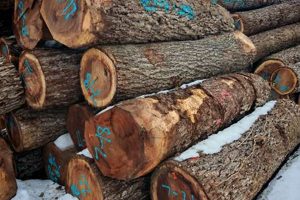
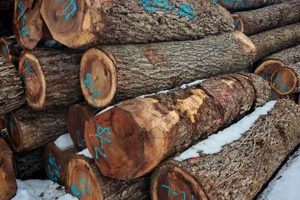
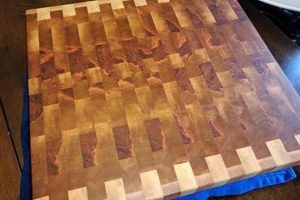
The selection of suitable timber is a foundational element in successful carpentry and joinery projects. It refers to lumber possessing characteristics conducive to being shaped, joined, and finished effectively. Examples encompass hardwoods like cherry, maple, and walnut, prized for their strength, grain patterns, and ability to accept fine detailing, and softwoods such as pine, cedar, and fir, often chosen for their workability and cost-effectiveness in larger construction or simpler projects.
Careful selection yields significant advantages. Appropriate material reduces the risk of cracking, splitting, or warping during construction and throughout the lifespan of the finished piece. It enhances the aesthetic appeal of the final product, contributing to both its visual beauty and market value. Historically, the choice of material has been dictated by regional availability, intended use, and the skills of the craftsman, influencing styles and techniques across different cultures and periods.
The ensuing discussion will delve into the specific properties of various materials, exploring their suitability for different applications. It will also consider factors affecting material durability, sustainability, and methods for ensuring optimal selection and preparation techniques.
Guidance on Material Selection
The following guidelines assist in choosing materials with appropriate qualities for intended projects, addressing durability, workability, and aesthetic considerations. Thoughtful material selection contributes significantly to the longevity and quality of finished carpentry.
Tip 1: Consider Project Requirements: Determine the specific needs of the project. Furniture intended for heavy use necessitates hardwoods like oak or maple, whereas decorative items may be suitable for softer options such as pine or basswood.
Tip 2: Evaluate Grain Pattern: Grain pattern influences both visual appeal and structural integrity. Straight grain is generally easier to work with, while figured grains like burl or curly patterns offer unique aesthetic qualities but may present challenges in shaping.
Tip 3: Assess Density and Hardness: Material density directly correlates with its resistance to dents, scratches, and wear. Utilize the Janka hardness scale as a reference when selecting a species based on its ability to withstand abrasion and impact.
Tip 4: Inspect for Defects: Thoroughly examine lumber for knots, cracks, warping, or insect damage prior to purchase. Such imperfections can compromise structural integrity and workability, leading to project failure.
Tip 5: Account for Moisture Content: Kiln-dried timber is generally preferred due to its dimensional stability. Ensure that the moisture content of the lumber is appropriate for the intended environment to prevent shrinkage, swelling, or warping after construction.
Tip 6: Research Species Characteristics: Before selecting a material, research its specific properties, including its tendency to split, ability to hold fasteners, and reaction to finishes. This will inform appropriate construction techniques and finishing methods.
Tip 7: Prioritize Sustainability: Opt for materials sourced from responsibly managed forests. Look for certifications such as FSC (Forest Stewardship Council) to ensure sustainable forestry practices.
Adherence to these guidelines enhances the likelihood of a successful project, producing items that are not only visually appealing but also structurally sound and long-lasting. Careful material selection represents a fundamental aspect of quality carpentry.
The subsequent section will address methods for preparing selected materials, including milling, shaping, and surface preparation, to ensure optimal results in the construction process.
1. Durability

Durability, in the context of carpentry, pertains to the ability of a chosen material to withstand wear, stress, and environmental factors over an extended period. The connection between durability and high-quality material selection is direct and causal: Material inherently resistant to decay, insect infestation, and physical damage leads to a longer-lasting, more robust finished product. This resistance stems from factors like density, hardness, and natural chemical composition. For example, teak, owing to its high oil content, demonstrates exceptional resistance to moisture and rot, making it highly sought after for outdoor furniture and marine applications. The choice of a less durable material, conversely, necessitates more frequent repairs or replacement, ultimately resulting in increased costs and reduced longevity.
The assessment of durability involves understanding the intended use and environmental conditions. Furniture placed in high-traffic areas or subjected to significant weight-bearing loads demands the selection of species known for their strength, such as oak or maple. In contrast, decorative items or those in controlled indoor environments might benefit from the aesthetic qualities of less durable options, such as poplar or basswood, provided that they are appropriately protected with finishes and maintained. Furthermore, the durability of a chosen timber influences the structural integrity of buildings and the safety of occupants, particularly in load-bearing applications.
In summary, durability constitutes a critical element in defining suitable carpentry material. The selection of material exhibiting high resistance to degradation ensures a longer lifespan, reduced maintenance costs, and greater overall value. Understanding the specific demands of the intended application and the environmental factors to which the piece will be exposed allows for informed decisions that prioritize durability, resulting in higher-quality, more reliable, and enduring projects.
2. Workability

Workability constitutes a primary determinant in evaluating suitable carpentry material. It refers to the ease with which a given species can be shaped, joined, and finished using both hand tools and power equipment. Proper workability streamlines the construction process, reduces material waste, and improves the overall quality of finished pieces. The inherent properties of the material significantly influence its workability characteristics.
- Planing and Shaping
Material with consistent density and minimal grain tear-out allows for smooth planing and shaping. Species like cherry and walnut exhibit favorable planing characteristics, producing clean, refined surfaces with minimal effort. Conversely, species with interlocked or irregular grain patterns can present challenges during planing, resulting in tear-out and requiring specialized techniques or tools.
- Joinery
The ability of a species to accept and securely hold fasteners and adhesives is crucial for joinery. Materials that are prone to splitting or crumbling when screws or nails are driven require pre-drilling or the use of reinforcement techniques. Species with tight grain structures, such as maple, offer excellent screw-holding power, whereas softer materials like pine may necessitate the use of larger fasteners or adhesives to ensure adequate joint strength.
- Carving and Detailing
Materials intended for intricate carvings and fine details must possess a fine, uniform texture and minimal grain deviation. Species such as basswood and butternut are frequently selected for carving due to their soft density and consistent grain, which allows for precise cuts and intricate designs. Denser or more fibrous materials may prove difficult to carve, requiring greater force and potentially resulting in chipping or fracturing.
- Finishing
Workability extends to the material’s ability to accept stains, paints, and other finishes evenly and consistently. Porous materials may require pre-sealing to prevent excessive absorption of finish, while resinous species can impede finish adhesion. The choice of material significantly impacts the final appearance and durability of the finish, necessitating careful consideration of surface preparation and application techniques.
In summation, workability forms an integral component in the selection process. Ease of manipulation directly impacts efficiency, precision, and the overall quality of final piece. By prioritizing materials that exhibit favorable workability characteristics, carpenters can optimize their workflow, minimize waste, and achieve superior results across a diverse range of projects.
3. Grain Pattern

The grain pattern of timber significantly influences its aesthetic appeal, structural integrity, and workability, thereby establishing itself as a crucial factor in determining material suitability for carpentry projects. The arrangement and orientation of wood fibers dictate both the visual characteristics and the mechanical properties, impacting the final product’s appearance and performance.
- Straight Grain and Structural Strength
Straight grain, characterized by fibers running parallel to the length of the board, typically indicates greater strength and stability. This grain pattern is less prone to warping or splitting, making it desirable for structural components like framing members, legs of tables, and drawer sides. Species like Douglas Fir and Southern Yellow Pine commonly exhibit straight grain, contributing to their widespread use in construction.
- Figured Grain and Aesthetic Value
Figured grain encompasses patterns such as burl, curly, quilted, and bird’s-eye, resulting from irregularities in the wood’s growth. While these patterns enhance the visual appeal of furniture, veneers, and decorative items, they often present challenges in terms of workability. Species like maple and walnut are known for exhibiting a variety of figured grain patterns, adding distinctiveness and value to crafted pieces.
- Grain Orientation and Joint Strength
The orientation of the grain in relation to joints influences their strength and stability. Aligning the grain direction in mating pieces of wood can maximize glue surface area and create stronger bonds. Understanding grain orientation is particularly critical in joinery techniques such as dovetailing, mortise-and-tenon joints, and edge-gluing, ensuring the integrity of the assembly.
- Open vs. Closed Grain and Finishing
Open-grained timbers, such as oak and ash, possess large pores that require filling prior to finishing to achieve a smooth surface. Conversely, closed-grained species like maple and cherry have finer pores that readily accept finishes without additional preparation. The grain structure dictates the type of finish required and the application techniques necessary to achieve a professional, durable result.
Consideration of grain pattern is paramount when selecting material. Whether the emphasis is on structural robustness or visual elegance, understanding the implications of various grain patterns allows for informed choices that enhance both the functional and aesthetic qualities of the final piece. The inherent characteristics of the grain contribute directly to the overall value and suitability of the timber for a given application.
4. Dimensional Stability

Dimensional stability, in the realm of carpentry, refers to the ability of timber to maintain its original size and shape despite fluctuations in moisture content and environmental conditions. Its importance when choosing suitable materials cannot be overstated, as it directly impacts the longevity, structural integrity, and aesthetic appeal of finished products.
- Moisture Content Equilibrium
Timber interacts hygroscopically with the surrounding environment, absorbing or releasing moisture until it reaches equilibrium. Species with superior dimensional stability exhibit minimal changes in size and shape as their moisture content fluctuates within acceptable ranges. Teak and mahogany are known for their relatively low shrinkage rates, making them suitable for applications where consistent dimensions are paramount. Conversely, species like beech are prone to significant movement, potentially leading to joint failure and structural instability.
- Tangential vs. Radial Shrinkage
Timber shrinks and swells anisotropically, meaning that the dimensional changes differ depending on the orientation of the grain. Tangential shrinkage, occurring perpendicular to the growth rings, is typically greater than radial shrinkage, occurring parallel to the growth rings. Understanding these differences is critical when designing and constructing pieces to minimize the risk of warping, cupping, or twisting. Quarter-sawn timber, with its growth rings oriented at a near right angle to the face of the board, exhibits superior dimensional stability compared to plain-sawn timber.
- Wood Density and Stability
While not a definitive indicator, density can correlate with dimensional stability. Denser species often possess tighter grain structures, resulting in reduced moisture absorption and less dimensional change. However, other factors such as cell wall composition and extractives content also play a significant role. For example, despite having similar densities, some species exhibit greater dimensional stability than others due to differences in their chemical makeup.
- Impact on Joinery
Dimensional instability can severely compromise the integrity of joints. As wood expands and contracts, stresses are placed on fasteners and adhesives, potentially leading to joint failure over time. Precise joinery techniques and careful species selection are crucial to mitigate these risks. For example, mortise-and-tenon joints constructed with dimensionally stable timber are less likely to loosen or fail compared to those made with unstable species.
The selection of dimensionally stable material is essential for producing high-quality, durable carpentry pieces. Understanding the factors that influence stability, such as moisture content equilibrium, anisotropic shrinkage, and species-specific characteristics, enables informed decisions that contribute to the longevity and success of carpentry projects. In the context of defining high-quality options, those timbers demonstrating consistent dimensions under varying environmental conditions represent a cornerstone of dependable craftsmanship.
5. Finishing Properties

Finishing properties represent a critical attribute contributing to the definition of suitable material for carpentry. The capacity of a material to accept and retain finishes directly influences its aesthetic presentation, durability, and resistance to environmental factors. Material lacking appropriate finishing characteristics may result in uneven coloration, poor adhesion, and diminished protection against moisture, UV radiation, and physical abrasion. Therefore, consideration of finishing properties is integral to material selection.
Several factors determine finishing suitability. Density and porosity affect the absorption rate and uniformity of stains, paints, and sealants. Open-grained timbers, such as oak, necessitate pore-filling prior to finishing to achieve a smooth surface, while closed-grained species, like maple, accept finishes more readily. Resin content and extractives can interfere with finish adhesion and drying times, requiring specialized surface preparation techniques. Examples of materials prized for their finishing properties include cherry, known for its ability to develop a rich, lustrous patina, and walnut, valued for its consistent color and ease of finishing. The practical consequence of understanding these properties is the ability to select appropriate finishing materials and techniques to enhance the inherent beauty and protective qualities of the raw material.
Ultimately, the selection of a material with desirable finishing properties optimizes the final outcome of carpentry projects. It ensures not only an aesthetically pleasing appearance but also long-term protection against wear and environmental damage. The challenges associated with finishing poorly suited material underscore the importance of prioritizing this characteristic in the selection process. By considering finishing properties alongside other factors such as durability, workability, and dimensional stability, carpenters can achieve superior results and produce enduring, high-quality pieces.
Frequently Asked Questions
The following section addresses common inquiries regarding the selection of suitable material for carpentry projects. These answers provide insights into key considerations for achieving optimal results.
Question 1: What distinguishes hardwoods from softwoods in the context of material selection for carpentry?
Hardwoods, derived from deciduous trees, generally exhibit greater density and durability, making them suitable for furniture and high-wear applications. Softwoods, sourced from coniferous trees, tend to be more workable and cost-effective for construction and general carpentry.
Question 2: How does grain orientation affect the strength and stability of a carpentry project?
Grain orientation influences resistance to bending, splitting, and warping. Straight grain offers optimal structural integrity, while figured grains, although aesthetically pleasing, can present challenges during construction and may compromise structural stability.
Question 3: Why is moisture content a critical factor in material selection?
Excessive moisture content can lead to shrinkage, swelling, and warping after construction, compromising joint integrity and overall dimensional stability. Kiln-dried lumber is typically preferred to minimize these risks.
Question 4: How does the Janka hardness rating assist in material selection for specific applications?
The Janka hardness rating quantifies a species’ resistance to indentation and wear. Higher ratings indicate greater durability, making them suitable for flooring, countertops, and other high-use surfaces.
Question 5: What are the key considerations when selecting material for outdoor applications?
Resistance to moisture, decay, and insect infestation are paramount for outdoor projects. Species like teak, cedar, and redwood possess natural preservatives that enhance their durability in outdoor environments.
Question 6: How does responsible sourcing contribute to sustainable carpentry practices?
Selecting lumber from sustainably managed forests ensures the long-term availability of resources and minimizes environmental impact. Certifications such as FSC (Forest Stewardship Council) provide assurance of responsible forestry practices.
The successful completion of any carpentry endeavor necessitates a thorough understanding of material properties and selection criteria. By addressing these frequently asked questions, carpenters can make informed decisions that optimize the quality, durability, and sustainability of their projects.
The following section will focus on effective techniques for joining various materials, addressing both traditional methods and contemporary approaches.
Conclusion
The preceding discussion has outlined the critical considerations in selecting suitable materials for carpentry. “Good wood for woodworking,” as a concept, embodies a confluence of characteristics, including durability, workability, grain pattern, dimensional stability, and finishing properties. Mastery of these elements is essential for successful and enduring projects.
Attentive application of these principles elevates the quality and longevity of crafted pieces. Continued diligence in material selection, coupled with evolving techniques, will undoubtedly shape the future of carpentry and contribute to the creation of superior, sustainable products.