



Devices employed to securely hold wood pieces together during gluing, fastening, or assembly processes are essential tools within a woodworking environment. These tools provide the necessary pressure to ensure tight joints and prevent movement while adhesives cure or fasteners are applied.
The utilization of effective work-holding devices is paramount for achieving precise and durable woodworking results. Proper clamping techniques contribute significantly to joint strength, dimensional accuracy, and overall project quality. Historically, simpler versions of these tools have been used for centuries, evolving alongside woodworking techniques and available materials.
The subsequent sections will delve into a categorized overview of different types of these devices, examine factors to consider when selecting appropriate tools, and address best practices for their effective application in woodworking projects.
Essential Woodworking Clamp Usage Guidelines
Effective utilization of work-holding devices is critical for successful woodworking projects. The following guidelines outline essential practices for achieving optimal results.
Tip 1: Distribute Pressure Evenly: Employ multiple clamps strategically to distribute pressure uniformly across the joint. This prevents localized stress and ensures consistent adhesion or fastening.
Tip 2: Use Protective Pads: Always use pads, such as wood scraps or specialized clamp pads, between the clamp jaws and the wood surface. This safeguards against indentation and marring of the workpiece.
Tip 3: Maintain Alignment: Before applying pressure, carefully align the wood pieces to ensure proper joint formation. Misalignment can result in weakened joints and aesthetic imperfections.
Tip 4: Avoid Over-Tightening: Excessive clamping pressure can damage wood fibers and compromise joint integrity. Apply sufficient pressure to close the joint without crushing the surrounding material.
Tip 5: Consider Clamp Reach: When selecting devices, ensure the clamp reach is adequate to accommodate the dimensions of the workpiece being joined. Insufficient reach renders the tool ineffective.
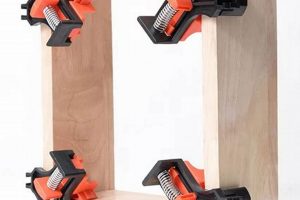
Tip 6: Choose the Right Type: Select a clamp type appropriate for the specific joint or assembly task. Different clamp designs excel in various applications, such as edge gluing, frame assembly, or miter joints.
Tip 7: Regularly Inspect and Maintain: Periodically inspect devices for signs of wear, damage, or corrosion. Lubricate moving parts to ensure smooth operation and prolong the tool’s lifespan.
Adhering to these guidelines promotes joint strength, dimensional accuracy, and overall project quality in woodworking endeavors. Proper clamp usage contributes significantly to professional-caliber results.
The concluding section will provide a brief summary and offer concluding remarks on the significance of effective work-holding solutions in woodworking.
1. Holding Pressure

Holding pressure is a critical specification of any woodworking clamp, directly influencing its efficacy in securing joints during assembly. Insufficient pressure leads to weak bonds, while excessive pressure can damage the wood fibers. Therefore, an understanding of holding pressure requirements is crucial when selecting appropriate clamps.
- Wood Species and Density
Denser hardwoods require higher holding pressure to achieve secure joints compared to softer woods. For example, clamping maple necessitates more force than clamping pine to ensure adequate adhesive contact. This difference in required pressure influences the selection of clamps with appropriate strength ratings.
- Adhesive Type and Open Time
Different adhesives necessitate varying holding pressures for optimal bond formation. Fast-setting glues may require less pressure than slow-curing epoxies. Additionally, the open time of the adhesive (the time available for assembly after glue application) impacts the required holding time. Clamps must maintain sufficient pressure throughout the adhesive’s curing period.
- Joint Geometry and Surface Area
The design of the joint influences the distribution of holding pressure. Joints with larger surface areas, such as edge-to-edge joints, typically require more evenly distributed pressure than smaller joints, like miter joints. The clamp’s jaw design and ability to apply force uniformly across the joint surface become paramount.
- Clamp Mechanism and Force Delivery
Different clamp mechanisms, such as screw-type, ratcheting, or spring-loaded, deliver holding pressure through varying mechanical advantages. Screw-type clamps generally offer higher and more controllable pressure, while spring clamps provide quick but lower pressure. The mechanism’s efficiency and consistency in force delivery are crucial factors in clamp selection.
The selection of woodworking clamps is intrinsically linked to the holding pressure they can exert. By considering the wood species, adhesive type, joint geometry, and clamp mechanism, woodworkers can choose the optimal devices to ensure strong, durable, and aesthetically pleasing joints.
2. Jaw Capacity
Jaw capacity, a fundamental characteristic of woodworking clamps, dictates the maximum thickness of material the clamp can effectively secure. This specification directly influences the clamp’s suitability for various woodworking projects. Insufficient jaw capacity renders a clamp unusable for thicker stock, while excessive capacity might hinder precise pressure application on thinner materials. Consequently, understanding jaw capacity is paramount when selecting appropriate work-holding devices.
The selection of clamps with appropriate jaw capacity has a direct effect on project outcomes. For instance, cabinet construction often necessitates clamps with substantial jaw capacity to accommodate face frame assemblies or panel glue-ups. Similarly, edge-joining thick lumber slabs requires clamps with significantly longer reach. Failure to account for material thickness results in improperly secured joints, compromising structural integrity and aesthetic quality. The practical implication is that the range of projects a woodworker can undertake is, in part, determined by the range of jaw capacities available in their clamp inventory.
In summation, jaw capacity is an integral attribute when evaluating woodworking clamps. Its influence on project scope and joint quality cannot be overstated. The ability to accurately assess material dimensions and match them with appropriate clamp specifications is crucial for achieving professional-grade woodworking results. A clamp’s maximum jaw size is a critical element of its design and should be a key factor in its selection process.
3. Durability
Durability is a paramount attribute of work-holding devices, directly influencing their longevity and return on investment. The stresses inherent in woodworking, including consistent application of force, exposure to adhesives, and potential impact, demand robust construction. Inferior materials or flawed designs lead to premature failure, necessitating frequent replacements and increased costs. Conversely, durable clamps provide consistent performance and long-term reliability, contributing to efficiency and project success.
The selection of materials significantly impacts clamp durability. High-carbon steel, known for its strength and resistance to deformation, is commonly employed in bar clamps and pipe clamps. Cast iron, while more susceptible to breakage under extreme stress, offers excellent vibration dampening and is often found in the jaws of heavier-duty clamps. Protective coatings, such as powder coating or zinc plating, mitigate corrosion, extending the lifespan of the tool. For example, a bar clamp constructed from hardened steel with a baked enamel finish will withstand significantly more use and environmental exposure than a clamp made from lower-grade steel with a simple paint finish.
Ultimately, clamp durability translates to reduced downtime, improved safety, and long-term cost savings. Investing in robust, well-constructed clamps, regardless of initial price, is a prudent decision for any woodworker. Regular inspection and proper maintenance further prolong clamp lifespan, ensuring consistent performance and maximizing the value of the investment.
4. Clamp Type

The selection of an appropriate clamp type is paramount in woodworking, directly influencing the success and efficiency of various assembly tasks. The term “top woodworking clamps” inherently implies a degree of specialization and suitability for specific applications. Different clamp designs excel in different scenarios, and a woodworker’s ability to select the right tool for the job is crucial.
- Bar Clamps
Bar clamps are characterized by their long reach and ability to apply significant pressure across extended surfaces. These clamps are essential for edge-gluing panels, assembling frames, and securing large workpieces. The selection of bar clamps with sufficient length and holding power is crucial for achieving flat, stable panels and robust frame constructions. Inferior bar clamps may exhibit bending or slippage under pressure, compromising joint integrity.
- Pipe Clamps
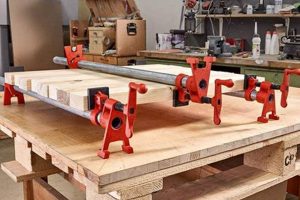
Pipe clamps utilize threaded pipes of varying lengths to achieve adjustable clamping capacity. This design offers flexibility and affordability, making pipe clamps suitable for a wide range of projects. However, the inherent flexibility of the pipe can introduce bowing or deflection under high pressure. The quality of the pipe threads and the clamp head are critical factors influencing the overall performance and longevity of pipe clamps.
- Spring Clamps
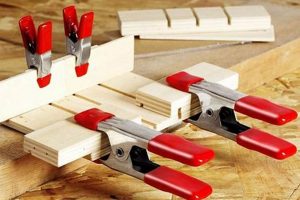
Spring clamps offer rapid application and release, making them ideal for temporary holding or light-duty tasks. These clamps exert relatively low pressure compared to other types, limiting their suitability for demanding glue-ups. Spring clamps are commonly used to secure templates, hold trim in place, or temporarily align components. The spring’s strength and durability are key determinants of clamp performance.
- Hand Screw Clamps
Hand screw clamps distribute pressure evenly across a broad surface, making them suitable for delicate materials or irregular shapes. These clamps consist of two wooden jaws connected by threaded spindles, allowing for precise adjustment of clamping force and jaw parallelism. Hand screw clamps are often employed in antique restoration, instrument making, and other specialized woodworking applications. The quality of the wood and the precision of the threads are critical factors influencing the clamp’s performance.
The effective utilization of “top woodworking clamps” hinges on a comprehensive understanding of the strengths and limitations of each clamp type. Selecting the appropriate clamp for the task at hand ensures secure joints, accurate assemblies, and professional-grade results.
5. Material Compatibility
The compatibility between woodworking clamps and the materials they contact directly influences the quality and longevity of woodworking projects. The selection of inappropriate clamp materials can lead to staining, indentation, or chemical reactions that compromise the integrity of the wood surface. Therefore, careful consideration of material compatibility is essential when choosing appropriate clamps.
- Metal Clamps and Tannin-Rich Woods
The interaction between ferrous metals and tannin-rich woods, such as oak or walnut, can result in unsightly black stains. The tannic acid reacts with the iron, forming iron tannate, a dark compound that penetrates the wood fibers. To mitigate this, utilize clamps with protective coatings or employ wood pads between the clamp jaws and the workpiece. Stainless steel or aluminum clamps offer alternative solutions for tannin-rich woods.
- Clamp Pad Materials and Delicate Surfaces
The hardness of clamp pad materials directly affects the potential for indentation or marring of softer wood species. Metal or hard plastic clamp jaws can easily imprint on woods like pine or basswood. Employing softer pad materials, such as cork, leather, or felt, distributes pressure more evenly and minimizes the risk of surface damage. Specialized clamp pads are commercially available for sensitive applications.
- Adhesive Residue and Clamp Cleaning
The compatibility of clamp materials with various wood adhesives affects the ease of cleaning and maintenance. Some adhesives bond tenaciously to metal surfaces, requiring aggressive solvents for removal. Selecting clamps with non-stick coatings or applying release agents facilitates cleaning and prevents adhesive buildup. Regular cleaning is essential to maintain clamp functionality and prevent adhesive contamination of future projects.
- Chemical Reactivity with Finishes
Certain clamp materials can react chemically with wood finishes, leading to discoloration or adhesion issues. Rubber or plastic components may contain plasticizers or solvents that migrate into the finish, causing softening, blistering, or uneven curing. Before clamping finished surfaces, ensure compatibility by testing the clamp material on a small, inconspicuous area. Utilizing inert materials or protective barriers minimizes the risk of finish damage.
In conclusion, material compatibility is a critical consideration when selecting “top woodworking clamps.” The potential for staining, indentation, adhesive bonding, and chemical reactivity necessitates careful assessment of clamp materials and their interaction with the workpiece. Utilizing appropriate clamp materials and implementing preventative measures ensures the preservation of wood surfaces and the integrity of woodworking projects.
6. Ergonomics

Ergonomics, the science of designing and arranging tools people use so that the people and things interact most efficiently and safely, is a crucial consideration in the selection of woodworking devices. The physical demands of woodworking tasks, including repetitive motions, sustained exertion, and awkward postures, necessitate tools that minimize strain and maximize user comfort. Ergonomically designed clamping devices enhance productivity, reduce the risk of musculoskeletal disorders, and promote overall well-being.
- Handle Design and Grip
The shape, size, and material of clamp handles directly impact hand fatigue and grip strength. Ergonomic handles, often incorporating contoured shapes and non-slip materials, provide a secure and comfortable grip, reducing the force required to apply and maintain clamping pressure. For instance, a clamp with a large, round handle may be easier to grip for individuals with larger hands, while a smaller, textured handle may provide better control for those with smaller hands. The implications extend to prolonged woodworking sessions, where comfortable handles mitigate hand strain and improve overall efficiency.
- Weight and Balance
The weight and balance of woodworking clamps influence user fatigue and control. Overly heavy clamps contribute to muscle strain, particularly during overhead or extended use. Well-balanced clamps distribute weight evenly, reducing the effort required to maneuver and position the tool. An example is a bar clamp where the weight is evenly distributed along the bar length reducing wrist strain during vertical applications.
- Adjustability and Ease of Use
The ease with which a woodworking clamp can be adjusted and operated is a critical ergonomic factor. Clamps with smooth, intuitive mechanisms and readily accessible controls minimize the physical effort required for setup and adjustment. For instance, a quick-release mechanism on a bar clamp allows for rapid adjustments, reducing downtime and minimizing hand strain. Clamps that require excessive force or complex manipulations can lead to frustration and increased risk of injury.
- Force Amplification and Leverage
Ergonomically designed clamps maximize force amplification and leverage, reducing the physical exertion required to achieve adequate clamping pressure. Ratcheting mechanisms, geared drives, and lever-action designs provide mechanical advantage, allowing users to apply substantial force with minimal effort. An example is a toggle clamp that can secure materials using mechanical advantage. These ergonomic features enhance efficiency and minimize the risk of repetitive strain injuries.
The incorporation of ergonomic principles into the design and selection of woodworking clamps is essential for promoting user comfort, preventing injuries, and maximizing productivity. By prioritizing handle design, weight balance, adjustability, and force amplification, woodworkers can create a safer and more efficient work environment. Prioritizing ergonomic design leads to “top woodworking clamps” and directly benefits the user’s long-term health and well-being.
Frequently Asked Questions About Clamping Devices Used in Woodworking
The following addresses common inquiries regarding the selection, application, and maintenance of devices used to secure wood during assembly.
Question 1: What is the appropriate holding pressure for clamping hardwoods versus softwoods?
Hardwoods, due to their higher density, generally require greater clamping pressure than softwoods to ensure adequate joint strength. Excessive pressure, regardless of wood type, can damage the material. Experimentation and experience are key to determining optimal pressure levels. Consult adhesive manufacturers’ recommendations for specific guidelines.
Question 2: How do environmental factors influence the selection of woodworking clamps?
Environmental conditions, particularly humidity, affect wood expansion and contraction. When clamping, consider the potential for dimensional changes to avoid over-stressing joints or inducing warping. Select clamps with sufficient adjustability to accommodate these variations. Store clamps properly to prevent rust or corrosion, particularly in humid environments.
Question 3: What is the best method for preventing clamp-induced indentations on wood surfaces?
The use of protective pads between the clamp jaws and the workpiece is crucial. Soft materials, such as cork, felt, or wood scraps, distribute pressure more evenly, minimizing the risk of indentation. Consider the compressibility of the pad material in relation to the applied pressure. Inspect pads regularly for wear or damage and replace as needed.
Question 4: How does clamp reach affect project feasibility?
Clamp reach, the maximum distance between the clamp jaws, directly dictates the size and geometry of workpieces that can be secured. Before initiating a project, assess the required clamp reach based on the dimensions of the assembly. Insufficient reach renders the clamp unusable. Invest in a range of clamp sizes to accommodate diverse project requirements.
Question 5: What are the key indicators of clamp wear or damage?
Inspect clamps regularly for signs of wear, including bent bars, stripped threads, cracked jaws, and corroded surfaces. Any deformation or functional impairment compromises the clamp’s ability to apply consistent pressure. Replace damaged clamps immediately to prevent project failures or potential injury.
Question 6: How does clamp type impact joint alignment?
Different clamp types offer varying degrees of control over joint alignment. Bar clamps and pipe clamps, while providing substantial clamping force, may require auxiliary supports to maintain alignment. Hand screw clamps offer precise adjustability for aligning complex joints. Select clamp types strategically based on the specific alignment requirements of the joint.
Proper device selection and usage are imperative for quality woodworking results. Consistent, informed application leads to stronger joints and improved project longevity.
The subsequent section will focus on advanced clamping techniques.
Conclusion
This exploration has examined “top woodworking clamps” from various perspectives, encompassing clamp types, holding pressure, jaw capacity, durability, material compatibility, and ergonomics. Emphasis was placed on the critical role of device selection in achieving strong, accurate, and aesthetically pleasing woodworking outcomes. The provided guidelines and considerations serve as a framework for informed decision-making in the woodworking environment.
The continued pursuit of excellence in woodworking necessitates a commitment to understanding and utilizing appropriate work-holding solutions. By investing in high-quality tools and mastering clamping techniques, practitioners can elevate their craft and achieve lasting results. The selection and application of woodworking clamps remains a cornerstone of quality craftsmanship.
![Top-Rated: Best Quick Clamps for Woodworking Projects [2024] | Step-by-Step Guides, Tools & Inspiration to Build Beautiful Wooden Decor on a Budget](https://woodfromhome.com/wp-content/uploads/2026/04/th-264-300x200.jpg "Top-Rated: Best Quick Clamps for Woodworking Projects [2024] Step-by-Step Guides, Tools & Inspiration to Build Beautiful Wooden Decor on a Budget")