



The fabrication of temporary fastening devices, tailored for securing wooden components during assembly operations in carpentry, represents a resourceful practice. These shop-made tools enable the application of controlled pressure, ensuring precise alignment and robust adhesion while adhesives cure or mechanical fasteners are installed. Examples include toggle clamps fashioned from scrap wood and hardware, cam clamps utilizing levers for adjustable force, and bar clamps constructed from metal pipes and fittings.
Their utility lies in providing cost-effective solutions for projects where commercially manufactured alternatives may be unavailable, too expensive, or not ideally suited to the task. Historically, woodworking artisans have relied on ingenuity to devise workholding mechanisms, adapting readily available materials to fulfill specific requirements. The ability to create customized solutions contributes significantly to project efficiency and allows for greater control over the assembly process.
Subsequent sections will explore various design approaches, material selection considerations, and practical construction techniques related to developing effective and economical solutions for workholding in woodworking applications. These resources will empower woodworkers to adapt, innovate, and construct bespoke solutions tailored to their unique project needs.
Essential Fabrication and Application Guidance
The following recommendations are designed to maximize the effectiveness and durability of self-constructed workholding devices. Adherence to these principles will enhance woodworking project outcomes.
Tip 1: Material Selection is Paramount. Employ hardwoods like maple or oak for components subject to high stress. Softwoods are permissible for less critical parts, but reinforcement may be necessary.
Tip 2: Prioritize Accuracy in Construction. Ensure mating surfaces are precisely aligned and square. Misalignment compromises clamping force distribution and potentially damages workpieces.
Tip 3: Implement a Reliable Clamping Mechanism. Cam actions, toggle levers, or threaded screws offer controlled application of force. Avoid designs reliant on excessive friction, which can lead to slippage.
Tip 4: Integrate Protective Padding. Applying cork, leather, or dense foam to contact points prevents marring of the workpiece surface under pressure. Choose materials compatible with finishing products.
Tip 5: Test the Device Thoroughly. Before committing to a full project, rigorously test the fabricated device with scrap material to verify its strength, stability, and consistent performance.
Tip 6: Regularly Inspect for Wear and Tear. Examine wooden components for cracks, splits, or signs of weakening. Replace or reinforce components as needed to maintain operational safety.
Tip 7: Consider Adjustability. Designs incorporating adjustable elements, such as sliding bars or threaded rods, offer greater versatility in accommodating workpieces of varying dimensions.
Proper design and execution are crucial for achieving the intended purpose and maximizing the lifespan of these woodworking aids. The implementation of sound engineering principles translates to enhanced precision and efficiency.
The subsequent section will provide guidance on maintenance procedures and long-term storage strategies for ensuring sustained functionality.
1. Material Strength

The inherent resistance of materials to deformation or fracture under applied stress directly influences the performance and longevity of shop-made fastening devices. In the context of woodworking, the choice of materials for constructing such devices determines the maximum clamping force achievable without compromising structural integrity. Insufficient strength leads to deformation, slippage, or outright failure under load, jeopardizing the precision and security of the workpiece during assembly. For instance, utilizing softwood for the jaws of a clamp intended for securing dense hardwoods will likely result in crushing or splitting of the jaws, rendering the clamp ineffective.
Conversely, employing high-strength materials, such as seasoned hardwoods (e.g., maple, oak) or appropriate grades of steel, enables the transmission of substantial clamping forces without deformation. This is crucial when gluing large panels or assembling intricate joinery, where consistent and unwavering pressure is paramount for achieving a strong and accurate bond. Moreover, the materials ability to withstand repeated stress cycles without fatigue significantly affects the clamps operational lifespan. A clamp constructed from materials prone to fatigue failure will require frequent maintenance or replacement, impacting long-term cost-effectiveness. Consider the example of a toggle clamp fabricated with a mild steel lever versus one using hardened steel. The hardened steel lever will maintain its geometry and clamping force much longer under similar usage conditions.
In summary, material strength represents a critical determinant in the functionality and durability of self-fabricated woodworking aids. Prudent material selection, based on the anticipated clamping forces and frequency of use, is essential for ensuring the reliable and safe operation of these devices. Challenges in material selection often involve balancing cost considerations with performance requirements. Understanding the mechanical properties of available materials allows for informed design decisions that maximize the effectiveness of workholding solutions within budgetary constraints.
2. Mechanical Advantage

Mechanical advantage, a pivotal concept in physics, is directly applicable to the design and construction of fastening devices tailored for woodworking. It quantifies the amplification of force achieved through the use of levers, screws, or other mechanical systems, thereby reducing the input force required to exert a desired clamping pressure. In the context of self-constructed workholding, understanding and effectively implementing mechanical advantage is critical for achieving robust and controlled clamping action.
- Leverage Ratio
The leverage ratio, a primary determinant of mechanical advantage, represents the proportion between the length of the effort arm and the length of the resistance arm in a lever system. A higher leverage ratio implies a greater amplification of force. Examples include cam clamps, where the distance from the pivot point to the cam surface dictates the force multiplication, and toggle clamps, where the linkage geometry determines the force exerted on the workpiece. Optimizing the leverage ratio is crucial for achieving adequate clamping pressure without requiring excessive manual force.
- Thread Pitch and Screw Clamps
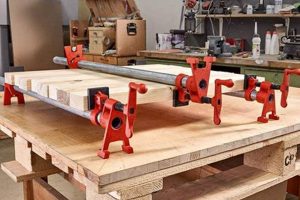
In screw clamps, the thread pitchthe distance between adjacent threadsdirectly influences the mechanical advantage. A finer thread pitch results in a higher mechanical advantage, as a greater number of rotations are required to advance the screw a given distance, thereby increasing the force exerted. However, a finer thread pitch also implies a slower clamping action. The selection of an appropriate thread pitch represents a trade-off between force amplification and clamping speed. Pipe clamps exemplify this principle, where the threaded rod and its corresponding nut determine the achievable clamping force.
- Friction Considerations
While mechanical advantage offers a theoretical amplification of force, frictional losses within the system can significantly reduce the actual force applied to the workpiece. Friction arises from the contact surfaces of moving components, such as the screw threads in a screw clamp or the pivot points in a lever system. Reducing friction through lubrication, surface treatment, or the selection of low-friction materials enhances the overall efficiency of the device. For instance, applying grease to the threads of a screw clamp reduces friction and allows for a greater clamping force to be achieved with the same input force.
- Compound Mechanical Advantage
Combining multiple mechanical advantage systems can significantly increase the clamping force. For example, using a lever system to drive a screw clamp. This approach is used when high levels of clamping force are needed. One such example can be large scale woodworking projects that require high force clamps.
Effective implementation of mechanical advantage is crucial for the successful design and construction of self-fabricated devices. It enables woodworkers to achieve robust and controlled clamping action with minimal effort, thereby enhancing the precision and efficiency of woodworking projects. By carefully considering the leverage ratio, thread pitch, friction, and the potential for combining mechanical advantage systems, woodworkers can create solutions tailored to their specific needs.
3. Even Pressure
Even pressure, a critical factor in woodworking, is the uniform distribution of force across a workpiece surface during clamping. Its significance in self-fabricated workholding devices cannot be overstated, as localized pressure concentrations can lead to deformation, damage, or compromised joint integrity. The effective application of even pressure ensures that adhesives cure properly, joinery is tightly fitted, and material surfaces remain unmarred.
- Jaws Parallelism
Maintaining parallelism between clamping jaws is paramount for achieving even pressure. Non-parallel jaws concentrate force on specific points, leading to uneven stress distribution and potential crushing of the workpiece fibers. In the design of self-fabricated devices, precise alignment mechanisms and rigid frame construction are essential to guarantee parallelism. For example, a wooden bar clamp with improperly aligned jaws will exert significantly more pressure on one edge of a panel than the other, resulting in a weak or distorted glue line.
- Surface Conformity
The clamping surfaces must conform to the shape of the workpiece to ensure uniform contact. Hard, unyielding jaws may create point loads on irregular surfaces. Incorporating compressible materials, such as cork, leather, or dense foam, between the jaws and the workpiece mitigates this issue by distributing pressure more evenly. An example is the use of cork lining on the jaws of a wooden handscrew clamp when securing delicate moldings, preventing damage to the profile.
- Clamping Point Distribution
Strategically distributing clamping points across the workpiece minimizes bending and warping. A single clamp in the center of a long board will create a significant bending moment, while multiple clamps spaced along the length will distribute the force and maintain flatness. This is particularly crucial when gluing large panels, where multiple clamps are required to ensure consistent pressure across the entire surface. A panel glued with insufficient clamp distribution may exhibit cupping or bowing after the adhesive has cured.
- Material Yield Strength
The material yield strength of the workpiece affects how it will react to clamp pressure. Workpieces that are too soft can be damaged if too much pressure is applied. Woodworkers should be mindful to use the correct amount of pressure when using clamps on a specific type of material. This also relates to the proper care and choice of material used on the clamp pads.
Achieving even pressure in shop-made devices necessitates careful attention to design, material selection, and construction techniques. By ensuring parallelism, surface conformity, and strategic distribution of clamping points, woodworkers can fabricate tools that deliver consistent and reliable performance, contributing to the quality and longevity of their projects. This emphasis on uniform pressure distinguishes well-designed from poorly designed fastening devices, and it directly impacts the outcome of woodworking endeavors.
4. Adjustability Range

The adjustability range inherent in self-fabricated workholding solutions directly influences their versatility and applicability across a spectrum of woodworking projects. This parameter defines the extent to which a device can accommodate workpieces of varying dimensions, thereby determining its utility in diverse assembly scenarios.
- Threaded Mechanisms
Threaded rods and screws afford continuous adjustability within defined limits. The travel distance of the threaded component dictates the maximum workpiece thickness that can be accommodated. Examples include pipe clamps, where the length of the pipe determines the overall clamping capacity, and screw-type hand screws, where the screw length and jaw opening define the adjustability range. The precision of the threading influences the fineness of adjustment achievable.
- Sliding Mechanisms
Sliding components, such as bars or arms that can be positioned along a track or guide, offer incremental adjustability. The spacing of detents or locking points determines the step size of adjustments. Bar clamps exemplify this approach, where the sliding jaw can be positioned at discrete intervals along the bar. The stability of the locking mechanism governs the reliability of the adjustment.
- Cam and Lever Systems
Cam and lever systems provide rapid adjustability within a limited range. The geometry of the cam or lever dictates the relationship between input displacement and output force. Quick-action clamps often employ this mechanism, allowing for fast engagement and release. The adjustability is typically less precise than with threaded or sliding mechanisms but offers speed and convenience.
- Combined Systems
Hybrid designs incorporating elements of threaded, sliding, and cam mechanisms can offer both broad adjustability range and fine-tuning capabilities. A clamp might use a sliding bar for coarse adjustments and a threaded screw for fine adjustments. This provides a balance between speed and precision, allowing the clamp to be quickly adapted to different workpiece sizes while still providing precise clamping force control.
The ability to modify the dimensions of self-fabricated workholding devices to suit specific project requirements represents a significant advantage over commercially manufactured alternatives with fixed dimensions. Thoughtful consideration of the adjustability range during the design phase enhances the adaptability and longevity of these tools, contributing to their value in a woodworking shop.
5. Stable Structure
The structural stability of self-fabricated fastening devices is paramount to their effective performance in woodworking applications. A stable structure ensures the consistent application of clamping force, precise alignment of components, and prevention of unintended movement during assembly operations. Instability compromises accuracy, reduces joint strength, and poses potential safety hazards.
- Frame Rigidity
The rigidity of the clamp’s frame is fundamental to maintaining its shape under load. Frame distortion leads to uneven pressure distribution and inaccurate alignment. Utilizing materials with high stiffness, such as hardwoods or steel, and employing robust joinery techniques are essential for creating a rigid frame. For example, a C-clamp fabricated from thin gauge metal will flex under load, reducing its clamping force and potentially damaging the workpiece. Reinforcing the frame with gussets or braces can significantly improve its rigidity.
- Jaw Alignment Mechanisms
The mechanisms responsible for maintaining jaw alignment directly impact the clamp’s ability to apply even pressure. Loose or poorly designed alignment mechanisms allow the jaws to skew or rotate, leading to localized stress concentrations and potential workpiece damage. Precision-machined guides, robust pivot points, and locking mechanisms are necessary to ensure consistent jaw alignment. A handscrew clamp with worn threads will exhibit play in the jaws, making it difficult to apply uniform pressure.
- Base Stability
The stability of the clamp’s base or support structure is critical for preventing tipping or sliding during use. An unstable base compromises the clamping force and increases the risk of accidents. Wide bases, non-slip feet, or anchoring mechanisms are necessary to provide adequate stability. A benchtop vise with a poorly designed mounting system will wobble or shift under load, reducing its effectiveness. Securing the base to a stable surface is crucial for maximizing its performance.
- Material Compatibility
The compatibility between the materials used in the clamp’s structure impacts its long-term stability. Dissimilar materials can cause corrosion or other interactions over time. Using compatible fasteners and protective coatings can help to prevent such issues. For example, using steel hardware to join aluminum components can cause galvanic corrosion in moist environments, weakening the joint over time.
The elements of frame rigidity, jaw alignment mechanisms, base stability and material compatibility collectively define the structural integrity of shop-made devices. Careful consideration of these factors during the design and construction phases is crucial for creating tools that deliver reliable and consistent performance in a wide range of woodworking applications. These structural elements allow the clamps to have a longer lifespan and reliability during usage.
6. Long-term Durability

The concept of long-term durability, when applied to self-fabricated fastening devices for woodworking, directly impacts their cost-effectiveness and sustained utility. These devices, often constructed from readily available materials, are subjected to repetitive stress cycles, environmental exposure, and varying degrees of user handling. The inherent design and material choices directly influence their resistance to degradation over time. For instance, clamps constructed from untreated wood in humid environments are susceptible to warping, fungal growth, and eventual structural failure, diminishing their clamping force and operational lifespan.
The selection of appropriate materials and implementation of protective measures are essential for enhancing the endurance of these tools. The use of hardwoods known for their resistance to wear, along with corrosion-resistant hardware, significantly extends the functional life of these devices. Furthermore, the application of protective coatings, such as varnish or paint, shields the wooden components from moisture absorption and ultraviolet radiation, mitigating the risk of degradation. Practical examples include utilizing kiln-dried lumber to minimize warping, employing stainless steel screws to prevent rust, and applying multiple coats of polyurethane to protect against abrasion and chemical exposure. Proper storage practices, such as keeping the devices clean and dry, further contribute to their long-term preservation.
In summary, long-term durability is a critical attribute of self-constructed fastening devices, influencing their overall value and operational efficiency. By prioritizing material selection, protective treatments, and mindful usage, woodworkers can create tools that withstand the rigors of repeated use and provide reliable service for extended periods. The challenges associated with achieving durability often involve balancing cost considerations with performance requirements, necessitating informed design choices that optimize both longevity and affordability.
Frequently Asked Questions
This section addresses common inquiries regarding the design, construction, and application of shop-made fastening devices in woodworking.
Question 1: What is the minimum acceptable material for constructing clamping jaws intended for hardwoods?
Hardwoods such as maple, oak, or beech are recommended for constructing clamping jaws intended for use with hardwoods. Softwoods lack the compressive strength required to apply adequate pressure without deformation.
Question 2: How does thread pitch influence the clamping force of a screw-type device?
A finer thread pitch provides a greater mechanical advantage, increasing the clamping force achievable with a given input torque. However, a finer thread pitch also reduces the clamping speed.
Question 3: What methods can be employed to prevent marring of workpiece surfaces during clamping?
Applying compressible materials, such as cork, leather, or dense foam, to the clamping surfaces distributes pressure and prevents direct contact between the hard clamp jaws and the workpiece.
Question 4: What is the recommended spacing between clamps when gluing large panels?
A general guideline is to space clamps approximately 6 to 12 inches apart along the glue line. Closer spacing may be necessary for thin or flexible materials to prevent warping.
Question 5: How does the design of the clamp frame influence its overall stability?
A rigid frame, constructed from materials with high stiffness and employing robust joinery techniques, minimizes deformation under load and ensures consistent clamping pressure.
Question 6: What protective measures can be taken to extend the lifespan of shop-made wooden clamps?
Applying a durable finish, such as varnish or polyurethane, protects the wood from moisture absorption and abrasion. Regular cleaning and lubrication of moving parts also contribute to longevity.
The effective application of shop-made fastening devices hinges on a thorough understanding of materials, mechanics, and construction principles. Adherence to sound engineering practices ensures reliable and safe operation.
The following section provides guidance on troubleshooting common problems encountered with self-fabricated workholding devices.
Conclusion
This exploration of DIY clamps for woodworking has underscored the critical role of these tools in achieving precision and efficiency. From material selection and mechanical advantage to structural stability and long-term durability, each design element directly impacts performance. Skillful execution of these principles enables woodworkers to create bespoke clamping solutions tailored to specific project demands.
The continued innovation in self-fabricated workholding devices promises to enhance woodworking practices further. As technology evolves and materials science advances, the potential for creating increasingly sophisticated and effective clamping solutions remains substantial. Embracing the challenge of crafting effective clamping solutions fosters both resourcefulness and a deeper understanding of woodworking principles.
![Top-Rated: Best Quick Clamps for Woodworking Projects [2024] | Step-by-Step Guides, Tools & Inspiration to Build Beautiful Wooden Decor on a Budget](https://woodfromhome.com/wp-content/uploads/2026/04/th-264-300x200.jpg "Top-Rated: Best Quick Clamps for Woodworking Projects [2024] Step-by-Step Guides, Tools & Inspiration to Build Beautiful Wooden Decor on a Budget")