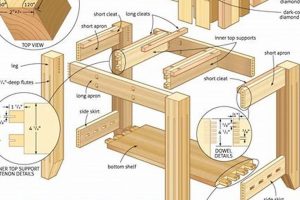
The creation and trade of uncomplicated wooden items represent a significant sector within the broader woodworking industry. These items are characterized by their ease of manufacture, relatively low material cost, and appeal to a wide range of consumers. Examples include small decorative boxes, simple shelves, and basic cutting boards.
The value of producing easily made wooden goods lies in their accessibility to novice woodworkers, providing an entry point into the craft. Furthermore, the demand for such items is consistently high due to their practicality, aesthetic appeal, and suitability as gifts. Historically, these projects have formed the backbone of craft fairs and small-scale woodworking businesses.
This analysis will explore the specific designs, materials, and marketing strategies crucial for developing and promoting commercially viable, easily constructed wooden creations. Emphasis will be placed on maximizing profit margins while maintaining quality and appealing to contemporary consumer preferences.
Generating Revenue Through Accessible Woodworking
The following recommendations are intended to guide woodworkers in identifying and capitalizing on opportunities within the market for readily produced wooden articles. Adherence to these principles can increase sales and enhance profitability.
Tip 1: Emphasize Functionality: Designs should prioritize practical use. Items like phone stands, key racks, and small storage containers address everyday needs and offer immediate value to potential buyers.
Tip 2: Select Readily Available Materials: Opt for common wood types such as pine, poplar, or fir. These materials are cost-effective and widely accessible, reducing production expenses.
Tip 3: Streamline the Production Process: Standardize dimensions and processes to minimize setup time and material waste. Jigs and templates can enhance efficiency and accuracy in repetitive tasks.
Tip 4: Focus on Flawless Finishing: A smooth, durable finish elevates the perceived value of even the simplest item. Invest in quality sanding equipment and appropriate finishing products.
Tip 5: Leverage Online Marketplaces: Utilize platforms like Etsy or Shopify to reach a wider audience. High-quality photographs and detailed product descriptions are crucial for online success.
Tip 6: Offer Customization Options: Providing personalized engravings or color choices can increase the perceived value of the items and appeal to a broader customer base.
Tip 7: Price Competitively: Research the market to determine appropriate price points. Consider material costs, labor hours, and competitor pricing when establishing retail prices.
Implementing these strategies allows woodworkers to optimize their production processes, enhance product appeal, and maximize revenue potential within the accessible woodworking market. The ability to adapt to changing consumer demands is also vital.
The concluding section will summarize key strategies for sustaining success within this specific segment of the woodworking industry.
1. Functionality

Functionality represents a cornerstone in the commercial success of uncomplicated woodworking creations. The inherent utility of an item directly influences its appeal to potential buyers, driving sales and establishing a stable market presence. The following facets explore how practical application dictates profitability.
- Addressing Everyday Needs
Projects that fulfill common requirements possess greater inherent value. Examples include phone stands, charging stations, key holders, and small storage containers. These items solve immediate, tangible problems, thereby increasing their desirability and marketability among a broad consumer base.
- Enhancing Organization and Efficiency
Woodworking projects that promote organization within a home or workspace demonstrate a clear functional benefit. Items like desk organizers, spice racks, and tool holders contribute to a more efficient and streamlined environment, appealing to individuals seeking practical solutions for everyday challenges.
- Providing Convenience and Accessibility
The convenience offered by a wooden product significantly impacts its perceived value. Items such as cookbook stands, tablet holders, and lap desks provide a hands-free experience or improved accessibility, addressing specific needs and enhancing user experience. The ease of use contributes to the product’s overall desirability.
- Offering Durable Solutions
Durability is a critical aspect of functionality. Woodworking projects, when crafted with appropriate materials and construction techniques, offer long-lasting solutions compared to alternatives made from less robust materials. Wooden cutting boards, for example, provide a durable and hygienic surface for food preparation, appealing to consumers seeking longevity and practicality.
The integration of practical functionality is paramount in the creation of easily made, commercially viable wooden articles. By prioritizing utility and addressing everyday needs, woodworkers can enhance the desirability and marketability of their creations, ensuring sustained success within the competitive woodworking market.
2. Material Cost

Material cost directly dictates the profitability and market competitiveness of uncomplicated woodworking projects. The judicious selection and sourcing of materials is crucial for maintaining reasonable production expenses and maximizing revenue potential. Inefficient material management can render even the most desirable design commercially unviable.
- Wood Selection
The choice of wood significantly impacts the final cost of the project. Common, readily available softwoods like pine, poplar, and fir offer a cost-effective alternative to expensive hardwoods such as oak, maple, or walnut. Selecting appropriate wood types necessitates a balance between desired aesthetic qualities and budgetary constraints. For instance, pine may be suitable for painted items, whereas a higher-grade hardwood may be required for projects where the natural grain is a prominent feature.
- Sourcing Strategies
The source from which materials are obtained influences overall expenditures. Local lumberyards may offer competitive pricing compared to large chain retailers, particularly for bulk purchases. Salvaged or reclaimed wood can also provide a cost-effective and environmentally conscious option, although it may require additional processing to ensure usability and safety. The geographic location and supplier relationships of the woodworker directly affect material expenses.
- Material Waste Minimization
Efficient cutting techniques and optimized design layouts are essential for minimizing material waste. Careful planning reduces the amount of unusable wood, directly decreasing costs. Implementing strategies such as nesting parts, utilizing offcuts for smaller components, and thoroughly evaluating project dimensions before commencing cutting operations contribute to improved material utilization and cost savings.
- Hardware and Finishing Supplies
The cost of hardware (screws, nails, hinges) and finishing supplies (stains, paints, sealants) must also be considered in the overall material expense. Sourcing these items in bulk or opting for less expensive alternatives can reduce production costs. Furthermore, the type of finish applied affects both the aesthetic appeal and the durability of the product, necessitating a careful evaluation of price versus performance.
Effective management of material costs is indispensable for producing commercially viable, uncomplicated woodworking items. Optimizing wood selection, implementing strategic sourcing practices, minimizing waste, and controlling hardware and finishing expenses are all essential components of a profitable woodworking operation. Failure to address these factors can erode profit margins and hinder the long-term sustainability of the business.
3. Ease of Production
Ease of production is a critical determinant in the commercial viability of rudimentary woodworking ventures. The complexity of manufacturing processes directly impacts production time, labor costs, and overall output capacity. Projects necessitating intricate techniques or specialized equipment often present significant barriers to entry, limiting scalability and profitability.
- Simplified Design and Assembly
Projects characterized by straightforward designs and uncomplicated assembly processes are inherently more amenable to efficient production. Items requiring minimal cutting, joining, and finishing operations can be manufactured at a faster rate, reducing labor hours and increasing output. For example, a basic wooden box constructed from pre-cut lumber and assembled with screws offers a simpler alternative to a dovetailed box requiring precise joinery and specialized tools. The reduced complexity translates directly into enhanced production efficiency.
- Standardized Processes and Jigs
The implementation of standardized processes and the utilization of jigs and templates streamline manufacturing procedures and enhance consistency. Standardized processes ensure that each unit is produced identically, reducing variations and minimizing errors. Jigs and templates facilitate accurate cutting, drilling, and assembly, thereby accelerating production and reducing the reliance on highly skilled labor. The use of a drilling jig for creating consistent hole patterns in shelving units, for instance, drastically reduces the time required for this task and ensures uniformity across all units.
- Minimal Tool Requirements
Projects that can be completed with a limited set of basic woodworking tools are more accessible to a broader range of craftspeople, including those with limited resources or experience. Reliance on specialized or expensive equipment creates a barrier to entry and increases production costs. A project requiring only a saw, drill, and sandpaper is inherently more amenable to rapid production than one necessitating a lathe, jointer, or planer. The accessibility of tools directly correlates to the ease of production and the potential for scalability.
- Reduced Finishing Time
Finishing processes, such as sanding, staining, and sealing, can be time-consuming and labor-intensive. Projects that require minimal finishing or that utilize simplified finishing techniques contribute to enhanced production efficiency. The application of a single coat of polyurethane, for example, is significantly faster than a multi-step finishing process involving multiple coats of stain and varnish. The reduction in finishing time translates directly into reduced labor costs and increased output capacity.
The incorporation of design elements that promote efficient manufacturing, coupled with the adoption of standardized processes and the minimization of tool requirements, is paramount to the success of basic woodworking ventures. Prioritizing ease of production not only reduces costs but also enhances scalability and allows for greater responsiveness to market demand. The ability to produce items quickly and efficiently is a key factor in achieving sustained profitability within this segment of the woodworking industry.
4. Market Demand

Market demand represents the aggregate desire of consumers for a specific product or service. In the context of easily made wooden articles, understanding and responding to prevailing market needs is crucial for achieving commercial success. Ignoring market trends and consumer preferences can result in unsold inventory and financial losses. Therefore, a thorough analysis of demand dynamics is essential for guiding design, production, and marketing strategies.
- Identifying Current Trends
Recognizing prevailing design aesthetics and consumer preferences is essential for aligning product offerings with market demand. Trends may encompass specific styles (e.g., minimalist, rustic, modern), color palettes, or functional features. Analysis of online marketplaces, social media platforms, and home dcor publications can provide valuable insights into current trends. For example, a surge in demand for sustainable and eco-friendly products necessitates the utilization of reclaimed wood or the adoption of environmentally responsible finishing practices. Failure to adapt to evolving trends can result in diminished sales and reduced market share.
- Assessing Seasonal Fluctuations
Market demand often exhibits seasonal fluctuations, with certain products experiencing increased sales during specific periods of the year. Holiday seasons, such as Christmas and Thanksgiving, typically generate heightened demand for gift items and decorative accessories. Understanding these seasonal patterns allows woodworkers to optimize production schedules and inventory levels to meet anticipated demand. For example, producing a larger quantity of wooden ornaments in anticipation of the Christmas season can maximize sales potential. Neglecting seasonal variations can lead to missed sales opportunities and overstocking of seasonal items.
- Analyzing Competitive Landscape
Evaluating the offerings and pricing strategies of competing woodworkers is crucial for establishing a competitive advantage. Identifying underserved market segments or product niches can reveal opportunities for differentiation and increased market share. For example, focusing on creating specialized wooden toys for children with specific developmental needs can provide a unique selling proposition. A comprehensive competitive analysis allows woodworkers to refine their product offerings, pricing, and marketing strategies to better address market demand and secure a sustainable position within the industry.
- Utilizing Customer Feedback
Direct customer feedback provides invaluable insights into product preferences, unmet needs, and areas for improvement. Soliciting customer reviews, conducting surveys, and engaging in direct communication with buyers allows woodworkers to refine their product designs and marketing messages to better align with customer expectations. For example, feedback indicating a preference for larger-sized cutting boards can inform future design decisions and inventory management. Actively listening to and responding to customer feedback fosters customer loyalty and increases the likelihood of repeat purchases.
The successful production and sale of basic woodworking creations hinges on a comprehensive understanding of market dynamics. By identifying current trends, assessing seasonal fluctuations, analyzing the competitive landscape, and actively utilizing customer feedback, woodworkers can effectively align their product offerings with market demand and maximize their commercial success. A proactive approach to market analysis is essential for long-term sustainability and profitability within this competitive industry.
5. Design Appeal

Design appeal functions as a significant determinant in the commercial success of uncomplicated woodworking projects. Aesthetic considerations often influence purchasing decisions, even for utilitarian items. Therefore, the visual characteristics of a simple woodworking project directly affect its marketability and perceived value.
- Form and Proportion
The overall shape and dimensional relationships of an object contribute significantly to its visual appeal. A well-proportioned item, adhering to principles of balance and harmony, is inherently more attractive to the consumer. For example, a small wooden box with balanced dimensions and a pleasing ratio of height to width will likely be more desirable than a box with awkward or disproportionate dimensions. The careful consideration of form and proportion is crucial for enhancing the aesthetic value of simple woodworking projects.
- Material Selection and Grain Pattern
The type of wood utilized, and the inherent grain pattern, contribute significantly to the aesthetic character of the finished product. Selecting woods with visually appealing grain patterns or contrasting colors can enhance the visual interest of even the simplest designs. For example, using a piece of figured maple for a small shelf or a cutting board can elevate its perceived value and desirability. The choice of material directly influences the aesthetic impact of the completed project.
- Surface Texture and Finish
The texture of the surface and the quality of the finish significantly impact the overall aesthetic appeal. A smooth, well-sanded surface is generally more desirable than a rough or uneven one. The choice of finish, whether it be a clear coat, stain, or paint, can enhance the natural beauty of the wood or provide a specific aesthetic effect. For example, a clear coat finish can highlight the natural grain of the wood, while a colored stain can alter its tone and appearance. The careful attention to surface texture and finish is essential for creating a visually appealing product.
- Incorporation of Decorative Elements
The strategic addition of decorative elements, such as carvings, inlays, or contrasting wood accents, can enhance the visual interest and perceived value of simple woodworking projects. These embellishments can add a touch of individuality and craftsmanship, differentiating the product from mass-produced alternatives. For example, a small wooden box with a simple carved design or an inlaid accent will likely be more appealing than a plain, undecorated box. The judicious incorporation of decorative elements can significantly enhance the aesthetic appeal and marketability of simple woodworking projects.
In essence, the aesthetic design of simple woodworking projects directly influences their perceived value and market demand. Through careful consideration of form, material selection, surface treatment, and decorative elements, woodworkers can enhance the visual appeal of their creations, thereby increasing their commercial viability within the woodworking market.
6. Finishing Quality

Finishing quality serves as a critical differentiator in the market for rudimentary woodworking creations. It transcends mere aesthetics, influencing both the perceived value and the longevity of these items. A substandard finish can detract from even the most well-designed and constructed project, negatively impacting sales and customer satisfaction.
- Surface Preparation
Proper surface preparation constitutes the foundation of a high-quality finish. Thorough sanding, filling imperfections, and removing dust or contaminants are essential steps. Failure to adequately prepare the surface results in uneven finish application, visible blemishes, and compromised adhesion. For example, a cutting board with poorly sanded surfaces will exhibit inconsistencies in the finish, potentially trapping food particles and compromising hygiene. Meticulous surface preparation is crucial for achieving a durable and visually appealing finish.
- Selection of Finishing Materials
The choice of finishing materials, including stains, paints, sealants, and varnishes, significantly impacts the final appearance and durability of the product. Selecting appropriate materials for the intended use and wood species is essential. For instance, a food-safe finish is imperative for items intended for food contact, while a UV-resistant finish is necessary for outdoor projects. Utilizing inappropriate or low-quality finishing materials can result in premature wear, discoloration, and compromised protection against moisture and other environmental factors. The selection of appropriate finishing materials directly contributes to the longevity and marketability of woodworking projects.
- Application Techniques
Proper application techniques, including brushwork, spraying, and wiping, are critical for achieving a consistent and flawless finish. Applying the finish evenly, avoiding runs and drips, and adhering to recommended drying times are essential. Improper application techniques can result in uneven color, visible brushstrokes, and compromised durability. For example, a poorly applied varnish on a wooden box will exhibit inconsistent gloss levels and may be prone to chipping or cracking. Mastering appropriate application techniques is crucial for achieving a professional-quality finish.
- Durability and Protection
A high-quality finish provides a protective barrier against moisture, scratches, and other forms of wear and tear. The finish should be durable enough to withstand the intended use of the product. For example, a finish applied to a wooden tabletop should be resistant to spills, scratches, and heat damage. A durable and protective finish not only enhances the aesthetic appeal of the product but also extends its lifespan, increasing its value and customer satisfaction. The protective qualities of the finish are essential for ensuring the long-term viability of woodworking creations.
The cumulative effect of surface preparation, material selection, application techniques, and durability directly influences the market success of rudimentary woodworking endeavors. A superior finish elevates the perceived value of even the simplest design, increasing consumer appeal and fostering repeat purchases. Conversely, a subpar finish can diminish the desirability of a project, regardless of its design or construction quality. The pursuit of excellence in finishing is, therefore, paramount for achieving sustained success in the competitive woodworking market.
7. Profit Margin

Profit margin, representing the percentage of revenue remaining after deducting costs, is a fundamental metric in evaluating the financial viability of manufacturing readily made wooden articles. Maximizing profit margins is essential for ensuring the sustainability and growth of woodworking businesses engaged in this market segment.
- Material Cost Optimization
Material cost significantly influences profit margins in uncomplicated woodworking projects. Sourcing affordable materials, minimizing waste through efficient cutting techniques, and leveraging bulk purchasing discounts directly impact profitability. For instance, a simple pine box constructed from low-cost lumber will inherently possess a higher potential profit margin than the same box constructed from an expensive hardwood. Effective material management is paramount for maintaining healthy profit margins.
- Labor Efficiency
Labor costs represent a significant expense in manufacturing wooden items. Streamlining production processes, utilizing jigs and templates, and optimizing workflow can enhance labor efficiency and reduce associated expenses. A project that requires extensive hand-tool work will typically exhibit a lower profit margin than one that can be efficiently produced using power tools and standardized techniques. Maximizing labor efficiency is crucial for improving profit margins, especially in high-volume production scenarios.
- Pricing Strategy
The pricing strategy employed directly impacts profit margins. Setting prices too high can deter potential customers, while pricing too low can erode profitability. Conducting market research to determine competitive pricing levels, understanding customer willingness to pay, and carefully considering the value proposition of the product are essential for establishing an effective pricing strategy. For example, a well-designed wooden cutting board crafted from quality materials may command a premium price, yielding a higher profit margin compared to a basic cutting board priced competitively with mass-produced alternatives. Strategic pricing is key for optimizing profit margins and maintaining a sustainable business.
- Overhead Cost Control
Overhead costs, including rent, utilities, and marketing expenses, can significantly impact profit margins. Minimizing these expenses through efficient resource management, strategic marketing initiatives, and cost-effective operational practices is crucial for maximizing profitability. A woodworking business operating from a home workshop may have lower overhead costs compared to one operating from a commercial facility, potentially resulting in higher profit margins. Effective overhead cost control is essential for ensuring the long-term financial viability of woodworking ventures.
In conclusion, maximizing profit margins in easily made wooden articles requires a holistic approach encompassing material cost optimization, labor efficiency improvements, strategic pricing, and overhead cost control. By carefully managing these factors, woodworking businesses can enhance profitability and ensure long-term sustainability within this competitive market segment. A focus on efficiency and value creation is essential for achieving success in this domain.
Frequently Asked Questions
This section addresses common inquiries and misconceptions regarding the production and sale of easily constructed wooden items. The information provided aims to offer clarity and guidance for those engaged in or considering entry into this market.
Question 1: What types of woodworking projects are considered “simple” and suitable for commercial sale?
Simple woodworking projects generally involve uncomplicated designs, minimal material requirements, and straightforward construction techniques. Examples include small wooden boxes, cutting boards, picture frames, shelves, and basic household organizers. These projects are typically accessible to novice woodworkers and can be produced efficiently using common woodworking tools.
Question 2: What are the primary factors influencing the profitability of simple woodworking projects?
Profitability is primarily determined by material costs, labor efficiency, pricing strategy, and overhead cost control. Minimizing material waste, streamlining production processes, setting competitive prices, and managing overhead expenses are crucial for maximizing profit margins.
Question 3: What are the most effective marketing strategies for promoting simple woodworking projects?
Effective marketing strategies include utilizing online marketplaces such as Etsy and Shopify, leveraging social media platforms to showcase products, participating in local craft fairs and markets, and building relationships with retailers or consignment shops. High-quality product photography and detailed product descriptions are essential for online sales.
Question 4: What are the common mistakes to avoid when starting a woodworking business focused on simple projects?
Common mistakes include underestimating material costs, neglecting market research, failing to prioritize quality control, neglecting to establish a strong online presence, and setting unrealistic pricing expectations. A thorough business plan and a commitment to continuous improvement are essential for avoiding these pitfalls.
Question 5: What types of wood are best suited for simple woodworking projects aimed at commercial sale?
Cost-effective and readily available softwoods like pine, poplar, and fir are often preferred for simple woodworking projects. These woods are easy to work with, accept finishes well, and are relatively inexpensive. However, the choice of wood should also consider the intended use and aesthetic requirements of the project.
Question 6: How important is finishing quality in determining the sales success of simple woodworking projects?
Finishing quality is exceptionally important. A smooth, durable, and visually appealing finish significantly enhances the perceived value and marketability of simple woodworking projects. A poorly finished project can detract from even the most well-designed and constructed item, negatively impacting sales and customer satisfaction. Attention to detail in the finishing process is crucial for commercial success.
In summary, success in the realm of easily manufactured wooden creations necessitates a comprehensive understanding of design principles, production efficiencies, marketing strategies, and financial management. A commitment to quality and a proactive approach to market analysis are also paramount.
The subsequent section will explore emerging trends and future opportunities within this specific segment of the woodworking industry.
Conclusion
The preceding analysis has examined the multifaceted elements contributing to the viability of simple woodworking projects that sell. Key considerations encompass design functionality, material selection and cost, streamlined production processes, market demand assessment, aesthetic appeal, finishing quality, and profit margin optimization. These factors, when strategically addressed, significantly influence the potential for commercial success in this segment of the woodworking industry.
The future of simple woodworking projects that sell lies in adapting to evolving consumer preferences, embracing sustainable practices, and leveraging technological advancements in design and manufacturing. Continued attention to quality, efficiency, and market relevance will be paramount for those seeking to thrive in this competitive landscape. The ability to innovate and respond to emerging trends will ultimately determine long-term viability and market leadership.