



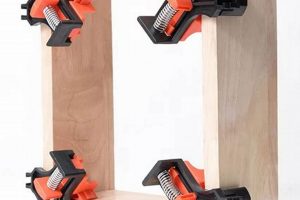
Specialized holding devices designed for furniture construction, specifically chairs, are essential for secure and accurate assembly. These tools apply pressure to joints, ensuring proper alignment and strong bonds during gluing and fastening processes. An example includes a corner clamp used to hold frame components at a 90-degree angle while adhesive cures.
These implements are crucial for producing high-quality, durable chairs. Their use minimizes movement and prevents misalignment, resulting in structurally sound and aesthetically pleasing pieces. Historically, simpler versions of these tools were employed, but advancements in materials and mechanisms have led to increased precision and ease of use, vital for both professional and amateur woodworkers.
The following sections will detail various types of these holding mechanisms, their applications in different chair-building scenarios, and factors to consider when selecting the appropriate tool for a given project.
Essential Considerations for Furniture Assembly Holding Devices
This section provides crucial advice for effectively utilizing specialized holding devices during furniture construction to achieve optimal results and ensure structural integrity.
Tip 1: Prioritize selecting a device with adequate clamping force. Insufficient pressure compromises joint strength, while excessive force damages the material.
Tip 2: Verify the device’s compatibility with the specific chair design. Different chair styles require varying types and sizes of holding mechanisms.
Tip 3: Ensure the device’s contact surfaces are clean and free of debris. Contamination reduces friction and can lead to slippage during the assembly process.
Tip 4: Implement protective padding between the tool and the workpiece. This prevents indentations or blemishes on the finished surfaces.
Tip 5: Test the alignment and clamping pressure before applying adhesive. Addressing errors proactively minimizes the risk of rework and material waste.
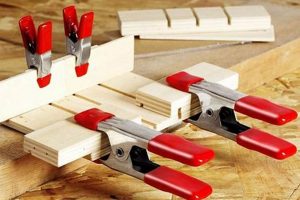
Tip 6: Consider utilizing multiple holding mechanisms simultaneously. Distributing pressure evenly enhances joint stability and reduces stress on individual components.
Tip 7: Allow sufficient curing time for adhesives before removing holding pressure. Premature removal compromises bond strength and structural integrity.
Adhering to these guidelines promotes accuracy, durability, and overall quality in chair construction. Proper technique mitigates potential problems and ensures a successful outcome.
The subsequent section summarizes the key aspects discussed, reinforcing the importance of these specialized tools in furniture production.
1. Clamping Force

Clamping force, in the context of chair construction, represents the pressure exerted by a holding device to maintain contact between components during adhesive curing or mechanical fastening. Insufficient clamping force allows movement between surfaces, compromising joint strength and potentially leading to structural failure. Conversely, excessive clamping force can damage the wood fibers, creating indentations or fracturing the material, especially when working with softer wood species. This necessitates a balanced approach tailored to the specific wood type and joint design.
The appropriate level of clamping force depends on factors such as the surface area of the joint, the type of adhesive used, and the density of the wood. For example, a larger mortise and tenon joint using a slow-curing epoxy adhesive may require sustained, moderate clamping force over an extended period. Conversely, a small dowel joint with quick-drying glue might only need brief, lighter clamping. In practice, adjustable clamps allow for fine-tuning the pressure applied, ensuring the joint is held securely without causing physical damage to the chair components. A common sign of inadequate force is visible gaps or movement during the glue-up process, while excessive force may manifest as glue starvation, where all the glue is squeezed out, resulting in a weak bond. Skilled use involves both observation and experience to achieve the optimal balance.
Therefore, understanding and controlling clamping force constitutes a critical skill for furniture makers. Implemented correctly, it directly contributes to the longevity and structural integrity of the finished chair. The challenge lies in selecting appropriate holding mechanisms and developing a tactile sensitivity for applying optimal pressure, balancing security with material preservation. Ultimately, mastery of clamping force is essential for producing high-quality, durable seating.
2. Joint Alignment
Joint alignment is a fundamental aspect of chair construction. The precise positioning of components prior to and during fastening is crucial for structural integrity and aesthetic appeal. Specialized holding mechanisms are essential tools for achieving and maintaining accurate alignment throughout the assembly process.
- Role of Holding Devices
Specialized holding devices, such as corner clamps or band clamps, facilitate the accurate positioning of chair components before fasteners or adhesives are applied. These tools allow for fine adjustments, ensuring that parts are square, flush, and aligned according to design specifications. Without such devices, maintaining proper alignment during assembly becomes significantly more challenging, potentially leading to structural weaknesses or visual imperfections.
- Mitigation of Cumulative Errors
Even minor misalignments at individual joints can accumulate, resulting in significant deviations in the overall chair geometry. Holding mechanisms mitigate this risk by providing consistent and repeatable positioning. For example, when assembling a chair seat frame, corner clamps applied to each corner ensure that the frame remains square and true, preventing cumulative errors from distorting the final shape.
- Enhancement of Joint Strength
Accurate alignment is directly correlated with joint strength. When components are properly aligned, the load is distributed evenly across the entire joint surface, maximizing the effectiveness of adhesives or mechanical fasteners. Conversely, misaligned joints create stress concentrations, weakening the connection and increasing the risk of failure. Holding devices ensure the proper mating of surfaces, facilitating optimal glue adhesion and load distribution.
- Facilitation of Complex Assemblies
Chairs with intricate designs or compound angles require precise alignment of numerous components. Holding mechanisms become indispensable for managing the complexity of these assemblies. For instance, when constructing a Windsor chair with its splayed legs and contoured seat, specialized jigs and clamps are necessary to maintain the correct angles and spacing of each element, ensuring structural stability and ergonomic comfort.
The benefits of precise joint alignment, facilitated by appropriate holding mechanisms, extend beyond structural soundness. Accurate alignment also contributes to the chair’s overall aesthetic quality, ensuring clean lines, consistent dimensions, and a professional finish. The investment in quality holding devices and the mastery of alignment techniques are essential for producing durable and visually appealing chairs.
3. Material Compatibility
The interaction between the materials of construction and the clamping mechanisms is a critical factor in chair construction. The selection of holding devices must consider the properties of the wood being used. Direct contact between metal clamp faces and softwood, for example, often results in unwanted impressions or damage to the workpiece. This effect is amplified when significant clamping force is applied. The absence of suitable protective measures, such as cork or felt pads, contributes to the potential for cosmetic or structural compromise. In contrast, hardwoods are generally less susceptible to surface damage but may still exhibit issues if the clamping pressure is excessive or unevenly distributed. Therefore, the holding device’s design, including the presence of features to mitigate direct contact, and the judicious application of clamping force are paramount for maintaining the integrity of the material.
Material compatibility extends beyond the direct contact between the clamp and the wood. Some adhesives react adversely with certain metals commonly used in clamp construction, causing corrosion or contamination of the joint. The selection of an appropriate adhesive, one that is chemically inert with the clamp’s material, is thus a crucial aspect of the assembly process. Furthermore, the presence of moisture in the wood can accelerate corrosion or cause dimensional changes that compromise the effectiveness of the clamping mechanism. Careful consideration of moisture content and environmental conditions is therefore essential to ensure stable and secure holding during the curing process. An example would be using clamps with rubber feet, which would stain certain woods or finishes.
In summary, the interplay between construction materials and holding devices is a multifaceted consideration. Effective chair construction necessitates an understanding of the physical and chemical interactions between these elements. Addressing the potential for damage or contamination through proper selection of materials and judicious application of clamping techniques represents a key component of successful chair construction. Disregard for material compatibility elevates the risk of compromising both the structural integrity and aesthetic quality of the finished chair.
4. Pressure Distribution

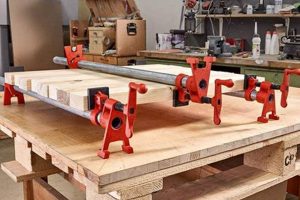
Pressure distribution, when applied to chair clamps during woodworking, directly influences the integrity of joints and the overall stability of the assembled structure. Uneven pressure application, a common consequence of poorly designed or improperly utilized clamps, concentrates stress on specific areas of the joint. This localized stress undermines the adhesive bond and increases the likelihood of joint failure under load. A well-designed chair clamp system, conversely, provides uniform pressure across the entire joint surface, ensuring optimal adhesion and load-bearing capacity. For example, using a single bar clamp across a wide chair back panel can result in bowing and uneven glue lines, while multiple smaller clamps spaced evenly will distribute the force more effectively.
Achieving consistent pressure distribution requires careful consideration of clamp selection and placement. Clamps with pivoting heads or flexible pads conform to the contours of the workpiece, minimizing stress concentrations. The strategic placement of multiple clamps along the joint line ensures that pressure is applied uniformly, even in areas with complex geometry. A practical application includes constructing a mortise and tenon joint, where clamps positioned directly above and below the joint maintain alignment and distribute pressure evenly, promoting a strong and durable bond. Failure to distribute pressure adequately leads to gaps within the joint and reduces its resistance to stress and warping over time.
In summary, pressure distribution constitutes a critical element in chair clamps woodworking. Uniform pressure application maximizes joint strength, enhances structural stability, and contributes to the longevity of the finished piece. Inadequate or uneven pressure distribution compromises the integrity of joints, ultimately diminishing the chair’s durability and aesthetic quality. Consequently, a thorough understanding of pressure distribution principles and the selection of appropriate clamping systems are vital for producing high-quality, structurally sound chairs.
5. Adhesive Curing

Adhesive curing is an essential phase in chair construction where the applied bonding agent undergoes a chemical process, transitioning from a liquid or semi-liquid state to a solid, hardened state, thereby uniting the chair’s components into a cohesive structure. Chair clamps directly influence the efficacy of this process.
- Maintenance of Joint Integrity
During adhesive curing, chair clamps maintain consistent pressure and alignment between joined components. Movement or shifting of the pieces during this period disrupts the adhesive bond, leading to weakened joints and potential structural failure. Clamps counteract this by holding the pieces securely in place, ensuring intimate contact between the surfaces and allowing the adhesive to cure undisturbed. For instance, when constructing a mortise and tenon joint, clamps prevent the tenon from shifting within the mortise as the glue sets, ensuring a tight and durable connection.
- Facilitation of Optimal Adhesive Contact
Effective adhesive curing depends on close contact between the adhesive and the substrate materials. Chair clamps compress the joint, maximizing the contact area and promoting even distribution of the adhesive. This compression forces the adhesive into the wood pores, creating a stronger mechanical bond. Without adequate clamping, gaps may form within the joint, preventing complete adhesion and reducing the overall strength. The even distribution achieved by appropriate clamping ensures that all available bonding sites are utilized, resulting in a superior joint.
- Mitigation of Internal Stresses
As adhesives cure, they often shrink slightly, creating internal stresses within the joint. Chair clamps counteract these stresses by maintaining a compressive force, preventing the joint from distorting or cracking during the curing process. The clamping force compensates for the shrinkage, ensuring that the joint remains tight and stable. In the case of complex chair assemblies with multiple joints, the cumulative effect of these stresses can be significant, making the role of clamps in mitigating them even more critical.
- Influence on Curing Time
While clamps do not directly alter the chemical curing process, they indirectly influence the required curing time. The intimate contact and stable alignment facilitated by clamps allow the adhesive to cure more efficiently, potentially reducing the necessary clamping time. In contrast, poorly clamped joints may require longer curing periods to achieve adequate strength, as the adhesive must compensate for gaps or movement within the joint. However, clamps should not be removed prematurely, as sufficient time must be allowed for the adhesive to reach its full strength.
The relationship between adhesive curing and chair clamps is synergistic. Clamps provide the necessary physical conditions for the adhesive to cure effectively, while the adhesive, once cured, creates a permanent bond that relies on the precision and stability provided by the clamps during its hardening. A comprehensive understanding of both adhesive properties and clamping techniques is therefore essential for producing high-quality, structurally sound chairs.
6. Workpiece protection
Workpiece protection is an indispensable component of chair construction using specialized holding devices. The application of clamping force, while necessary for secure joint adhesion, presents a risk of marring or damaging the wood surface. Direct contact between the clamp’s metal surfaces and the workpiece causes indentations, scratches, or crushing of wood fibers, particularly in softer wood species. This underscores the need for protective measures to mitigate potential damage during the clamping process. The absence of such protection detracts from the finished product’s aesthetic appeal and diminishes its structural integrity, especially if the damage compromises joint strength. One common example involves applying bar clamps directly to the legs of a chair without the use of padding; the resulting pressure leaves permanent marks on the wood, necessitating time-consuming repairs or even replacement of the affected component.
Effective workpiece protection encompasses several strategies, including the utilization of cushioning materials between the clamp faces and the wood surface. Materials such as cork, felt, leather, or even scrap pieces of wood can serve as buffers, distributing the clamping force evenly and preventing direct contact with the metal. The choice of material depends on the type of wood and the clamping pressure required. Softer woods demand thicker, more compliant padding to prevent damage, while hardwoods tolerate firmer padding. Furthermore, careful selection of the clamp itself can contribute to workpiece protection. Clamps with pivoting pads conform to the contours of the workpiece, minimizing stress concentrations. Clamps with adjustable pressure settings also help prevent over-tightening, reducing the risk of damage. This practical approach necessitates that every woodworking project, especially in fine furniture, include a check to see if all clamps in use are properly padded to prevent damage.
In summary, workpiece protection is a critical, often overlooked, aspect of chair construction utilizing specialized holding devices. The balance of adequate clamping force for secure joints and effective measures to prevent damage to the wood’s surface guarantees both structural integrity and visual quality. Disregarding workpiece protection leads to avoidable imperfections that detract from the finished product’s value and longevity. Therefore, the integration of protective practices is a requisite skill for the woodworker, essential for consistently producing high-quality, durable chairs.
Frequently Asked Questions
This section addresses common inquiries regarding the selection, application, and maintenance of specialized holding devices used in chair construction.
Question 1: What constitutes appropriate clamping force for chair joinery?
The requisite clamping force varies depending on the wood species, joint type, and adhesive used. Excessive force risks material deformation or adhesive starvation, while insufficient force compromises joint strength. Experimentation and careful observation are essential for determining the optimal pressure.
Question 2: How does one prevent marring or indentations when using holding devices?
Employing protective padding between the clamp faces and the workpiece is crucial. Suitable materials include cork, felt, leather, or scrap wood. The thickness and density of the padding should correspond to the hardness of the wood and the clamping pressure applied.
Question 3: Are specialized holding devices necessary for all chair construction projects?
While simpler joinery techniques may not necessitate specialized devices, complex assemblies, intricate designs, or situations requiring precise alignment benefit significantly from their use. The investment in appropriate devices often translates to increased accuracy, efficiency, and structural integrity.
Question 4: How often should holding devices be inspected and maintained?
Regular inspection, particularly before each use, is recommended. Check for signs of wear, damage, or corrosion. Lubricate moving parts as needed to ensure smooth operation. Damaged or malfunctioning devices should be repaired or replaced promptly to prevent compromised performance.
Question 5: Can one type of holding device be used for all chair components and joint types?
Different chair components and joint types necessitate different clamping solutions. Corner clamps excel at holding 90-degree angles, while band clamps are versatile for irregular shapes. Select devices based on the specific requirements of each joint and component.
Question 6: What is the recommended curing time for adhesives when using holding devices?
Adhere strictly to the adhesive manufacturer’s recommendations regarding curing time. Premature removal of clamps compromises joint strength. Factors such as ambient temperature and humidity may influence curing time, requiring adjustments as necessary.
The proper selection and utilization of chair clamps, coupled with adherence to sound woodworking principles, are fundamental to producing durable, aesthetically pleasing chairs.
The subsequent section will discuss advanced techniques and considerations for maximizing the effectiveness of these holding devices in complex chair-building scenarios.
Chair Clamps Woodworking
This exploration of chair clamps woodworking has underscored the importance of selecting and applying these specialized tools effectively. Key considerations include clamping force, joint alignment, material compatibility, pressure distribution, adhesive curing, and workpiece protection. Each factor contributes directly to the structural integrity and aesthetic quality of the finished chair.
Proficient implementation of these techniques ensures the creation of durable and visually appealing furniture. Continued refinement of these skills allows the craftsman to achieve consistent and high-quality results in chair construction. Further research and practical application remain vital for advancing expertise in this domain.
![Top-Rated: Best Quick Clamps for Woodworking Projects [2024] | Step-by-Step Guides, Tools & Inspiration to Build Beautiful Wooden Decor on a Budget](https://woodfromhome.com/wp-content/uploads/2026/04/th-264-300x200.jpg "Top-Rated: Best Quick Clamps for Woodworking Projects [2024] Step-by-Step Guides, Tools & Inspiration to Build Beautiful Wooden Decor on a Budget")