



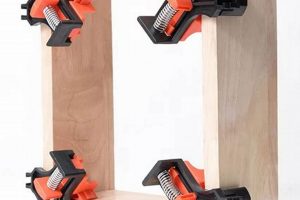
The selection of appropriate clamping devices is crucial for achieving precise and robust corner joints in woodworking projects. These specialized tools, designed to hold workpieces at a 90-degree angle during the gluing and fastening process, ensure squareness and structural integrity. An example would be utilizing these tools when constructing cabinet frames or picture frames where perfect right angles are essential.
Employing effective corner joining techniques significantly enhances the quality and durability of finished woodworking products. Accurate corner alignment prevents racking and instability, contributing to the longevity of furniture and structures. Historically, various methods have been used, but modern clamping technologies offer increased precision and ease of use, streamlining the assembly process and reducing the margin for error.
The subsequent sections will examine diverse types of these tools available on the market, discuss factors influencing their performance, and offer guidance on selecting the optimal tool for specific woodworking applications. This analysis aims to provide woodworkers with the knowledge necessary to make informed purchasing decisions and improve the accuracy of their corner joinery.
Tips for Effective Corner Clamping in Woodworking
This section presents essential guidelines to maximize the utility and effectiveness of corner clamps, ensuring accurate and robust corner joints.
Tip 1: Select the Appropriate Clamp Type: Consider the specific project requirements when choosing a clamp. Options include miter clamps, right-angle clamps, and band clamps. Different clamp types are suited for varying material thicknesses and joint configurations.
Tip 2: Ensure Accurate Alignment: Before tightening clamps, verify that the workpieces are perfectly aligned at a 90-degree angle. Use a square or precision measuring tool to confirm accuracy. Misalignment during clamping can result in skewed joints.
Tip 3: Apply Even Pressure: Distribute clamping pressure evenly across the joint surface. Excessive pressure in one area may cause damage or distortion. Utilize shims or padding to distribute force uniformly.
Tip 4: Protect Workpiece Surfaces: Employ protective pads or cauls between the clamp jaws and the wood surface. This prevents marring, indentation, and staining of the material, particularly with delicate wood species.
Tip 5: Use Glue Sparingly: Apply adhesive in a controlled manner to minimize squeeze-out. Excessive glue can complicate the clamping process and require additional cleanup. Select a glue appropriate for the wood species and joint type.
Tip 6: Allow Adequate Drying Time: Adhere to the adhesive manufacturer’s recommended drying time before removing the clamps. Premature removal can compromise joint strength and stability.
Tip 7: Inspect the Joint After Clamping: After clamp removal, carefully inspect the joint for any imperfections or weaknesses. Address any issues promptly to prevent future problems.
Proper application of these guidelines results in stronger, more accurate, and visually appealing corner joints in woodworking projects. Consistent adherence to these principles elevates the quality of craftsmanship.
The final section will offer a concluding perspective on the critical role of precise corner clamping in achieving superior woodworking outcomes.
1. Accuracy

Accuracy, in the context of corner clamping tools used in woodworking, dictates the precision with which a right angle can be maintained during the joining process. This precision directly influences the structural integrity and visual appeal of the final product. Deviation from a true 90-degree angle can lead to instability and aesthetic imperfections.
- Impact on Joint Strength
Inaccurate clamping can result in poorly aligned joints, reducing the surface area available for adhesive bonding. This diminished contact compromises the joint’s ability to withstand stress and mechanical forces. The resulting weakness can lead to premature failure, particularly in load-bearing applications.
- Effect on Component Alignment
When assembling multi-component structures, inaccurate corner clamping can compound alignment errors. Even minor deviations at each corner can accumulate, leading to significant discrepancies in overall dimensions and geometry. This can necessitate rework or render components unusable.
- Influence on Visual Aesthetics
Visually, inaccurately clamped corners are immediately noticeable. Skewed angles and uneven gaps detract from the perceived quality of the finished piece. In furniture construction, for example, precise corner joints are critical for achieving a professional and refined appearance.
- Dependence on Tool Calibration
The accuracy of a corner clamp is directly dependent on its manufacturing tolerances and ongoing calibration. High-quality clamps are engineered to minimize play and maintain consistent angles over time. Regular inspection and adjustment may be necessary to ensure continued accuracy.
The selection of corner clamps should prioritize designs and brands known for their commitment to precision engineering. Achieving true right angles during the assembly process is fundamental to the success of any woodworking project. Failure to maintain accuracy can negate the benefits of even the most skilled craftsmanship.
2. Durability

The durability of corner clamping tools significantly impacts their long-term effectiveness and overall value in woodworking applications. This characteristic reflects the clamp’s ability to withstand repeated use, resist wear and tear, and maintain its functional integrity over an extended period. Insufficient durability leads to premature failure, compromised accuracy, and increased replacement costs.
Material selection directly contributes to a clamp’s durability. High-strength metals, such as hardened steel or aluminum alloys, provide superior resistance to bending, cracking, and deformation under clamping pressure. The design of the clamp’s mechanism also plays a crucial role. Robust designs, featuring reinforced components and precise machining, minimize the risk of mechanical failure. For example, clamps subjected to frequent use in a professional woodworking shop must possess exceptional durability to endure the demands of continuous operation. Low-quality clamps, constructed from inferior materials, may exhibit premature wear, rendering them unreliable and unsafe. Consider a scenario where a woodworker is constructing a large cabinet; if the corner clamps fail mid-assembly, the entire project could be jeopardized, resulting in material waste and lost time.
Ultimately, the durability of these tools translates directly to cost-effectiveness and reliability. Investing in clamps engineered for longevity ensures consistent performance and minimizes the need for frequent replacements. This not only saves money in the long run but also promotes safety and efficiency in the woodworking process. Selecting durable tools is a critical factor in ensuring the quality and longevity of woodworking projects.
3. Ease of Use
Ease of use is a critical factor determining the effectiveness of corner clamping tools. The efficiency and precision of woodworking projects are directly influenced by how readily a woodworker can manipulate and adjust these devices. Complex clamping mechanisms or unintuitive designs can lead to wasted time, increased error rates, and compromised joint quality. A clamp that is difficult to position, tighten, or release impedes the assembly process and increases the potential for workpiece damage.
Consider the task of assembling a complex picture frame with multiple mitered corners. If the corner clamps require significant force to operate or lack fine-adjustment capabilities, achieving precise corner alignment becomes challenging. The woodworker may struggle to maintain consistent pressure across the joint, resulting in gaps or uneven surfaces. In contrast, clamps with ergonomic handles, quick-release mechanisms, and clear markings for angle settings significantly streamline the process, reducing fatigue and enhancing accuracy. The intuitive design of these tools minimizes the learning curve, enabling both novice and experienced woodworkers to achieve professional-quality results.
Therefore, ease of use is not merely a convenience; it is a fundamental characteristic of an effective corner clamping tool. It directly contributes to improved productivity, reduced error rates, and enhanced overall project quality. Prioritizing user-friendly designs ensures that woodworkers can focus on the craft, rather than struggling with cumbersome equipment. The selection process should carefully evaluate the tool’s ergonomics, adjustability, and overall simplicity of operation to maximize efficiency and minimize the risk of complications during assembly.
4. Clamping Pressure
Clamping pressure, in the context of corner clamps for woodworking, refers to the force exerted by the clamp to hold workpieces together during the adhesive bonding process. This pressure is a critical factor influencing joint strength and overall structural integrity. Insufficient pressure results in weak bonds and potential joint failure, while excessive pressure can damage the wood fibers, compromising the joint’s integrity. The optimal clamping pressure varies depending on the wood species, adhesive type, and joint configuration. Example of best corner clamps woodworking with consistent clamping pressure would ensure a secure and durable bond, contributing to the furniture’s longevity.
Achieving the appropriate clamping pressure requires careful consideration of the clamp’s design and adjustability. Clamps with calibrated pressure settings or adjustable mechanisms allow for precise control over the applied force. For instance, when working with softwood species, such as pine, lower clamping pressures are recommended to prevent indentation or crushing of the wood fibers. Conversely, hardwoods, such as oak or maple, may require higher pressures to ensure adequate adhesive contact and penetration. The selection of corner clamps should therefore prioritize models that offer a wide range of pressure settings and maintain consistent force distribution across the joint surface. Clamping pressure will ensure structural integrity when crafting things, and having corner clamps would be beneficial.
In summary, clamping pressure is a fundamental parameter in corner clamping for woodworking, influencing joint strength, structural integrity, and overall project quality. The selection of appropriate corner clamps should consider their ability to deliver and maintain optimal pressure levels for the specific materials and applications involved. Failure to address this aspect can lead to compromised joint performance and reduced longevity of the finished product. Clamping pressure is important when using corner clamps.
5. Material Compatibility
Material compatibility is a critical consideration when selecting corner clamps for woodworking. The interaction between the clamp’s materials and the workpiece material directly influences the effectiveness of the clamping process and the integrity of the finished product. Incompatibility can lead to surface damage, staining, or even structural compromise.
- Clamp Jaw Material and Wood Hardness
The material composition of the clamp jaws must be carefully considered in relation to the hardness of the wood being clamped. Hard steel jaws can easily mar softer woods like pine or cedar, leaving unsightly indentations. Conversely, softer jaw materials like plastic or rubber may not provide sufficient grip on harder woods like oak or maple. The appropriate choice ensures secure holding without damaging the workpiece surface. For example, when clamping delicate veneers, padded or non-marring clamp jaws are essential to prevent surface blemishes.
- Chemical Reactivity of Clamp Components
Certain clamp materials can chemically react with some wood species or adhesives, leading to staining or discoloration. For example, some metals can react with the tannins in certain hardwoods, resulting in dark stains around the clamping area. Similarly, some plastics can be dissolved or weakened by certain solvents or adhesives. Selecting clamps with chemically inert materials minimizes the risk of unwanted reactions and ensures a clean, professional finish.
- Clamp Design and Pressure Distribution
The design of the clamp and its ability to distribute pressure evenly across the workpiece surface is crucial for material compatibility. Clamps with narrow jaws or uneven clamping surfaces can concentrate pressure in specific areas, leading to localized damage or distortion. Clamps with wide, flat jaws and adjustable pressure settings provide more uniform support, reducing the risk of material damage. For instance, when clamping thin or fragile materials, a clamp with adjustable pressure and wide jaws is essential to prevent cracking or warping.
- Environmental Considerations
Environmental factors can also influence material compatibility. For example, humidity and temperature can affect the expansion and contraction rates of both the clamp material and the wood, potentially leading to stress and warping. Selecting clamps with materials that are less susceptible to environmental changes minimizes these risks and ensures consistent performance over time. Similarly, exposure to UV light can degrade certain plastics, making them brittle and prone to cracking. Choosing UV-resistant materials enhances the clamp’s durability and longevity.
The selection process for corner clamps should always prioritize material compatibility. Understanding the interactions between clamp materials, wood species, adhesives, and environmental factors is crucial for achieving secure, damage-free clamping and ensuring the quality and longevity of woodworking projects. Attention to these details differentiates a competent woodworker from a novice.
6. Joint Type
The specific type of corner joint being executed in woodworking dictates the selection of the most appropriate clamping apparatus. Different joint configurations present unique challenges in terms of alignment, stability, and pressure distribution, making specialized clamps necessary for optimal results. Therefore, understanding the characteristics of each joint type is crucial for effective clamp selection.
- Miter Joints
Miter joints, characterized by their angled cuts that meet to form a corner, require clamps capable of applying even pressure along the mitered surfaces. Miter clamps, band clamps, or specialized corner clamps with adjustable angles are commonly employed. The challenge lies in preventing slippage and ensuring precise alignment during adhesive curing. Incorrect clamp selection can lead to gaps or misalignment, compromising the joint’s aesthetic appeal and structural integrity.
- Butt Joints
Butt joints, where two surfaces meet end-to-end without any interlocking features, rely heavily on adhesive strength and external reinforcement. While simple to execute, they are inherently weak without proper clamping and additional fasteners. Corner clamps, often used in conjunction with screws or dowels, provide the necessary pressure to achieve a strong bond. The clamp must maintain consistent pressure across the entire joint surface to prevent gaps and ensure optimal adhesive contact.
- Dovetail Joints
Dovetail joints, known for their interlocking pins and tails, offer exceptional strength and resistance to pulling forces. While the interlocking nature of the joint provides inherent mechanical strength, clamping is still necessary to ensure tight closure and optimal adhesive bonding. Corner clamps with adjustable jaws can accommodate the complex geometry of dovetail joints, applying pressure to both the face and edge of the joint. Proper clamping enhances the joint’s resistance to racking and ensures long-term stability.
- Rabbet Joints
Rabbet joints, created by cutting a recess along the edge of one workpiece to receive another, offer increased surface area for adhesive bonding compared to butt joints. Corner clamps, in conjunction with bar clamps or hand screws, are often used to secure rabbet joints during assembly. The clamp must apply pressure perpendicular to the joint surface to prevent slippage and ensure proper alignment. Careful attention to clamp placement and pressure distribution is crucial for achieving a strong and aesthetically pleasing joint.
The choice of clamping tool is intrinsically linked to the selected joint type. Each joint configuration demands specific features and capabilities from the clamping mechanism to ensure accurate alignment, even pressure distribution, and optimal adhesive bonding. The informed woodworker considers these factors to select the appropriate tools, maximizing the strength, durability, and aesthetic quality of the finished product.
7. Size Capacity
Size capacity, in the context of selecting the appropriate tools for woodworking, directly relates to the dimensions of the workpieces that a corner clamp can effectively accommodate. The range of adjustability and the physical dimensions of the clamp determine its suitability for various projects. Adequate size capacity is essential for secure and accurate corner joint assembly.
- Maximum Workpiece Thickness
This parameter indicates the largest dimension of material that the clamp can hold securely. Corner clamps must possess sufficient jaw depth and clamping force to accommodate the thickness of the wood being joined. Exceeding this limit compromises the clamp’s ability to maintain a 90-degree angle, leading to weakened or misaligned joints. For example, assembling thick table legs requires clamps with a significantly greater maximum workpiece thickness than those used for delicate picture frames.
- Minimum Workpiece Dimensions
Conversely, the minimum size of the workpiece also dictates clamp suitability. Clamps designed for larger materials may be unwieldy or ineffective when used with smaller pieces. Jaws that are too large can interfere with proper alignment or damage delicate edges. For instance, crafting small boxes or intricate models demands corner clamps specifically designed for smaller dimensions.
- Adjustability Range
The adjustability range defines the span between the minimum and maximum workpiece dimensions that a clamp can handle. A wider adjustability range provides greater versatility, allowing the clamp to be used for a broader variety of projects. However, it is important to note that some clamps sacrifice precision for adjustability; therefore, selecting a clamp with an appropriate balance between adjustability and accuracy is essential.
- Throat Depth
The throat depth of a corner clamp indicates the distance from the clamping edge to the back of the clamp jaw. This dimension determines how far the clamp can reach into the workpiece to apply pressure. Insufficient throat depth can limit the clamp’s ability to secure corners, particularly on larger or more complex assemblies. For example, assembling large cabinet carcasses requires clamps with sufficient throat depth to reach and secure the corners effectively.
Effective selection depends upon precise project needs. Matching size capacity maximizes joint precision, integrity, and woodworking success. Thus, when evaluating clamping options, careful attention to dimensional requirements is vital.
Frequently Asked Questions
This section addresses common inquiries and misconceptions regarding corner clamps used in woodworking, providing concise and informative answers to aid in selection and application.
Question 1: What is the significance of clamp jaw material in relation to the workpiece?
The clamp jaw material directly impacts the potential for surface damage to the workpiece. Hard steel jaws can mar softer woods, while softer materials may lack sufficient grip on hardwoods. Selection must align with wood hardness to prevent indentations or slippage.
Question 2: How does clamping pressure affect joint strength?
Clamping pressure is directly proportional to joint strength, up to a certain point. Insufficient pressure results in weak bonds, while excessive pressure can crush wood fibers. Adherence to recommended pressure ranges is critical for optimal results.
Question 3: What are the key differences between miter clamps and right-angle clamps?
Miter clamps are designed specifically for angled joints, providing pressure along mitered surfaces. Right-angle clamps are intended for 90-degree corners, ensuring squareness and alignment. Each is optimized for its respective joint configuration.
Question 4: How does the size capacity of a corner clamp influence its suitability for different projects?
Size capacity, encompassing both maximum and minimum workpiece dimensions, dictates the range of projects for which a clamp is appropriate. Exceeding these limits compromises clamping force and accuracy. Selecting clamps with suitable capacity ensures proper joint assembly.
Question 5: Why is consistent clamping pressure important across the entire joint surface?
Consistent clamping pressure ensures uniform adhesive distribution and contact across the entire joint surface. Uneven pressure can result in gaps, weakened bonds, and compromised structural integrity. Clamps with adjustable and calibrated pressure settings mitigate this risk.
Question 6: How does ease of use contribute to the effectiveness of corner clamping?
Ease of use directly impacts efficiency, accuracy, and potential for error. Clamps with ergonomic designs, quick-release mechanisms, and intuitive adjustments streamline the assembly process, reducing fatigue and enhancing overall project quality.
In conclusion, careful consideration of jaw material, clamping pressure, clamp type, size capacity, pressure consistency, and ease of use is essential for maximizing the effectiveness of corner clamps in woodworking.
The subsequent section will provide best practices for corner clamp maintenance and storage to ensure longevity and consistent performance.
Conclusion
The preceding analysis has explored several critical facets of selecting and utilizing appropriate tools for joining workpieces at right angles in woodworking endeavors. Considerations such as clamp jaw material, clamping pressure, specific joint type, size capacity and overall ease of use each play a significant role in the precision, strength and aesthetic quality of the finished product. A comprehensive understanding of these factors allows for informed purchasing decisions and optimized application techniques.
Effective employment of suitable devices for right-angle joining ensures structural integrity and elevates the overall craftsmanship of woodworking projects. Continued diligence in selecting tools tailored to the unique demands of each project will yield superior results and foster professional excellence. Further research and experimentation in specific applications is recommended for continued refinement of joinery techniques.
![Top-Rated: Best Quick Clamps for Woodworking Projects [2024] | Step-by-Step Guides, Tools & Inspiration to Build Beautiful Wooden Decor on a Budget](https://woodfromhome.com/wp-content/uploads/2026/04/th-264-300x200.jpg "Top-Rated: Best Quick Clamps for Woodworking Projects [2024] Step-by-Step Guides, Tools & Inspiration to Build Beautiful Wooden Decor on a Budget")