



Holding materials securely during assembly is a fundamental aspect of successful woodworking. Devices designed for this purpose, available from retailers like Harbor Freight, are essential for creating strong and precise joints. These tools apply pressure to keep wood pieces aligned while adhesives dry or fasteners are driven. Examples include bar clamps, pipe clamps, C-clamps, and spring clamps, each suited for different applications and project sizes.
Their importance stems from enabling accurate construction and preventing movement that could compromise structural integrity or aesthetic appeal. Using such devices enhances safety by freeing hands to operate tools, and improves overall efficiency by streamlining the assembly process. Historically, similar methods utilizing ropes, wedges, and hand-operated levers have been employed for centuries to achieve the same objective: temporary, controlled pressure for bonding materials.
The subsequent discussion will explore factors to consider when selecting these tools, including their material composition, clamping force, and the range of sizes offered, as well as their suitability for specific woodworking tasks and project requirements. We will also examine relevant safety precautions and maintenance practices to ensure longevity and optimal performance.
Guidance on Securing Woodworking Projects
Effective utilization of clamping devices is pivotal for achieving quality results in woodworking endeavors. The following guidelines offer practical advice for selecting and employing these tools available from retailers like Harbor Freight.
Tip 1: Match the Clamp to the Task: Selecting the appropriate type for each specific application is crucial. Bar clamps are suited for larger assemblies, while spring clamps are ideal for lighter tasks or holding small pieces. Consider the size and shape of the materials being joined.
Tip 2: Distribute Pressure Evenly: Uneven pressure can lead to warping or joint failure. Employ cauls, which are sacrificial pieces of wood, to spread force across the surface of the workpiece, particularly when working with delicate materials.
Tip 3: Protect Wood Surfaces: Direct contact with metal surfaces can mar the wood. Use padding, such as cork or felt, between the jaws and the material to prevent indentations and staining, particularly on finished surfaces.
Tip 4: Avoid Over-Tightening: Excessive force can damage both the workpiece and the device. Tighten only to the point where the joint is secure and the pieces are firmly aligned. Monitor for signs of compression or deformation.
Tip 5: Use Adequate Quantity: Employ sufficient devices to ensure uniform pressure along the entire joint line. The number required depends on the size and complexity of the assembly, but err on the side of using more rather than fewer.
Tip 6: Maintain Cleanliness: Glue residue and debris can impede performance and shorten lifespan. Regularly clean the threads and jaws to ensure smooth operation and prevent adhesion to workpieces.
Tip 7: Inspect for Damage: Prior to each use, examine the clamping devices for signs of wear, such as bent bars, stripped threads, or cracked jaws. Damaged tools can compromise safety and accuracy. Discard or repair them as needed.
Implementing these recommendations will contribute to stronger, more precise, and more aesthetically pleasing woodworking projects.
The subsequent section will address safety considerations and maintenance practices to prolong the useful life and effectiveness of woodworking clamps.
1. Affordable pricing

Affordable pricing is a central characteristic often associated with woodworking clamps available at Harbor Freight. This affordability directly impacts accessibility for hobbyists, beginners, and those operating on limited budgets. The lower cost enables individuals to acquire a variety of types and sizes, facilitating a broader range of woodworking projects. For example, a novice woodworker can purchase a set of C-clamps, bar clamps, and spring clamps without exceeding a modest budget, allowing experimentation and skill development. The affordability serves as a primary driver for initial purchase decisions.
However, the affordability may correlate with compromises in material quality or clamping force. It becomes crucial to balance the lower cost with the specific requirements of the project. Consider a scenario where heavy-duty clamping is needed for a large-scale furniture assembly. While Harbor Freight clamps may provide initial cost savings, the clamping force or long-term durability may prove insufficient compared to higher-priced alternatives. The implication is a potential trade-off between immediate cost savings and long-term performance or longevity.
In summary, the affordable pricing of woodworking clamps at Harbor Freight creates an accessible entry point for many woodworkers. It is important to recognize that this affordability is but one aspect of the purchase decision and that careful consideration of material quality, clamping force, and project requirements are necessary to ensure satisfactory results. Over-reliance on price as the sole determinant can potentially lead to compromised outcomes.
2. Variety of Types

The availability of a diverse assortment of clamping devices at retailers such as Harbor Freight directly influences the scope and versatility of woodworking projects that can be undertaken. This variety enables users to select the most appropriate tool for a given task, thereby improving efficiency and the quality of the finished product.
- Application Specificity
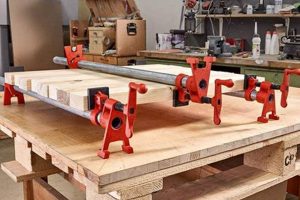
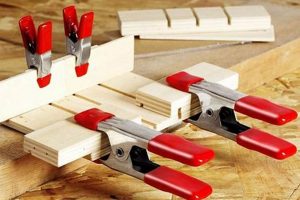
The range encompasses clamps designed for specific applications. C-clamps, for instance, are general-purpose tools suitable for many tasks, while pipe clamps excel in large assemblies. Spring clamps provide quick, light-duty holding power. This specificity allows a woodworker to match the tool to the needs of the project, optimizing holding power and preventing damage to the workpiece. For example, using a delicate spring clamp for thin veneer work versus a heavy-duty bar clamp for assembling a table frame.
- Size and Capacity
The assortment includes variations in size and clamping capacity. Smaller clamps are suitable for intricate details or smaller workpieces, while larger clamps accommodate broader assemblies. This scaling allows for working on anything from small boxes to large pieces of furniture. Limiting the clamps used to similar sizes will increase consistency.
- Material and Construction
The composition and construction of these tools vary, influencing their durability and performance. Some are constructed from cast iron, while others utilize steel bars and composite handles. This variation provides a spectrum of strength and resilience. For example, Cast iron based-clamps may be more prone to damage if excessive tension is applied versus steel variations.
- Specialized Clamps
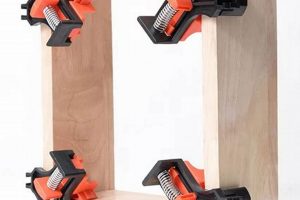
Beyond standard types, the selection can include specialized clamps like corner clamps for joining corners precisely, or hand screw clamps for distributing pressure over a wide area. These specialized tools address unique challenges in woodworking. Utilizing the right clamps allows for the precision needed for a professional finish.
In summation, the extensive assortment of clamps available allows woodworkers to adapt to various project requirements, facilitating precision and efficiency in assembly. A lack of diversity can limit the types of projects that can be effectively executed or necessitate compromises in technique. It also means more options for beginners.
3. Clamping Pressure
Clamping pressure, the force exerted by a clamp to hold workpieces together, is a critical factor determining the success of woodworking projects. The clamping devices offered by Harbor Freight provide a range of pressure capabilities, influencing their suitability for different tasks and material types.
- Clamping Force Ratings
Each clamp model possesses a specified maximum force it can exert, measured in pounds or kilograms. Harbor Freight typically provides these ratings, but it is crucial to verify their accuracy and consistency. Exceeding the rated force can result in clamp failure, potentially damaging the workpiece and causing injury. Underestimating the necessary force can compromise joint integrity.
- Material Properties
The capacity of a clamp to generate adequate pressure is intrinsically linked to the material from which it is constructed. Lower-cost clamps may utilize less robust metals, leading to deformation or breakage under high stress. The threads of a screw-type clamp, or the locking mechanism of a bar clamp, are particularly vulnerable. Selection should consider the anticipated frequency of use and the types of materials being worked.
- Joint Integrity
The amount of clamping pressure applied directly affects the strength and longevity of a glued joint. Insufficient pressure prevents proper adhesion, resulting in weak bonds prone to failure. Conversely, excessive pressure can squeeze out too much adhesive, also weakening the joint. Determining the optimal pressure depends on the adhesive type, the wood species, and the joint configuration.
- Application Considerations
Different woodworking applications require varying degrees of clamping pressure. Light-duty tasks, such as holding small pieces for detail work, require less force than assembling large furniture components. Harbor Freight offers a variety of clamp types to address this range, but selecting the appropriate type for the specific application is essential. Bar clamps are suitable for larger projects, while spring clamps are adequate for lighter tasks.
Therefore, the effective utilization of clamping devices from Harbor Freight requires a thorough understanding of the relationship between clamping pressure, material properties, joint requirements, and application demands. Selecting a clamp solely based on price without considering its pressure capabilities can lead to compromised results and potential safety hazards. Evaluating durability, material strength, and clamping capacity is crucial for achieving successful woodworking outcomes.
4. Material Quality
Material quality directly impacts the performance, longevity, and safety of clamps available at Harbor Freight. Its assessment is crucial for determining suitability for specific woodworking applications and the overall value proposition.
- Composition and Durability
The metals used in construction significantly influence the clamp’s ability to withstand stress and resist deformation. Harbor Freight’s clamp selection often includes options utilizing cast iron, steel, and aluminum alloys. Cast iron, while economical, can be brittle and prone to fracture under high stress. Steel offers superior tensile strength but may be susceptible to corrosion if not properly treated. The implications are that tasks requiring high clamping force or frequent use may demand clamps constructed from higher-grade steel.
- Thread Quality and Precision
For screw-type clamps, the precision and quality of the threads are paramount. Poorly manufactured threads can strip easily, rendering the clamp unusable and potentially causing slippage during operation. Evaluating the thread engagement and smoothness of operation is essential before purchase. The implication is that clamps with imprecise threads may be suitable only for light-duty tasks or infrequent use.
- Coating and Corrosion Resistance
Surface treatments, such as powder coating or galvanization, provide protection against corrosion and extend the lifespan of clamps, particularly in environments with high humidity. The absence of adequate coating can lead to rust, weakening the material and impeding smooth operation. The implication is that clamps lacking corrosion resistance may require more frequent maintenance or replacement, especially in damp workshops.
- Jaw Pad Material and Design
The material used for jaw pads, which protect the workpiece from damage, varies widely. Some clamps utilize hard plastic, while others incorporate softer rubber or cork. The design of the pad, including its surface area and adherence to the jaw, also influences its effectiveness. Inadequate padding can lead to indentations or marring of the wood surface. The implication is that delicate or finished surfaces require clamps with softer, more protective jaw pads.
These facets collectively illustrate the importance of material quality in the context of clamps available at Harbor Freight. While affordability is a key consideration, neglecting material quality can result in compromised performance, reduced lifespan, and potential safety risks. Careful evaluation of composition, thread quality, coating, and jaw pad material is essential for selecting clamps that meet the demands of specific woodworking tasks.
5. Size Availability
The range of sizes offered in clamping devices, particularly those available from retailers such as Harbor Freight, directly influences the types of woodworking projects that can be undertaken and the effectiveness of those projects. The accessibility of various sizes determines the suitability of these tools for a broad spectrum of applications.
- Project Scalability
The availability of multiple sizes enables woodworkers to scale projects from small, intricate tasks to large-scale assemblies. A limited size selection restricts the user to projects within those dimensional constraints. For example, a lack of long bar clamps precludes the assembly of wide tabletops, while an absence of small clamps hinders the construction of delicate boxes or models. Harbor Freight’s size offerings should therefore align with the anticipated range of projects.
- Workpiece Adaptation
Woodworking projects often involve materials of varying thicknesses and dimensions. A diverse size selection allows adaptation to different workpiece geometries. The ability to select a clamp with the appropriate jaw opening and throat depth ensures secure holding without excessive pressure or instability. If the available sizes don’t include the right size for a project, it may make the project unfeasible, or require alternative means of securing the workpiece.
- Force Distribution and Stability
The size of the clamping surface and the overall dimensions of the device contribute to the distribution of force and the stability of the assembly. Larger clamps provide a broader contact area, reducing the risk of localized pressure points that can damage the wood. Smaller clamps, when strategically placed, can provide precise control over joint alignment. The lack of diverse sizing can result in unbalanced force application and potential warping or misalignment. The availability of a large clamp may replace multiple smaller clamp configurations to provide more even pressure.
- Storage and Portability
The range of sizes also affects storage space and portability. A collection of numerous large clamps requires more storage capacity than a set of smaller, more compact devices. Consider the available workshop space and the need for portability when selecting a set of clamps. A wide variety of sizes has implications for the storage space and equipment bags necessary to contain and transport the clamps.
In conclusion, the availability of a comprehensive range of sizes in woodworking clamps from Harbor Freight expands the scope of projects that can be undertaken effectively. It enables adaptation to diverse workpiece dimensions, promotes stable force distribution, and influences storage and portability considerations. A limited size selection can restrict project possibilities and compromise the quality of the finished product. A wide selection also means the woodworker is more likely to find the right size and type for their project.
6. Durability Concerns

The lifespan and sustained performance of woodworking clamps obtained from Harbor Freight are matters of practical significance. Durability directly influences the value proposition of these tools, determining their long-term cost-effectiveness and reliability in maintaining consistent clamping force. A primary concern stems from the materials used in construction. Lower-grade metals, often employed to achieve competitive pricing, can exhibit premature wear, bending, or breakage under sustained stress. An example is the stripping of threads on screw-type clamps, rendering them incapable of applying adequate pressure. Similarly, cast iron components can be susceptible to fracture under impact or excessive force, leading to irreversible damage. This vulnerability undermines the clamp’s ability to maintain consistent clamping pressure, potentially compromising the integrity of glued joints or affecting the accuracy of assembled components.
Environmental factors also contribute to durability concerns. Woodworking environments often expose clamps to moisture, glue residue, and abrasive dust. Inadequate surface treatments or protective coatings can accelerate corrosion, weakening the structural integrity of the metal components and impeding smooth operation. For instance, rust accumulating on the threads of a bar clamp can make adjustment difficult, diminishing the clamping force and potentially damaging the workpiece. Furthermore, the design and construction of the clamp’s moving parts influence its resistance to wear and tear. Loosening of rivets, deformation of the clamping jaws, or failure of the locking mechanisms can compromise its functionality. Routine maintenance and careful handling are essential to mitigate these factors, but the inherent material quality ultimately limits the lifespan of the clamp.
In summary, durability concerns represent a significant consideration when evaluating woodworking clamps from Harbor Freight. While affordability may be an attractive feature, the potential for premature failure or diminished performance necessitates a careful assessment of material quality, construction methods, and environmental resilience. Trade-offs between cost savings and long-term reliability must be weighed against the specific demands of the intended woodworking applications. Awareness of these durability concerns allows for informed purchasing decisions and appropriate maintenance strategies to maximize the useful life of these essential woodworking tools. In the absence of due diligence, the user risks spending time or money repairing the clamp.
Frequently Asked Questions
This section addresses common inquiries and clarifies essential considerations regarding woodworking clamps sourced from Harbor Freight.
Question 1: Are Harbor Freight woodworking clamps suitable for professional use?
The suitability of Harbor Freight clamps for professional use depends on the specific application and the user’s tolerance for potential durability issues. While some models may suffice for light-duty tasks, professional woodworkers typically require clamps with higher clamping force, greater precision, and superior longevity. It is important to assess the clamp’s material composition and construction quality before committing to professional-grade projects.
Question 2: What types of woodworking clamps are commonly available at Harbor Freight?
Harbor Freight typically offers a selection of C-clamps, bar clamps, pipe clamps, spring clamps, and occasionally, specialized clamps such as corner clamps or hand screw clamps. Availability may vary depending on the specific store location and current inventory.
Question 3: How can the clamping force of a Harbor Freight woodworking clamp be determined?
The maximum clamping force, typically measured in pounds or kilograms, should be indicated on the clamp itself or on the product packaging. It is crucial to adhere to this rating to avoid damaging the clamp or the workpiece.
Question 4: What materials are commonly used in the construction of Harbor Freight woodworking clamps?
Materials vary but commonly include cast iron, steel, and aluminum alloys. The specific composition influences the clamp’s strength, durability, and resistance to corrosion. The user should check the material composition before purchasing the clamps for their specific needs.
Question 5: What maintenance procedures are recommended for extending the life of Harbor Freight woodworking clamps?
Regular cleaning to remove glue residue and debris is essential. Lubricating threads and moving parts with a light oil can prevent corrosion and ensure smooth operation. Inspecting clamps for signs of wear or damage before each use and storing them in a dry environment is also recommended.
Question 6: Are replacement parts readily available for Harbor Freight woodworking clamps?
Replacement parts for Harbor Freight clamps are generally not readily available. If a clamp component fails, the entire clamp may need to be replaced.
In summation, responsible and informed purchasing and maintenance practices are crucial for maximizing the utility of woodworking clamps sourced from Harbor Freight.
The following section will provide resources and further reading materials related to this subject.
Conclusion
This exposition has explored key aspects of “clamps for woodworking harbor freight,” addressing their functionality, selection criteria, and limitations. The discussion encompassed clamping pressure, material quality, size availability, and durability concerns, offering a balanced perspective on their use in woodworking applications. The information presented aims to aid in informed decision-making when selecting these tools.
Ultimately, responsible application of these implements, with a comprehensive understanding of their capabilities and potential shortcomings, will contribute to safer and more successful woodworking endeavors. Continued vigilance in assessing the specific requirements of each project remains paramount to achieving desired outcomes.
![Top-Rated: Best Quick Clamps for Woodworking Projects [2024] | Step-by-Step Guides, Tools & Inspiration to Build Beautiful Wooden Decor on a Budget](https://woodfromhome.com/wp-content/uploads/2026/04/th-264-300x200.jpg "Top-Rated: Best Quick Clamps for Woodworking Projects [2024] Step-by-Step Guides, Tools & Inspiration to Build Beautiful Wooden Decor on a Budget")