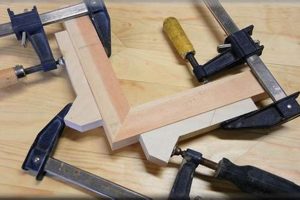
A securing device designed to hold workpieces firmly to a woodworking surface is essential for stability and precision. These tools come in a variety of forms, employing pressure to immobilize wood during cutting, shaping, assembly, and other woodworking operations. Functionally, they act as temporary fasteners, enabling the creation of strong and accurate joints and preventing movement that could compromise the project. An example involves affixing a board to the edge of a workbench while routing a decorative edge.
The importance of these devices cannot be overstated in woodworking. They ensure safety by preventing slippage, contributing significantly to accuracy. Their use traces back to early carpentry, evolving from simple wooden wedges to sophisticated mechanical designs. Modern iterations offer enhanced clamping force, ease of use, and adaptability to various materials and project scales. This development has fostered increased efficiency and quality in both professional and hobbyist woodworking contexts.
Subsequently, a discussion of types, selection criteria based on project requirements, proper application techniques for optimal results, and routine maintenance protocols for longevity will follow. Exploring the array of options and understanding their specific applications are key to maximizing the potential of these tools in any woodworking endeavor.
Essential Clamping Techniques for Woodworking Benches
Effective utilization of securing devices significantly enhances woodworking outcomes. The following tips provide guidance for maximizing the benefits of these tools while working on a bench.
Tip 1: Select the Appropriate Type: Different projects require different mechanisms. Face clamps excel at joining face frames, while bar styles are suitable for larger assemblies. Choose the type best suited for the task at hand. Consider throat depth and jaw capacity for specific project dimensions.
Tip 2: Evenly Distribute Clamping Pressure: Apply equal force across the joint to prevent warping or distortion. Over-tightening can damage the wood fibers. Use cauls, wooden blocks, to evenly distribute pressure.
Tip 3: Protect Wood Surfaces: Direct contact between the securing device and the wood can leave indentations. Employ protective pads or scrap wood between the jaws and the workpiece to prevent marring. Cork, leather, or even soft wood shims can be effective barriers.
Tip 4: Ensure Proper Alignment: Prior to tightening, meticulously align all components. Clamping will hold the pieces in their current configuration, exacerbating any initial misalignment. Dry fitting and visual inspection are crucial before applying any pressure.
Tip 5: Utilize Adequate Quantity: Insufficient quantity can lead to unstable joints. Distribute multiple mechanisms strategically to ensure uniform pressure distribution across the entire glue surface. Consider the size and complexity of the workpiece when determining the required number.
Tip 6: Consider Bench Dog Compatibility: Many modern woodworking benches incorporate bench dog holes. Utilizing models compatible with these holes can provide enhanced stability and versatility in setup. This feature allows for quick and secure positioning of workpieces.
Tip 7: Regularly Inspect and Maintain: Inspect for damage, wear, and thread stripping. Lubricate moving parts to ensure smooth operation and prevent corrosion. Proper maintenance will extend the lifespan and maintain the effectiveness of these tools.
These techniques contribute to safer, more accurate, and more efficient woodworking. Integrating these practices into one’s workflow will result in higher-quality projects and a more enjoyable woodworking experience.
The ensuing sections will address advanced clamping strategies and creative applications for complex joinery.
1. Clamping Force
Clamping force represents a critical performance parameter for any securing device used on a woodworking bench. It directly affects the stability of workpieces, the integrity of glued joints, and the overall accuracy of woodworking operations.
- Sufficient Joint Integrity
Adequate clamping force is essential for achieving strong and lasting glued joints. Insufficient pressure results in weak bonds due to incomplete contact between mating surfaces. Conversely, excessive force can crush wood fibers, weakening the joint and potentially causing damage. A balanced force ensures optimal adhesive penetration and secure bonding, leading to robust structural integrity.
- Material Stability and Precision
During cutting, shaping, or assembly, stability is paramount. Clamping force maintains workpieces in a fixed position, preventing movement that could compromise accuracy. This is particularly important when using power tools such as routers or saws. The device needs to generate sufficient force to counteract the tool’s vibrations and the material’s resistance to cutting, ensuring clean and precise cuts.
- Prevention of Warping and Distortion
Wood is susceptible to warping, especially during glue-up. Clamping force, when applied strategically, can counteract this tendency. Even distribution of pressure across the workpiece helps maintain its intended shape and prevents distortion. This is particularly critical when working with thin or flexible materials that are prone to bending under stress.
- Considerations for Wood Species
Different wood species exhibit varying degrees of compressive strength. A softwood, for example, requires less clamping force than a hardwood to achieve a secure hold. Applying excessive force to a softwood can easily damage the surface, leaving unsightly indentations. Choosing a device with adjustable force settings and using protective pads are crucial for accommodating diverse wood types.
The relationship between clamping force and securing devices for woodworking benches is therefore multifaceted. Understanding the appropriate force for a given task, considering material properties, and utilizing techniques to distribute pressure evenly are essential for maximizing the effectiveness of these tools and achieving successful woodworking outcomes. The careful consideration of all these factors during the selection and use of securing devices improves project quality and longevity.
2. Jaw Capacity
Jaw capacity, a primary specification of a securing device for a woodworking bench, dictates the maximum thickness of material the device can effectively secure. This measurement is crucial because it directly limits the range of projects for which a particular device is suitable. Insufficient jaw capacity renders the tool unusable for thicker stock, while excessive capacity may hinder the secure clamping of thinner materials, especially when the jaws are not parallel at smaller openings. For instance, a small face frame clamp with a limited capacity is appropriate for joining thin pieces, whereas a large bar clamp with a substantial capacity is required for assembling a wide tabletop.
The selection of a device with adequate jaw capacity is essential for achieving stable and accurate woodworking. It prevents the need for improvisational solutions that can compromise safety and the quality of the finished piece. For example, attempting to secure material exceeding the device’s capacity can result in slippage, material damage, or even tool failure. Projects involving thicker lumber, such as furniture construction or timber framing, demand devices with correspondingly large jaw capacities. Conversely, tasks involving thin veneers or delicate pieces require smaller, more precise devices to avoid crushing or marking the material.
Therefore, jaw capacity must be a primary consideration during the selection process. Evaluating the typical dimensions of materials used in a woodworking practice and anticipating potential future projects will inform the selection of devices that offer both immediate utility and long-term adaptability. Failure to account for this fundamental specification can lead to limitations, inefficiencies, and compromised project outcomes. This critical parameter ensures that the chosen device is fit for purpose, promoting both safety and precision in woodworking endeavors.
3. Throat Depth

Throat depth, in the context of a securing device for a woodworking bench, defines the distance from the tool’s gripping edge to its back support. This dimension dictates how far into a workpiece the tool can reach to apply pressure, affecting its suitability for various woodworking tasks.
- Accessibility in Overhanging Applications
Greater throat depth enables application of clamping pressure farther from the edge of a workpiece. This becomes particularly important when working with overhanging components, such as attaching edging to a tabletop or securing a mitered corner where the joint extends inward. A shallow throat depth would limit the ability to apply pressure directly at the joint line, compromising the strength and accuracy of the bond.
- Edge Treatment Applications
When shaping edges with a router or other tools, workpieces are often secured to the workbench with the edge extending outward. A greater throat depth allows a securing device to hold the piece firmly without obstructing the cutting tool’s path. This is essential for maintaining stability and precision during edge profiling or shaping.
- Complex Assembly Considerations
In intricate assemblies, components may be recessed or partially obscured by other elements. A greater throat depth facilitates reaching these areas to apply clamping pressure precisely where needed. This avoids the need for makeshift solutions that can compromise the integrity of the assembly or introduce inaccuracies.
- Influence on Tool Selection
Throat depth must be considered alongside other specifications such as clamping force and jaw capacity when selecting a securing device. Certain tasks may prioritize throat depth over other features, depending on the geometry of the workpiece and the nature of the operation. Understanding these trade-offs is essential for making informed equipment choices that optimize efficiency and quality.
In summary, throat depth directly influences the versatility and effectiveness of a securing device for a woodworking bench. A thorough understanding of this parameter, and its impact on specific woodworking applications, is crucial for achieving accurate, stable, and high-quality results.
4. Mechanism Type

The mechanism type of a securing device for a woodworking bench directly influences its performance characteristics, ease of use, and suitability for specific tasks. The mechanism is the core component that translates user input into clamping force, affecting the speed, precision, and magnitude of pressure applied to the workpiece. A screw mechanism, for example, offers precise control and high clamping force, suitable for demanding applications such as joinery. In contrast, a quick-release cam mechanism prioritizes speed and convenience, facilitating rapid adjustments for repetitive tasks like securing a template.
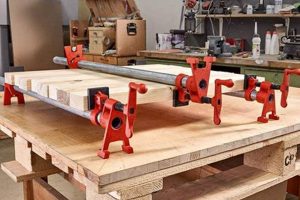
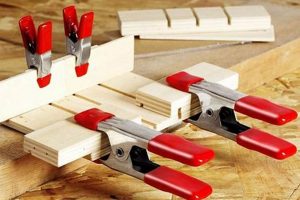
Different mechanisms exhibit varying strengths and weaknesses. Bar securing devices, which employ a screw or lever to apply pressure along a sliding bar, offer versatility in clamping large workpieces. Spring securing devices deliver rapid, moderate force, ideal for holding components during glue-up. Hand-screw securing devices, with their adjustable jaws and opposing screws, excel at conforming to irregular shapes and distributing pressure evenly. The choice of mechanism impacts not only the clamping force generated but also the risk of damaging the workpiece. Improper selection can lead to slippage, misalignment, or indentation of the wood surface.
Ultimately, the selection of the appropriate mechanism type is crucial for optimizing woodworking outcomes. Careful consideration of project requirements, material properties, and user preferences ensures that the securing device effectively serves its intended purpose. This understanding mitigates potential challenges and contributes to enhanced efficiency, accuracy, and safety in woodworking practices.
5. Material Quality

The selection of materials used in constructing a securing device for a woodworking bench directly affects its performance, longevity, and overall utility. The quality of the materials influences the device’s ability to withstand repeated use, maintain its clamping force, and resist wear and tear from the often-demanding environment of a woodworking shop.
- Steel Hardness and Temper
The hardness and temper of the steel used in the securing device’s frame, screw, and jaws determine its resistance to deformation and breakage. High-quality steel, properly heat-treated, can withstand greater clamping forces without bending or stripping threads. For example, a securing device constructed from low-grade steel is more susceptible to bending under pressure, leading to inaccurate clamping and a shorter lifespan. Conversely, high-quality steel maintains its shape and clamping force over time, contributing to more precise and reliable woodworking.
- Cast Iron Density and Composition
For securing devices incorporating cast iron components, such as the body or base, the density and composition of the cast iron dictate its strength and resistance to cracking. A dense, high-quality cast iron can absorb vibrations and distribute clamping forces evenly, while a porous or poorly composed cast iron is more prone to fracturing under stress. This is particularly relevant for large securing devices used for heavy-duty applications.
- Wood Selection for Handles and Jaws
When wood is used for handles or jaws, the type and quality of wood impact the user’s comfort and the device’s ability to protect the workpiece. Hardwoods like maple or beech offer durability and resistance to wear, while softwoods like pine are more prone to damage. Properly seasoned wood minimizes warping and cracking, ensuring a comfortable grip and preventing damage to the workpiece. For instance, a handle made from poorly dried wood may crack or split over time, reducing the user’s grip and control.
- Protective Coatings and Finishes
Protective coatings and finishes, such as paint, powder coating, or plating, shield the securing device from corrosion and abrasion. These finishes extend the device’s lifespan and maintain its appearance. A securing device lacking adequate protection is more susceptible to rust, which can weaken the steel and make the mechanism difficult to operate. High-quality finishes also prevent the transfer of stains or marks to the workpiece.
The interplay between these material properties ultimately determines the overall value and effectiveness of a securing device. Selecting a device constructed from high-quality materials ensures reliable performance, increased longevity, and a greater return on investment for woodworking professionals and enthusiasts alike.
6. Bench Compatibility

Bench compatibility, concerning securing devices for woodworking benches, refers to the degree to which a given model integrates effectively with the bench’s design and features. The absence of bench compatibility can negate the effectiveness of even the highest-quality device. Benches often incorporate features such as dog holes, t-tracks, or specific edge profiles. Securing devices designed to interface with these features offer enhanced stability, versatility, and ease of use. For instance, a securing device employing bench dogs that fit securely into pre-drilled holes prevents lateral movement and allows for consistent, repeatable setups. In contrast, a generic securing device lacking these features may require awkward positioning or additional adaptations, reducing efficiency and potentially compromising accuracy.
Furthermore, bench thickness and edge profile play crucial roles in compatibility. A securing device designed for a thin bench may not securely grip a thicker surface, leading to slippage or instability. Conversely, a model intended for a specific edge profile, such as a rounded edge, may not function correctly on a bench with a square edge. The location and spacing of dog holes also dictate which securing devices can be used effectively. A carefully chosen device, designed to integrate with these features, streamlines workflows and enhances the stability of the workpiece. An example would be a face frame securing device that precisely fits into a t-track system, allowing for rapid and secure positioning along the length of the bench.
In conclusion, bench compatibility is not merely a secondary consideration but a crucial factor in the selection and utilization of securing devices. Understanding the bench’s features and selecting securing devices accordingly ensures optimal performance, enhances efficiency, and contributes to safer and more accurate woodworking practices. The integration between the bench and its securing devices is therefore a key determinant of overall woodworking effectiveness.
Frequently Asked Questions
This section addresses common inquiries regarding the selection, application, and maintenance of securing devices used on woodworking benches. Understanding these aspects is crucial for achieving optimal performance and ensuring safety.
Question 1: What is the appropriate clamping force for softwood versus hardwood?
Softwoods, being less dense, require less clamping force to achieve a secure hold. Excessive force can easily mar or crush the wood fibers. Hardwoods, conversely, can withstand greater pressure. As a general guideline, apply only enough force to achieve a firm, stable hold without causing visible indentation. Experimentation on scrap material is recommended to determine the ideal force for a specific wood species.
Question 2: How does throat depth influence the selection of a securing device?
Throat depth dictates the maximum distance a securing device can reach into a workpiece. A greater throat depth is necessary for tasks such as edge banding, where pressure needs to be applied away from the edge. A shallow throat depth limits the device’s reach, restricting its applicability to edge-clamping situations.
Question 3: What are the advantages and disadvantages of different securing device mechanisms?
Screw mechanisms offer precise control and high clamping force but are slower to adjust. Cam mechanisms provide rapid adjustments but typically deliver less force. Bar securing devices are versatile for larger workpieces, while spring securing devices offer quick, moderate pressure. The optimal mechanism depends on the specific task and user preferences.
Question 4: How can damage to wood surfaces be prevented during clamping?
Employ protective pads, such as cork, leather, or softwood shims, between the securing device jaws and the workpiece. These pads distribute pressure evenly and prevent direct contact between the metal jaws and the wood surface. Ensure the pads are clean and free of debris to avoid scratching the workpiece.
Question 5: How often should securing devices be inspected and maintained?
Securing devices should be inspected regularly for damage, wear, and thread stripping. Moving parts should be lubricated periodically to ensure smooth operation and prevent corrosion. Damaged or worn components should be replaced promptly to maintain the device’s effectiveness and prevent accidents.
Question 6: Are specialized securing devices necessary for specific woodworking tasks?
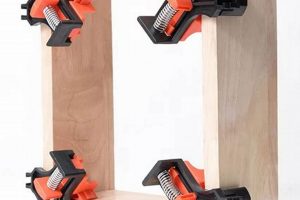
While general-purpose securing devices are versatile, specialized models often offer superior performance for specific tasks. Examples include miter securing devices for assembling frames, pipe securing devices for round stock, and hand-screw securing devices for conforming to irregular shapes. Investing in specialized securing devices can improve accuracy, efficiency, and safety for repetitive or complex woodworking operations.
Proper selection, application, and maintenance of securing devices are essential for achieving successful woodworking outcomes. The factors outlined above should be carefully considered to optimize performance and ensure longevity.
The subsequent section will delve into advanced clamping techniques and strategies for complex woodworking projects.
Conclusion
The preceding exploration has elucidated the multifaceted nature of the securing device for a woodworking bench. Considerations of clamping force, jaw capacity, throat depth, mechanism type, material quality, and bench compatibility define the selection and application of these tools. Understanding each aspect is paramount for achieving precise and stable woodworking outcomes. Proper technique and routine maintenance further contribute to the effectiveness and longevity of these essential workbench components.
Continued attention to advancements in securing device technology and methodology remains crucial for maximizing efficiency and safety within the evolving landscape of woodworking. Mastery of these principles ensures the creation of durable and aesthetically refined projects. The diligent application of this knowledge stands as a testament to craftsmanship and commitment to excellence in woodworking practice.
![Top-Rated: Best Quick Clamps for Woodworking Projects [2024] | Step-by-Step Guides, Tools & Inspiration to Build Beautiful Wooden Decor on a Budget](https://woodfromhome.com/wp-content/uploads/2026/04/th-264-300x200.jpg "Top-Rated: Best Quick Clamps for Woodworking Projects [2024] Step-by-Step Guides, Tools & Inspiration to Build Beautiful Wooden Decor on a Budget")