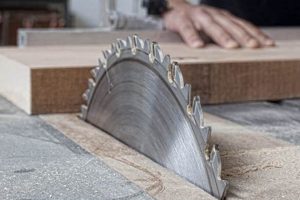
A dedicated area designed to house and support a miter saw for cutting wood accurately, this setup typically includes a flat surface for the saw to sit on, extensions to support longer workpieces, and often storage for tools and materials. For instance, it enables a craftsman to precisely cut trim for a home renovation project or create components for furniture construction with repeatable accuracy.
These stations offer significant advantages in terms of workflow efficiency, safety, and precision. By providing a stable and consistent platform, they minimize errors during cutting operations. Historically, these were often custom-built by individual woodworkers, but commercially manufactured versions have become increasingly prevalent due to their convenience and modular design.
The subsequent sections will explore the key considerations for designing or selecting an appropriate workspace, including factors such as size, material choices, dust collection integration, and storage solutions, thereby enhancing the overall woodworking experience.
Optimizing a Miter Saw Work Area
The following guidelines offer practical advice for constructing or selecting an efficient and ergonomic workspace that enhances both accuracy and safety when utilizing a miter saw.
Tip 1: Ensure Adequate Support: Extended wings or outfeed supports are critical for managing long workpieces. Without proper support, material can flex or sag, leading to inaccurate cuts. Consider adjustable rollers or flip-down supports.
Tip 2: Prioritize Dust Collection: Miter saws generate considerable dust. Integrating a dust collection system, such as a shop vacuum connected directly to the saw’s port and an overhead dust hood, significantly reduces airborne particulate matter, improving air quality and visibility.
Tip 3: Maintain Consistent Height: The surface height should align with the saw’s table to facilitate smooth material handling. This reduces strain and improves cut quality. Adjustable legs can be incorporated to accommodate variations in floor levels.
Tip 4: Incorporate Integrated Storage: Maximize space efficiency by including drawers, shelves, or cabinets for storing blades, measuring tools, and other accessories. This minimizes clutter and keeps essential items readily accessible.
Tip 5: Optimize Lighting Conditions: Adequate illumination is crucial for precise cuts. Implement strategically placed LED lights above and around the saw to eliminate shadows and enhance visibility of the cut line.
Tip 6: Secure the Saw: Properly anchoring the saw to the station is essential for safety and accuracy. Use bolts and washers to firmly secure the saw to the work surface, preventing movement during operation.
Tip 7: Implement a Measurement System: Incorporating a measuring system, such as a stop block system or an accurate measuring tape adhered to the station, ensures repeatable cuts for production work and reduces errors.
These tips promote a safer, more organized, and more productive work environment for individuals utilizing a miter saw. By adhering to these guidelines, one can significantly enhance the quality and efficiency of woodworking projects.
The subsequent sections will delve into specific station designs, exploring both DIY and commercially available options to further illustrate the application of these principles.
1. Stability

Stability is paramount in the design and construction of a woodworking miter saw station. It directly influences the precision and safety of cuts, and a lack of stability can compromise the integrity of projects and potentially lead to hazardous situations.
- Material Selection
The choice of materials significantly impacts the overall stability. Dense, rigid materials like hardwood, plywood, or steel provide a solid foundation. Lightweight or flexible materials can introduce vibrations and inconsistencies. For example, a station constructed from solid maple will generally exhibit greater stability than one built with thin particleboard.
- Joint Integrity
The method of joining the components is critical. Robust joinery techniques, such as mortise-and-tenon, dovetails, or strong screw connections, ensure the structure remains rigid under load. Weak joints can loosen over time, leading to instability. Consider a station with properly executed mortise-and-tenon joints versus one held together only by staples; the former offers superior long-term stability.
- Leveling and Support
Uneven floors can introduce instability. Adjustable leveling feet allow the station to be firmly grounded, compensating for imperfections in the floor surface. Sufficient support, including strategically placed legs or bracing, prevents sagging or flexing under the weight of the saw and workpiece. Imagine trying to cut a long piece of lumber on a station that rocks; the result will likely be an inaccurate or even unsafe cut.
- Vibration Dampening
Miter saws generate vibrations during operation, which can affect cut quality and increase noise. Incorporating vibration-dampening materials, such as rubber feet or strategically placed pads, can minimize these effects. The difference between a saw mounted directly on a resonant surface and one cushioned by vibration-dampening materials can be significant in terms of both noise reduction and cut accuracy.
The cumulative effect of these facets underscores the critical role stability plays in a functional woodworking miter saw station. A stable station facilitates precise and safe operation, contributing to the overall quality and efficiency of woodworking projects. Neglecting stability can lead to inaccuracies, material waste, and potential safety hazards.
2. Accuracy

The connection between accuracy and a woodworking miter saw station is intrinsic; accuracy is not merely a desirable feature but a fundamental requirement. A miter saw station serves as a platform for making precise cuts, and its design and construction directly influence the achievable level of accuracy. Inaccurate cuts can lead to misaligned joints, structurally unsound assemblies, and aesthetically displeasing finished products. For example, if a miter saw station’s fence is not perfectly square to the blade, every cut will be slightly angled, accumulating error as the project progresses. A well-designed and properly calibrated station mitigates these risks.
Several components of a miter saw station contribute to accuracy. The fence, which guides the workpiece, must be perfectly straight and square to the saw blade. Any deviation from this alignment introduces inaccuracies. Stop blocks, used for repetitive cuts, must be precisely positioned and securely fastened. Furthermore, the mounting surface for the saw must be perfectly flat and level to prevent any tilting or wobbling during operation. One practical application of this understanding is in creating precise angles for picture frames. An accurate station ensures that all four corners meet seamlessly, creating a professional-looking result. Conversely, an inaccurate station will produce gaps and require extensive rework.
In conclusion, accuracy is a defining characteristic of a functional woodworking miter saw station. Achieving high levels of accuracy requires meticulous attention to detail in both the design and construction phases. While challenges such as material selection and calibration exist, addressing these issues directly translates to improved project quality, reduced material waste, and enhanced safety. The link between accuracy and the station extends beyond individual cuts to the overall success of woodworking endeavors.
3. Dust Management
Effective dust management is an indispensable component of any woodworking miter saw station. The act of cutting wood, particularly with a high-speed miter saw, generates a substantial volume of fine particulate matter. This airborne dust poses significant health risks to the operator, including respiratory irritation, allergic reactions, and long-term lung damage. Furthermore, accumulated dust obscures the work surface, reducing visibility and increasing the risk of inaccurate cuts and potential accidents. The operation of a miter saw without proper dust control, for instance, rapidly coats the surrounding area in a layer of fine dust, necessitating frequent cleanup and prolonged exposure to hazardous particles.
Implementation of a dedicated dust collection system directly mitigates these concerns. Integrating a dust port adapter on the saw, connected to a shop vacuum or a more sophisticated dust collector, captures a significant portion of the dust at the source. Augmenting this with an overhead dust hood or enclosure further contains the spread of airborne particles. Moreover, ambient air filtration systems can continuously remove residual dust from the workshop environment. A well-designed system maintains a cleaner workspace, improves visibility, and reduces the need for extensive post-operation cleanup. Consider a woodworking shop where a fully enclosed miter saw station is coupled with a high-efficiency dust collector. The air remains noticeably cleaner, and surfaces stay relatively free of dust, fostering a safer and more efficient working environment.
In summary, effective dust management is not merely a matter of convenience but a critical safety and efficiency consideration for woodworking miter saw stations. Proper dust control minimizes health risks, enhances visibility, and promotes a cleaner workspace. While the initial investment in dust collection equipment may represent a significant expense, the long-term benefits in terms of health, safety, and productivity far outweigh the costs. The implementation of robust dust management practices is therefore an essential aspect of responsible woodworking.
4. Material Support
Material support is inextricably linked to the effective operation of a woodworking miter saw station. The station’s primary function involves making precise cuts on workpieces, and without adequate support, longer materials are prone to sagging or flexing. This, in turn, can lead to inaccurate cuts, material waste, and potentially unsafe working conditions. The cause-and-effect relationship is clear: insufficient material support directly results in diminished cut quality and increased risk. For example, attempting to cut a long piece of crown molding without extensions on a station inevitably leads to a warped or angled cut, rendering the molding unusable. The importance of material support stems from its ability to maintain the workpiece in a stable and level position during the cutting process.
Extending beyond simple horizontal surfaces, effective material support can incorporate adjustable rollers or flip-down supports to accommodate varying material thicknesses and lengths. Integration of a stop-block system, anchored to a robust support extension, allows for repeatable cuts with minimal error. In practice, a cabinet maker needing to produce multiple cabinet face frames will find precisely positioned stop-blocks invaluable for ensuring each stile and rail is cut to the exact same dimension. Furthermore, considerations for material weight are crucial; heavier materials require stronger and more substantial support structures to prevent collapse or shifting. The design of the support system should also account for ease of adjustment, enabling quick and accurate setups for different cutting tasks.
In conclusion, the provision of ample and appropriately designed material support is not an ancillary feature but a critical element of any functional woodworking miter saw station. Addressing the challenges of material weight, length, and consistent positioning directly contributes to improved cut accuracy, enhanced safety, and increased overall efficiency. Ignoring this facet undermines the potential benefits of the station and compromises the quality of the finished woodworking products.
5. Ergonomics

The integration of ergonomic principles into the design and setup of a woodworking miter saw station directly influences operator comfort, reduces the risk of musculoskeletal disorders, and enhances overall productivity. The repetitive nature of miter saw operations, often involving prolonged standing, reaching, and repetitive arm movements, predisposes woodworkers to strain injuries if ergonomic considerations are neglected. Inadequate station height, for example, forces the operator to bend or stoop, placing undue stress on the back and neck. An improperly positioned saw relative to the operator necessitates excessive reaching, leading to shoulder and arm fatigue. A well-designed station mitigates these risks through careful attention to workstation geometry and tool placement.
A crucial aspect of ergonomic design is workstation height. The ideal height allows the operator to maintain a neutral posture, with the elbows bent at approximately 90 degrees and the wrists straight. This reduces strain on the back, shoulders, and wrists. Adjustable-height stations offer flexibility to accommodate individuals of different statures. Furthermore, the placement of material support extensions should minimize reaching and twisting motions. An example of good ergonomic practice would be arranging the infeed and outfeed supports at the same height as the saw table and within easy reach, allowing for seamless material handling. Conversely, a poorly designed station with inadequate support extensions forces the operator to reach awkwardly to support long workpieces, increasing the risk of muscle strain.
In summary, ergonomics are not an optional add-on but an essential element of a functional and safe woodworking miter saw station. Prioritizing ergonomic design reduces the risk of injury, enhances operator comfort, and increases productivity. Challenges in implementing ergonomic principles include accommodating diverse body types and work styles; however, the benefits of improved health, safety, and efficiency outweigh these challenges. Understanding and applying ergonomic principles directly contributes to a more sustainable and enjoyable woodworking experience.
6. Storage

Integration of storage within a woodworking miter saw station is a critical consideration that directly impacts workflow efficiency and workspace organization. The absence of designated storage compels woodworkers to expend time searching for necessary tools and materials, interrupting workflow and potentially compromising safety. Consequently, a miter saw station lacking integrated storage creates a less productive and potentially hazardous work environment. As an example, consider a scenario where miter saw blades, measuring devices, and safety equipment are stored remotely from the saw. Each cutting task then necessitates a search-and-retrieve process, adding unnecessary time and potential risks associated with traversing the workshop. In contrast, a station with strategically placed drawers and shelves allows immediate access to frequently used items.
The nature of storage also matters. Simple shelving is useful for quickly accessible items, but drawers provide better protection from dust and accidental damage, especially for sensitive measuring tools or precision blades. Designing storage around specific needs enhances its utility. For instance, a small compartment designed to hold blade wrenches or an integrated rack for different miter gauges contribute significantly to workflow optimization. Another beneficial strategy is employing modular storage units within the station framework, allowing for future expansion or reconfiguration as tool collections evolve. By accommodating these storage solutions, a woodworking miter saw station’s functionality is noticeably improved.
In summation, storage is not merely an optional element of a woodworking miter saw station but a fundamental component that contributes to both efficiency and organization. The integration of appropriately designed storage solutions minimizes wasted time, promotes a safer work environment, and ultimately enhances the overall quality of woodworking projects. The challenge resides in creating storage solutions that are both accessible and adaptable, allowing for the efficient management of tools and materials specific to the individual woodworker’s needs.
Frequently Asked Questions
This section addresses common inquiries regarding the design, construction, and utilization of woodworking miter saw stations, providing clarity and informed guidance.
Question 1: What are the fundamental dimensions to consider when designing a station?
The height should align with the user’s waist to minimize bending. The width should accommodate the saw’s full range of motion, and the depth should support the longest common workpiece. Extensions may be necessary for handling exceptionally long boards.
Question 2: Is it essential to integrate dust collection into a station?
Yes, dust collection is highly recommended for health and safety reasons. Miter saws generate significant amounts of fine dust, posing respiratory risks. A dedicated dust collection system minimizes these risks and maintains a cleaner workspace.
Question 3: What are the recommended materials for building a durable station?
Plywood, hardwood, and steel are common choices. Plywood offers a balance of strength and affordability. Hardwood provides superior durability and aesthetic appeal. Steel provides maximum structural integrity.
Question 4: How can a station improve the accuracy of miter cuts?
A stable and level surface prevents workpiece movement during cutting. Precisely aligned fences ensure square cuts. Stop-block systems facilitate repeatable cuts with consistent dimensions.
Question 5: What is the optimal method for securing the miter saw to the station?
Bolts and washers, sized appropriately for the saw’s mounting holes, are recommended. Ensure the saw is securely fastened to prevent movement during operation, which can compromise accuracy and safety.
Question 6: Should a station be mobile or stationary?
The choice depends on workspace constraints and user preferences. Mobile stations offer flexibility in confined spaces. Stationary stations provide greater stability and are suitable for dedicated workshops.
Proper planning and construction techniques are crucial for maximizing the effectiveness of a woodworking miter saw station.
The subsequent section will explore specific design examples and case studies to further illustrate the principles discussed.
Conclusion
This article has explored the multifaceted aspects of the woodworking miter saw station, emphasizing its significance in achieving precision, safety, and efficiency in woodworking endeavors. The examination encompassed critical design considerations, including stability, accuracy, dust management, material support, ergonomics, and storage. These elements collectively contribute to a functional and optimized workspace for miter saw operations.
The principles outlined herein serve as a guide for woodworkers seeking to construct or select a suitable woodworking miter saw station. By prioritizing these factors, woodworkers can enhance the quality of their projects, improve their working environment, and promote long-term well-being. The creation of a well-planned and thoughtfully executed station represents a tangible investment in craftsmanship and professional development, fostering a more productive and enjoyable woodworking experience.