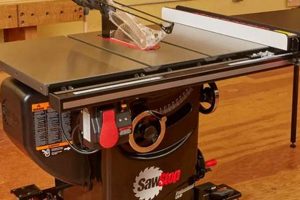
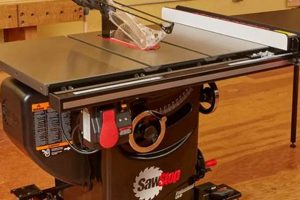
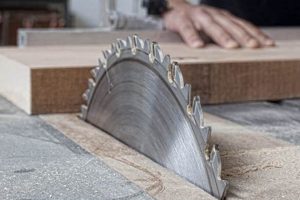
This essential piece of shop equipment combines the functionality of a stationary saw with the stability of a workbench. It provides a dedicated surface for precise cutting operations, offering support and often incorporating features like integrated dust collection or storage. A typical example features a flat, level surface with an embedded circular saw, along with outfeed supports and potentially adjustable fences for accurate cuts.
The stability and accuracy this setup provides are crucial for producing high-quality woodworking projects. It allows for repeatable, consistent cuts, improving efficiency and reducing material waste. Historically, these units have evolved from simple sawhorses used to support lumber during manual sawing to sophisticated, purpose-built stations that enhance safety and productivity.
Understanding the components, safety procedures, and maintenance requirements of this integrated system is paramount for any woodworker. The following sections will explore these aspects in detail, providing a comprehensive guide to maximizing the effectiveness and longevity of this valuable tool.
Essential Usage Guidance
This section outlines crucial recommendations for optimizing the utilization of the integrated woodworking tool to ensure both precision and safety.
Tip 1: Prioritize Calibration: Routinely verify the blade’s perpendicularity to the table surface and the fence’s parallelism to the blade. Deviations introduce inaccuracies into cuts. Utilize a precision square and measuring tools to confirm alignment and adjust as necessary.
Tip 2: Implement Effective Dust Management: Connect a dust collection system to the integrated port. This practice minimizes airborne particulate matter, improving visibility and respiratory health. Regularly empty the collection container to maintain suction efficiency.
Tip 3: Select Appropriate Blades: Employ the correct blade type for the material being cut. Using a blade designed for hardwoods on softwood may result in splintering or tear-out. Consult blade manufacturers’ guidelines for optimal selection.
Tip 4: Practice Push Stick Usage: Always employ a push stick when ripping narrow stock or when hands are in close proximity to the blade. The push stick maintains consistent pressure and minimizes the risk of accidental contact.
Tip 5: Manage Material Support: Utilize outfeed supports for long workpieces to prevent sagging and binding. Adequate support ensures consistent cut quality and reduces strain on the saw motor.
Tip 6: Regularly Inspect Components: Periodically examine the table surface for damage or warping. A damaged surface can compromise accuracy. Similarly, inspect the fence for secure locking and smooth movement.
Tip 7: Secure Workpiece Clamping: When creating specialized cuts, employ clamping mechanisms to firmly secure the material. Preventing movement during the cutting process yields a more consistent and predictable outcome.
Adhering to these recommendations will significantly enhance the operational effectiveness, precision, and user safety associated with the specified woodworking apparatus.
The subsequent sections will delve into maintenance protocols to ensure the continued optimal performance of this vital workshop asset.
1. Stability

The degree of firmness exhibited by a woodworking station directly impacts the precision achievable during cutting operations. Vibration, movement, or an unsteady base introduces inconsistencies that translate into inaccurate cuts, potentially compromising project quality. A solid, well-anchored structure mitigates these issues, providing a stable platform for the saw. This stability is achieved through robust construction materials, secure joinery, and often, leveling feet that compensate for uneven floors. The cause-and-effect relationship is clear: inadequate stability leads to imprecise cuts, while a stable base facilitates accurate, repeatable results.
Consider the scenario of cutting a dado joint. Even minor vibrations can cause the blade to waver, resulting in a dado that is too wide or uneven. Similarly, when ripping a long board, instability can lead to the board binding or kicking back, posing a significant safety risk. A stable station, conversely, allows the operator to focus solely on guiding the material through the blade, resulting in clean, square cuts. This is particularly crucial when working with expensive hardwoods or intricate joinery where accuracy is paramount.
In conclusion, stability is not merely a desirable feature; it is a fundamental requirement for a functional woodworking setup. The absence of stability introduces error and hazard, undermining the purpose of the equipment. Achieving optimal stability requires careful selection of materials, robust construction techniques, and attention to the surrounding environment. A stable setup contributes directly to both the quality and safety of woodworking endeavors, highlighting its critical importance.
2. Accuracy

Accuracy in woodworking is fundamentally linked to the quality of the cuts produced by the apparatus. The integrated nature of a stable saw and workbench directly influences the precision of each cut. Inaccuracies stemming from misaligned fences, blade wobble, or an unlevel table surface propagate into project defects. Cause-and-effect is straightforward: a precise setup yields accurate results, while any deviation from optimal alignment introduces error. This precision is essential for joinery, fitting components, and achieving overall project dimensions. For example, constructing a cabinet requires accurately sized and square components; deviations compromise the structural integrity and aesthetic appeal of the finished product. The significance of accuracy cannot be overstated, since it’s a cornerstone of quality woodworking.
Practical applications of a well-calibrated system manifest in the ability to create tight-fitting joints, minimize material waste, and achieve desired dimensions consistently. Creating precise tenons for mortise-and-tenon joinery necessitates an accurate setup. Similarly, repeatable cuts for multiple components, such as drawer sides in a chest, depend on the system’s ability to hold settings and deliver consistent results. Without this level of accuracy, projects become time-consuming, require excessive rework, and ultimately may not meet the intended specifications. Furthermore, precise cuts minimize the need for extensive sanding and filling, saving time and material while improving the overall finish quality.
Achieving and maintaining accuracy presents challenges, including the need for regular calibration, proper maintenance, and a thorough understanding of the machine’s operation. Environmental factors, such as temperature and humidity, can also affect the dimensions of wood, requiring adjustments to cutting parameters. Despite these challenges, accuracy remains a paramount concern. By understanding its direct relationship to the final product, woodworkers can prioritize setup and maintenance procedures to ensure the equipment consistently delivers precise, high-quality results. A commitment to this practice is essential for producing durable, aesthetically pleasing, and structurally sound woodworking projects.
3. Dust Collection
Effective dust collection is intrinsically linked to the functionality and safety of a woodworking table saw station. The cutting process generates substantial volumes of fine particulate matter that, without proper removal, create significant health and operational challenges. Inhaled wood dust poses respiratory risks, ranging from irritation to chronic conditions. Furthermore, accumulated dust impairs visibility, impacting cut accuracy and increasing the potential for accidents. A properly integrated dust collection system mitigates these issues, extracting particulate matter at the source, maintaining a cleaner work environment, and contributing directly to operator well-being and cutting precision.
The practical implementation of dust collection on a cutting station typically involves a combination of methods. A primary port, connected to a high-volume dust collector, is often integrated directly into the saw’s enclosure, capturing dust generated beneath the table. Supplemental collection methods, such as overhead booms with flexible hoses, address dust ejected above the table during cutting. Effective systems also include sealing gaps and crevices in the saw’s housing to minimize fugitive dust emissions. The efficiency of the collection system is directly proportional to the cleanliness of the workspace and the reduction of airborne particulate matter. For example, using a system with inadequate CFM (cubic feet per minute) will result in visible dust accumulation, indicating the need for a higher-capacity collector or improvements to the system’s design.
Ultimately, the incorporation of a robust dust collection system is not merely an optional add-on but a critical component of a comprehensive cutting station setup. While implementing such a system presents challenges, including the initial investment in equipment and the ongoing maintenance of filters and hoses, the benefits far outweigh the costs. The reduction in health risks, improved visibility, enhanced cutting accuracy, and overall cleaner work environment contribute to a more productive, safer, and more enjoyable woodworking experience. This holistic understanding underscores the importance of prioritizing dust collection when designing or upgrading any woodworking space featuring a table saw setup.
4. Blade Selection

The choice of blade for use on a woodworking table saw is not arbitrary; it directly influences the quality of cut, efficiency, and safety of the operation. The station serves as the stable platform, while the blade acts as the direct cutting implement. Improper blade selection, such as using a ripping blade for crosscutting, can lead to tear-out, splintering, and increased kickback potential. Therefore, blade selection constitutes an integral component of operating the combined woodworking equipment safely and effectively. For instance, selecting a thin-kerf blade for lower-powered saws reduces stress on the motor and enhances cutting efficiency, while a full-kerf blade provides greater stability for thicker materials on higher-powered saws. The material being cut, the desired finish, and the saw’s power must all be considered in blade selection.
Different blade types are designed for specific purposes. Ripping blades, characterized by fewer teeth and larger gullets, are optimized for cutting along the grain of wood. Crosscut blades, with more teeth and smaller gullets, are designed to cut across the grain, producing smoother edges. Combination blades offer a compromise, suitable for both ripping and crosscutting at the expense of optimal performance in either. Specialty blades, such as those designed for plywood or laminates, minimize tear-out on these materials. Utilizing the appropriate blade type for the task at hand is paramount. A common example is using a blade with a high tooth count to cut plywood, as it minimizes splintering on the delicate veneer layers. Failure to do so can result in significant material waste and increased finishing time.
In summary, selecting the correct blade is not merely a matter of convenience but a crucial determinant of the woodworking station’s performance and the overall success of a project. Factors such as blade type, tooth count, kerf width, and intended material must be carefully considered to achieve optimal results and ensure operator safety. Understanding the relationship between blade selection and the combined saw/bench system empowers the woodworker to make informed decisions, leading to improved cutting accuracy, reduced material waste, and a safer working environment. The challenges of selecting the appropriate blade highlight the need for ongoing education and experience in woodworking practices.
5. Safety Features

Safety features integrated into a woodworking table saw configuration represent a primary defense against injury. The inherent design of a rotating blade, coupled with the potential for material kickback or operator error, necessitates these safeguards. The presence and proper utilization of safety features directly impact the risk of accidents. For example, a blade guard prevents accidental contact with the moving blade, while a riving knife minimizes the potential for material binding and subsequent kickback. Cause-and-effect is clear: the absence or misuse of these elements increases the likelihood of injury. The integration of safety measures is not merely a regulatory requirement but a practical necessity for preserving operator well-being.
Specific examples of safety features and their applications illustrate their importance. Anti-kickback pawls, for instance, engage when a board begins to move backward against the blade, preventing it from being ejected towards the operator. Push sticks and push blocks allow for safe manipulation of smaller workpieces, keeping hands away from the blade. A properly adjusted fence ensures accurate cuts and reduces the risk of the material twisting or binding. Furthermore, emergency stop switches provide immediate shut-down capabilities in critical situations. The efficacy of these features depends on regular inspection, maintenance, and a thorough understanding of their function. Neglecting these aspects compromises their effectiveness and negates the intended safety benefits.
In conclusion, safety features are not optional accessories but essential components of a responsible woodworking setup. A comprehensive approach to safety involves not only the presence of these features but also a commitment to their proper use and maintenance. By prioritizing safety and adhering to established guidelines, operators can significantly reduce the risk of accidents and create a safer working environment. The integration of these precautions directly supports the creation of a more controlled and predictable operation, aligning with the goals of precision and craftsmanship in woodworking. Challenges remain in promoting consistent adherence to safety protocols, emphasizing the need for ongoing education and reinforcement within the woodworking community.
6. Material Support
Material support is an indispensable element of a woodworking table saw configuration, directly impacting cut accuracy, safety, and overall operational efficiency. The degree to which a workpiece is adequately supported before, during, and after the cutting process dictates the consistency of the final product. Insufficient support leads to material sag, blade binding, and increased risk of kickback, compromising both the quality of the cut and the safety of the operator. The implementation of effective material support systems, therefore, transcends mere convenience; it is a fundamental requirement for achieving precise, predictable results.
Examples of material support mechanisms include outfeed tables, roller stands, and extension wings integrated into the bench’s design. Outfeed tables provide a level surface behind the saw, preventing long boards from dropping and causing the cut to deviate. Roller stands offer adjustable support for workpieces of varying lengths, minimizing sagging and ensuring consistent contact with the table surface. Extension wings expand the table’s surface area, providing a wider platform for larger materials. In practical applications, failing to provide adequate outfeed support when ripping a long board can result in the board lifting off the table as it exits the blade, causing the cut to wander and potentially leading to a dangerous kickback event. Conversely, using a roller stand to support the end of the board maintains a consistent cutting plane, reducing the risk of binding and improving the accuracy of the cut. Correct material support transforms a potentially hazardous task into a controlled and predictable operation.
In summary, the correlation between material support and the performance of a woodworking setup is undeniable. The provision of adequate support mechanisms mitigates the risks associated with cutting operations, enhances the precision of cuts, and contributes to the overall efficiency of the workflow. Understanding this relationship empowers woodworkers to prioritize the implementation of appropriate support systems, ultimately leading to improved project quality and a safer working environment. Challenges persist in adapting support systems to accommodate diverse project requirements and workspace constraints, emphasizing the need for adaptable and thoughtfully designed bench configurations.
Frequently Asked Questions
This section addresses common inquiries regarding integrated table saw and workbench configurations, providing concise, informative answers to assist users in understanding the tool’s functionality and safe operation.
Question 1: What are the primary advantages of an integrated station over a standalone table saw?
An integrated unit offers enhanced stability, increased work surface area, and often includes built-in dust collection capabilities, contributing to improved accuracy, safety, and workspace cleanliness. Standalone saws typically require separate support structures and dust management systems.
Question 2: How does the selection of the appropriate blade influence the performance of the table saw configuration?
Blade selection directly impacts cut quality, efficiency, and safety. Utilizing the correct blade type for the material and cut type minimizes tear-out, reduces stress on the motor, and lowers the risk of kickback.
Question 3: What safety measures are essential for operating this type of woodworking equipment?
Essential safety measures include the use of a blade guard, riving knife, anti-kickback pawls, push sticks/blocks, and appropriate personal protective equipment (PPE), such as safety glasses and hearing protection.
Question 4: How frequently should the table saw integrated into the bench be calibrated?
Calibration should be performed regularly, ideally before each significant project or after any event that may have altered the saw’s alignment. This includes verifying blade parallelism to the miter slot and fence alignment to the blade.
Question 5: What are the key considerations when designing or selecting a woodworking table saw configuration?
Key considerations include available workspace, budget, desired features (e.g., dust collection, outfeed support), material being worked with, and the operator’s skill level. Stability and accuracy should be prioritized.
Question 6: How can dust collection be effectively integrated into a system?
Effective dust collection involves connecting a high-volume dust collector to the saw’s dust port, sealing any gaps in the saw’s housing, and utilizing overhead booms or flexible hoses to capture airborne dust at the point of origin.
A thorough understanding of these FAQs can greatly enhance the safe and effective utilization of the equipment.
The subsequent section offers guidance on purchasing considerations.
In Conclusion
The preceding discussion has illuminated the multifaceted nature of the woodworking table saw bench, exploring its components, functionalities, safety considerations, and maintenance requirements. The integrated system represents a cornerstone of many woodworking operations, providing a stable and accurate platform for material processing. A comprehensive understanding of blade selection, dust collection, safety protocols, and material support is crucial for maximizing the potential of the unit and ensuring a safe working environment.
The responsible application of the woodworking table saw bench demands continuous learning and adherence to best practices. By prioritizing safety, accuracy, and proper maintenance, woodworkers can harness its capabilities to produce high-quality results while minimizing risks. The future of woodworking may see further advancements in integrated bench technology, emphasizing the importance of staying informed and adapting to evolving industry standards.