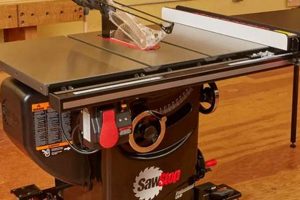
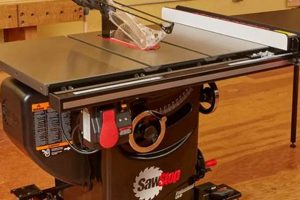
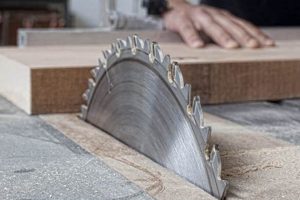
This multifaceted piece of equipment integrates a sturdy work surface with a precision cutting instrument. The design typically incorporates a flat, stable platform, often constructed from wood or metal, combined with a circular saw blade mounted beneath. The blade protrudes through a slot in the tabletop, enabling controlled and accurate cuts on various types of lumber. An example includes a dedicated structure where one can perform joinery or assembly operations while also having immediate access to a saw for ripping or crosscutting boards to precise dimensions.
Its significance stems from the enhanced efficiency and accuracy it brings to woodworking projects. The combination of a stable support surface and a powerful saw facilitates safer and more precise cuts, reducing material waste and improving the quality of finished products. Historically, such integrated systems represent an evolution from simpler hand-tool methods, allowing for faster and more consistent results in both professional and amateur woodworking settings.
The following sections will delve deeper into specific aspects, including design variations, safety considerations, maintenance procedures, and the range of applications for which this essential tool is employed. Understanding these elements is crucial for anyone seeking to maximize the utility and longevity of their equipment.
Essential Usage Guidelines
Maximizing the effectiveness and safety of this equipment requires adherence to specific practices. These guidelines aim to promote accuracy, prevent accidents, and extend the lifespan of the apparatus.
Tip 1: Blade Selection: Employ blades specifically designed for the material being processed. Using an inappropriate blade can result in splintering, kickback, or damage to the saw motor. For example, utilize a blade with a high tooth count for fine crosscuts in hardwood.
Tip 2: Fence Alignment: Ensure the fence is precisely parallel to the blade. Misalignment leads to inaccurate cuts and increased friction, potentially causing the wood to bind and kickback. Regularly check the fence using a precision measuring tool.
Tip 3: Blade Height Adjustment: Adjust the blade height so that it extends no more than a quarter inch above the workpiece. Excessive blade exposure increases the risk of injury and reduces cut quality. Lower blade settings optimize control.
Tip 4: Push Stick Utilization: Always use a push stick when ripping narrow pieces of wood. This maintains a safe distance between the operator’s hands and the blade, preventing accidental contact. A push stick provides controlled forward pressure.
Tip 5: Dust Collection Integration: Connect a dust collection system to the saw. Sawdust accumulation obscures the cut line, reduces visibility, and poses a respiratory hazard. Effective dust removal is essential for safety and precision.
Tip 6: Regular Maintenance: Perform routine maintenance, including cleaning the blade, lubricating moving parts, and inspecting the power cord. Neglecting maintenance can lead to reduced performance and increased risk of malfunction.
Tip 7: Stock Support: Employ outfeed supports when cutting long pieces. Adequate support prevents the workpiece from sagging, which can affect cut accuracy and increase the risk of kickback. Rollers or adjustable stands can provide the necessary support.
By adhering to these fundamental guidelines, users can enhance both the precision and safety of their woodworking projects, while also prolonging the operational life of their valuable equipment.
The subsequent sections will address common issues and troubleshooting techniques to further refine the user’s understanding of this integral workshop asset.
1. Stability

Stability is a fundamental requirement for woodworking stations with integrated saws. It directly influences the accuracy and safety of operations. A non-rigid setup introduces vibrations and movement, negatively impacting cut quality and potentially leading to hazardous situations. Instability can arise from several sources, including inadequate frame construction, uneven flooring, or insufficient weight distribution. For instance, if the platform flexes during a cut, the blade may deviate from the intended line, resulting in uneven or angled edges. The severity of this effect is magnified when working with dense or thick materials.
Effective stabilization strategies involve utilizing heavy-gauge materials for the frame, incorporating leveling feet to compensate for uneven surfaces, and employing a wide stance to prevent tipping. Additionally, securing the setup to the floor or wall can significantly enhance stability, particularly in environments prone to vibration. A practical example is the use of a welded steel frame with adjustable feet on a concrete floor. This combination provides a solid and level foundation, minimizing movement and ensuring consistent cutting performance.
In summary, stability is not merely a desirable feature but a necessity for woodworking stations featuring integrated saws. It directly affects cut precision, user safety, and overall work quality. Addressing potential sources of instability through robust construction and strategic stabilization techniques is essential for achieving reliable and predictable results.
2. Blade Precision
Blade precision, in the context of an integrated woodworking station, directly determines the quality and accuracy of cuts. It is a critical factor impacting the outcome of woodworking projects and the efficient utilization of the equipment. Several interconnected facets contribute to achieving and maintaining optimal blade precision.
- Blade Sharpness and Material
The sharpness of the blade and the composition of its cutting teeth are paramount. A dull blade yields rough, splintered edges and increases the risk of kickback. High-quality steel or carbide-tipped blades maintain their edge longer, reducing the frequency of sharpening or replacement. For instance, a carbide-tipped blade is preferable for cutting hardwoods due to its superior wear resistance compared to a standard steel blade. This directly translates to cleaner cuts and reduced material waste when processing expensive lumber.
- Blade Alignment and Runout
Proper alignment of the blade relative to the fence and miter slots is essential for precise cuts. Blade runout, or wobble, introduces inaccuracies and can lead to uneven cut depths and widths. Regular checks using precision measuring tools, such as dial indicators, are necessary to ensure that the blade is perfectly perpendicular to the table surface and parallel to the fence. Failure to address runout can result in angled cuts or boards that are not square, compromising the integrity of joinery.
- Blade Stabilizers and Vibration Dampening
Blade stabilizers, or stiffeners, are often used to reduce vibration and improve cut quality, particularly when working with thin or flexible materials. These devices attach to the blade near the arbor and dampen vibrations that can cause the blade to deflect or chatter during cutting. This is particularly beneficial when cutting dadoes or grooves, where consistent width and depth are crucial. The use of stabilizers minimizes blade flexing, resulting in smoother, more precise cuts.
- Kerf and Material Compatibility
The kerf, or width of the cut produced by the blade, must be considered in relation to the material being cut. A thin-kerf blade reduces material waste and requires less power to operate, but it may be more prone to deflection. Conversely, a thicker kerf blade provides greater stability but removes more material. Selecting the appropriate kerf for the material being processed is essential for achieving optimal cut quality and minimizing waste. For example, a thin-kerf blade is often preferred for cutting veneered plywood to reduce the risk of chipping and delamination.
In conclusion, blade precision is a multifaceted characteristic that influences both the quality of the cut and the overall safety of integrated woodworking stations. Each of the aspects discussed blade sharpness, alignment, stabilization, and kerf contributes significantly to achieving accurate and predictable results in woodworking applications. Proper attention to these details will ultimately enhance the user’s ability to produce high-quality projects with minimal material waste and increased safety.
3. Dust Management
Effective dust management is an indispensable component of any woodworking environment utilizing a station with an integrated saw. Uncontrolled dust generation poses significant health and safety risks while also impairing visibility and impacting the precision of cuts. Therefore, integrating effective dust collection strategies is not merely a matter of convenience but a necessity for responsible and efficient operation.
- Respiratory Health Protection
The inhalation of fine wood dust particles can lead to a range of respiratory ailments, including allergic reactions, asthma, and in severe cases, nasal cancer. Engineered systems are designed to capture airborne dust before it reaches the operator’s breathing zone, mitigating these health risks. For example, a well-designed system captures dust at the source, preventing it from becoming airborne and minimizing exposure. This is critical when working with hardwoods or treated lumber, which may contain irritants or toxins.
- Visibility and Accuracy Enhancement
Accumulated sawdust obscures the cut line, making it difficult to accurately follow markings and increasing the likelihood of errors. Efficient dust extraction clears the work area, providing a clear view of the blade and workpiece. This leads to improved cut precision and reduced material waste. Consider, for example, the challenge of cutting intricate patterns; clear visibility is essential for achieving the desired results.
- Fire Hazard Mitigation
Fine wood dust is highly flammable and can ignite easily from sparks or static electricity, posing a significant fire hazard. Regular removal of accumulated dust reduces the risk of fire and helps to maintain a safe working environment. A dedicated collection system efficiently removes dust from the vicinity of the saw, preventing it from accumulating in corners or on surfaces where it could ignite. Consistent dust removal is particularly important in enclosed workshops where dust concentrations can quickly reach dangerous levels.
- Equipment Longevity and Maintenance
The accumulation of sawdust can clog mechanical components, leading to premature wear and reduced performance. Regularly removing dust from the saw motor, gears, and other moving parts extends the lifespan of the equipment and reduces the need for costly repairs. A well-designed system effectively captures dust before it can infiltrate these critical components, maintaining optimal operating conditions. For instance, preventing dust buildup in the saw’s motor housing prevents overheating and extends the motor’s service life.
In summary, the implementation of effective dust management practices is intrinsically linked to the safe, efficient, and sustainable operation of any woodworking station with integrated saw. By addressing the health, safety, visibility, and equipment longevity concerns associated with wood dust, operators can create a more productive and less hazardous work environment.
4. Safety Features

The integration of safety features into a woodworking bench table saw is paramount, representing a critical interface between operational efficacy and operator well-being. The inherent design, which combines a high-speed rotating blade with manual material manipulation, necessitates robust safety mechanisms to mitigate potential injury. Absent these features, the risk of accidental contact with the blade, material kickback, and airborne debris significantly increases, leading to potentially severe consequences. For instance, the inclusion of a blade guard minimizes accidental contact, while anti-kickback pawls prevent the workpiece from being ejected towards the operator. The absence of either substantially elevates the risk of workplace accidents.
Safety features encompass a range of design elements and operational protocols. Blade guards, push sticks, feather boards, and riving knives each play a specific role in preventing accidents. Operational protocols, such as proper blade selection, fence alignment, and adherence to recommended cutting speeds, complement these mechanical safeguards. For example, utilizing a push stick when ripping narrow stock maintains a safe distance between the operator’s hands and the blade, minimizing the risk of contact. Similarly, ensuring the fence is parallel to the blade prevents binding and kickback, both potentially hazardous scenarios. The correct integration and conscientious use of these features create a safer operational environment.
Ultimately, the incorporation of comprehensive safety features in a woodworking bench table saw is not merely an adjunct to functionality; it is an intrinsic element defining the tool’s responsible and effective application. Challenges remain in ensuring consistent adherence to safety protocols and promoting a culture of safety awareness among users. A thorough understanding of these features and their correct application is indispensable for minimizing risk and maximizing the tool’s utility in woodworking endeavors.
5. Versatility
Versatility, within the context of a woodworking bench table saw, refers to the equipment’s capacity to perform a diverse range of woodworking operations. This adaptability is crucial for both professional woodworkers and hobbyists, enabling them to accomplish multiple tasks with a single piece of equipment, thereby optimizing workspace and investment.
- Cutting Capabilities Across Materials
A versatile woodworking bench table saw should be capable of accurately cutting a variety of materials, including hardwoods, softwoods, plywood, and composite boards. This requires adjustable blade height and angle, as well as appropriate blade selection. For instance, a blade designed for hardwoods may not be suitable for cutting plywood, potentially leading to tear-out or splintering. The ability to adapt to different material properties is fundamental to versatility.
- Precision Ripping and Crosscutting
The capability to perform both precision ripping (cutting along the grain) and crosscutting (cutting against the grain) is a hallmark of a versatile woodworking bench table saw. This necessitates a stable fence for accurate rip cuts and a miter gauge for precise crosscuts. An example would be the construction of a cabinet, which requires both ripping boards to the correct width and crosscutting them to the appropriate length. A lack of precision in either operation compromises the final product.
- Joinery Applications
A versatile system extends beyond basic cutting operations to facilitate various joinery techniques, such as creating dados, rabbets, and tenons. This often requires specialized accessories, such as dado blades and tenoning jigs. For example, a woodworker might use a dado blade to create a channel in a board for receiving the shelf of a bookcase. The ability to execute these joinery cuts expands the scope of projects that can be undertaken.
- Accessory Compatibility
The compatibility of the equipment with a range of accessories, such as feather boards, hold-down clamps, and extension tables, significantly enhances its versatility. These accessories provide added stability, control, and support, enabling the operator to safely and accurately process a wider range of workpiece sizes and shapes. For example, an extension table can support long boards during ripping operations, preventing them from tipping and ensuring a straight cut.
The multifaceted nature of versatility in a woodworking bench table saw underscores its value as a central tool in a woodworking shop. The ability to adapt to different materials, perform various cutting operations, facilitate joinery, and accommodate accessories directly contributes to increased productivity, project scope, and overall return on investment. A versatile system is a critical asset for woodworkers seeking to maximize their capabilities and efficiency.
6. Material Support
Material support is an integral component of a woodworking station with an integrated saw, directly impacting the accuracy, safety, and efficiency of cutting operations. Insufficient support can lead to material sagging, blade binding, kickback, and inaccurate cuts. Conversely, adequate support ensures the workpiece remains stable and aligned, facilitating smooth and precise cuts. For instance, when ripping a long board, a lack of outfeed support can cause the trailing end to drop, altering the cut angle and potentially leading to a dangerous kickback situation. Similarly, when crosscutting large panels, inadequate lateral support can cause the panel to flex, resulting in uneven or angled cuts.
The type of material support required depends on the size, weight, and shape of the workpiece. Outfeed tables or rollers are commonly used to support long boards during ripping operations. Extension wings provide additional surface area for supporting large panels during crosscutting. Adjustable stands can be positioned to provide support at specific points along the workpiece, preventing sagging or flexing. Vacuum hold-down systems offer secure support for thin or flexible materials, minimizing vibration and ensuring clean cuts. The selection and proper placement of material support devices are crucial for optimizing cutting performance.
Effective material support enhances user safety by preventing unstable workpieces. By maintaining the stability and alignment of material throughout the cutting process, reduces the risk of accidents. An awareness of support systems and how they influence the interaction between the saw and workpiece are essential for anyone operating this equipment. This also enhances precision and increases overall efficiency. Selecting and implementing effective techniques for ensuring material support are vital. Failure to do so compromises both safety and the quality of finished woodwork.
Frequently Asked Questions
The following questions address common concerns and misconceptions regarding woodworking bench table saws, providing essential information for safe and effective operation.
Question 1: What are the primary safety concerns associated with using this equipment?
The primary safety concerns involve blade contact, material kickback, and airborne dust inhalation. Blade guards, anti-kickback pawls, and dust collection systems are essential for mitigating these risks. Proper operating procedures, including the use of push sticks and eye protection, further minimize potential hazards.
Question 2: What blade types are suitable for different woodworking tasks?
Blade selection depends on the material being cut and the desired cut quality. High tooth count blades are ideal for fine crosscuts in hardwoods, while low tooth count blades are more suitable for ripping. Carbide-tipped blades offer increased durability and are recommended for abrasive materials. Specialized blades, such as dado blades, are used for specific joinery applications.
Question 3: How is precise fence alignment achieved and maintained?
Precise fence alignment requires the use of accurate measuring tools, such as precision squares and dial indicators. The fence should be adjusted so that it is exactly parallel to the blade. Periodic checks are necessary to ensure that the fence remains aligned, particularly after making adjustments or transporting the equipment.
Question 4: What maintenance procedures prolong the lifespan of a woodworking bench table saw?
Regular maintenance includes cleaning the blade, lubricating moving parts, inspecting the power cord for damage, and ensuring that all fasteners are properly tightened. Routine cleaning of dust and debris prevents clogging and overheating, extending the equipment’s operational life.
Question 5: What factors influence the stability of a woodworking bench table saw?
Stability is affected by the frame construction, the evenness of the floor, and the distribution of weight. A robust frame, leveling feet, and a wide stance contribute to stability. Securing the equipment to the floor or wall may further enhance stability, particularly in environments prone to vibration.
Question 6: What role does material support play in ensuring cut accuracy?
Material support prevents the workpiece from sagging or flexing during cutting, which can lead to inaccurate cuts and increased risk of kickback. Outfeed tables, extension wings, and adjustable stands provide the necessary support for various workpiece sizes and shapes. Proper material support is essential for achieving precise and consistent results.
Understanding and addressing these frequently asked questions is essential for responsible and effective utilization of a woodworking bench table saw. A commitment to safety and proper maintenance ensures optimal performance and longevity.
The next section will explore advanced techniques and troubleshooting tips to further enhance the user’s understanding of this essential woodworking tool.
Conclusion
This exploration has detailed the multifaceted nature of the woodworking bench table saw, addressing its inherent capabilities, safety prerequisites, and operational protocols. Critical elements such as blade precision, material support, dust management, and the strategic integration of safety mechanisms have been examined to provide a comprehensive understanding of its function within a woodworking environment.
The woodworking bench table saw represents a significant investment in both capability and potential. Maximizing that investment requires diligent adherence to established safety guidelines, proactive maintenance procedures, and a continuous commitment to refining operational techniques. Its effective and responsible utilization stands as a cornerstone of achieving precision, efficiency, and safety in woodworking endeavors.