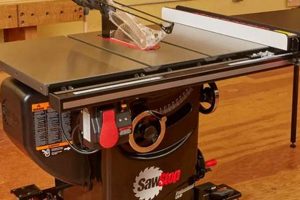
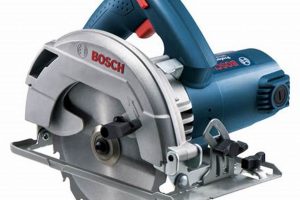
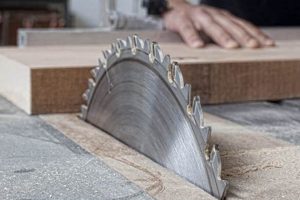
These power tools are characterized by a reciprocating blade, enabling the creation of curved and intricate cuts in various materials. Commonly employed in crafting projects involving wood, the tool offers maneuverability and control. Its versatility makes it suitable for tasks ranging from shaping decorative pieces to cutting out openings for sinks or fixtures.
The value of this tool lies in its ability to produce designs difficult to achieve with straight-edged saws. This capability enhances creativity and precision in woodworking applications. Historically, advancements in motor technology and blade design have improved its efficiency and user-friendliness, contributing to its widespread adoption across professional workshops and hobbyist settings.
Further discussion will focus on blade selection criteria, optimal operating techniques, and safety considerations to maximize the tool’s effectiveness and ensure user protection. Consideration of different models and their respective strengths will also be addressed.
Operating Strategies for Precision Cutting
The following guidelines offer practical advice for maximizing the accuracy and efficiency when using reciprocating saws. These suggestions focus on technique and preparation, contributing to optimal results and minimizing potential errors.
Tip 1: Blade Selection. Choosing the appropriate blade is crucial. Finer tooth blades are generally preferred for intricate designs and minimizing splintering, whereas coarser blades are more efficient for faster material removal during rough shaping.
Tip 2: Secure Material. The workpiece must be firmly secured before initiating the cut. Clamps or a vise should be used to prevent movement, which could compromise accuracy and create safety hazards. Rigidity is essential for controlled operation.
Tip 3: Pendulum Action Adjustment. Engage pendulum action for rapid cutting in straight lines through thicker materials. However, disengage this feature for intricate curves or when working with delicate materials to reduce vibration and improve control.
Tip 4: Variable Speed Control. Utilizing variable speed settings allows for adaptation to different materials and cutting requirements. Lower speeds are advisable for hardwoods and plastics to prevent overheating and melting, while higher speeds may be suitable for softer woods.
Tip 5: Pilot Hole Implementation. When starting an internal cut, pre-drill a pilot hole slightly larger than the blade width. This approach facilitates accurate blade insertion and prevents damage to the workpiece during the initial plunge.
Tip 6: Follow the Line. Consistent visual monitoring of the cutting line is imperative. Maintain a steady hand and smoothly guide the tool along the desired path, avoiding abrupt movements that can lead to deviations or blade binding.
Tip 7: Dust Removal. Integrated dust blowers, if available, should be utilized to maintain clear visibility of the cutting line. Alternatively, manual removal of sawdust buildup may be necessary to ensure accuracy and prevent blade obstruction.
Consistent application of these techniques will enhance cutting quality, reduce material waste, and improve overall project outcomes. Skilled utilization of these reciprocating saws requires both practice and attention to detail.
The subsequent sections of this document will delve into safety protocols and maintenance procedures crucial for preserving the longevity and effectiveness of these power tools.
1. Cutting Capacity

Cutting capacity, in the context of these power tools, denotes the maximum thickness of material the tool can effectively cut. This specification, typically expressed in inches or millimeters, directly influences the range of woodworking tasks for which a specific tool is suitable. Insufficient cutting capacity necessitates either modification of the design to accommodate thinner materials, or the use of an alternative tool with greater capabilities. Overestimation of cutting capacity, on the other hand, can lead to inefficient operation or damage to the workpiece and/or tool.
For instance, crafting furniture often requires working with lumber ranging from inch to several inches in thickness. A saw with a cutting capacity of only inch would be inadequate for many common furniture-making tasks. Conversely, attempting to cut thin veneers with a high-powered, large-capacity tool might prove challenging due to the increased risk of splintering or material distortion. Therefore, selecting a tool with appropriate cutting capacity for the anticipated range of materials is a critical decision in woodworking.
Understanding the interplay between cutting capacity and the intended use of these tools is fundamental for efficient and safe operation. Manufacturers typically provide clear specifications for cutting capacity, and prudent selection based on project requirements minimizes potential problems. Disregard for this parameter leads to compromised results and increased risk of tool malfunction or workpiece damage.
2. Blade Variety
The range of available blades significantly influences the utility of reciprocating saws in woodworking. The correct blade selection is paramount for achieving desired cut quality, speed, and material compatibility. A limited blade selection restricts the tool’s versatility, potentially compromising project outcomes.
- Tooth Count (TPI) and Material
Tooth Count (Teeth Per Inch) defines the coarseness of the blade. Higher TPI blades are suited for fine, clean cuts in hardwoods and thin materials, minimizing splintering. Lower TPI blades excel in rapid material removal in softer woods or thicker stock. Blade material, typically high-speed steel (HSS) or bi-metal, dictates durability and suitability for specific materials. HSS is effective for wood, while bi-metal provides enhanced heat resistance and longevity when cutting harder materials or composites.
- Blade Geometry
Various blade geometries exist to optimize cutting performance for different applications. Scroll-cutting blades, with their narrow width and specialized tooth patterns, facilitate tight curves and intricate designs. Reverse-tooth blades minimize tear-out on the top surface of the workpiece, providing a cleaner finish. Aggressive-tooth blades offer faster cutting speeds but may produce a rougher cut.
- Blade Length and Width
Blade length must be adequate for the thickness of the material being cut, ensuring that the blade fully penetrates the workpiece. Insufficient length can lead to blade flexing and inaccurate cuts. Blade width influences stability and maneuverability. Narrower blades are easier to guide along curved lines, while wider blades provide greater rigidity for straight cuts.
- Shank Type
The shank type determines compatibility with the saw’s blade clamping mechanism. Universal shanks are designed to fit a wide range of saws, while proprietary shanks may be specific to certain brands or models. Using the correct shank type is essential for secure blade attachment and safe operation.
Therefore, a comprehensive understanding of blade characteristics is essential for maximizing the potential of reciprocating saws in woodworking. The ability to select the appropriate blade for a given task directly affects the quality, efficiency, and safety of the cutting process. Diversifying the blade collection enables woodworking professionals and hobbyists alike to tackle a wider range of projects with precision and confidence.
3. Motor Amperage

Motor amperage, a measure of electrical current drawn by the motor, directly influences the performance characteristics of reciprocating saws. Higher amperage ratings generally correspond to increased power output, allowing the tool to handle denser materials and maintain cutting speed under load. Insufficient amperage can lead to motor overheating, reduced cutting efficiency, and potential damage to the tool. For instance, cutting hardwoods such as oak or maple requires a motor with sufficient amperage to prevent stalling or significant speed reduction. A saw with a lower amperage rating may struggle to maintain a consistent cut, resulting in jagged edges and increased cutting time. Conversely, for softer woods like pine or balsa, a lower amperage motor may suffice, provided the user avoids excessive force during the cutting process. Therefore, amperage represents a critical factor in determining the suitability of a given tool for specific woodworking tasks.
The practical significance of understanding motor amperage lies in the ability to select the appropriate tool for the intended application. A professional woodworker, regularly working with a variety of wood types and thicknesses, typically requires a reciprocating saw with a higher amperage rating to ensure consistent performance and durability. A hobbyist, primarily focused on smaller projects with softer woods, may find a lower amperage tool adequate and more cost-effective. Additionally, amperage impacts the tool’s ability to handle extended use. Higher amperage motors generally incorporate more robust cooling systems, reducing the risk of overheating during prolonged operation. This is particularly important in professional settings where tools are used continuously throughout the day. Neglecting amperage considerations results in inefficient workflow and increased tool maintenance or replacement costs.
In summary, motor amperage serves as a crucial indicator of a reciprocating saw’s power and overall capability. Matching the amperage rating to the specific demands of the woodworking tasks at hand is essential for achieving optimal performance, extending tool life, and ensuring user safety. Challenges in selecting the appropriate amperage often stem from a lack of understanding of the relationship between motor power, material density, and cutting requirements. Accurate assessment of these factors enables informed decision-making and minimizes potential problems. Ultimately, careful consideration of motor amperage contributes to the successful completion of woodworking projects.
4. Variable Speed
Variable speed control is a key feature on woodworking tools, influencing precision, safety, and material compatibility. Its presence on reciprocating saws enables operators to tailor cutting parameters to specific project requirements.
- Material Compatibility
Different wood species exhibit varying densities and grain structures. Variable speed allows adjusting the blade speed to suit the material, preventing burning or splintering in hardwoods and maintaining control in softer woods. An example is reducing speed when cutting dense exotic hardwoods to minimize heat build-up and maintain blade sharpness.
- Intricate Cuts and Curves
Detailed woodworking often involves complex curves and intricate designs. Lower speeds provide greater control and accuracy when navigating these features, reducing the risk of blade wandering or material damage. Cutting tight radii in cabinet trim benefits significantly from the reduced cutting speed.
- Blade Life Extension
Operating at excessive speeds can accelerate blade wear, especially when cutting hardwoods or abrasive materials. Variable speed control allows adjusting the speed to minimize heat generation and friction, thereby extending blade life. Consistent use of appropriate speeds reduces the frequency of blade replacement.
- Improved User Safety
High speeds can increase the risk of kickback or loss of control, especially for inexperienced operators. Variable speed enables reducing the cutting speed for greater stability and control, minimizing the likelihood of accidents. Slowing the speed when starting a cut provides greater precision and control over the initial blade placement.
The integration of variable speed functionality enhances the versatility and usability of reciprocating saws. By matching the cutting speed to the material, cut type, and user skill level, operators can achieve more precise results, extend blade life, and improve overall safety.
5. Bevel Adjustment
Bevel adjustment on reciprocating saws allows for angled cuts relative to the workpiece surface. The mechanism typically involves tilting the saw’s footplate or base to a specific angle, enabling cuts ranging from 0 to 45 degrees, or occasionally more, depending on the model. This capability introduces versatility to woodworking tasks, facilitating the creation of tapered edges, angled joints, and decorative elements. Without bevel adjustment, angled cuts would require alternative tools or complex manual techniques, increasing project time and potentially compromising accuracy. An example of its application is in crafting picture frames, where precise 45-degree miter cuts are essential for joining the corners seamlessly. In furniture construction, bevel cuts can create aesthetically pleasing angled legs or decorative inlays.
The accuracy and ease of use of the bevel adjustment mechanism are critical considerations. Some saws feature detents or pre-set stops at common angles, such as 22.5 and 45 degrees, allowing for quick and repeatable adjustments. Others utilize a continuous adjustment mechanism with a locking lever, offering greater flexibility but potentially requiring more careful alignment. The stability of the footplate at the selected angle is also crucial; any slippage during the cut can compromise the accuracy of the bevel. Furthermore, the visibility of the cutting line becomes increasingly important when making bevel cuts, as the angled blade obscures the view. Some saws incorporate features such as integrated lights or clear plastic guards to improve visibility.
In summary, bevel adjustment significantly expands the capabilities of reciprocating saws in woodworking. Its absence limits the range of achievable designs, while its presence necessitates careful consideration of accuracy, ease of use, and visibility. Proficiency in utilizing bevel adjustment contributes to enhanced project quality and efficiency. Selection of a saw with a robust and user-friendly bevel adjustment mechanism is essential for woodworking applications requiring angled cuts.
6. Ergonomic Design

Ergonomic design plays a critical role in the usability and safety of reciprocating saws used in woodworking. The repetitive motions and sustained grip required during operation necessitate a tool designed to minimize strain on the operator’s musculoskeletal system. Inadequate ergonomic considerations can lead to discomfort, fatigue, and, in severe cases, repetitive strain injuries such as carpal tunnel syndrome. The design of the handle, weight distribution, and vibration dampening mechanisms are all critical components influencing the overall ergonomic profile of the tool. A well-designed handle allows for a secure and comfortable grip, reducing the force required to control the saw. Balanced weight distribution minimizes the effort needed to maneuver the tool, particularly during prolonged use. Effective vibration dampening reduces the transmission of vibrations to the operator’s hands and arms, mitigating fatigue and the risk of vibration-induced white finger.
The consequences of neglecting ergonomic principles manifest in several ways. Woodworkers using poorly designed saws may experience reduced productivity due to fatigue and discomfort. Accuracy can also suffer as the operator’s ability to maintain a steady hand diminishes. Furthermore, the increased risk of injury can lead to lost work time and medical expenses. Conversely, a saw incorporating ergonomic design features can enhance user experience and productivity. For instance, a handle with a contoured grip and non-slip surface provides greater control and reduces hand fatigue. A lightweight design minimizes strain on the arms and shoulders, allowing for longer periods of use without discomfort. Vibration dampening technologies reduce the transmission of vibrations, improving comfort and reducing the risk of long-term health issues. These design elements contribute to a safer and more efficient woodworking environment.
In summary, ergonomic design is not merely a cosmetic consideration in reciprocating saws; it is a fundamental aspect influencing user safety, productivity, and long-term health. Addressing these design elements enhances the overall value and effectiveness of the tool. Challenges in implementing effective ergonomic design often arise from balancing user comfort with performance requirements and manufacturing costs. However, prioritizing ergonomic considerations is essential for creating reciprocating saws that support the well-being and productivity of woodworkers.
Frequently Asked Questions
The following addresses common inquiries regarding the application, maintenance, and safety considerations associated with these power tools.
Question 1: What blade characteristics are crucial for cutting hardwoods cleanly?
A high tooth count (TPI) blade, typically 14 TPI or higher, constructed from high-speed steel (HSS) or bi-metal, minimizes splintering and produces smoother cuts in hardwoods. A reverse-tooth blade can further reduce tear-out on the top surface.
Question 2: How frequently should saw blades be replaced to ensure optimal performance?
Blade replacement frequency depends on usage intensity and the material being cut. Dull blades compromise cutting efficiency and increase the risk of kickback. Blades should be replaced when cutting speed noticeably decreases, or when the cut quality deteriorates.
Question 3: What safety precautions are paramount when operating reciprocating saws?
Eye protection is essential to prevent injury from flying debris. Securing the workpiece firmly with clamps is crucial to avoid movement during cutting. Hands must be kept clear of the blade path at all times. A dust mask or respirator is advisable to minimize inhalation of sawdust.
Question 4: What distinguishes orbital action from non-orbital action, and when is each appropriate?
Orbital action involves a forward-and-backward motion of the blade in addition to the standard up-and-down movement, enabling faster cutting in thicker materials. Non-orbital action provides greater control and precision for intricate cuts and delicate materials.
Question 5: What factors influence the longevity and reliability of these power tools?
Regular maintenance, including cleaning and lubrication, is crucial. Overloading the tool beyond its capacity should be avoided. Proper storage protects the tool from moisture and physical damage. Selecting a tool with a robust motor and durable construction contributes to its longevity.
Question 6: Is a cordless or corded model preferable for woodworking applications?
Cordless models offer greater mobility and convenience, but may have limited runtime and power compared to corded models. Corded models provide consistent power and are suitable for extended use in a workshop setting. The optimal choice depends on the specific needs and working environment.
Careful consideration of these points enhances both project outcomes and user safety when utilizing reciprocating saws for woodworking. Diligent adherence to safety guidelines, combined with informed equipment selection, contributes to a safer and more productive woodworking experience.
The subsequent section will offer a comparison of different saw models and their suitability for various woodworking projects.
Conclusion
This document has provided an overview of “jig saws for woodworking,” outlining critical aspects from blade selection and operating techniques to safety protocols and model variations. The multifaceted nature of these tools necessitates a comprehensive understanding to maximize their effectiveness and ensure user safety. Informed decision-making regarding tool selection, blade compatibility, and appropriate operating parameters contributes to the successful execution of woodworking projects.
Continued adherence to established safety guidelines and a commitment to ongoing learning will further refine woodworking skills and enhance the utility of these tools. The principles outlined herein serve as a foundation for safe and efficient woodworking practices, fostering precision and minimizing potential hazards. The informed application of these power tools remains paramount for achieving optimal results.