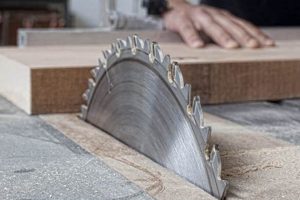
The optimal cutting tool selection for a table saw, specifically tailored to precision craftsmanship in wood, is paramount for achieving clean, accurate results. It is the component directly responsible for the quality of the cut, influencing the smoothness of the surface and the minimization of tear-out, splintering, or burning. For instance, when crafting intricate inlays or precisely fitting joints, the appropriate choice can make the difference between a professional finish and a flawed piece.
Selecting the correct blade significantly impacts the efficiency and safety of woodworking projects. A blade designed for this level of detail reduces the need for extensive sanding or rework, saving time and material. Historically, woodworkers relied on hand tools for such delicate work. The development of specialized blades for power tools has enabled greater precision and speed, thereby expanding the possibilities for intricate designs and complex joinery. The advancements in metallurgy and blade design have continually improved the capabilities of these tools, allowing for more refined and controlled cutting operations.
Understanding the various blade characteristics, such as tooth count, grind angle, and kerf width, is essential for making an informed decision. The following sections will delve into the specific attributes of different blade types and how they contribute to achieving superior results in fine woodworking endeavors. The goal is to provide the necessary knowledge for choosing the ideal tool for any given project and material.
Tips for Optimal Blade Selection
Selecting the appropriate blade for intricate woodworking projects requires careful consideration. Several factors influence performance and cut quality. These tips highlight crucial aspects for making informed choices.
Tip 1: Consider Tooth Count: Higher tooth counts generally produce smoother cuts, ideal for delicate work. A blade with 60-80 teeth is often suitable for plywood and hardwoods where minimal tear-out is desired.
Tip 2: Analyze Grind Angle: Alternate Top Bevel (ATB) grinds are versatile and effective for crosscutting and ripping. However, Hi-ATB grinds, with steeper bevel angles, can minimize chipping in brittle materials like melamine.
Tip 3: Evaluate Kerf Width: Thin-kerf blades remove less material, reducing the load on the saw and requiring less horsepower. This can be particularly beneficial when working with smaller saws or harder woods. However, ensure sufficient blade stability to prevent deflection.
Tip 4: Match Blade Material to Wood Type: Carbide-tipped blades offer superior durability and longevity compared to steel blades, particularly when cutting abrasive materials like exotic hardwoods or manufactured boards. Ensure the carbide grade is suitable for the intended application.
Tip 5: Prioritize Blade Stabilization: Blade stabilizers, also known as stiffeners, can reduce vibration and improve cut quality, especially with thinner blades or on saws prone to vibration. Ensure the stabilizer is properly sized and installed.
Tip 6: Implement Proper Saw Maintenance: A clean, well-aligned saw is crucial for optimal performance. Regularly check blade alignment and ensure the saw’s fence and miter slots are square. A dull or misaligned saw can negate the benefits of even the highest-quality blade.
Tip 7: Control Feed Rate: Forcing the wood through the blade can lead to burning, tear-out, and inaccurate cuts. A consistent, moderate feed rate allows the blade to cut cleanly and efficiently. Adjust feed rate based on wood hardness and blade characteristics.
Selecting the right blade and employing proper techniques are essential for achieving superior results in fine woodworking. Paying attention to these details will enhance precision, reduce waste, and improve overall project quality.
With a better understanding of blade selection, the discussion can now transition to real-world examples and case studies to further illustrate the principles outlined above.
1. Tooth Count
Tooth count is a primary determinant in the performance of a table saw blade when used for fine woodworking. The number of teeth directly influences the smoothness and cleanliness of the cut, making it a critical factor in selecting the optimal blade for achieving high-quality results.
- Cut Quality and Smoothness
A higher tooth count generally produces a smoother cut, minimizing tear-out and splintering on the workpiece. Blades with 60-80 teeth are commonly favored for fine woodworking tasks such as cutting plywood or hardwoods where a flawless finish is paramount. This increased density of cutting edges reduces the size of each chip removed, leading to a more refined surface.
- Cutting Speed and Efficiency
Lower tooth count blades typically cut faster but produce a rougher finish. Blades with 24-40 teeth are generally more appropriate for ripping thicker stock where speed is more important than surface quality. However, such blades are unsuitable for fine woodworking due to the increased likelihood of tear-out and splintering.
- Material Compatibility
Different materials require different tooth counts to achieve optimal results. Dense hardwoods benefit from higher tooth counts to prevent chipping and ensure a clean cut. Softer woods and composite materials may be cut with lower tooth counts, but careful feed control is still necessary to avoid issues. Blades designed for specific materials, such as melamine or acrylic, often feature specialized tooth geometries and counts tailored to those materials’ unique properties.
- Blade Type and Application
The intended application dictates the optimal tooth count. Combination blades, designed for both ripping and crosscutting, typically feature a moderate tooth count (around 50) to balance speed and finish quality. Dedicated crosscut blades have higher tooth counts for superior smoothness, while dedicated ripping blades have lower tooth counts for efficient material removal. Choosing the appropriate blade type, with its associated tooth count, is essential for maximizing performance in fine woodworking.
Therefore, understanding the relationship between tooth count and cut quality, speed, material compatibility, and blade type is crucial for selecting the best table saw blade for achieving the desired results in fine woodworking. Careful consideration of these factors ensures that the selected blade will deliver the precision and smoothness necessary for intricate and high-quality projects.
2. Kerf Width
Kerf width, the width of the cut made by a saw blade, directly influences material yield, waste reduction, and the overall precision attainable in fine woodworking. A blade’s kerf is a critical characteristic to consider when selecting a blade optimized for detail-oriented projects, as it dictates the amount of material removed with each pass. In instances where valuable or limited-quantity hardwoods are used, minimizing the kerf width becomes paramount to conserving resources and maximizing the number of usable pieces. Conversely, an excessively wide kerf results in unnecessary material loss, reducing the cost-effectiveness of the project and potentially compromising the integrity of the final dimensions.
The relationship between kerf width and blade stability is also noteworthy. Thin-kerf blades, while advantageous for material conservation, can be more susceptible to deflection, particularly when cutting thicker stock or denser hardwoods. This deflection can lead to inaccurate cuts and increased risk of kickback. Therefore, the choice of a thin-kerf blade necessitates careful consideration of the saw’s power and the blade’s overall construction to ensure adequate stability. For instance, a cabinetmaker constructing a complex frame-and-panel door might opt for a thin-kerf blade to minimize waste when shaping the frame components, but would simultaneously ensure the saw is properly tuned and the blade is adequately stabilized to maintain precise angles and dimensions. Conversely, a thicker kerf blade offers increased stability and is often preferred when cutting thicker materials, albeit at the expense of increased material loss.
Ultimately, the optimal kerf width selection involves a balance between material conservation, blade stability, and the specific demands of the project. The objective is to minimize waste while maintaining the necessary precision and safety. Therefore, understanding the implications of kerf width on these factors is essential for achieving superior results in fine woodworking. The following sections will explore the interplay of grind geometry and how it contributes to maximizing the cut quality.
3. Grind Geometry
Grind geometry is a critical aspect of saw blade design directly impacting cut quality, efficiency, and suitability for various woodworking tasks. The configuration of the teeth, particularly the angles and shapes of the cutting edges, dictates how effectively the blade interacts with the wood fibers, influencing factors such as tear-out, smoothness, and cutting speed.
- Alternate Top Bevel (ATB) Grind
The ATB grind is a versatile design featuring teeth that alternate between beveling to the left and right. This configuration creates a slicing action that produces cleaner cuts across the grain, making it a popular choice for crosscutting in hardwoods and plywood. The alternating bevels shear the wood fibers rather than tearing them, reducing splintering and improving surface finish. Blades with an ATB grind are frequently employed in fine woodworking applications where precision and aesthetics are paramount.
- Flat Top Grind (FTG)
The FTG grind features teeth with flat tops, optimized for ripping operations along the grain. The flat cutting edge efficiently removes material, making it suitable for cutting thick stock where speed is more important than surface finish. FTG blades generate more tear-out when crosscutting and are generally not recommended for fine woodworking tasks requiring pristine edges. Their primary application lies in situations where material removal rate is prioritized over aesthetic considerations.
- Triple Chip Grind (TCG)
The TCG grind combines a flat-topped tooth with a beveled tooth, designed for cutting abrasive materials such as laminates, MDF, and non-ferrous metals. The flat tooth provides clearance, while the beveled tooth performs the cutting action. This configuration extends blade life when working with materials that dull conventional blades quickly. TCG blades are occasionally used in fine woodworking for cutting composite materials or when a highly durable blade is needed, but they are not typically the first choice for general-purpose hardwood cutting due to their potential for producing a less refined finish compared to ATB grinds.
- Hi-Alternate Top Bevel (Hi-ATB) Grind
The Hi-ATB grind features a steeper bevel angle than standard ATB grinds, further enhancing the slicing action and minimizing tear-out on delicate materials such as melamine and veneered plywood. The steeper bevels create an even cleaner cut, making them ideal for applications where a flawless surface finish is essential. Hi-ATB blades are often selected for fine woodworking projects involving brittle or easily chipped materials, providing the highest level of cut quality and minimizing the need for post-processing.
The selection of a specific grind geometry hinges on the nature of the woodworking project, the type of material being cut, and the desired level of finish. ATB and Hi-ATB grinds generally align with the demands of high-quality woodworking due to their capacity to create clean, precise cuts. Understanding the characteristics of each grind allows for the optimized selection of a blade for any woodworking task.
4. Blade Material

The material composition of a table saw blade is inextricably linked to its performance in fine woodworking. The hardness, durability, and heat resistance of the blade material directly affect its ability to maintain a sharp cutting edge and produce clean, accurate cuts over an extended period. A superior blade material is, therefore, a fundamental component of what constitutes a “best table saw blade for fine woodworking.” The cause-and-effect relationship is clear: an inferior blade material leads to rapid dulling, increased friction, burning, and ultimately, a degraded cut quality unacceptable for intricate woodworking projects. For instance, a blade made of low-grade steel will quickly lose its edge when cutting hardwoods such as maple or cherry, necessitating frequent sharpening or replacement, thereby increasing operational costs and diminishing efficiency. In contrast, blades constructed from premium materials offer superior longevity and maintain consistent performance, reducing downtime and ensuring project precision.
Carbide-tipped blades represent a significant advancement in blade material technology and are commonly favored in fine woodworking. Carbide is significantly harder and more heat-resistant than steel, allowing carbide-tipped blades to maintain their sharpness for much longer periods, even when cutting abrasive materials like plywood or exotic hardwoods. Furthermore, the specific grade and composition of the carbide itself play a role. Micro-grain carbide, for example, offers a finer cutting edge and greater resistance to chipping compared to coarser grades, resulting in smoother cuts and longer blade life. Another consideration is the brazing material used to attach the carbide tips to the blade body; a strong, heat-resistant braze is essential to prevent the tips from detaching during operation, especially under heavy load. The practical significance of understanding these nuances lies in the ability to select a blade whose material properties are optimally matched to the demands of a specific woodworking task. A hobbyist working primarily with softwoods may find a standard carbide-tipped blade sufficient, while a professional cabinetmaker dealing with a variety of hardwoods and composite materials would likely benefit from investing in a premium blade with micro-grain carbide tips and a high-quality braze.
In summary, blade material is a critical determinant of a blade’s suitability for fine woodworking. The choice of material directly impacts the blade’s durability, sharpness retention, and ability to produce clean, accurate cuts. While carbide-tipped blades are generally preferred for their superior performance, the specific grade of carbide and the quality of the brazing process are important factors to consider. Understanding these material properties allows woodworkers to make informed decisions, selecting blades that will deliver optimal results and contribute to the overall success of their fine woodworking projects. The challenge lies in balancing cost with performance, selecting a blade that provides the necessary level of quality without exceeding the budget constraints of the project or workshop.
5. Blade Diameter

Blade diameter is a fundamental specification that significantly influences the performance characteristics of a table saw blade, and consequently, its suitability for fine woodworking applications. The diameter dictates the maximum depth of cut achievable, and it also affects blade stability and vibration, all factors that contribute to the precision and quality of cuts necessary for intricate woodworking projects.
- Depth of Cut Capacity
The primary role of blade diameter is to determine the maximum depth of cut. A larger diameter allows for cutting thicker stock, whereas a smaller diameter limits the material thickness that can be processed. In fine woodworking, the need to cut thicker hardwoods for joinery or casework often necessitates a blade with sufficient diameter to achieve the required depth in a single pass. For example, crafting mortise-and-tenon joints in 2-inch thick stock requires a blade with a diameter that exposes enough cutting edge above the table surface to complete the cut. Insufficient blade diameter necessitates multiple passes or alternative techniques, potentially compromising precision and increasing the risk of errors.
- Blade Stability and Vibration
Blade diameter affects its susceptibility to vibration and deflection during cutting. Larger diameter blades, while providing greater depth of cut, can be more prone to vibration, especially if they are not adequately tensioned or if the saw arbor lacks sufficient rigidity. Conversely, smaller diameter blades tend to be more stable and less prone to vibration, which can translate to cleaner, more accurate cuts in certain scenarios. Stabilizer collars can mitigate vibrations in larger blades but require careful setup and adjustment. When working on intricate patterns or delicate materials, minimizing blade vibration is critical to preventing chipping and ensuring a smooth finish. For instance, crafting delicate inlays or veneers demands a blade that maintains stability and minimizes deflection, which may favor a smaller diameter blade on saws with limited arbor support.
- Arbor Size Compatibility
Blade diameter must be compatible with the arbor size of the table saw. The arbor is the rotating shaft that mounts and drives the blade, and its diameter must match the bore size of the blade. Using a blade with an incompatible arbor size is unsafe and will prevent proper blade mounting. In fine woodworking, where precision is paramount, ensuring a secure and accurate blade mounting is essential for achieving clean, consistent cuts. For example, a blade with a 5/8-inch arbor hole cannot be safely or effectively used on a saw with a 1-inch arbor, and attempting to do so could lead to blade slippage, vibration, and potential injury. Therefore, selecting the correct blade diameter that corresponds to the saw’s arbor size is a fundamental prerequisite for achieving safe and precise woodworking operations.
- Power Requirements
Larger diameter blades require more power to operate effectively, particularly when cutting dense hardwoods. A smaller saw with limited horsepower may struggle to maintain a consistent speed when using a large diameter blade, leading to burning, stalling, and reduced cut quality. Conversely, a larger saw with ample power can handle a larger diameter blade with ease, maintaining consistent performance and enabling efficient cutting of thicker stock. In fine woodworking, where controlled and precise cuts are essential, matching the blade diameter to the saw’s power capabilities is crucial for achieving optimal results. For example, a small benchtop saw may be better suited for a smaller diameter blade, while a larger cabinet saw can effectively utilize a larger diameter blade to its full potential.
In summation, the selection of an appropriate blade diameter is not merely a matter of matching the blade to the saw’s arbor; it is a holistic consideration that involves balancing the need for depth of cut with the factors of blade stability, vibration, and power requirements. In the context of what constitutes the “best table saw blade for fine woodworking,” blade diameter must be evaluated in conjunction with other blade characteristics, such as tooth count, grind geometry, and material composition, to ensure optimal performance and results.
6. Stabilization

Stabilization, in the context of table saw blades, refers to minimizing vibration and deflection during operation, a critical element in achieving the precision demanded by fine woodworking. The best table saw blade, irrespective of its other qualities, cannot deliver its full potential without adequate stabilization. Vibration introduces inaccuracies into cuts, leading to uneven surfaces, tear-out, and compromised joinery. Deflection, the bending or warping of the blade under load, results in cuts that deviate from the intended line, rendering the workpiece unusable for high-precision applications. Thus, effective stabilization is not merely an ancillary consideration but an integral component of blade performance and a defining characteristic of a superior blade for fine woodworking. An example is the construction of intricate dovetail joints; even minor blade wobble can ruin the precise fit required for a strong, aesthetically pleasing joint. The understanding of this connection has practical significance: by addressing stabilization, woodworkers can maximize the return on their investment in high-quality blades.
Several factors contribute to blade stabilization. The inherent design of the blade, including its thickness and the quality of its construction, plays a role. Thicker blades generally exhibit greater rigidity and are less prone to deflection. However, even a robust blade can benefit from external stabilization mechanisms. Blade stabilizers, often referred to as stiffeners, are circular plates that clamp onto the blade near its periphery, damping vibration and increasing resistance to bending. These stabilizers are particularly valuable when using thinner-kerf blades, which, while offering advantages in material conservation and reduced power requirements, are more susceptible to deflection. Furthermore, the saw itself must be properly tuned and maintained. Loose belts, worn bearings, or a misaligned fence can introduce vibrations that negate the benefits of even the most sophisticated blade and stabilization system. For example, a cabinet maker using a thin-kerf blade for creating delicate molding profiles must ensure that both the blade is stabilized and the saw is in optimal condition to produce consistent, clean cuts.
In conclusion, stabilization is not a discrete feature but rather an essential aspect of blade performance that enables the realization of precision and quality in fine woodworking. It involves a combination of blade design, external stabilization devices, and proper saw maintenance. While the ideal blade possesses inherent stability, external stabilizers can further enhance performance, particularly when using thinner-kerf blades. By recognizing the importance of stabilization and implementing appropriate measures, woodworkers can consistently achieve the accuracy and surface finish required for demanding projects. The challenge lies in balancing the cost of stabilization equipment with the benefits gained in terms of reduced material waste, improved project quality, and increased efficiency. Prioritizing stability is not just about achieving accurate cuts; it’s about ensuring the longevity and reliability of the blade and the consistency of the results achieved with it.
7. Wood Type

The selection of a table saw blade for fine woodworking is fundamentally influenced by the type of wood being processed. The physical properties of different wood species, such as hardness, density, grain orientation, and resin content, dictate the optimal blade characteristics required to achieve clean, accurate cuts. Therefore, understanding wood type constitutes a crucial component in identifying the “best table saw blade,” as a blade optimized for one wood species may perform poorly on another. For instance, a blade designed for softwoods like pine, with its lower density and minimal tear-out tendency, would be ill-suited for hardwoods such as maple or cherry, where a high tooth count and appropriate grind geometry are essential to prevent chipping and ensure a smooth finish. The cause-and-effect relationship is evident: neglecting to consider wood type leads to suboptimal blade selection, resulting in degraded cut quality and increased material waste.
Practical significance arises in the selection of blade materials and tooth configurations. Abrasive hardwoods, such as teak or ipe, necessitate carbide-tipped blades with a higher carbide grade to resist wear and maintain sharpness over extended use. Furthermore, the tooth count and grind geometry must be carefully chosen to minimize tear-out and prevent burning, especially when cutting against the grain. Conversely, when working with softwoods, a blade with a lower tooth count and a less aggressive grind may suffice, prioritizing cutting speed over absolute surface smoothness. In the realm of composite materials, such as plywood or MDF, specific blade designs, such as those with a triple-chip grind, are often preferred due to their ability to minimize chipping and delamination. The understanding of these wood-specific requirements allows woodworkers to optimize their blade selection, maximizing cut quality and extending blade life. For instance, a luthier crafting acoustic guitars must meticulously select blades appropriate for the various tonewoods used, such as spruce for soundboards and mahogany for backs and sides, to ensure precise cuts that contribute to the instrument’s tonal quality.
In summary, the relationship between wood type and blade selection is paramount in fine woodworking. The physical properties of the wood dictate the optimal blade characteristics needed to achieve clean, accurate cuts. Neglecting to consider wood type leads to suboptimal performance, increased material waste, and compromised project quality. The challenge lies in developing a comprehensive understanding of wood properties and their influence on blade performance, enabling informed decisions that maximize efficiency and minimize errors. Recognizing the importance of wood type, therefore, represents a fundamental principle in the pursuit of identifying the “best table saw blade for fine woodworking,” ensuring that the chosen blade is optimally suited to the specific demands of the wood being processed.
Frequently Asked Questions
This section addresses common inquiries regarding the selection and application of saw blades tailored for fine woodworking, providing definitive answers to ensure informed decision-making.
Question 1: What tooth count is appropriate for achieving smooth cuts in hardwood?
A blade with a high tooth count, typically ranging from 60 to 80 teeth, is generally recommended for achieving smooth, splinter-free cuts in hardwood. This increased tooth density minimizes tear-out and produces a cleaner surface finish compared to blades with lower tooth counts.
Question 2: Does kerf width impact the precision of cuts?
Yes, kerf width influences the precision of cuts. Thin-kerf blades, which remove less material, can reduce the load on the saw and minimize waste, thereby contributing to more accurate and controlled cuts, particularly in delicate woodworking projects. However, blade stability must be considered.
Question 3: Are carbide-tipped blades always superior for fine woodworking?
Carbide-tipped blades generally offer superior durability and longevity compared to steel blades, particularly when cutting abrasive materials. However, the specific grade and composition of the carbide, as well as the quality of the brazing, are critical factors to consider when evaluating their suitability for fine woodworking applications.
Question 4: How does grind geometry affect cut quality?
Grind geometry significantly impacts cut quality. Alternate Top Bevel (ATB) grinds are versatile and effective for crosscutting and ripping, while Hi-ATB grinds, with steeper bevel angles, can minimize chipping in brittle materials like melamine. The choice of grind geometry should align with the specific demands of the woodworking project.
Question 5: What role does blade stabilization play in achieving precision?
Blade stabilization is crucial for minimizing vibration and deflection during cutting, which directly contributes to improved accuracy and surface finish. Blade stabilizers, also known as stiffeners, can reduce vibration and enhance cut quality, especially when using thinner blades or on saws prone to vibration.
Question 6: Is it necessary to change blades when working with different wood types?
Yes, it is generally advisable to change blades when working with different wood types. The physical properties of various woods, such as hardness and density, necessitate different blade characteristics to achieve optimal results. Using a blade designed for softwoods on hardwoods can lead to burning, tear-out, and reduced cut quality.
In conclusion, selecting the optimal cutting tool requires a comprehensive understanding of tooth count, kerf width, blade material, grind geometry, blade stabilization, and wood type. Careful consideration of these factors ensures superior results and minimizes errors in precision woodworking endeavors.
The subsequent sections will explore real-world applications and case studies to further illustrate the principles outlined above, providing practical insights into achieving excellence in fine woodworking.
Concluding Remarks
The preceding analysis underscores the multifaceted considerations involved in selecting the optimal cutting tool for precision woodworking. “Best table saw blade for fine woodworking” is not a singular entity but rather a designation achieved through a confluence of factors: appropriate tooth count, kerf width, grind geometry, blade material, stabilization techniques, and a comprehensive understanding of the wood species being processed. These elements, when harmonized, contribute to achieving the clean, accurate cuts essential for intricate designs and seamless joinery.
The pursuit of excellence in fine woodworking necessitates a continuous commitment to informed decision-making and meticulous execution. The selection of a table saw blade should not be a perfunctory task but rather a deliberate process informed by knowledge and experience. Continued exploration of advancements in blade technology and refinement of woodworking techniques will undoubtedly further elevate the craft. The pursuit of precise cuts is ongoing, leading to the development of innovative approaches and a deeper appreciation for the art of woodworking.