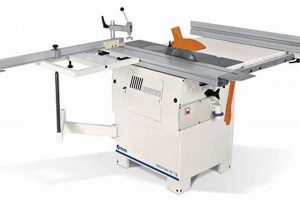
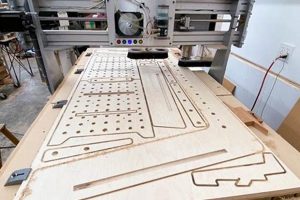
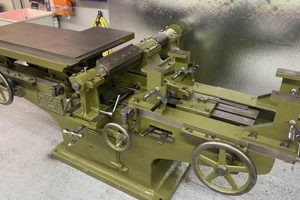
A single piece of equipment capable of performing multiple woodworking operations, such as sawing, planing, jointing, and shaping, represents a significant advancement in woodworking technology. This type of apparatus consolidates various specialized machines into one, reducing both the required floor space and the initial investment costs typically associated with a fully equipped woodworking shop. For instance, a combined machine might include a table saw for ripping and crosscutting, a jointer for creating flat surfaces, a planer for thicknessing lumber, and a shaper for creating decorative edges.
The advantages of utilizing a multi-functional woodworking system are considerable, particularly for smaller workshops or hobbyists with limited space. These machines offer a cost-effective solution, eliminating the need to purchase several individual units. Historically, these devices emerged as a response to the increasing demand for efficient and versatile woodworking tools, reflecting the evolving needs of both professional and amateur woodworkers. Their adoption streamlines workflow and allows for a wider range of projects to be completed within a single workspace.
The following discussion will delve into the specific features, operational considerations, and maintenance procedures associated with these integrated woodworking solutions. Detailed analysis of safety protocols, adjustment techniques, and optimal material selection will also be presented, providing a comprehensive understanding of how to maximize the potential of this versatile equipment.
Essential Practices for Integrated Woodworking Equipment
The following recommendations outline key strategies for achieving optimal performance and longevity when utilizing multi-functional woodworking equipment. Adherence to these guidelines will promote efficiency, safety, and consistent results.
Tip 1: Prioritize Machine Calibration: Precise alignment of all components is crucial. Conduct regular checks of fence squareness, blade parallelism, and planer bed co-planarity using appropriate measuring tools, such as a precision square and straightedge. Misalignment can compromise accuracy and lead to material waste.
Tip 2: Employ Proper Dust Collection: Due to the nature of combined operations, dust generation can be significant. A dedicated dust collection system, sized appropriately for the machine’s exhaust ports, is essential for maintaining a clean and safe working environment. This also prevents premature wear on machine components.
Tip 3: Implement a Scheduled Maintenance Program: Regular lubrication of moving parts, inspection of belts and pulleys, and cleaning of critical surfaces are vital. Refer to the manufacturer’s guidelines for recommended lubricants and service intervals. Neglecting maintenance can result in decreased performance and potential mechanical failures.
Tip 4: Secure Workpiece Fixturing: Adequate workpiece support and clamping are paramount for safe and accurate machining. Employ jigs and fixtures to securely hold material during operations such as shaping or routing. Ensure that the work area is clear of obstructions and that all clamps are properly tightened.
Tip 5: Use Appropriate Feed Rates: Avoid excessive feed rates that can strain the motor and compromise cut quality. Adjust the feed rate according to the material being processed and the desired finish. Slower feed rates generally produce smoother surfaces and reduce the risk of tear-out.
Tip 6: Implement Sharp Cutting Edges: Dull blades or cutters place excessive strain on the motor and can lead to poor cut quality. Regularly sharpen or replace cutting tools to maintain optimal performance. Use appropriate sharpening techniques and equipment to ensure consistent results.
Tip 7: Understand Material Properties: Different wood species require varying cutting parameters. Adjust feed rates, blade selection, and cutter geometry according to the material being processed. Research the properties of the wood to avoid common issues such as chipping or burning.
Adhering to these practices contributes to a safer, more efficient, and more productive woodworking experience. Consistent application of these principles will maximize the capabilities of the equipment and contribute to the creation of high-quality woodworking projects.
The subsequent sections will address advanced techniques and troubleshooting strategies for integrated woodworking equipment, providing a comprehensive guide for both novice and experienced users.
1. Space Optimization

The operational efficiency of any woodworking endeavor is significantly influenced by the available workspace. Integrated woodworking equipment directly addresses the constraints of limited space by consolidating multiple functions into a single unit. This amalgamation minimizes the footprint required for a comprehensive set of woodworking capabilities. The cause-and-effect relationship is straightforward: the need for space optimization leads to the adoption of multi-functional machines. Space optimization is not merely a tangential benefit; it is a core component of the value proposition offered by this equipment.
Consider a small-scale cabinet making shop operating within a confined urban environment. The acquisition of individual machines for sawing, planing, jointing, and shaping would be impractical due to spatial limitations. By contrast, a single machine capable of performing all these functions enables the business to operate effectively within its existing constraints. Furthermore, the reduction in floor space translates to lower rental costs and improved maneuverability within the shop, contributing to overall productivity. The significance of this understanding lies in its practical application: workshops can maximize their operational capabilities without incurring the expense of expanding their physical premises. It facilitates operation without the need for multiple stationary tools such as table saw, lathe or spindle moulder.
In summary, the adoption of multi-functional woodworking machinery is a direct response to the challenge of space optimization. This approach offers tangible benefits in terms of reduced floor space requirements, lower operational costs, and improved workflow. While the initial investment in such equipment may be substantial, the long-term advantages in space efficiency and operational flexibility make it a compelling option for woodworking businesses and hobbyists operating in space-constrained environments. Understanding this relationship is essential for making informed decisions about equipment acquisition and workshop layout. The challenge, however, is knowing all functions are not always operated simultaneusly.
2. Cost Efficiency

Cost efficiency, as a primary driver in equipment procurement, is inextricably linked to the adoption of integrated woodworking systems. The fundamental economic principle at play is the reduction of capital expenditure. Rather than investing in multiple, specialized machines, a single unit capable of performing diverse operations presents a lower initial cost. The cause is the need for a comprehensive woodworking shop; the effect is the potential to achieve this at a lower overall expense. The importance of cost efficiency stems from its direct impact on profitability and the ability to allocate resources to other critical areas, such as materials and labor.
Consider a vocational school establishing a woodworking program. Budget constraints limit the institution’s ability to acquire a full complement of individual machines. An integrated system allows the school to provide students with exposure to a range of woodworking techniques without exceeding its allocated funds. This translates to more students receiving training, and a wider range of skills imparted, for the same or lesser investment. Furthermore, reduced maintenance requirementsa consequence of fewer machinestranslate to lower operating costs over the equipment’s lifespan. This exemplifies how an integrated approach facilitates broader educational opportunities despite limited financial resources. However, it is important to take into consideration that production speed may be lower.
In conclusion, the pursuit of cost efficiency is a significant factor influencing the adoption of multi-functional woodworking equipment. By consolidating capabilities into a single unit, businesses and institutions can realize substantial savings in initial investment and ongoing operating costs. While challenges associated with operational complexity may exist, the economic advantages make this a compelling option for those seeking to establish or expand woodworking capabilities within budgetary constraints. The understanding of this connection is pivotal in optimizing resource allocation and maximizing the return on investment in woodworking equipment, while understanding speed isn’t the end-all be-all.
3. Versatile Functionality

The core appeal of integrated woodworking equipment lies in its versatile functionality, a direct consequence of consolidating multiple operations into a single machine. This characteristic is not merely a feature but a defining element of such systems. The cause is the demand for efficient and adaptable woodworking solutions; the effect is the availability of equipment capable of performing a wide range of tasks. The importance of versatile functionality stems from its ability to address diverse project requirements without the need for multiple, specialized machines, optimizing workflow and reducing setup time.
Consider a custom furniture manufacturer specializing in intricate designs. The ability to switch seamlessly between sawing, shaping, and routing operations on a single machine enables the creation of complex components with minimal interruption. This increased flexibility translates to faster turnaround times and the capacity to handle a wider variety of custom orders. A craftsman undertaking diverse projects, from cabinet building to creating picture frames, would also greatly benefit from the versatility offered. Furthermore, this equipment type can be adapted to different material types to an extent, thus, increasing project flexibility.
In conclusion, versatile functionality is a paramount consideration in the selection of integrated woodworking equipment. Its ability to streamline workflows, reduce setup times, and accommodate diverse project needs makes it an invaluable asset for both professional and hobbyist woodworkers. While the initial learning curve may be steeper than that of individual machines, the long-term benefits in terms of efficiency and adaptability make versatile functionality a central component of any successful woodworking operation utilizing integrated equipment. However, this does mean there will be a time period of adaptation.
4. Complexity Management

Complexity Management is a critical consideration when utilizing integrated woodworking equipment. The consolidation of multiple functions into a single machine introduces operational and procedural complexities that demand careful management. Successfully navigating these complexities is essential for maximizing efficiency, ensuring safety, and achieving desired results.
- Operational Sequencing
Integrated machines require a clear understanding of operational sequencing. The order in which tasks are performed directly impacts the final outcome. For example, if a piece requires planing and then shaping, the planing operation must precede shaping. Failure to adhere to the correct sequence can result in wasted material or damage to the workpiece. A detailed workflow plan is often necessary to mitigate errors and optimize throughput. A large scale woodworking operation may require a specialized employee who is skilled in sequencing.
- Setup and Adjustment Procedures
Each function within an integrated machine necessitates specific setup and adjustment procedures. Changing from sawing to planing, for instance, requires adjusting fences, blades, and feed rates. These adjustments must be performed accurately to ensure precise results. Incorrect setup can lead to inaccurate cuts, uneven surfaces, or even mechanical damage to the machine. Comprehensive training and readily accessible reference materials are crucial for operators to execute these adjustments effectively. This step may take several minutes, or longer depending on the skillset of the woodworking personnel.
- Troubleshooting and Maintenance
Integrated machines present unique troubleshooting challenges. When a problem arises, identifying the source can be more complex than with individual machines. A malfunction in one component can affect the performance of other functions. Moreover, maintenance procedures may be more intricate due to the interconnected nature of the system. A systematic approach to diagnostics and preventive maintenance is essential for minimizing downtime and ensuring long-term reliability. One example may include the failure of the dust collection system.
- Safety Protocols
Safety protocols are paramount in any woodworking environment, but they are particularly crucial when operating integrated equipment. The presence of multiple blades and moving parts in close proximity demands heightened awareness. Operators must be thoroughly trained on all safety procedures and consistently adhere to them. Safety devices, such as blade guards and emergency stop buttons, must be properly maintained and utilized. A comprehensive safety program that addresses the specific hazards associated with integrated machines is essential. This includes making sure the operator is aware of the “kickback” or “push back” zones.
These facets of Complexity Management highlight the importance of a structured and disciplined approach to utilizing integrated woodworking equipment. While these machines offer numerous benefits in terms of space optimization and cost efficiency, their inherent complexity requires careful planning, thorough training, and diligent execution. Failure to address these challenges can negate the advantages and lead to inefficiencies, safety hazards, and suboptimal results. It is important to understand that it may take a few practice runs to master any machine, whether simple or complex.
5. Maintenance Demands

Integrated woodworking equipment, consolidating multiple functions into a single unit, inherently presents unique maintenance demands. This is a direct consequence of its complex design and operational nature. The cause is the integration of multiple systems, such as sawing, planing, and shaping, into a single apparatus; the effect is an increase in the variety and frequency of required maintenance tasks. The importance of addressing these maintenance demands stems from their direct impact on the machine’s performance, lifespan, and the safety of its operation. Neglecting maintenance can lead to reduced accuracy, increased downtime, and potential hazards. For example, failure to regularly lubricate moving parts can result in premature wear and increased friction, compromising the precision of cuts and potentially causing the motor to overheat.
Specific maintenance tasks associated with integrated woodworking equipment include regular calibration of cutting tools, such as blades and knives, to ensure accuracy and prevent damage to the machine. Proper cleaning and dust removal are also crucial, as accumulated sawdust and debris can clog mechanisms and reduce efficiency. Belt tension and alignment must be periodically checked and adjusted to prevent slippage and ensure optimal power transmission. Furthermore, lubrication of bearings, gears, and other moving components is essential to minimize friction and prevent wear. Real-world examples include a cabinet shop where the integrated machine’s planer function produced inconsistent board thickness due to a misaligned and unlubricated feed roller system, or a woodworking school where students using an integrated saw/shaper caused a dangerous kickback incident due to a dull blade and improperly adjusted fence. These situations underscore the practical significance of consistent and meticulous maintenance.
In conclusion, maintenance demands are an indispensable aspect of owning and operating integrated woodworking equipment. These demands stem from the machine’s complex design and the integration of multiple functions. Regular calibration, cleaning, lubrication, and inspection are essential to ensure optimal performance, extend the machine’s lifespan, and maintain a safe working environment. While these tasks may require additional time and effort, their diligent execution is crucial to realize the full potential of integrated woodworking equipment and avoid costly repairs or accidents. The key is to adhere to a maintenance schedule appropriate for the volume and intensity of the work undertaken.
Frequently Asked Questions
This section addresses common inquiries regarding the use, maintenance, and suitability of universal machine woodworking equipment. The information provided aims to clarify typical concerns and misconceptions associated with these integrated systems.
Question 1: What are the primary advantages of using a universal machine woodworking system compared to individual machines?
The core advantages include space optimization, reduced initial capital investment, and the ability to perform a diverse range of woodworking operations with a single piece of equipment. These factors contribute to improved efficiency and cost-effectiveness, particularly in workshops with limited space.
Question 2: Are universal machine woodworking systems suitable for professional woodworking operations or are they primarily intended for hobbyists?
These systems can be suitable for both professional and hobbyist woodworkers, depending on the scale and complexity of the work. While high-volume production environments may benefit from specialized, individual machines, universal machine woodworking equipment can provide a cost-effective and versatile solution for smaller professional workshops and custom woodworking businesses.
Question 3: What types of maintenance are required to ensure the longevity and optimal performance of a universal machine woodworking system?
Regular maintenance includes calibration of cutting tools, cleaning and dust removal, lubrication of moving parts, inspection and adjustment of belt tension, and verification of proper alignment. Adhering to a consistent maintenance schedule is essential to prevent premature wear, ensure accurate performance, and maintain a safe working environment.
Question 4: How does the accuracy and precision of cuts produced by a universal machine woodworking system compare to that of individual, specialized machines?
The accuracy and precision of a universal machine woodworking system can be comparable to that of individual machines, provided that the equipment is properly calibrated and maintained. However, specialized machines may offer advantages in specific applications requiring extremely tight tolerances. Consistent use and recalibration of the machine is paramount.
Question 5: What are the primary safety considerations when operating a universal machine woodworking system?
Safety considerations include thorough training on all operational procedures, consistent use of safety devices such as blade guards and emergency stop buttons, strict adherence to recommended feed rates, proper workpiece fixturing, and the implementation of a comprehensive dust collection system. Awareness of kickback areas is also important. Thorough understanding of all moving parts is essential.
Question 6: How does the learning curve for operating a universal machine woodworking system compare to that of individual machines?
The learning curve may be steeper due to the complexity of operating multiple functions within a single machine. However, comprehensive training, readily accessible reference materials, and a systematic approach to operational sequencing can mitigate this challenge. It is best to work with a senior woodworking personnel.
The information provided herein highlights key aspects of universal machine woodworking. Careful consideration of these factors is essential for making informed decisions about equipment acquisition, operation, and maintenance.
The following sections will discuss best practices in the workflow of using the universal machine woodworking system
Conclusion
This discourse has addressed the multifaceted nature of universal machine woodworking. It has explored the advantages inherent in space optimization, cost efficiency, and versatile functionality. At the same time, it has acknowledged the challenges associated with complexity management and the imperative of adhering to rigorous maintenance schedules. The integration of diverse operations into a single machine necessitates a comprehensive understanding of both its capabilities and its limitations.
The informed application of the principles outlined herein is crucial for maximizing the potential of universal machine woodworking. Woodworkers should weigh the benefits against the demands, considering the specific requirements of their operational context. Only through diligent planning, meticulous execution, and a commitment to safety can the full value of this technology be realized, ensuring the creation of high-quality woodworking projects and a sustainable operational model.