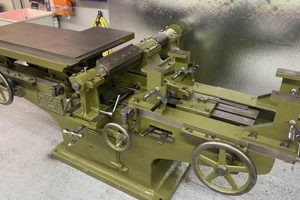
Equipment utilized in historical woodworking practices that predate modern manufacturing techniques forms a distinct category. These implements, often characterized by robust construction and manually-operated mechanisms, represent a tangible link to traditional craftsmanship. For instance, a pre-1950s bandsaw, meticulously restored, embodies the essence of this category.
The value associated with such equipment extends beyond mere functionality. These machines offer a glimpse into the ingenuity of past engineers and the durability inherent in designs built to last. Their restoration and continued use promote sustainable practices by reducing reliance on new manufacturing and preserving historical knowledge. They also represent a financial investment, potentially appreciating in value as collectors seek out well-maintained examples.
Subsequent sections will delve into specific types of these woodworking tools, restoration techniques applicable to their upkeep, and considerations for their safe and effective operation within a contemporary workshop setting.
Tips for Acquiring and Maintaining Vintage Woodworking Machines
The acquisition and preservation of equipment from bygone eras demands diligence and foresight. Adherence to the following guidelines will optimize the longevity and functionality of these valuable tools.
Tip 1: Conduct Thorough Pre-Purchase Inspections: Prior to acquisition, meticulously examine the machine for structural integrity. Assess the presence of cracks, excessive wear, and prior repairs. A comprehensive inspection can mitigate future operational complications.
Tip 2: Research the Machine’s History: Understanding the provenance of a machine provides insights into its potential usage patterns and maintenance needs. Consult historical records, manufacturer documentation, and online forums to gather relevant information.
Tip 3: Prioritize Original Components: Preserve original components whenever feasible. Replacements should ideally match the original specifications and materials to maintain the machine’s authenticity and operational characteristics.
Tip 4: Implement a Regular Lubrication Schedule: Adhere to a consistent lubrication schedule using appropriate lubricants. Neglecting lubrication can accelerate wear and lead to mechanical failures. Refer to manufacturer’s recommendations when available.
Tip 5: Ensure Proper Storage Conditions: When not in use, store these tools in a dry, climate-controlled environment. This minimizes the risk of corrosion and deterioration of critical components.
Tip 6: Document all repairs and maintenance performed: A maintenance log, documenting all actions taken to service the machine will provide vital insights for continued operation.
Tip 7: Familiarize yourself with the operational manual (if available): A thorough understanding of the operational characteristics of the machine will assist in performing the necessary maintenance procedures to the machine.
The application of these measures will ensure the continued operation of woodworking machines from past generations. Diligent maintenance and careful acquisition practices ensure their place in future workshops.
The article now progresses towards a conclusion summarizing the significance of historical woodworking equipment in contemporary practice.
1. Durability

The enduring appeal of historical woodworking machines stems from their inherent durability, a characteristic indicative of the manufacturing philosophies and material qualities prevalent in past eras. This resilience contributes significantly to their continued relevance and value in contemporary woodworking practices.
- Material Composition and Construction Techniques
Vintage machinery often features cast iron frames and components, offering exceptional resistance to vibration and wear. Construction techniques, such as dovetail joints and heavy-gauge steel fabrication, further enhanced structural integrity. An example is the robust framework of a 1940s jointer, designed to withstand decades of continuous use without significant degradation. The application of such superior design and construction methods made them the choice machine for years.
- Simplicity of Design and Mechanical Operation
Many vintage woodworking machines employ relatively simple mechanical systems, reducing the potential for complex failures. Fewer electronic components and reliance on manual adjustments contribute to their long-term reliability. Consider a pre-1960s drill press, where direct drive mechanisms and minimal electronic controls minimize maintenance requirements and potential points of failure. Simplicity of design contributes to the lifespan of the machine.
- Ease of Maintenance and Repair
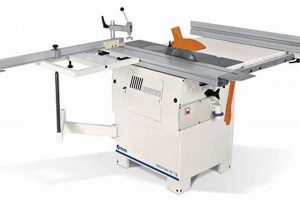
The straightforward design of older machines facilitates easier maintenance and repair procedures. Replacement parts, while potentially requiring sourcing or fabrication, are often less complex and more readily understood than components in modern, technologically advanced equipment. For instance, repairing a vintage table saw typically involves basic mechanical adjustments and replacement of belts or bearings, tasks manageable with fundamental mechanical skills and tools.
- Resistance to Technological Obsolescence
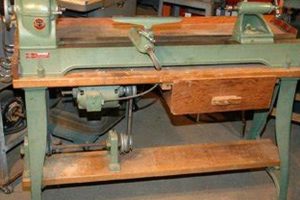
Unlike modern equipment prone to technological obsolescence, these tools retain their functionality over extended periods. Their core purpose remains unchanged, and their operation is not dependent on proprietary software or specialized electronic components that may become unavailable. A vintage lathe, for example, continues to perform its essential function of shaping wood irrespective of advancements in computerized numerical control (CNC) technology. The focus on manual design and production resulted in extended use and minimal changes to the function of the machine.
The durability inherent in historical woodworking machines extends their useful life, making them a sustainable and economically viable option for woodworkers. Their robust construction, coupled with ease of maintenance, ensures their continued contribution to the craft for generations to come.
2. Restoration

The restoration of vintage woodworking machines is a critical process that enables the continued utilization of these historically significant tools. It extends beyond mere cosmetic refurbishment, encompassing mechanical repairs, component replacement, and careful reassembly to ensure safe and efficient operation. Without meticulous restoration, these machines risk obsolescence, rendering them unusable or potentially hazardous.
- Assessment and Documentation
The initial stage of restoration involves a comprehensive assessment of the machine’s condition. This includes documenting existing damage, identifying missing or non-original components, and evaluating the extent of wear. Detailed photographs and written records are essential for guiding the restoration process and tracking progress. For example, a thorough assessment of a vintage planer might reveal rusted bed surfaces, damaged knives, and a non-functional motor, all of which require specific restoration procedures.
- Cleaning and Disassembly
Prior to any repairs, the machine must be thoroughly cleaned to remove accumulated dirt, grease, and rust. This often involves disassembling the machine into its individual components. Cleaning methods may include manual scrubbing, solvent baths, and media blasting. Disassembly requires careful attention to detail, documenting the location and orientation of each part to facilitate reassembly. Improper disassembly can lead to further damage or loss of critical components. Each component should be cataloged for inspection and replacement if needed.
- Repair and Component Replacement
This phase addresses mechanical repairs and the replacement of worn or damaged components. Repairs may involve welding cracked castings, machining damaged shafts, and fabricating missing parts. Replacement components should ideally match the original specifications and materials to maintain the machine’s authenticity and performance. Sourcing original or reproduction parts can be a challenging but crucial aspect of the restoration process. Replacing a bushing or bearing can restore functionality and extend the life of the machine.
- Reassembly and Calibration
The final stage involves reassembling the machine, ensuring proper alignment and functionality of all components. This includes lubricating moving parts, adjusting belts and pulleys, and calibrating cutting tools. Precise calibration is essential for achieving accurate and consistent results. Reassembly requires meticulous attention to detail and adherence to the original design specifications. Calibration is essential for safety and productivity, so the machine can perform its function without the need for additional or extensive adjustments.
The restoration of woodworking machines is a skilled undertaking that preserves these historical tools for future generations. Through careful assessment, cleaning, repair, and reassembly, these machines can be restored to their original functionality, offering a tangible connection to the craftsmanship of the past.
3. Precision

The attainment of precise cuts, shapes, and joinery stands as a paramount objective in woodworking. With vintage machines, achieving such accuracy requires a nuanced understanding of the equipment’s capabilities and limitations, coupled with diligent maintenance and calibration practices.
- Material Quality and Stability
The dense cast iron construction common in vintage machines provides inherent stability, minimizing vibration and ensuring accurate cuts. This material composition directly influences the machine’s ability to maintain precision during operation. For example, a vintage bandsaw with a heavy cast iron frame exhibits significantly less blade deflection compared to a lighter, modern counterpart, resulting in straighter cuts.
- Mechanical Accuracy and Adjustment
Achieving precision necessitates meticulous calibration of the machine’s mechanical components. This involves adjusting fences, tables, and blades to ensure proper alignment and parallelism. A vintage jointer, for instance, requires precise adjustment of the infeed and outfeed tables to produce flat, square edges. Deviation from these settings directly impacts the accuracy of the finished workpiece.
- Operator Skill and Experience
Effective utilization of vintage machines demands a higher level of operator skill compared to modern, automated equipment. The operator must possess a thorough understanding of the machine’s mechanics and the nuances of manual control. For example, achieving a precise rabbet cut on a vintage shaper requires careful manual feeding of the workpiece and constant monitoring of the cutting process. Skill is paramount to achieving precision, due to the absence of automated guides and assists.
- Maintenance and Component Condition
Regular maintenance, including lubrication, sharpening, and component replacement, is crucial for maintaining precision in vintage machines. Worn bearings, dull blades, or misaligned belts can significantly degrade accuracy. A vintage lathe, for example, requires properly lubricated spindle bearings and a sharp cutting tool to produce smooth, precise turnings. Proper maintenance is the foundation of maintaining the machines operation characteristics, as it limits the degradation that would result from unserviced components.
While vintage machines may lack the automated features of their modern counterparts, their inherent stability and mechanical simplicity, when combined with operator skill and diligent maintenance, enable the attainment of remarkably precise results. This makes them a viable and valuable option for woodworkers who prioritize accuracy and craftsmanship.
4. Originality

The concept of originality holds significant weight in the context of equipment manufactured in prior eras, influencing both its historical value and functional performance. Preserving a machine’s original components and configuration is a key consideration for collectors, restorers, and woodworkers alike.
- Authenticity and Historical Significance
Original components serve as tangible evidence of the machine’s manufacturing history, providing insights into the design philosophies, material choices, and production techniques of its time. Machines retaining their original parts are often considered more historically significant and command higher prices in the collector market. For example, a vintage table saw with its original blade guard, fence, and motor carries a greater historical narrative than one with replaced or modified components. The use of original parts provides a narrative into the history and operation of the machine.
- Performance Characteristics and Design Intent
Original components are designed to function in harmony with the machine’s overall system. Replacing these parts with aftermarket alternatives can alter the machine’s performance characteristics, potentially compromising its accuracy, power, or safety. Maintaining originality ensures that the machine operates as intended by its original designers. For instance, substituting a non-original motor on a vintage lathe may result in changes to spindle speed and torque, affecting the quality of the finished workpiece. Modifications should be avoided to maintain the function designed by the manufacturer.
- Restoration and Preservation Challenges
Preserving originality often presents significant challenges during the restoration process. Original components may be worn, damaged, or no longer readily available. Restorers must carefully balance the desire to maintain originality with the need to ensure safe and reliable operation. Sourcing or fabricating replacement parts that closely match the originals requires considerable skill and resources. The restorer must possess the skills to maintain and restore the parts to the machine without altering the components or function of the machine.
- Functional Equivalence vs. Historical Accuracy
In some cases, functional equivalence may outweigh the importance of historical accuracy. For example, replacing a deteriorated original belt with a modern equivalent may improve the machine’s performance without significantly detracting from its historical value. However, such decisions should be carefully considered, and any non-original components should be clearly documented. Balancing operation with maintaining historical relevance provides unique challenges that must be carefully balanced.
The pursuit of originality in machines represents a commitment to preserving the legacy of craftsmanship. While complete originality may not always be feasible or practical, striving to retain as many original components as possible contributes to the historical value, functional integrity, and overall appeal of these tools.
5. Safety
The intersection of operator well-being and vintage woodworking machines presents a unique set of considerations. Unlike contemporary power tools equipped with modern safety mechanisms, older equipment often lacks such features, necessitating a heightened awareness of potential hazards and the implementation of rigorous safety protocols. The absence of automatic shut-off switches, blade guards, and dust collection systems increases the risk of injury and exposure to harmful particulate matter. A restored 1930s table saw, while functionally sound, requires the operator to exercise extreme caution due to the exposed blade and lack of anti-kickback devices. Neglecting safety protocols can lead to severe injuries, including lacerations, amputations, and respiratory ailments.
Mitigating these risks requires a multi-faceted approach. Thorough inspection and maintenance of the machinery are paramount. Ensuring proper blade sharpness, belt tension, and lubrication minimizes the likelihood of mechanical failures that could lead to accidents. Operators must also prioritize personal protective equipment (PPE), including safety glasses, hearing protection, and dust masks. Furthermore, a comprehensive understanding of the machine’s operation, including its limitations and potential hazards, is crucial. For instance, recognizing the absence of a riving knife on an older table saw necessitates the use of feather boards and push sticks to prevent kickback. Practicing safe operating habits is the most important preventative action to improve overall safety.
In conclusion, operating vintage woodworking machines demands a proactive and informed approach to safety. The absence of modern safety features necessitates a commitment to meticulous maintenance, the consistent use of PPE, and a thorough understanding of the machine’s operational characteristics. Adherence to these principles minimizes the risk of injury and allows woodworkers to safely utilize these valuable tools, ensuring that the rich tradition of woodworking is practiced responsibly.
6. Functionality

The enduring relevance of “vintage woodworking machines” hinges directly on their continued functionality. While historical value and aesthetic appeal contribute to their desirability, the ability to perform intended tasks effectively remains the primary determinant of their usefulness. A machine, regardless of its age or provenance, loses its practical worth if it cannot reliably and accurately process wood. This functionality is a direct consequence of original design, subsequent maintenance, and restoration efforts. The practical significance of a 1950s-era planer, for example, lies in its capacity to flatten and smooth lumber to specified dimensions. If mechanical wear or neglect compromise this function, its historical value becomes secondary to the need for repair or replacement.
The practical application of “vintage woodworking machines” is often intertwined with specific woodworking techniques and historical contexts. Certain machines, such as mortisers or tenoners, were designed to perform specific joinery tasks that are essential for traditional furniture construction. Their functionality, therefore, is not merely a matter of performing a general operation, but of executing specific cuts or shaping operations with the precision and repeatability required for intricate joinery. Furthermore, understanding the intended functionality of a machine often necessitates researching historical documentation and understanding the woodworking practices prevalent during its period of manufacture. Consider the challenge of achieving accurate dovetail joints using hand-operated machinery. A detailed understanding of the machine and skill is needed to perform specific cuts and shapes.
In conclusion, the ongoing functionality of “vintage woodworking machines” is a synthesis of original design, diligent maintenance, and informed restoration. While challenges exist in ensuring the continued operation of these tools, their value remains intrinsically linked to their ability to perform woodworking tasks effectively. The pursuit of functionality necessitates a commitment to understanding the machines’ historical context, mechanical operation, and the specific techniques for which they were designed. The key insight in these components ensures the continued use of these historical tools.
Frequently Asked Questions Regarding Vintage Woodworking Machines
This section addresses common inquiries and misconceptions concerning the acquisition, maintenance, and operation of woodworking machines manufactured in prior eras. The information presented aims to provide clarity and guidance for those considering the integration of these tools into their workshops.
Question 1: What defines a “vintage woodworking machine?”
The term generally refers to woodworking equipment manufactured prior to the widespread adoption of modern electronic controls and lightweight materials. Machines built before the 1970s, often characterized by heavy cast iron construction and simple mechanical designs, are commonly considered vintage.
Question 2: Are these tools safe to operate in a modern workshop?
Operational safety hinges on meticulous maintenance, proper restoration, and adherence to rigorous safety protocols. Many vintage machines lack the safety features found on contemporary equipment. Operator training and the consistent use of personal protective equipment are essential for mitigating potential risks.
Question 3: How does one source replacement parts for equipment of this age?
Sourcing replacement parts can be challenging. Options include contacting specialized vendors, searching online marketplaces, consulting with vintage machinery enthusiasts, and, in some cases, fabricating custom parts. Maintaining detailed records of the machine’s specifications can aid in the search process.
Question 4: Do machines require specialized power requirements?
Power requirements vary depending on the machine’s age, design, and motor type. Some vintage machines may require three-phase power or specific voltage configurations. Consulting with a qualified electrician is essential to ensure compatibility with the existing electrical system.
Question 5: How does machine maintenance differ from contemporary woodworking equipment?
Maintenance typically involves more frequent lubrication, belt adjustments, and mechanical inspections. Due to the simpler designs, repairs often require mechanical aptitude rather than specialized electronics knowledge. Adherence to a regular maintenance schedule is critical for ensuring continued reliable operation.
Question 6: Does the acquisition offer a cost-effective alternative to modern woodworking equipment?
The total cost of ownership must consider the initial purchase price, restoration expenses, maintenance requirements, and potential safety upgrades. While initial costs may be lower, restoration and ongoing maintenance can offset any savings. A thorough cost-benefit analysis is crucial before making a purchase decision.
Understanding the intricacies associated with woodworking equipment from past generations enables responsible and effective integration into a modern shop. Prudent planning mitigates risks and capitalizes on the strengths of these historical tools.
The subsequent section will examine specific case studies involving the restoration and utilization of woodworking machines from distinct historical periods.
Vintage Woodworking Machines
The preceding exploration has illuminated the multifaceted nature of “vintage woodworking machines.” Key considerations include inherent durability, the complexities of restoration, the pursuit of precision, the preservation of originality, the paramount importance of safety, and the assurance of continued functionality. These factors collectively determine the viability and value of such equipment within contemporary woodworking practices.
The responsible acquisition, restoration, and utilization of “vintage woodworking machines” represent a commitment to both historical preservation and sustainable craftsmanship. Prudent stewardship of these tools ensures their continued contribution to the woodworking tradition, offering future generations a tangible connection to the ingenuity and skill of the past. Further research and ongoing dialogue remain essential for maximizing the potential of these machines while minimizing the associated risks.