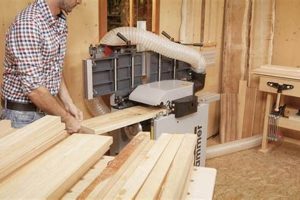
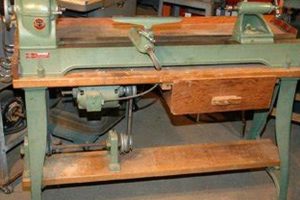
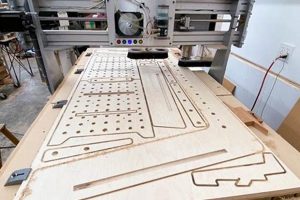
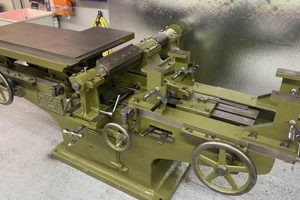
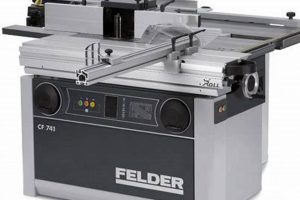
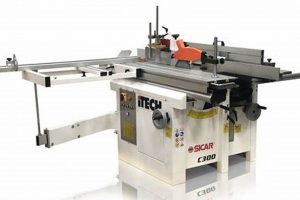
This technology refers to equipment utilized in the shaping, cutting, and joining of wood, where the processes are carried out with minimal human intervention through computerized control systems. An example includes a CNC router configured to carve intricate designs into wooden panels based on pre-programmed instructions.
The adoption of these systems is driven by the need for increased efficiency, precision, and repeatability in woodworking operations. Historically, woodworking relied heavily on manual skills, making it a time-consuming and labor-intensive process. These automated systems enhance production rates, reduce material waste, and improve the overall quality and consistency of finished products. Furthermore, they enable the creation of complex designs that would be difficult or impossible to achieve manually, fostering innovation within the industry.
The ensuing discussion will explore the various types of these systems, their operational principles, the software and programming involved, and the diverse applications across different woodworking sectors. Specific attention will be given to considerations for selecting the appropriate system, maintenance protocols, and the future trends shaping this evolving field.
Operational Guidance for Automated Woodworking Equipment
The following guidelines offer practical advice for maximizing the utility and longevity of automated woodworking equipment. Adherence to these recommendations will contribute to enhanced productivity, reduced downtime, and improved safety within the woodworking environment.
Tip 1: Invest in Comprehensive Training. Ensure all personnel involved in the operation and maintenance of this equipment receive thorough training. This should encompass not only operational procedures but also troubleshooting, safety protocols, and basic programming principles. Effective training minimizes user error and maximizes the equipment’s potential.
Tip 2: Implement a Preventative Maintenance Schedule. Establish a regular maintenance schedule based on manufacturer recommendations and operational demands. This schedule should include lubrication of moving parts, inspection of electrical components, cleaning of debris, and calibration checks. Consistent preventative maintenance prolongs equipment lifespan and reduces the likelihood of unexpected failures.
Tip 3: Utilize Appropriate Tooling. The selection of appropriate cutting tools, blades, and accessories is critical for achieving optimal performance and preserving equipment integrity. Incorrect tooling can lead to premature wear, reduced cut quality, and potential equipment damage. Consult manufacturer specifications and material compatibility charts to ensure proper tool selection.
Tip 4: Optimize Cutting Parameters. Proper adjustment of cutting speeds, feed rates, and depth of cuts is essential for achieving desired results and preventing equipment overload. Overly aggressive cutting parameters can strain the machine, leading to reduced precision and potential breakdowns. Conduct test cuts to determine optimal settings for specific materials and projects.
Tip 5: Maintain a Clean and Organized Workspace. Dust and debris accumulation can negatively impact the performance of automated woodworking equipment, particularly sensitive electronic components and mechanical systems. Implement a rigorous cleaning protocol to remove sawdust, shavings, and other contaminants from the work area and the equipment itself.
Tip 6: Monitor Equipment Performance. Regularly monitor equipment performance indicators such as motor temperature, spindle speed, and vibration levels. Unusual readings may indicate underlying issues that require attention. Early detection and correction of problems can prevent costly repairs and minimize downtime.
Tip 7: Secure Adequate Ventilation. Automated woodworking processes often generate substantial amounts of airborne dust, which poses a health hazard and can compromise the performance of the equipment. Implement an effective dust collection system to remove dust particles from the work environment. Proper ventilation is crucial for both operator safety and equipment longevity.
Following these guidelines will result in a more efficient, reliable, and safer woodworking operation. The long-term benefits include reduced costs, improved product quality, and a more sustainable manufacturing process.
The subsequent sections will delve into specific case studies demonstrating the application of these principles in real-world woodworking environments.
1. Precision

Precision, within the context of automated woodworking, refers to the degree of accuracy and repeatability achieved in the shaping and fabrication of wood components. It is a critical attribute directly influenced by the capabilities of these systems. The automated nature of this equipment, particularly CNC routers and laser cutters, ensures that each part is produced to the exact specifications defined in the programming, thereby minimizing deviations and errors inherent in manual woodworking processes. For example, in the production of cabinet doors, automated systems consistently produce identical dimensions, resulting in seamless integration and aesthetic uniformity, reducing fitting issues that arise from dimensional inconsistencies in doors crafted using manual methods. The cause is inherent in the control and feedback mechanisms employed in these systems, where any deviation from the programmed trajectory results in immediate correction.
This level of precision translates into several practical benefits. The first is a significant reduction in material waste, as components are manufactured with minimal tolerances, optimizing the use of raw materials. Second, the repeatability ensures consistency in production, enabling manufacturers to fulfill large orders with predictable outcomes. Furthermore, it facilitates the creation of complex designs and intricate patterns that would be impractical or impossible to achieve through manual means. The manufacturing of custom furniture often relies on this to create complex joinery only achievable by this method. It creates tighter and stronger joint, ensuring a longer lifespan and higher quality final product.
In summary, the integration of automated systems in woodworking dramatically enhances precision, leading to tangible improvements in efficiency, material utilization, and design capabilities. While challenges remain in terms of initial investment and programming expertise, the long-term benefits associated with increased precision underscore the importance of these technologies in shaping the future of the woodworking industry. This precision also minimizes the need for extensive post-processing, such as sanding and fitting, saving time and labor.
2. Efficiency

Efficiency, in the realm of automated woodworking, directly correlates to the optimal utilization of resources time, labor, and materials to maximize output. These systems provide quantifiable improvements compared to traditional methods, streamlining processes and minimizing waste across the production cycle.
- Reduced Cycle Time
Automated woodworking equipment significantly reduces the time required to complete woodworking tasks. CNC routers, for instance, execute complex cuts and carvings at rates exceeding manual capabilities. This diminished cycle time directly translates to increased production capacity, allowing manufacturers to fulfill larger orders and meet tighter deadlines. The speed of operation is often programmable and optimized to match the material and complexity of the design.
- Optimized Material Usage
Automated systems, driven by precise programming, minimize material waste. Cutting paths are optimized to extract the maximum number of parts from a given sheet of material, reducing scrap and lowering raw material costs. Software programs perform nesting operations, arranging parts strategically to minimize unused areas. This is particularly valuable when working with expensive hardwoods or specialized composite materials.
- Decreased Labor Requirements
The automated nature of these systems reduces the need for manual labor. A single operator can oversee multiple machines simultaneously, freeing up skilled workers to focus on more complex tasks such as design and quality control. This reduces labor costs and addresses potential labor shortages. Automation minimizes the risk of human error and ensures consistent results across production runs, reducing the need for rework and quality assurance intervention.
- Enhanced Throughput
These machines offer enhanced output with consistent product yield through the automation process. A system, when properly managed, is able to deliver the expected or planned product quantity in the time expected.
The facets above highlight the gains that can be expected through automated systems. The automation processes help achieve efficiency for the manufacturing company and customer, ultimately providing a better quality product for their business needs.
3. Automation

Automation represents a fundamental shift in woodworking, transitioning from manual processes to computer-controlled operations. Its integration into woodworking machinery results in increased productivity, precision, and efficiency. This technology reduces the need for human intervention, allowing for continuous operation and minimized labor costs.
- Computer Numerical Control (CNC) Integration
CNC integration forms the cornerstone of automation in woodworking. CNC systems control the movement of cutting tools and workpieces based on pre-programmed instructions. This allows for the creation of complex shapes and intricate designs with a high degree of accuracy. An example includes CNC routers used to create elaborate carvings on furniture components. The implications are far-reaching, enabling the mass production of customized designs and the creation of products previously unattainable with manual methods.
- Robotics for Material Handling
Robotics are increasingly used in woodworking for material handling tasks, such as loading and unloading workpieces from machines, stacking finished products, and sorting materials. Robotic arms can perform these tasks with speed and precision, reducing the risk of injury and minimizing downtime. For instance, a robotic arm might load sheets of plywood onto a CNC cutting table, ensuring consistent alignment and reducing the physical strain on human operators. The implementation of robotics results in a more streamlined and efficient workflow, leading to increased output and reduced labor costs.
- Automated Finishing Systems
Automated finishing systems apply coatings, stains, and sealants to wood products with consistent quality and efficiency. These systems use robotic sprayers and automated drying processes to ensure uniform coverage and minimize waste. An example is an automated spray booth that applies multiple coats of lacquer to cabinet doors, resulting in a smooth, durable finish. This eliminates the inconsistencies associated with manual finishing methods and reduces the exposure of workers to harmful chemicals.
- Sensor-Based Quality Control
Sensors integrated into these systems monitor various aspects of the woodworking process, such as tool wear, material thickness, and cut accuracy. These sensors provide real-time feedback to the control system, allowing for adjustments to be made to optimize performance and prevent defects. An example is a laser sensor that measures the depth of a cut, ensuring that it meets the specified dimensions. This minimizes the need for manual inspection and reduces the risk of producing substandard products.
These facets illustrate the transformative impact of automation on woodworking. This enables businesses to operate at a higher throughput and quality level. These improvements have a direct impact on cost savings for the company and potentially lower prices for the customer. The implementation of these features result in a more streamlined operation that can yield enhanced results for the production output.
4. Programming
The operation of automated woodworking equipment relies fundamentally on programming. It serves as the instructional code that dictates the equipment’s movements, cutting paths, and operational parameters. Without accurate and efficient programming, these machines are rendered inoperable. The programming acts as the central nervous system, translating design specifications into physical actions. For instance, a CNC router utilizes G-code, a standardized programming language, to interpret the desired shape and dimensions of a wooden component. Deviations in the G-code, such as incorrect coordinates or feed rates, will directly manifest as errors in the finished product, highlighting the critical link between the programming and the equipment’s performance. The selection of appropriate software and the skill of the programmer are therefore paramount to achieving the desired outcomes.
Practical applications showcase the significance of programming. In furniture manufacturing, complex joinery can be achieved through precise programming that dictates the movements of the cutting tools to create interlocking parts. Similarly, in the production of musical instruments, programming ensures the accurate shaping of soundboards and other components, directly influencing the instrument’s tonal quality. The efficiency of the equipment is also directly proportional to the efficiency of the programming, a well-optimized program reduces cycle times, minimizing material waste and maximizing throughput. Simulation software is often employed to visualize the cutting process, ensuring the programmed tool paths are collision-free and achieve the desired result, before committing to physical execution.
In conclusion, programming is an indispensable element in the successful utilization of automated woodworking equipment. Accurate and efficient programming enables precise execution, optimized material usage, and enhanced productivity. The challenges associated with programming include the need for specialized training, the cost of software licenses, and the potential for errors. However, the benefits of automated woodworking, driven by precise programming, significantly outweigh these challenges, solidifying its role as a cornerstone of modern woodworking practices.
5. Materials
The selection of appropriate materials is integral to the successful operation and output of automated woodworking equipment. The physical properties of the material directly influence the cutting parameters, tool selection, and overall performance of the machinery. Different wood species, composites, and plastics exhibit varying degrees of hardness, density, and grain structure, necessitating adjustments to feed rates, spindle speeds, and cutting tool geometry. For example, machining hardwoods like oak or maple requires slower feed rates and more robust cutting tools compared to working with softwoods like pine or cedar. Failure to account for these material properties can result in tool wear, material damage, and reduced precision, ultimately affecting the quality and efficiency of the automated woodworking process. Moreover, the material’s moisture content and internal stresses can impact dimensional stability during and after machining, requiring careful consideration in the programming and processing parameters.
The versatility of these machines enables the processing of diverse materials, extending beyond traditional wood species. Composites like MDF (Medium-Density Fiberboard) and plywood are frequently used due to their consistent properties and cost-effectiveness. Plastics, such as acrylic and PVC, can also be machined using specialized cutting tools and programming strategies. The choice of material depends on the application requirements, including strength, durability, aesthetic appeal, and cost considerations. For instance, in cabinet manufacturing, MDF may be used for the cabinet box due to its stability and paintability, while solid wood may be reserved for doors and face frames to enhance aesthetic appeal and structural integrity. The use of these machines is not limited to cutting operations alone. Some systems can also apply finishes, adhesives, and other treatments to materials, further expanding their capabilities and applications. The use of appropriate techniques improves product consistency and finish quality.
In conclusion, a thorough understanding of material properties and their interaction with automated woodworking equipment is essential for achieving optimal results. Proper material selection, combined with appropriate programming and machine settings, contributes to increased efficiency, reduced waste, and improved product quality. The ongoing development of new materials and machining techniques continues to expand the possibilities for automated woodworking, driving innovation across various industries. This approach maximizes the value of the product and reduces inefficiencies across the entire process, delivering a competitive advantage for manufacturers adopting this strategy.
6. Maintenance

Consistent maintenance is a critical factor in ensuring the reliable operation, longevity, and optimal performance of automated woodworking machinery. These systems represent a significant capital investment; therefore, a comprehensive maintenance program is essential to maximize their return on investment and minimize downtime. Neglecting maintenance can lead to reduced precision, increased risk of breakdowns, and compromised safety.
- Regular Cleaning and Lubrication
Accumulation of sawdust, debris, and contaminants can impede the operation of moving parts and electronic components, leading to premature wear and reduced efficiency. Regular cleaning of all machine surfaces, including cutting tables, spindles, and control panels, is necessary. Lubrication of bearings, gears, and other moving parts reduces friction, prevents corrosion, and ensures smooth operation. Specific lubrication schedules and types of lubricants should adhere to manufacturer recommendations. For example, failing to lubricate the lead screws on a CNC router can result in reduced positional accuracy and eventual failure of the screw drive mechanism.
- Inspection and Replacement of Worn Parts
Periodic inspection of critical components, such as cutting tools, belts, hoses, and electrical wiring, is essential for identifying signs of wear or damage. Worn cutting tools should be replaced promptly to maintain cut quality and prevent machine damage. Belts should be inspected for cracks and fraying, and hoses should be checked for leaks. Electrical wiring should be examined for insulation damage or loose connections. For instance, worn bearings in a spindle can cause excessive vibration, leading to reduced cut quality and potential damage to the spindle motor. Replacing these components proactively minimizes the risk of unexpected breakdowns and costly repairs.
- Calibration and Alignment
Automated woodworking machinery relies on precise calibration and alignment to ensure accurate cutting and shaping. Over time, vibrations, thermal expansion, and other factors can cause misalignment, leading to inaccuracies in the finished product. Regular calibration checks should be performed using precision measuring instruments, and adjustments should be made as necessary. For example, improper alignment of the gantry on a CNC router can result in inconsistent cut depths and dimensional errors. Ensuring proper calibration and alignment is critical for maintaining the machine’s ability to produce high-quality parts consistently.
- Software and Control System Updates
The software and control systems that govern the operation of automated woodworking equipment require periodic updates to address bugs, improve performance, and enhance security. These updates often include new features, improved compatibility with different file formats, and enhanced safety protocols. Neglecting software updates can lead to compatibility issues, system instability, and vulnerability to security threats. For example, an outdated version of CNC control software might not be compatible with the latest CAD/CAM programs, limiting the machine’s ability to process complex designs. Keeping software and control systems up-to-date is essential for maximizing the machine’s capabilities and ensuring its long-term reliability.
By implementing a comprehensive maintenance program, woodworking businesses can ensure the continued productivity and profitability of their automated woodworking machinery. The commitment to proactive maintenance minimizes downtime, reduces repair costs, extends equipment lifespan, and enhances the quality of finished products. This ensures a return on the initial investment and ongoing operational benefits.
Frequently Asked Questions
The following addresses common inquiries concerning automated woodworking equipment. The intent is to provide clear and concise information regarding functionality, applications, and operational considerations.
Question 1: What constitutes an “automatic woodworking machine”?
The term refers to equipment that performs woodworking operations with minimal human intervention, typically employing Computer Numerical Control (CNC) systems to execute pre-programmed instructions. These systems automate tasks such as cutting, shaping, drilling, and finishing.
Question 2: What are the primary benefits of utilizing these systems?
The advantages include increased precision, improved efficiency, reduced material waste, and enhanced production capacity. Automation minimizes the need for manual labor, lowers operational costs, and enables the creation of complex designs.
Question 3: Which industries benefit most from this technology?
The furniture manufacturing, cabinet making, construction, and musical instrument industries are among the primary beneficiaries. Any industry requiring precise and repeatable woodworking operations can leverage the advantages of automation.
Question 4: What types of materials can these systems process?
These systems can process a wide range of materials, including hardwoods, softwoods, composites (e.g., MDF, plywood), and certain plastics. Material selection depends on the specific application and the capabilities of the equipment.
Question 5: What level of skill is required to operate and maintain this equipment?
Operation and maintenance require specialized training in programming, machine operation, and troubleshooting. Skilled technicians and programmers are essential for maximizing the equipment’s performance and ensuring its longevity.
Question 6: What are the key considerations when selecting a machine?
Factors to consider include the type of woodworking operations required, the size and complexity of the parts to be produced, the material being processed, the available budget, and the level of technical support provided by the manufacturer.
In summary, automated woodworking equipment offers significant advantages in terms of efficiency, precision, and productivity. However, proper training, maintenance, and material selection are crucial for achieving optimal results.
The next section will explore potential challenges and future trends related to this technology.
Conclusion
This exploration has addressed the multifaceted nature of the automatic woodworking machine, examining its operational principles, benefits, and maintenance requirements. The integration of automation, driven by sophisticated programming and precise engineering, offers tangible improvements in efficiency, precision, and material utilization across a wide range of woodworking applications. The discussion encompassed material considerations, operational advice, and common inquiries, providing a comprehensive overview of this transformative technology.
As the woodworking industry continues to evolve, the adoption of automatic woodworking machines will become increasingly crucial for maintaining competitiveness and meeting the demands of a rapidly changing marketplace. Continued investment in research, development, and training will be essential to unlocking the full potential of these systems and shaping the future of woodworking practices.