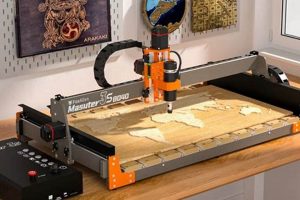
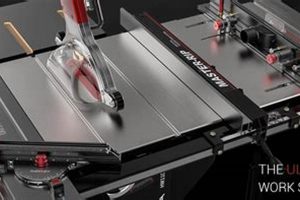
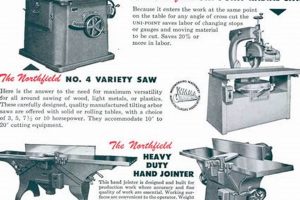
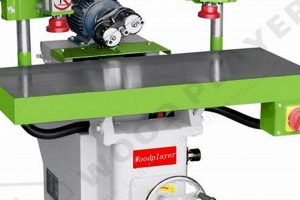
The acquisition of pre-owned equipment for shaping wood offers a cost-effective alternative to purchasing new machinery. These items, typically available from businesses upgrading their facilities or individuals downsizing their operations, can range from basic hand-fed tools to sophisticated computer-controlled systems. A common example includes planers, jointers, and saws previously used in cabinet making or furniture production being offered to the market.
Procuring existing equipment presents several advantages, primarily financial savings. Start-up businesses and hobbyists often benefit from the reduced capital outlay, allowing them to invest in other critical areas. Historically, the availability of such equipment has played a crucial role in the growth of small-scale woodworking enterprises, enabling them to compete with larger manufacturers. Additionally, it supports environmental sustainability by extending the lifespan of functional machinery.
This article will delve into the key factors to consider when evaluating the purchase of such equipment, including inspection procedures, valuation methods, and resources for locating reputable vendors. It will also explore the maintenance requirements and potential challenges associated with operating older machines, providing a comprehensive guide for making informed decisions.
Important Considerations
Careful evaluation is paramount when considering the acquisition of pre-owned equipment. The following points offer guidance to ensure a satisfactory transaction.
Tip 1: Conduct a Thorough Inspection: Prior to purchase, a detailed examination of the machinery is essential. This includes assessing the condition of critical components such as motors, bearings, and cutting surfaces. Operate the equipment, if possible, to identify any operational anomalies or excessive vibration.
Tip 2: Verify Operational History: Obtain detailed information regarding the machine’s past usage. Understanding the type and volume of materials processed can provide insights into potential wear and tear. Request maintenance records to assess the machine’s upkeep.
Tip 3: Assess Availability of Replacement Parts: Inquire about the ease of sourcing replacement parts. Older models may have limited availability, potentially leading to extended downtime and increased repair costs. Identify potential suppliers before committing to a purchase.
Tip 4: Confirm Electrical Compatibility: Ensure the machine’s electrical specifications are compatible with the intended facility. Voltage and phase requirements must be carefully matched to avoid damage to the equipment or electrical system. Consult with a qualified electrician as necessary.
Tip 5: Evaluate Safety Features: Verify that all original safety features are present and functional. Missing guards or compromised safety mechanisms can pose a significant risk to operators. Prioritize equipment that meets current safety standards or can be readily upgraded.
Tip 6: Negotiate Fair Pricing: Research the market value of similar equipment to establish a reasonable price. Factors such as age, condition, and included accessories should be considered during negotiations. Obtain independent appraisals if warranted.
Tip 7: Secure a Warranty or Guarantee: Whenever feasible, obtain a warranty or guarantee from the seller. This provides recourse in the event of unforeseen mechanical failures or undisclosed issues. Carefully review the terms and conditions of any warranty offered.
Adherence to these guidelines minimizes risks and maximizes the potential benefits of acquiring equipment that has been previously owned.
The next section will address the legal aspects of purchasing and transferring ownership of woodworking equipment.
1. Condition Assessment

The condition assessment of equipment offered in the pre-owned market directly impacts operational efficiency and financial viability. A thorough examination is not merely a superficial appraisal; it is a critical determinant of the machine’s remaining service life and potential for unexpected downtime. For example, a pre-owned table saw exhibiting excessive bearing play in its arbor directly correlates to reduced cutting accuracy and increased risk of motor failure. Neglecting this condition assessment could lead to a purchase that initially appears cost-effective but ultimately results in significant repair expenditures.
Furthermore, a comprehensive condition assessment encompasses not only the mechanical aspects but also the electrical components and safety mechanisms. Damaged wiring, corroded electrical contacts, or malfunctioning safety interlocks pose immediate hazards. Consider a pre-owned jointer lacking its original blade guard. While the machine might appear functional, the absence of this safety feature significantly increases the risk of operator injury. Therefore, the condition assessment must extend beyond basic functionality to encompass all aspects of safety and operational integrity. The absence or degradation of safety features directly influences insurance liability and worker safety.
In conclusion, the condition assessment is the cornerstone of a sound purchasing decision for equipment in the pre-owned market. It is a preventative measure that mitigates the risk of acquiring a machine with hidden defects or compromised safety features. The financial savings associated with a pre-owned purchase can quickly erode if the assessment is inadequate, leading to costly repairs, decreased productivity, or, more seriously, workplace accidents. A meticulous and professional condition assessment is, therefore, indispensable to ensure the long-term value and safe operation of acquired equipment.
2. Vendor Reputation

The credibility of the seller is a paramount factor when considering the acquisition of pre-owned equipment. The vendor’s reputation directly impacts the accuracy of the equipment’s disclosed condition and the likelihood of a transparent transaction. Due diligence in evaluating the vendor is therefore essential.
- Honesty in Disclosures
A reputable vendor provides accurate and comprehensive details regarding the equipment’s history, maintenance, and current condition. This includes disclosing any known defects, past repairs, and the reasons for the equipment’s sale. Dishonest disclosures can lead to unforeseen maintenance costs and operational disruptions. For instance, a vendor concealing a history of motor failures in a pre-owned lathe may present a significant financial burden to the purchaser.
- After-Sales Support
A vendor with a positive reputation typically offers adequate after-sales support, including technical assistance, parts availability, and warranty coverage. This support can be invaluable in resolving any issues that arise after the purchase. Conversely, an unreliable vendor may be unresponsive to inquiries or unwilling to honor warranty obligations. This lack of support can result in costly delays and potential equipment downtime.
- Transparency in Pricing
A trustworthy vendor provides transparent and justifiable pricing, based on the equipment’s condition, age, and market value. They are willing to provide documentation supporting their pricing and engage in reasonable negotiations. Opaque pricing practices or an unwillingness to negotiate may indicate questionable business ethics.
- Adherence to Legal and Ethical Standards
A reputable vendor adheres to all applicable legal and ethical standards, including providing accurate documentation of ownership transfer, complying with safety regulations, and conducting business with integrity. Failure to adhere to these standards can expose the purchaser to legal liabilities and reputational risks.
In summary, vendor reputation is inextricably linked to the successful acquisition of pre-owned equipment. A thorough evaluation of the vendor’s history, business practices, and customer feedback is essential in mitigating the risks associated with these transactions and ensuring a satisfactory outcome.
3. Pricing Dynamics

The economic principles governing the valuation of pre-owned equipment exert a significant influence on the accessibility and feasibility of acquiring machinery in the secondary market. Understanding these dynamics is critical for both buyers and sellers to ensure equitable and informed transactions.
- Depreciation Factors
The primary driver of value reduction in equipment is depreciation. This encompasses both physical wear and tear resulting from operational use and obsolescence due to technological advancements. For example, a ten-year-old CNC router, while potentially functional, will command a lower price than a newer model with enhanced processing speeds and updated software. The rate of depreciation varies depending on the type of equipment, its initial cost, and the intensity of its prior usage. Higher depreciation rates often apply to machines subjected to demanding production environments or lacking regular maintenance.
- Market Demand and Supply
The interplay between demand and supply significantly impacts the prices of equipment in the secondary market. Periods of economic expansion typically increase demand, leading to higher prices, while economic downturns often result in a surplus of available equipment and corresponding price reductions. Regional variations in demand also exist, with certain geographic areas experiencing greater interest in specific types of machinery due to local industry concentrations.
- Condition and Maintenance History
The physical condition of the machine and its documented maintenance history are key determinants of its market value. Equipment that has been meticulously maintained and is free from significant damage commands a premium price. Conversely, machinery with evident signs of wear, unreported repairs, or a lack of maintenance records will be valued lower. A comprehensive inspection by a qualified technician is often necessary to accurately assess the equipment’s condition and identify any hidden defects that may impact its long-term reliability and value.
- Seller Motivation and Urgency
The seller’s motivation and time constraints also influence pricing dynamics. A seller facing imminent closure or needing to liquidate assets quickly may be willing to accept a lower price than a seller who is not under pressure to sell. Understanding the seller’s circumstances can provide opportunities for negotiation and potentially result in a more favorable purchase price.
In conclusion, the price of pre-owned machinery is not a static figure but rather a dynamic value influenced by a complex interplay of factors. A comprehensive understanding of these dynamics enables buyers to make informed decisions, negotiate effectively, and ultimately acquire the equipment that best meets their needs and budget. Equally, sellers benefit from understanding these factors to accurately price and market their assets effectively in the secondary market.
4. Part Availability

The capacity to procure replacement components directly affects the long-term viability of equipment acquired in the pre-owned market. Diminished or nonexistent part availability presents operational challenges, potentially leading to extended downtime and reduced productivity. The correlation between component accessibility and operational longevity is a significant consideration when evaluating the purchase of used woodworking machinery. For example, the acquisition of a vintage bandsaw, while potentially cost-effective initially, becomes less advantageous if essential components like blade guides or drive belts are no longer manufactured or readily sourced. The consequence of this scarcity is often machine idleness, negating any initial cost savings.
Furthermore, the cost of acquiring specialized or custom-fabricated components can escalate expenses considerably. While generic parts, such as bearings or fasteners, may be universally available, proprietary components specific to a particular machine model or manufacturer can be challenging and expensive to obtain. The absence of original manufacturer support for older models frequently necessitates reliance on third-party suppliers, often resulting in increased prices and potential delays. Consider the scenario of a pre-owned CNC router requiring a replacement servo motor. If the original motor is no longer in production, the purchaser may face the expense of retrofitting a compatible alternative, requiring both specialized knowledge and potentially extensive modifications to the machine’s control system.
In conclusion, the prospective purchaser of pre-owned woodworking equipment must thoroughly assess the feasibility of obtaining replacement parts. This assessment should include identifying potential suppliers, verifying the availability of critical components, and evaluating the cost implications of acquiring or fabricating replacements. Neglecting this crucial aspect can transform an initially attractive investment into a long-term operational liability. The proactive evaluation of part availability is, therefore, an indispensable step in the due diligence process for used equipment acquisitions, ensuring sustained operational capability and mitigating the risk of premature machine obsolescence.
5. Safety Compliance

The acquisition of equipment in the secondary market presents inherent safety considerations. Used woodworking machinery, in particular, demands meticulous scrutiny to ensure adherence to current safety standards. Failure to comply with established regulations can lead to elevated risks of workplace accidents, potential legal liabilities, and increased insurance premiums. The condition of safety guards, emergency stop mechanisms, and interlock systems must be thoroughly assessed prior to purchase and operation. For instance, a pre-owned table saw lacking a functional blade guard significantly increases the risk of operator injury. Similarly, a jointer with a compromised safety interlock may allow operation with the guard open, posing a severe hazard. Non-compliance with safety regulations transforms an apparent cost saving into a potential liability.
Many older machines may predate current safety regulations, necessitating upgrades or modifications to meet contemporary standards. Such upgrades may include the installation of new guarding systems, the addition of emergency stop buttons, or the retrofitting of dust collection systems to mitigate respiratory hazards. The cost of these modifications must be factored into the overall acquisition cost to accurately assess the economic viability of the purchase. Consider a used lathe acquired without a chip shield. Retrofitting a properly designed and installed shield not only enhances operator safety but also contributes to a cleaner and more organized work environment. Compliance with safety regulations often requires a collaborative effort between the purchaser, equipment vendors, and qualified safety professionals.
In summary, the integration of safety compliance considerations is non-negotiable when evaluating pre-owned equipment. The failure to prioritize safety not only jeopardizes worker well-being but also exposes businesses to significant financial and legal risks. A comprehensive safety assessment, coupled with necessary upgrades and modifications, is essential to ensure that used woodworking machinery operates safely and in accordance with applicable regulations. The long-term benefits of prioritizing safety compliance far outweigh the initial costs associated with ensuring a safe working environment.
Frequently Asked Questions About Acquiring Used Woodworking Machinery
This section addresses common inquiries regarding the purchase of previously owned equipment, providing clarity on key considerations and potential challenges.
Question 1: What is the typical lifespan of such equipment?
Lifespan is contingent upon usage intensity, maintenance practices, and original manufacturing quality. Well-maintained industrial-grade machines can often provide decades of service, whereas lighter-duty equipment may have a shorter operational life. A thorough inspection is crucial to assess remaining service potential.
Question 2: How can one verify the accuracy of a machine’s specifications?
Original manufacturer documentation is the most reliable source. If unavailable, independent verification through qualified technicians or calibration specialists is recommended. Deviations from stated specifications can indicate wear, damage, or prior modifications.
Question 3: What are the potential hidden costs associated with these transactions?
Hidden costs may include expenses for transportation, rigging, installation, electrical modifications, safety upgrades, and unforeseen repairs. A comprehensive assessment of these potential expenses is essential to accurately evaluate the total cost of ownership.
Question 4: What legal considerations apply to the purchase of used equipment?
Legal considerations include verifying clear ownership title, ensuring compliance with applicable safety regulations, and addressing potential environmental liabilities. Independent legal counsel is recommended to review purchase agreements and address specific jurisdictional requirements.
Question 5: How does one mitigate the risk of acquiring equipment with undisclosed defects?
A pre-purchase inspection conducted by a qualified technician is the most effective mitigation strategy. This inspection should include a thorough examination of mechanical, electrical, and safety systems, as well as operational testing to identify any hidden issues.
Question 6: What resources are available for locating reputable sellers?
Industry trade associations, online marketplaces specializing in industrial equipment, and referrals from other woodworking professionals can provide access to reputable sellers. Verifying the seller’s history, customer reviews, and industry affiliations is advisable.
Careful consideration of these questions facilitates a more informed and prudent approach to acquiring used woodworking equipment, minimizing potential risks and maximizing long-term value.
The subsequent section will address the ongoing maintenance requirements and best practices for operating such machinery.
Conclusion
The preceding exploration has underscored the multifaceted nature of engaging with used woodworking machines for sale. Key considerations, including condition assessment, vendor reputation, pricing dynamics, part availability, and safety compliance, are critical determinants of a successful acquisition. A comprehensive understanding of these elements mitigates risk and maximizes the potential return on investment. Prudent due diligence and informed decision-making are paramount to navigating the complexities inherent in the secondary equipment market.
The acquisition of such machinery represents a significant capital expenditure for many businesses and individuals. Therefore, a thorough understanding of the discussed principles is essential for ensuring long-term operational efficiency and safety. Continued vigilance in evaluating equipment and adherence to best practices in maintenance and operation will contribute to the longevity and productivity of acquired machinery, ultimately fostering success within the woodworking sector.