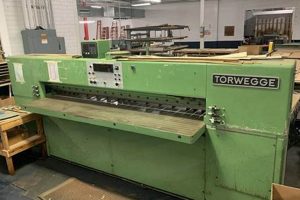
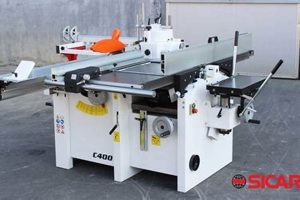
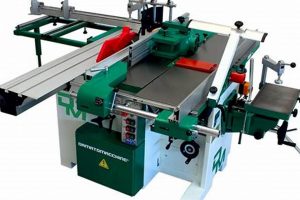
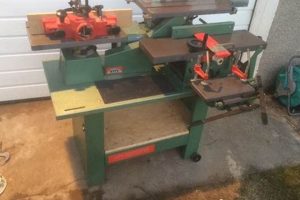
A specialized apparatus employed in woodworking operations is designed to create bores into wood components along a plane that is parallel to the ground. This equipment provides a stable platform for securing wood pieces and features a drilling mechanism that operates in a side-to-side orientation. Examples include machines used for creating mortises, dowel holes, or other features that necessitate precise, horizontally aligned openings.
The significance of such equipment lies in its capacity to produce repeatable and accurate bores, which is crucial for joinery and assembly within woodworking projects. Its benefits include increased efficiency and precision compared to manual drilling methods. Historically, these devices have evolved from manually operated tools to sophisticated, power-driven machinery with advanced features such as digital readouts and programmable controls.
The following sections will delve into the various types of these machines, their applications, safety considerations, and maintenance procedures, providing a comprehensive overview for both novice and experienced woodworkers.
Tips for Effective Operation
Maximizing the performance and lifespan of the specified equipment necessitates adherence to specific operational guidelines. The following tips provide insights into ensuring accurate, safe, and efficient drilling procedures.
Tip 1: Material Support: Proper support of the workpiece is paramount. Employ auxiliary supports, such as outfeed rollers or extension tables, especially when working with long or heavy stock. This prevents material sag, ensuring consistent hole alignment.
Tip 2: Bit Selection: Choose the correct drill bit for the wood species and desired hole characteristics. Forstner bits are suitable for clean, flat-bottomed holes, while auger bits are effective for deep, rapid boring. Verify the bit’s sharpness before each use.
Tip 3: Speed Control: Adjust the drilling speed based on the wood’s density and the bit’s diameter. Hardwoods typically require slower speeds to prevent burning or bit damage. Variable speed controls provide optimal performance.
Tip 4: Clamping Security: Secure the workpiece firmly using appropriate clamping mechanisms. Loose or inadequately clamped stock can shift during drilling, resulting in inaccurate hole placement and potential hazards.
Tip 5: Depth Adjustment: Precisely set the drilling depth to avoid breakthrough or over-drilling. Utilize depth stops or digital depth gauges to maintain consistent hole depths across multiple workpieces.
Tip 6: Dust Extraction: Employ a dedicated dust collection system to remove wood chips and dust generated during drilling. This improves visibility, prevents overheating, and maintains a cleaner working environment.
Tip 7: Regular Maintenance: Conduct routine maintenance, including lubrication of moving parts, inspection of belts and pulleys, and cleaning of the drill chuck. This proactive approach ensures reliable performance and extends the equipment’s lifespan.
These practices, when implemented consistently, contribute to enhanced drilling accuracy, improved safety, and prolonged operational life of the machine.
The subsequent section will address common troubleshooting scenarios and their respective solutions.
1. Precision Alignment

Within the realm of horizontal drilling apparatus employed in woodworking, precision alignment stands as a cornerstone element. Its influence permeates every facet of the machine’s operation and determines the quality and accuracy of the finished product.
- Spindle Alignment and Runout
The spindle, which houses and rotates the drill bit, must maintain perfect perpendicularity to the work table and a minimal runout (deviation from true rotation). Misalignment or excessive runout translates directly into inaccurate hole placement and enlarged, irregular bores. For instance, if the spindle deviates by even a fraction of a degree, repetitive drilling operations will exhibit cumulative errors, rendering joinery unreliable.
- Workpiece Fixture Accuracy
The mechanisms used to secure the workpiece must themselves be precisely aligned to the drill axis. This includes fences, stops, and clamping systems. If these elements are not square and parallel, the drilled hole will be skewed relative to the intended location on the workpiece. Consider a scenario where a fence is slightly angled; each hole drilled along that fence will be progressively offset, leading to significant discrepancies in the final assembly.
- Laser or Optical Alignment Systems
Advanced models often incorporate laser or optical alignment systems to aid in precise positioning. These systems project a visible line or crosshair onto the workpiece, enabling the operator to accurately align the drilling point with the marked location. The absence of such a system demands meticulous manual measurement and alignment, increasing the risk of human error and slowing down production.
- Calibration and Maintenance Procedures
Achieving and maintaining precision alignment necessitates rigorous calibration and maintenance procedures. Regular checks using precision instruments such as dial indicators and levels are essential. Furthermore, any wear or damage to critical components must be promptly addressed to prevent degradation in alignment accuracy. Neglecting these procedures leads to a gradual decline in drilling precision, ultimately impacting the quality of finished woodwork.
In summary, precision alignment is not merely a desirable feature, but a fundamental requirement for reliable and accurate performance. Without it, the equipment’s ability to produce consistent, high-quality bores is severely compromised. Meticulous attention to spindle trueness, fixture accuracy, alignment aids, and ongoing maintenance is paramount to realizing the full potential of the woodworking tool and delivering superior results.
2. Material Support
Material support constitutes a critical component in the effective operation of a horizontal woodworking drilling machine. The absence of adequate support introduces the potential for workpiece deflection, vibration, and misalignment during the drilling process. These factors directly affect the accuracy of the bore and the quality of the final product. For example, drilling a long, unsupported piece of lumber will likely result in a hole that deviates from the intended axis due to the material sagging under its own weight. This is particularly pronounced with heavier or less rigid wood species. The effectiveness of the horizontal drilling apparatus is inherently tied to the stability it provides to the material being processed.
The implementation of appropriate material support systems, such as adjustable rollers, outfeed tables, and custom-built jigs, mitigates these detrimental effects. These support mechanisms maintain a level plane for the workpiece, minimizing deflection and ensuring consistent contact with the drilling mechanism. Consider the construction of a large cabinet where numerous precisely aligned dowel holes are required. Without proper material support, achieving the necessary tolerances for a seamless assembly becomes exceedingly difficult. Furthermore, inadequate support can lead to increased tool wear and reduced operational safety as the operator may be compelled to exert undue force to stabilize the workpiece.
In summary, material support is not merely an auxiliary consideration but an integral factor in achieving precise and safe horizontal drilling operations. Neglecting this aspect can lead to dimensional inaccuracies, compromised structural integrity, and increased risk of operator injury. Understanding and implementing appropriate support strategies is therefore essential for maximizing the capabilities of the drilling equipment and producing high-quality woodworking projects.
3. Bit Selection

The performance of a horizontal woodworking drilling machine is intrinsically linked to the selection of appropriate drill bits. The machine provides the framework and motive power, while the bit executes the actual material removal. Therefore, the characteristics of the chosen bit directly influence the precision, efficiency, and quality of the drilled hole. For instance, using a twist drill bit designed for metal on wood is likely to result in splintering and a ragged hole, whereas a Forstner bit specifically designed for creating clean, flat-bottomed holes in wood will produce a far superior result. This highlights the cause-and-effect relationship between bit selection and outcome.
The horizontal drilling machine, with its focus on accurately aligned and controlled bores, amplifies the importance of using the correct bit. A poorly selected or dull bit can introduce vibrations or wander, negating the stability and precision offered by the machine itself. For example, when drilling dowel holes for joining cabinet components, using a self-centering dowel drill bit ensures that the holes are perfectly aligned, promoting a strong and aesthetically pleasing joint. Conversely, using a standard drill bit without a self-centering feature requires careful manual alignment, increasing the risk of errors and weakening the joint’s integrity. Furthermore, the machine’s power and stability allow for the effective use of specialized bits, such as mortising bits for creating precise mortises for joinery.
In conclusion, bit selection is not a peripheral consideration but an integral element for achieving optimal results with a horizontal woodworking drilling machine. The type of bit selected determines the outcome of horizontal drilling. Therefore, the proper selection, use, and maintenance of drill bits ensures the full capabilities of the machinery is used. Ultimately, this underscores the interplay between machine capabilities and tool characteristics in precision woodworking.
4. Speed Control
Speed control is an essential feature of the horizontal woodworking drilling machine, directly impacting the quality of the bore and the longevity of the tooling. The rotational speed of the drill bit must be appropriately matched to the wood species being worked and the diameter of the bit itself. Insufficient speed can result in inefficient cutting, increased friction, and potential stalling of the motor. Excessive speed, conversely, can lead to overheating of the bit, burning of the wood, and increased risk of splintering or tear-out, particularly with hardwoods. For instance, drilling a large-diameter hole in oak at a high speed will likely produce a rough, charred edge and potentially damage the bit. A slower, more controlled speed, in contrast, will yield a clean, precise bore.
The integration of variable speed control mechanisms allows the operator to optimize the machine’s performance for diverse applications. Electronic variable speed drives provide precise and repeatable speed adjustments, enabling the woodworker to fine-tune the cutting parameters. A skilled operator, through observation and experience, can adjust the speed to achieve the ideal balance between cutting efficiency and surface finish. The ability to control the speed further expands the range of compatible tooling, accommodating various bit types and sizes. Consider a scenario where the machine is used for both drilling small pilot holes and creating large mortises. Without variable speed control, the machine would be limited to either smaller bits at high speed or larger bits at a fixed, potentially unsuitable speed. The machine’s versatility is intrinsically tied to the operator’s ability to adjust the rotational speed of the drill bit.
In summary, speed control is not merely a convenience feature but a critical component of the horizontal woodworking drilling machine, enabling the woodworker to optimize performance, protect tooling, and achieve superior results across a wide range of woodworking applications. Challenges related to speed control primarily involve acquiring the experience to accurately judge the optimal speed for a given material and bit. However, a clear understanding of the cause-and-effect relationship between speed, material, and bit type enables woodworkers to realize the full potential of this crucial piece of equipment. This contributes directly to the broader goal of producing high-quality, accurately crafted woodworking projects.
5. Clamping Force
Clamping force, in the context of a horizontal woodworking drilling machine, refers to the pressure applied to secure a workpiece firmly in place during drilling operations. Its magnitude and consistency are paramount to achieving accurate and safe results. The effective management of clamping force is a critical factor in mitigating movement, vibration, and potential workpiece damage during the drilling process, each directly affecting the precision and quality of the finished product.
- Workpiece Stability and Accuracy
Insufficient clamping force allows the workpiece to shift or vibrate during drilling, resulting in inaccurate hole placement and potential bit wander. Excessive clamping force, on the other hand, can deform or damage the wood, particularly with softer species. For example, if drilling a series of dowel holes in a cabinet frame, inconsistent clamping pressure can lead to misaligned holes, compromising the structural integrity and aesthetic appeal of the finished cabinet. Precise hole alignment can’t be achieved without secure clamping.
- Mitigation of Vibration and Chatter
The process of drilling, especially with larger diameter bits or harder wood species, generates significant vibration. Adequate clamping force dampens these vibrations, preventing chatter and ensuring a smooth, clean bore. For instance, when drilling a mortise using a mortising bit, insufficient clamping can result in excessive vibration, leading to a rough and uneven mortise wall, thus increasing the risk of joint failure. Damping requires proper clamp force.
- Operator Safety
Inadequate clamping force presents a significant safety hazard. A loose workpiece can unexpectedly eject from the machine during operation, posing a risk of injury to the operator. Firm and reliable clamping ensures that the workpiece remains securely fixed, minimizing the risk of accidents. The risk is diminished when the operator implements and uses proper clamping.
- Clamp Type and Application
A variety of clamping mechanisms can be employed, ranging from simple hand-screw clamps to pneumatic or hydraulic systems. The choice of clamp depends on the size and shape of the workpiece, the required clamping force, and the production volume. For example, a quick-action cam clamp may be suitable for repetitive drilling of small parts, while a heavy-duty bar clamp is preferable for securing large or irregularly shaped workpieces. The clamp type is an important element of the machine.
The proper application and maintenance of clamping systems is integral to maximizing the performance and safety of a horizontal woodworking drilling machine. The consistency and appropriateness of the clamping force applied will directly influence the accuracy, efficiency, and quality of the drilling operation, ultimately contributing to the production of superior woodworking projects.
6. Depth accuracy

Depth accuracy constitutes a fundamental parameter in the operation of a horizontal woodworking drilling machine. It directly influences the precision of joinery, the integrity of structural components, and the overall quality of the finished product. The control over drilling depth allows woodworkers to create features such as mortises, dowel holes, and blind holes with a high degree of consistency and predictability.
- Role of Depth Stops
Depth stops are mechanical or electronic devices integrated into the drilling machine to limit the travel of the drill bit. Their accurate setting is essential for achieving the desired hole depth. In the absence of a functional depth stop, the operator relies on visual estimation, which is prone to error. For instance, consider the creation of a blind mortise for a furniture leg. An inaccurate depth stop could result in the mortise being too shallow, compromising the joint’s strength, or too deep, creating an unsightly void on the opposite surface.
- Digital Depth Gauges
Advanced horizontal drilling machines often feature digital depth gauges that provide a precise numerical readout of the drilling depth. These gauges enhance accuracy and repeatability, particularly in production environments where identical parts are manufactured in large quantities. A digital gauge allows for depth to be easily checked and reproduced.
- Consequences of Inaccurate Depth
Inaccurate drilling depth can have far-reaching consequences, particularly in complex woodworking projects. Over-drilling can weaken a component, while under-drilling can prevent proper assembly. The ability to create holes to precise depths is crucial for ensuring the structural integrity and aesthetic appeal of the final product.
- Impact on Joint Integrity
The horizontal woodworking drilling machine’s operation relies on joint integrity to complete builds. The application of drill depth accuracy has a direct relation on a wood joints final stability, the integrity will vary from wood types, clamp style and materials used in the construction.
The facets discussed highlight the interconnectedness of depth accuracy, machine features, and operator skill in horizontal drilling operations. The capacity to consistently produce holes to the specified depth is a hallmark of quality woodworking and depends on the effective utilization of the technology incorporated in the machine.
7. Dust extraction

Dust extraction, when integrated with a horizontal woodworking drilling machine, functions as a critical system for maintaining operator safety, optimizing machine performance, and ensuring project quality. The efficient removal of particulate matter generated during the drilling process minimizes health risks, reduces equipment wear, and improves the precision of the work.
- Operator Health and Safety
Wood dust, a byproduct of drilling operations, poses a respiratory hazard. Prolonged exposure can lead to various health complications, including asthma and other respiratory illnesses. Effective dust extraction systems capture airborne particles at the source, reducing the operator’s exposure and mitigating these health risks. For instance, a well-designed dust port located near the drill bit can significantly reduce the amount of respirable dust in the operator’s breathing zone.
- Machine Performance and Longevity
The accumulation of dust and debris can impede the function of moving parts within the drilling machine, leading to premature wear and reduced operational efficiency. Dust extraction systems prevent the buildup of these contaminants, protecting critical components such as bearings, motors, and lead screws. Regularly removing dust from the machine’s internal mechanisms reduces friction, prolongs service life, and maintains the machine’s precision.
- Improved Visibility and Accuracy
Excessive dust obscures the operator’s view of the workpiece and the drill bit, hindering precise alignment and increasing the risk of errors. Efficient dust extraction clears the immediate work area, providing a clear line of sight. For example, a dust collection system connected to the machine’s dust port ensures that chips and debris are removed as they are generated, allowing the operator to maintain accurate control over the drilling process.
- Surface Finish Quality
Uncollected dust particles can settle on the workpiece surface, interfering with finishing processes such as sanding and staining. This can result in an uneven or marred surface finish, detracting from the overall quality of the project. An effective dust extraction system removes these particles, ensuring a clean surface that is conducive to achieving a superior finish.
The implementation of a robust dust extraction system is an integral aspect of operating a horizontal woodworking drilling machine responsibly and effectively. By prioritizing operator safety, equipment maintenance, and project quality, woodworkers can fully realize the potential of this specialized equipment while minimizing the associated risks.
Frequently Asked Questions
The following addresses common inquiries regarding woodworking drilling machines operating in a horizontal configuration. The intent is to provide clarity on operational aspects, maintenance protocols, and application parameters.
Question 1: What distinguishes a horizontal drilling machine from a vertical drilling machine in woodworking applications?
A horizontal drilling machine orients the drilling spindle parallel to the work surface, facilitating operations such as mortising and doweling where holes are required on the face of the workpiece. A vertical drilling machine orients the spindle perpendicularly, typically used for through-holes and similar applications.
Question 2: What types of wood are best suited for horizontal drilling operations?
Hardwoods such as oak, maple, and cherry are commonly processed on horizontal drilling machines, though the suitability is dependent on the machine’s power and the tooling employed. Softer woods like pine and fir can also be used, but require careful handling to prevent splintering.
Question 3: What safety precautions are essential when operating a horizontal drilling machine?
Eye protection is mandatory. Secure workpiece clamping is crucial to prevent movement during drilling. Hands must be kept clear of the bit’s path, and dust extraction systems should be utilized to mitigate airborne particulate matter.
Question 4: What are common causes of inaccurate hole placement when using a horizontal drilling machine?
Inaccurate hole placement can stem from loose workpiece clamping, misalignment of the fence or stops, excessive bit runout, or play in the machine’s moving components. Regular inspection and calibration are necessary.
Question 5: How often should the drill bits used in a horizontal drilling machine be sharpened or replaced?
Bit sharpness should be assessed before each use. Frequency of sharpening or replacement depends on wood hardness, drilling volume, and bit material. Dull bits increase friction, reduce accuracy, and can damage the workpiece.
Question 6: What maintenance procedures are recommended for ensuring the longevity of a horizontal drilling machine?
Regular lubrication of moving parts, inspection of belts and pulleys, cleaning of the drill chuck and table, and verification of alignment are vital. Following the manufacturers maintenance schedule is advised.
The effective utilization of horizontal drilling machines in woodworking demands a thorough understanding of machine capabilities, material properties, and adherence to established safety protocols.
The subsequent section will elaborate on advanced techniques and troubleshooting scenarios.
Conclusion
This exploration of the apparatus used to perform woodworking drilling machine horizontal has illuminated its pivotal role in achieving precision and efficiency in woodworking operations. Key aspects discussed encompass alignment, material support, tooling selection, speed regulation, clamping methodology, depth accuracy and the importance of effective dust extraction. A woodworking drilling machine horizontal with these facets, when correctly implemented, directly translates to enhanced project quality and safety.
The continued evolution of woodworking drilling machine horizontal technology promises even greater accuracy and automation in the future. Adherence to established operational guidelines and proactive maintenance will remain paramount for maximizing the lifespan and utility of this tool. Mastery of the horizontal drilling machine horizontal will continue to define excellence in woodworking practice, for those pursuing that aim.