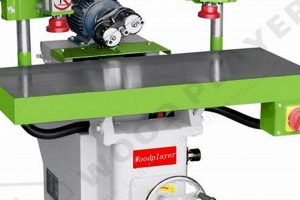
A multipurpose woodworking center combines several stationary power tools into a single unit. For example, such a system might incorporate a table saw, jointer, planer, shaper, and mortiser, all driven by one or more motors within a shared framework.
These combination machines offer several advantages, particularly for hobbyists and small workshops. They consolidate space, reduce the initial investment compared to purchasing individual tools, and often provide a mobile solution. Historically, these systems allowed craftspeople with limited resources to perform a broader range of woodworking tasks.
The following sections will delve into the specific functionalities, selection criteria, maintenance requirements, and the evolving role of these versatile units in modern woodworking practices.
Essential Usage Tips
Maximizing the performance and longevity of a multipurpose woodworking center requires adherence to specific operational guidelines. Safety, precision, and regular maintenance are paramount.
Tip 1: Prioritize Safety Protocols: Thoroughly review the operator’s manual prior to any operation. Ensure all safety guards are correctly positioned and functional. Employ appropriate personal protective equipment, including safety glasses, hearing protection, and dust masks.
Tip 2: Understand Tool Transitions: Familiarize yourself with the process of switching between different functions. Correctly installing and adjusting the required attachments or configurations is critical for accurate and safe operation. Improper transitions can lead to inaccurate cuts or potential damage.
Tip 3: Maintain Sharp Cutting Edges: The performance of the saw, jointer, and planer relies on sharp blades and knives. Regularly inspect these components and sharpen or replace them as needed. Dull cutting edges can result in tear-out, increased motor strain, and potentially dangerous kickback.
Tip 4: Implement Dust Collection: Woodworking processes generate significant amounts of dust, which poses a health hazard and can impair the machine’s performance. Connect a dedicated dust collection system to the machine’s dust ports to minimize airborne particles. Regularly empty the dust collection receptacle.
Tip 5: Calibrate Regularly: Combination machines are susceptible to misalignment due to vibration and use. Routinely check and calibrate the table saw fence, jointer fence, and planer bed to ensure accurate cuts and consistent results. Utilize precision measuring tools for calibration procedures.
Tip 6: Lubricate Moving Parts: Friction can cause wear and tear on the machine’s moving parts. Periodically lubricate bearings, gears, and other moving components with appropriate lubricants as specified in the operator’s manual. This will ensure smooth operation and extend the machine’s lifespan.
These practices contribute to optimal functionality, promoting precision and prolonging the operational life. Ignoring these precautions could compromise both the quality of work and the safety of the operator.
The next section will explore factors to consider when selecting a multipurpose woodworking solution that aligns with specific project needs and workshop constraints.
1. Space Optimization

The inherent advantage of a combination woodworking machine lies in its capacity to consolidate multiple stationary tools into a singular footprint. This capability addresses the critical challenge of space constraints often encountered in hobbyist workshops and smaller professional settings. The correlation between the number of individual machines eliminated and the resultant gain in usable workspace is direct and significant. For instance, a workshop previously occupied by a table saw, jointer, and planer could realize a substantial area reclaim by adopting a single combination unit integrating these functions. The cause is the combination machine itself; the effect is a more streamlined and versatile workspace.
Real-world examples demonstrate the practical significance of space optimization. Consider a small business specializing in custom cabinetry operating from a limited square footage facility. A single combination machine enables them to perform a wide range of tasks from dimensioning lumber to creating joinery without the prohibitive space demands of separate tools. This allows for more efficient workflow, improved organization, and potentially the ability to handle larger projects. This can also reduce the costs involved with space, such as property or rental expenses.
Understanding the space-saving benefits of a combination machine is paramount when making purchasing decisions. However, potential buyers must also consider the machine’s physical dimensions, including any required clearances for operation. Optimizing workspace layout, therefore, becomes an integral part of the adoption process. Ultimately, the effectiveness of a combination machine in terms of space optimization is contingent on both the machine’s design and the user’s strategic planning. It enables more efficient execution and provides an immediate, tangible reduction in operational space needs.
2. Cost Effectiveness

The economic advantage of a multipurpose woodworking machine stems from its ability to consolidate several essential functions into a single purchase. The initial investment is often less than the cumulative cost of acquiring individual tools capable of performing the same range of operations. This reduction in capital expenditure is a primary driver for adoption, particularly among hobbyists, small workshops, and startups with limited financial resources. The cause of this advantage is the machine’s inherent design; the effect is a lower barrier to entry for woodworking activities. For example, a small cabinet shop might choose a combination machine over separate units, lowering its initial overhead. This allows resources to be allocated to other operational areas, such as materials or marketing.
Beyond the initial purchase price, cost effectiveness extends to operational savings. A single machine occupies less floor space, reducing potential rental or mortgage costs associated with larger workshops. Reduced electricity consumption is another factor. While the machine may draw more power when operating multiple functions simultaneously, the overall consumption can be lower than running several individual motors. Maintenance costs can also be lower, as there is only one machine requiring upkeep. The accuracy and efficiency provided by a quality machine reduces material waste. Skilled operators reduce project time, thereby lowering labor expenses.
In conclusion, the cost effectiveness of an “all in one woodworking machine” is not solely defined by the initial price tag. A comprehensive analysis reveals savings in space, energy, maintenance, and material usage. Challenges remain, such as the potential for downtime affecting multiple operations if the machine requires repair. Understanding the total cost of ownership, including depreciation and potential resale value, is crucial for making an informed investment decision. This holistic perspective allows users to accurately assess the long-term financial implications of adopting a combination woodworking machine.
3. Functional Versatility

Functional versatility is a defining characteristic of the “all in one woodworking machine,” enabling a single unit to perform a range of woodworking operations traditionally requiring multiple standalone tools. This adaptability provides significant advantages in space-constrained environments and enhances workflow efficiency.
- Sawing Operations
The inclusion of a table saw function allows for ripping, crosscutting, and miter cutting of lumber. The table saw is adaptable for various project needs through the use of different blades. This functionality allows the user to shape raw materials effectively.
- Jointing and Planing
A jointer and planer are critical for creating flat, square surfaces on lumber. The jointer flattens one face and one edge, while the planer ensures consistent thickness across a board. These operations are essential for cabinet making and furniture construction, ensuring proper alignment and joinery.
- Shaping and Molding
The integration of a shaper enables the creation of decorative edges, profiles, and moldings. This functionality expands design possibilities. Custom trim work, raised panels, and intricate details can be produced with the appropriate cutters.
- Mortising Capabilities
Mortising attachments or integrated mortisers facilitate the creation of mortise-and-tenon joints, a strong and traditional woodworking connection. This capability is essential for constructing robust furniture frames and structural components.
The functional versatility inherent in the “all in one woodworking machine” provides a comprehensive solution for a variety of woodworking tasks. While dedicated machines may offer superior precision or capacity in specific operations, the combination unit delivers a broad range of capabilities within a single platform, making it a valuable asset for workshops with limited space or resources. The trade-offs are the benefit. The next topic explores Power Requirements of this machine.
4. Power Requirements

Electrical demand is a critical consideration when evaluating a multipurpose woodworking machine. These systems integrate multiple tool functionalities, often requiring significant electrical power to operate effectively. Insufficient power supply can lead to operational inefficiencies, reduced performance, or even damage to the machine’s motor and internal components. The cause is the integration of multiple tools; the effect is higher electrical demand than single-function machines. For example, attempting to run a jointer and planer simultaneously on a machine designed for sequential operation can overload the motor, causing it to overheat or trip a circuit breaker.
The power requirements of a combination machine are typically specified in terms of voltage (e.g., 120V or 240V) and amperage. Prospective buyers must ensure that their workshop’s electrical infrastructure can adequately supply the machine’s demands. This may necessitate installing dedicated circuits or upgrading the electrical panel. Selecting a machine with power requirements that align with the available electrical capacity is paramount. Failure to do so can result in frequent circuit overloads, compromised performance, and potential safety hazards. Certain models come with soft-start motors, which reduce the initial surge of power when starting, which in turn lowers the risk of tripping circuit breakers.
In summary, a thorough understanding of the power demands associated with a multipurpose woodworking machine is crucial for ensuring safe and efficient operation. Overlooking this aspect can lead to operational challenges, increased costs, and potential safety risks. Proper assessment and planning are essential for integrating these versatile tools into any woodworking environment, and it’s important to review the machine’s specifications and consult a qualified electrician if needed. The machine’s overall performance and reliability is directly correlated to the ability to fulfill its power demands.
5. Precision Capabilities
The level of precision achievable with a multipurpose woodworking machine is a critical factor determining its suitability for various woodworking projects. Accuracy in cutting, shaping, and joining directly impacts the quality and integrity of the final product. The extent to which these machines deliver precise results warrants careful consideration.
- Table Saw Accuracy
The accuracy of the table saw function depends on the flatness of the table, the quality of the fence, and the blade’s trueness. A precise fence ensures straight and consistent cuts, while a flat table provides stable support for the workpiece. Inaccurate table saws can lead to misaligned joinery and dimensional errors, compromising the structural integrity of the finished piece.
- Jointer and Planer Precision
The precision of the jointer and planer determines the flatness and thickness uniformity of lumber. Accurate jointers create perfectly square edges for seamless joinery, while precise planers ensure consistent material thickness. Deviations in these functions can result in uneven surfaces, gaps in joints, and overall dimensional inaccuracies. For example, consider a kitchen cabinet or any type of frame work.
- Shaper Control
Shaper precision relies on the spindle’s runout and the fence’s adjustability. Minimal runout ensures smooth and consistent profiles, while a finely adjustable fence allows for precise depth of cut. Imprecise shapers can produce uneven profiles and tear-out, negatively impacting the aesthetic appeal of the workpiece.
- Mortising Accuracy
Mortising accuracy is crucial for creating tight and strong mortise-and-tenon joints. Accurate mortisers produce precisely sized and aligned mortises, ensuring a secure fit with the tenon. Inaccurate mortising can lead to weak joints and structural instability. A high-quality fence can greatly improve this accuracy.
While multipurpose machines offer versatility, their precision capabilities may not always match those of dedicated machines. The design compromises inherent in combining multiple functions into a single unit can sometimes limit the achievable accuracy in individual operations. Assessing the specific precision requirements of planned projects is essential when evaluating the suitability of a multipurpose machine. Compromises must be weighed against benefits.
6. Maintenance Demands

The operational longevity and precision of a multipurpose woodworking machine are directly correlated to consistent and thorough maintenance practices. These machines, due to their complex integration of multiple functions, exhibit heightened maintenance demands compared to single-purpose tools. Neglecting these demands can result in diminished performance, increased risk of mechanical failure, and reduced lifespan. The root cause of these increased demands lies in the shared mechanical and electrical components serving diverse functions. The resultant effects of neglected maintenance can manifest as inaccurate cuts, increased vibration, motor strain, and ultimately, costly repairs or replacements. For example, failure to regularly lubricate moving parts can lead to premature wear on bearings and gears, eventually causing the machine to seize or malfunction. Regular cleaning is also paramount, preventing sawdust accumulation that can obstruct moving parts and create fire hazards.
Specific maintenance procedures vary depending on the machine model and its integrated functions. However, certain common tasks are universally applicable. These include: regular inspection and sharpening or replacement of blades and knives; lubrication of moving parts according to manufacturer specifications; cleaning of dust collection systems; calibration of fences and tables to ensure accuracy; and inspection of electrical components for wear or damage. Adherence to the manufacturer’s recommended maintenance schedule is crucial, as it provides a structured framework for preventative care. This proactive approach helps identify and address potential issues before they escalate into major problems. For instance, consistent calibration checks can detect minor misalignments early on, preventing them from compounding and affecting the accuracy of subsequent cuts.
In summary, the effective utilization of an “all in one woodworking machine” necessitates a commitment to proactive and consistent maintenance. Neglecting these demands can compromise the machine’s performance, safety, and lifespan. While the initial investment in a combination machine may be attractive, the long-term cost-effectiveness hinges on diligent maintenance practices. Challenges exist in balancing the time required for maintenance with the demands of production, but prioritizing preventative care is ultimately essential for maximizing the value and utility of these versatile woodworking tools. A well-maintained machine contributes to higher quality output, reduced downtime, and a safer working environment.
Frequently Asked Questions
This section addresses common inquiries concerning the operational characteristics, limitations, and appropriate applications of multi-function woodworking systems.
Question 1: What are the primary advantages of using a multipurpose woodworking machine?
The primary advantage lies in space consolidation. These units combine several functions into a single footprint, reducing the spatial demands on a workshop. Cost savings can also be realized compared to purchasing individual machines.
Question 2: How does the precision of a combination machine compare to that of dedicated tools?
While versatile, combination machines may not always match the precision of specialized tools. Design compromises inherent in integrating multiple functions can affect the achievable accuracy in individual operations. Careful calibration and adjustment are crucial for optimal results.
Question 3: What are the key maintenance requirements for a multi-function woodworking system?
Maintenance demands include regular inspection and sharpening of blades, lubrication of moving parts, cleaning of dust collection systems, and calibration of fences and tables. Adherence to the manufacturer’s recommended maintenance schedule is essential.
Question 4: Are combination woodworking machines suitable for professional use?
Suitability for professional use depends on the specific application and the machine’s capabilities. While some models are robust enough for light to medium-duty professional tasks, high-volume production environments may benefit more from dedicated machinery.
Question 5: What electrical requirements are typically associated with these machines?
Electrical requirements vary depending on the machine’s size and functionality. Prospective buyers must ensure that their workshop’s electrical infrastructure can adequately supply the machine’s voltage and amperage demands, potentially requiring dedicated circuits.
Question 6: What are the potential drawbacks of using a combination woodworking machine?
Potential drawbacks include limitations in simultaneous operation, potential compromises in precision compared to dedicated tools, and the possibility of downtime affecting multiple functions if the machine requires repair. The need to adjust between functions can also impact workflow efficiency.
In summary, the suitability of a multi-function woodworking machine hinges on a careful assessment of individual needs, available space, budget constraints, and the specific demands of planned projects. Understanding both the advantages and limitations is crucial for making an informed decision.
The subsequent section provides guidance on selecting an appropriate multipurpose system based on various factors, including workshop size, project requirements, and budgetary considerations.
Conclusion
The preceding discussion has explored the multifaceted nature of the “all in one woodworking machine”. Emphasis has been placed on its space-saving attributes, potential cost-effectiveness, functional versatility, power demands, precision capabilities, and essential maintenance requirements. These elements collectively define the operational value and limitations of these systems in diverse woodworking contexts.
Selection and implementation of an “all in one woodworking machine” necessitates a rigorous evaluation of individual needs and resources. A comprehensive understanding of the trade-offs inherent in combining multiple functionalities is paramount for informed decision-making, ensuring optimal utilization and long-term value. Continued advancements in design and engineering may further enhance the capabilities and precision of future iterations.