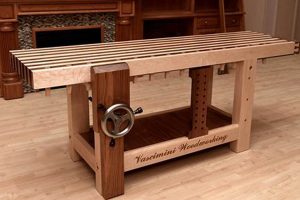
A self-constructed, portable platform designed for supporting carpentry tasks is a valuable addition to any workspace. This structure typically incorporates features that enhance maneuverability, such as casters or wheels, allowing for convenient relocation within a shop or even transport to different job sites. These stations often include integrated storage solutions and clamping mechanisms to improve efficiency and organization during projects.
The advantages of building a customized carpentry support are numerous. The design can be tailored to specific needs and available space, optimizing workflow and maximizing storage capacity. Cost savings can be realized compared to purchasing commercially manufactured alternatives. Historically, such handcrafted solutions have allowed woodworkers to adapt to changing work environments and resource constraints, leading to innovative and personalized tools.
The following discussion will delve into key considerations for planning and executing the construction of a personalized carpentry support platform, including material selection, structural design principles, mobility solutions, and strategies for incorporating essential features to optimize its functionality.
Essential Construction Considerations
The successful implementation of a personalized, portable carpentry station relies on careful planning and execution. The following considerations are crucial for maximizing the utility and longevity of the final product.
Tip 1: Structural Integrity: Prioritize a robust frame. Employ joinery techniques such as mortise and tenon or sturdy screw construction with wood glue to ensure stability under heavy loads and repeated movement. A weak frame compromises the entire structure.
Tip 2: Work Surface Material: Select a durable and dimensionally stable material for the work surface. Solid hardwood, such as maple or birch, provides a resilient surface capable of withstanding impacts and clamping forces. Alternatively, MDF or plywood can be used, but should be adequately sealed and protected.
Tip 3: Mobility Hardware Selection: Choose casters rated for the intended load capacity. Locking casters are essential for preventing unwanted movement during operations. Consider the floor surface; soft rubber casters are preferable for delicate floors, while hard plastic casters are suitable for concrete.
Tip 4: Integrated Storage Solutions: Incorporate storage solutions tailored to frequently used tools. Drawers, shelves, and pegboards maximize organization and accessibility. The placement of storage should be ergonomic, minimizing unnecessary reaching or bending.
Tip 5: Clamping Options: Integrate clamping mechanisms directly into the design. Bench dogs, vise mounting points, and T-tracks offer versatility in securing workpieces. Ensure that clamping solutions are securely fastened to the work surface and frame.
Tip 6: Consider Electrical Integration: Plan for the inclusion of electrical outlets and cable management. Mounting a power strip directly to the frame provides convenient access to power tools. Securely route and protect electrical cables to prevent hazards.
Tip 7: Ergonomic Height Adjustment: Consider the ergonomic implications of the work surface height. A height that promotes proper posture reduces fatigue and improves efficiency. Adjustable height options can accommodate multiple users or different tasks.
Adhering to these guidelines will result in a versatile and durable platform that enhances workflow and productivity.
The subsequent section will examine the process of adapting and refining the carpentry platform to cater to specific needs.
1. Mobility

Mobility, in the context of a self-constructed carpentry support, transcends simple portability. It encompasses the ease with which the station can be repositioned within a workspace or transported between locations. The selection of appropriate mobility solutions significantly impacts the efficiency and adaptability of the entire system.
- Caster Selection and Load Capacity
The choice of casters directly influences the station’s ease of movement and weight-bearing capabilities. Casters must be rated to support the fully loaded station, including the weight of the bench itself, stored tools, and the workpiece. Undersized casters can lead to premature failure, rendering the platform immobile. Considerations include caster diameter, material (e.g., rubber, polyurethane), and brake mechanisms. Locking casters are crucial for maintaining stability during operations.
- Floor Surface Considerations
The type of floor surface dictates the optimal caster type. Smooth concrete floors allow for the use of hard casters with low rolling resistance. Conversely, uneven or delicate floors necessitate the use of softer, wider casters to distribute weight and prevent damage. Failure to account for floor surface can lead to difficult maneuvering or floor damage.
- Frame Reinforcement and Weight Distribution
The frame of the carpentry platform must be adequately reinforced to withstand the stresses induced by movement, particularly when loaded with heavy materials. Uneven weight distribution can exacerbate these stresses, leading to frame distortion and reduced mobility. Reinforcing joints and strategically positioning heavy components close to the casters minimizes these effects.
- Handle Placement and Ergonomics
The placement of handles for maneuvering the platform impacts the ease of relocation. Handles should be positioned ergonomically to allow for comfortable pushing or pulling, minimizing strain. The design should also consider clearance around the handles to prevent obstruction or interference with other objects.
These interconnected elements of mobility are critical to the successful implementation of a self-built carpentry support. Neglecting any of these facets can compromise the system’s utility and longevity, diminishing its value as a flexible and adaptable workspace solution.
2. Stability

Stability is a paramount consideration in the design and construction of a self-assembled, portable carpentry platform. Insufficient stability compromises accuracy, safety, and overall usability. The following aspects delineate the key factors contributing to a stable, mobile carpentry station.
- Frame Rigidity and Joint Integrity
The frame serves as the foundational structure, and its rigidity is directly proportional to the overall stability. The use of robust joinery techniques, such as mortise and tenon, dovetails, or reinforced screw connections with adhesive, is essential. Weak joints introduce play and flex, resulting in inaccurate cuts and potentially hazardous working conditions. The frame must resist racking forces induced by uneven weight distribution or forceful operations.
- Base Support and Leveling Mechanisms
The base of the platform must provide a solid and level foundation. Utilizing adjustable leveling feet or casters allows for compensation on uneven surfaces. A wide base enhances stability by lowering the center of gravity and increasing resistance to tipping. The distribution of weight across the base is also crucial, with heavier components positioned closer to the supporting structure.
- Work Surface Thickness and Material Properties
The work surface contributes significantly to the overall stability. A thicker, denser material, such as solid hardwood or high-density composite, provides greater resistance to deflection under load. A thinner or less rigid surface can flex during operations, leading to inaccurate results and potential workpiece movement. The work surface should be securely fastened to the frame to prevent slippage or vibration.
- Caster Locking Mechanisms and Placement
Locking casters are a critical safety feature, preventing unintended movement during operations. High-quality locking mechanisms ensure that the casters remain firmly engaged, even under substantial force. The placement of casters should be optimized to distribute weight evenly and minimize the risk of tipping. A configuration with four or more casters provides enhanced stability compared to a three-caster design.
The aforementioned aspects of stability collectively define the performance of a self-built, portable carpentry station. A design that prioritizes these elements will result in a safe, reliable, and accurate platform for a wide range of woodworking tasks. Conversely, neglecting these considerations will inevitably lead to a compromised and potentially hazardous working environment.
3. Work Surface
The work surface is the primary interface between the craftsman and the carpentry project in a self-constructed, portable carpentry station. Its design and material properties directly influence the accuracy, efficiency, and safety of woodworking tasks. The characteristics of this surface must be carefully considered to optimize its performance within a mobile environment.
- Material Selection and Durability
The choice of material for the work surface dictates its resistance to wear, impact, and moisture. Solid hardwoods, such as maple or birch, provide exceptional durability and dimensional stability, withstanding repeated clamping forces and accidental impacts. Alternatively, laminated materials like plywood or MDF offer cost-effectiveness but require proper sealing to prevent moisture damage and edge banding to enhance durability. The chosen material must possess sufficient thickness to resist deflection under load.
- Surface Flatness and Finish
A perfectly flat and smooth surface is essential for accurate woodworking. Any irregularities can compromise the precision of cuts and assembly. The work surface should be meticulously flattened during construction, using techniques such as planing or sanding. The finish should be durable and non-reactive with common woodworking adhesives and finishes. A smooth, sealed surface minimizes friction and facilitates easy cleanup.
- Integration of Clamping Mechanisms
The work surface should be designed to accommodate various clamping mechanisms, enabling secure workpiece retention during operations. Bench dog holes, T-tracks, and integrated vises provide versatility in securing materials of different shapes and sizes. The placement and spacing of these clamping features should be strategically planned to maximize their utility and accessibility. Reinforcement beneath the work surface may be necessary to support clamping forces and prevent deformation.
- Size and Shape Considerations
The dimensions of the work surface should be commensurate with the types of projects typically undertaken. A larger surface provides greater flexibility for working with larger workpieces, while a smaller surface offers increased portability and maneuverability. The shape of the work surface can also influence its functionality. A rectangular shape is generally suitable for most tasks, while specialized shapes may be advantageous for specific applications. The overall size and shape should be carefully considered to optimize ergonomics and workflow.
The properties of the work surface directly impact the utility of the self-constructed, portable carpentry support. The intersection of material selection, surface preparation, clamping options, and dimensioning determines its effectiveness as a platform for precision woodworking tasks. Therefore, it is a crucial focal point for optimizing performance.
4. Storage
The incorporation of storage within a self-constructed, portable carpentry support is not merely an additive feature, but an integral element that directly influences its operational efficiency. The presence of designated storage solutions minimizes the need for extraneous tool retrieval, thereby streamlining workflow and reducing project completion time. For instance, a bench equipped with drawers specifically sized for frequently used hand tools ensures immediate access, eliminating disruptions caused by searching for misplaced items. Similarly, shelving designed to accommodate power tools allows for quick deployment and storage, preventing clutter and potential hazards.
The design of the storage component is contingent upon the intended use and scale of projects. A compact, mobile bench intended for on-site carpentry repairs may prioritize vertical storage solutions, such as pegboards or narrow shelving, to maximize space utilization. Conversely, a larger bench designed for workshop use may incorporate deeper drawers and cabinets for accommodating a wider array of tools and materials. The integration of storage should also consider the weight distribution, ensuring that the loaded bench remains stable and easily maneuverable. Overloading one side of the storage compartment can compromise stability and make the unit difficult to relocate.
In summation, the inclusion of well-planned storage within a mobile carpentry support translates directly to enhanced productivity and organization. The type and configuration of storage should be carefully tailored to the user’s specific needs and the physical constraints of the bench itself. By optimizing the storage component, the self-constructed carpentry platform becomes a more efficient and user-friendly tool, ultimately contributing to a safer and more productive woodworking environment.
5. Clamping
Effective clamping is inextricably linked to the utility of a self-constructed, portable carpentry platform. The primary function of this platform is to provide a stable and secure surface for performing woodworking tasks; consequently, the ability to reliably secure workpieces through clamping is essential. Insufficient clamping options or poorly executed clamping systems diminish the platform’s ability to facilitate accurate cuts, strong joints, and safe operations. For instance, consider the process of assembling a tabletop using glue and screws. Without adequate clamping pressure, the glue joints may be weak, leading to structural failure. Similarly, when cutting small pieces of wood, a secure clamping system prevents movement, ensuring precise cuts and minimizing the risk of injury.
The integration of clamping solutions can take various forms. Bench dogs, which are inserted into holes in the work surface, provide a versatile method for securing pieces. Vises, either mounted to the front or side of the bench, offer substantial clamping force for holding larger workpieces. T-tracks, embedded in the work surface, allow for the flexible placement of clamps and jigs. The choice of clamping methods should be tailored to the anticipated types of projects. A bench designed primarily for small-scale craft projects may prioritize quick-release clamps and bench dogs, while a bench intended for larger furniture construction may necessitate the inclusion of a robust vise and multiple clamping points.
In conclusion, the design and implementation of clamping mechanisms are critical determinants of a carpentry platform’s overall effectiveness. The ability to securely restrain workpieces enables accurate cuts, strong joinery, and safe working practices. Without adequate clamping solutions, the potential of even the most well-constructed platform is significantly diminished, underscoring the vital role clamping plays in achieving successful woodworking outcomes.
6. Ergonomics

Ergonomics, the science of designing and arranging workplaces, products, and systems to fit the people who use them, plays a critical role in the effective utilization of a self-constructed, portable carpentry platform. A well-designed ergonomic workspace promotes comfort, reduces the risk of injury, and enhances productivity. The following points illustrate key ergonomic considerations applicable to the creation of such a platform.
- Work Surface Height and Posture
The height of the work surface directly affects posture and the potential for musculoskeletal strain. A work surface that is too low forces the user to bend over, leading to back pain. Conversely, a surface that is too high causes shoulder and neck strain. The ideal height should allow the user to work with elbows bent at approximately 90 degrees. Adjustable height mechanisms can accommodate multiple users and varying tasks.
- Reach Zones and Tool Placement
The placement of tools and materials within the workspace impacts efficiency and the risk of repetitive strain injuries. Frequently used tools should be located within easy reach, minimizing the need for excessive stretching or twisting. The design should consider optimal reach zones, placing less frequently used items further away. Pegboards, drawers, and shelving can be strategically positioned to facilitate efficient tool access.
- Lighting and Visual Acuity
Adequate lighting is essential for maintaining visual acuity and reducing eye strain. Insufficient lighting can lead to errors and increase the risk of injury. Task lighting, which focuses light directly on the work surface, can significantly improve visibility. The color and intensity of the lighting should be appropriate for the tasks being performed, minimizing glare and shadows.
- Vibration and Noise Reduction
The use of power tools can generate significant vibration and noise, contributing to fatigue and potential long-term health issues. Damping materials can be incorporated into the design of the platform to reduce vibration transmission. Ear protection should be readily available and consistently used. The placement of noise-generating equipment should be considered to minimize its impact on the surrounding environment.
These ergonomic considerations, when integrated into the design of a self-constructed, portable carpentry platform, transform it into a more efficient, comfortable, and safe workspace. Prioritizing these elements promotes long-term well-being and enhances productivity.
7. Power Access

The integration of reliable electrical power access is a critical determinant of the functionality and efficiency of a self-constructed, portable carpentry station. Modern woodworking increasingly relies on power tools; therefore, a platform lacking convenient and safe electrical connections severely restricts its utility. The absence of integrated power necessitates reliance on extension cords, which present tripping hazards and limit maneuverability. The practical consequence is a reduction in workflow efficiency and an increased risk of accidents. A station designed for mobility is inherently compromised if it cannot readily support the electrical demands of common woodworking equipment.
Strategies for incorporating power access involve mounting a power strip directly to the frame of the platform, providing multiple outlets at a convenient location. The power strip should be surge-protected to safeguard tools from electrical surges. Cable management solutions, such as cord organizers or channels, are essential to prevent tangling and tripping hazards. The electrical wiring must be properly grounded and conform to local electrical codes. Consider the amperage requirements of the tools typically used, ensuring the power supply is adequate to prevent overloading circuits. For example, a platform intended for use with a high-amperage table saw requires a robust electrical connection capable of handling the load. Furthermore, consideration should be given to integrating task lighting powered by the same electrical source, illuminating the work surface for increased precision and safety.
In summary, power access is not merely an ancillary feature; it is a foundational element that enables the full potential of a mobile carpentry station. A well-executed electrical integration enhances safety, streamlines workflow, and expands the range of tasks the platform can accommodate. The challenges associated with incorporating power access, such as ensuring electrical safety and managing cable clutter, are readily addressed through careful planning and the implementation of appropriate solutions.
Frequently Asked Questions
This section addresses common inquiries regarding the design, construction, and utilization of self-constructed, portable carpentry platforms. The objective is to provide clarity on critical aspects and dispel potential misconceptions.
Question 1: What is the minimum recommended load capacity for casters on a mobile carpentry support?
The minimum recommended load capacity for casters should exceed the total anticipated weight of the bench itself, all stored tools and materials, and the maximum expected workpiece weight by at least 25%. This safety margin accounts for dynamic loads and uneven weight distribution.
Question 2: How can racking be prevented in a wooden frame construction?
Racking, the distortion of a frame due to lateral forces, can be effectively mitigated through the implementation of diagonal bracing. This can take the form of solid wood braces, metal straps, or plywood sheathing applied to the frame. Corner joints should also be reinforced with gussets or metal brackets.
Question 3: Is it necessary to seal a plywood work surface?
Sealing a plywood work surface is highly recommended to prevent moisture absorption and warping. Polyurethane, epoxy resin, or a durable varnish can be used to create a protective barrier. All surfaces, including edges, should be thoroughly sealed.
Question 4: What are the benefits of incorporating a vise into the design?
The integration of a vise provides a robust clamping solution for securing workpieces during various operations, such as sawing, planing, and chiseling. A vise offers superior holding power and stability compared to other clamping methods, particularly for larger or irregularly shaped items.
Question 5: How should electrical wiring be managed on a mobile carpentry platform?
Electrical wiring should be securely routed and protected to prevent damage and hazards. Conduit, cable ties, and strain relief clamps can be used to organize and secure wiring. All electrical connections must be properly grounded and conform to relevant electrical codes. A residual-current device (RCD) is recommended for added safety.
Question 6: What are the key considerations for ergonomic work surface height?
The ideal work surface height should allow for comfortable working posture with elbows bent at approximately 90 degrees. The user’s height and the typical tasks performed should be considered. An adjustable height mechanism allows for customization and accommodates multiple users.
The answers provided offer insight into fundamental considerations for creating a useful and effective self-built carpentry support. Additional research and careful planning are essential for optimizing the design to meet individual requirements.
The following section will explore different design variations and project examples for constructing self-constructed portable carpentry platform.
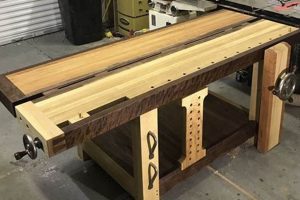
DIY Mobile Woodworking Bench
This exploration has underscored the multifaceted considerations inherent in the design and construction of a diy mobile woodworking bench. Critical aspects such as structural stability, work surface integrity, mobility solutions, integrated storage, clamping mechanisms, ergonomic principles, and electrical power access have been delineated. A comprehensive approach to these elements is essential for creating a functional and safe platform.
The successful implementation of a self-constructed, portable carpentry support hinges on meticulous planning and execution. The principles outlined herein serve as a foundation for further exploration and customization. As woodworking practices evolve, the capacity to adapt and innovate through personalized tool solutions remains a valuable asset. Continuing to refine and improve such self-built aids empowers craftspeople to optimize their workspaces and enhance their craft.
![Best Woodworking Tool Bench [Guide] | Build Stronger | Step-by-Step Guides, Tools & Inspiration to Build Beautiful Wooden Decor on a Budget](https://woodfromhome.com/wp-content/uploads/2026/04/th-85-300x200.jpg "Best Woodworking Tool Bench [Guide] | Build Stronger Step-by-Step Guides, Tools & Inspiration to Build Beautiful Wooden Decor on a Budget")