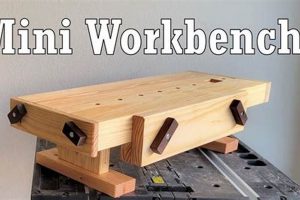
This specific workbench represents a convergence of traditional craftsmanship and modern design, typically intended for use in woodworking environments. It serves as a stable and versatile platform for a wide variety of woodworking tasks, from joinery and carving to assembly and finishing. An example would be a craftsman utilizing it to precisely cut dovetails for a cabinet, leveraging its solid construction to ensure accuracy.
The significance of this type of workbench lies in its contribution to precision, efficiency, and overall quality in woodworking projects. Its robust design minimizes vibration, leading to cleaner cuts and more accurate results. Historically, workbenches have been central to the craft, evolving from simple tables to specialized pieces of equipment that reflect the evolving needs of woodworkers. The value extends to both amateur and professional woodworkers.
The following sections will explore the key features that define this type of workbench, including its construction materials, design considerations, and various available configurations. Subsequent discussion will cover maintenance procedures to ensure the long-term durability of a high-quality woodworking surface.
Workbench Optimization
This section offers practical advice to maximize the utility and lifespan of a woodworking bench. Proper setup and maintenance are crucial for achieving optimal performance.
Tip 1: Level the Surface: A perfectly level surface is essential for accurate woodworking. Utilize shims under the legs to compensate for uneven floors. Test with a reliable spirit level in multiple directions.
Tip 2: Secure it Firmly: Anchor the bench to the floor if significant vibration is anticipated. This can improve stability and reduce movement during demanding tasks. Consider lag bolts into concrete floors.
Tip 3: Regularly Flatten the Top: Over time, the surface can become uneven due to wear and tear. Periodic flattening with hand planes or a router sled ensures a consistent working area. Implement this procedure at least annually.
Tip 4: Protect from Moisture: Wood is susceptible to changes in humidity. Apply a protective finish, such as oil or varnish, to prevent warping and cracking. Reapply as needed, especially in humid environments.
Tip 5: Optimize Vise Placement: Strategically position vises for maximum holding power and accessibility. Consider the types of projects typically undertaken and adjust vise locations accordingly.
Tip 6: Store Tools Efficiently: Integrate tool storage solutions, such as drawers or racks, to keep essential implements readily available. A well-organized workspace minimizes distractions and enhances productivity.
Tip 7: Clean Regularly: Remove wood shavings and debris after each use. This prevents build-up and helps maintain a clean and safe working environment. A shop vacuum is an efficient tool for this purpose.
Implementing these tips can extend the life of the workbench and contribute to more precise and efficient woodworking.
The following section will provide information concerning the types of woodworking projects best suited for this type of workbench and the associated tools that enhance its functionality.
1. Solid Wood Construction

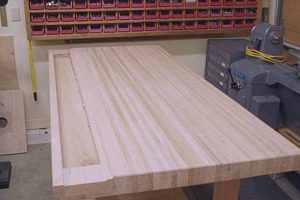
Solid wood construction is a fundamental characteristic directly influencing the performance and longevity of a woodworking bench. Its inherent properties dictate the bench’s stability, work-holding capacity, and overall suitability for demanding woodworking tasks.
- Vibration Dampening
Solid wood possesses natural vibration-dampening qualities absent in materials like particleboard or metal. This minimizes the transmission of vibrations generated during sawing, planing, and other operations, leading to cleaner cuts and more accurate results. For example, a bench constructed from dense hardwood like maple will exhibit superior vibration dampening compared to a bench made from softwood like pine, improving the precision of hand-cut dovetails.
- Load-Bearing Capacity
Solid wood offers a significantly higher load-bearing capacity than engineered wood products. This is essential for supporting heavy workpieces, vises, and woodworking tools without deflection or collapse. A properly constructed bench can withstand the forces exerted during tasks such as mortising or edge-jointing thick boards, ensuring a stable and safe working platform.
- Durability and Longevity
Solid wood benches, when properly maintained, can last for generations. The material’s inherent strength and resistance to wear and tear contribute to its long lifespan. Unlike benches constructed from composite materials, solid wood can be repaired and refinished multiple times, extending its usability and retaining its value over time. A bench handed down through a family of woodworkers is a testament to the durability of solid wood construction.
- Work-Holding Effectiveness
Solid wood provides a superior material for vise installation and work-holding features. Its density and structural integrity allow for secure attachment of vises and other clamping mechanisms. Vises mounted on solid wood benches are less prone to loosening or stripping, ensuring reliable work-holding during demanding operations. The ability to firmly secure workpieces is paramount for achieving precise and consistent results in woodworking projects.
These facets of solid wood construction collectively contribute to the overall functionality and value of a woodworking bench. The selection of appropriate wood species and construction techniques directly impacts the bench’s performance, durability, and suitability for a wide range of woodworking applications. The advantages inherent in solid wood make it a preferred material for discerning woodworkers.
2. Vise Integration

Vise integration represents a critical element in the functionality of a woodworking bench, directly influencing its versatility and effectiveness in securing workpieces for various operations. Its impact on precision, stability, and overall user experience cannot be overstated.
- Front Vise Functionality
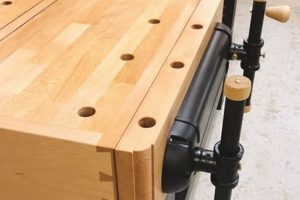
The front vise, typically mounted flush with the benchtop’s front edge, provides lateral clamping force for securing wide boards or panels. Its robust construction and smooth operation are crucial for planing, jointing, and other edge-working tasks. A well-integrated front vise should exhibit minimal racking and consistent clamping pressure across its entire jaw surface to ensure uniform contact with the workpiece, preventing slippage or distortion. The effectiveness of the front vise directly impacts the accuracy and efficiency of edge-related woodworking operations.
- Tail Vise and Dog Hole System
The tail vise, often paired with a series of dog holes running the length of the benchtop, enables end-to-end clamping of long boards or assemblies. Bench dogs, inserted into the dog holes, provide adjustable clamping points that complement the tail vise’s action. This system facilitates secure work-holding for tasks such as tenoning, dovetailing, and assembling frames. Proper alignment and spacing of dog holes are essential for maximizing the tail vise’s versatility and preventing binding or uneven clamping pressure. The precise integration of the tail vise and dog hole system significantly enhances the bench’s ability to handle diverse woodworking projects.
- Vise Jaw Material and Construction
The material and construction of the vise jaws directly influence their ability to grip workpieces securely and without marring. Hardwood jaws, often faced with leather or cork, provide a balance of holding power and surface protection. Precision-machined jaws with parallel faces ensure consistent clamping pressure across the entire contact area. Furthermore, the vise’s internal mechanism should operate smoothly and reliably, minimizing backlash and maximizing clamping force. High-quality vise jaws are essential for preventing workpiece damage and ensuring accurate results.
- Vise Placement and Ergonomics
The strategic placement of vises on the benchtop directly affects user comfort and efficiency. Vises should be positioned to minimize reaching and bending, promoting ergonomic work practices. Furthermore, the height of the vise jaws relative to the benchtop surface should be optimized for the woodworker’s stature and preferred working methods. Thoughtful vise placement can significantly reduce fatigue and improve overall productivity.
These integrated vise features are essential considerations when evaluating a woodworking bench. The quality and design of these components directly impact the bench’s ability to securely hold workpieces for a wide range of woodworking operations, ultimately influencing the accuracy, efficiency, and overall enjoyment of the craft.
3. Work Surface Flatness

Work surface flatness is a critical attribute of any high-quality woodworking bench. Its relevance to the functionality and precision achievable with a “garrett wade woodworking bench” is paramount. A non-planar surface undermines the accuracy of all subsequent operations.
- Impact on Joinery Accuracy
Non-flatness directly affects the precision of joinery. When mating surfaces are not coplanar, gaps and misalignments can occur, compromising the strength and aesthetics of the joint. For example, attempting to glue up a tabletop on an uneven surface will inevitably result in a warped or twisted final product. The “garrett wade woodworking bench”, when possessing a truly flat surface, provides the necessary reference plane for achieving tight, accurate joints.
- Influence on Planing and Surfacing
Surface flatness is indispensable for accurate planing and surfacing operations. A bench with an uneven surface will introduce inconsistencies and undulations into the workpiece, making it impossible to achieve a truly flat and smooth finish. Consider the task of flattening a wide board; any deviation in the benchtop’s flatness will be transferred to the board, necessitating additional corrective work. A properly flattened “garrett wade woodworking bench” ensures the consistent removal of material and facilitates efficient stock preparation.
- Role in Assembly Operations
During assembly, a flat bench surface provides a stable and consistent platform for aligning and clamping components. Misalignment or distortion during assembly can lead to structural weaknesses and aesthetic flaws in the finished piece. For example, assembling a cabinet frame on an uneven surface can result in a racked or twisted frame, requiring significant remedial work. The “garrett wade woodworking bench” contributes to accurate and reliable assembly by providing a true and stable reference plane.
- Maintenance and Long-Term Stability
Maintaining surface flatness requires ongoing attention and proper maintenance. Wood is a hygroscopic material, and changes in humidity can cause the benchtop to warp or cup over time. Periodic flattening with hand planes or specialized tools is necessary to restore the surface to its original condition. A “garrett wade woodworking bench”, often constructed from high-quality, well-seasoned wood, is designed to minimize these effects, but regular maintenance remains essential to preserve its flatness and accuracy over the long term.
The consistent application of these principles ensures the “garrett wade woodworking bench” remains a reliable and accurate foundation for all woodworking endeavors. Ignoring the importance of a flat work surface introduces error and compromises the quality of finished pieces. The value lies in enabling precision at every stage of the woodworking process.
4. Tool Storage Options
Efficient tool storage is an integral aspect of maximizing the functionality of a woodworking bench. The availability and design of storage solutions directly impact workflow, organization, and the overall efficiency of woodworking tasks.
- Integrated Drawers
Drawers incorporated into the bench’s design provide dedicated storage for frequently used hand tools, measuring instruments, and hardware. The size, number, and placement of these drawers are crucial considerations. Well-designed drawers, equipped with smooth-gliding hardware, minimize clutter and ensure easy access to essential implements, thereby streamlining the woodworking process. For instance, a drawer positioned directly below the benchtop can provide immediate access to chisels and marking gauges.
- Under-Bench Shelving
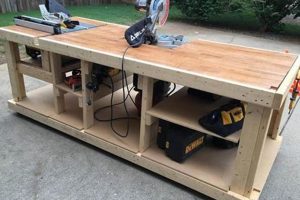
Open shelving beneath the bench offers storage for larger tools, power tools, and project materials. This configuration allows for quick visual assessment of available resources and facilitates efficient retrieval. The height and depth of the shelves should be optimized to accommodate the specific tools and materials used. An example would be storing planes, saws, and partially completed projects on shelves located directly beneath the work surface.
- Vise-Mounted Tool Racks
Tool racks attached to the vise or bench legs provide convenient storage for tools commonly used in conjunction with the vise, such as chisels, mallets, and marking knives. These racks keep tools readily accessible during operations that require frequent adjustments or tool changes. A rack mounted near the front vise, for example, can hold a selection of chisels used for paring and shaping joinery.
- Mobile Tool Carts
Mobile tool carts offer flexible storage solutions that can be positioned near the bench as needed. These carts typically include a combination of drawers, shelves, and pegboards, providing versatile storage options for a wide range of tools and accessories. A mobile cart can be used to store specialized tools or materials required for a particular project, allowing for a customized and adaptable workspace.
The strategic implementation of tool storage solutions enhances the usability of the woodworking bench. Organized storage promotes efficiency, reduces wasted time, and contributes to a safer and more productive woodworking environment. The selection and arrangement of these solutions should be tailored to the individual woodworker’s needs and workflow, maximizing the bench’s potential as a central hub for woodworking activities.
5. Overall Stability
Overall stability is a foundational attribute that directly influences the effectiveness and usability of any woodworking bench. In the context of a “garrett wade woodworking bench,” it determines the bench’s ability to resist movement and vibration during woodworking operations, thereby impacting precision, safety, and the quality of the finished product.
- Leg Design and Construction
The design and construction of the bench legs are critical for achieving overall stability. Leg thickness, material selection, and joinery methods all contribute to the bench’s resistance to racking and twisting. For example, thick, splayed legs connected to the benchtop with mortise-and-tenon joints provide superior stability compared to thin, straight legs attached with screws. A well-designed leg system ensures that the bench remains firmly planted, even under heavy loads or during vigorous planing.
- Weight Distribution and Mass
The distribution of weight and the overall mass of the bench contribute significantly to its stability. A heavier bench is inherently more resistant to movement than a lighter one. Weight distribution should be balanced to prevent tipping or rocking. For instance, incorporating a solid base or adding weight to the lower portions of the bench can lower the center of gravity, enhancing stability. A “garrett wade woodworking bench,” if designed with adequate mass and balanced weight distribution, will remain stable during demanding tasks.
- Joinery and Frame Rigidity
The rigidity of the bench’s frame is essential for preventing unwanted movement and maintaining stability. Strong joinery techniques, such as dovetails, mortise-and-tenons, and through-tenons, create a solid and interconnected structure. A rigid frame minimizes racking and ensures that the bench remains square and true over time. For example, a frame constructed with interlocking joinery will resist deformation under stress, providing a stable platform for woodworking operations.
- Floor Contact and Leveling
The manner in which the bench contacts the floor and its ability to be leveled are important factors in achieving overall stability. Uneven floors can cause the bench to rock or wobble, undermining its stability. Adjustable feet or shims can be used to compensate for unevenness and ensure that all four legs make solid contact with the floor. Proper floor contact ensures that the bench remains stable and level, providing a reliable surface for accurate woodworking.
These elements collectively contribute to the overall stability of a woodworking bench. A “garrett wade woodworking bench,” when properly designed and constructed, will exhibit excellent stability, providing a solid and reliable platform for a wide range of woodworking tasks. Its stable platform is a great help for woodworkers of all levels.
6. Dimensional Accuracy

Dimensional accuracy, in the context of woodworking, refers to the degree to which a finished piece conforms to its intended dimensions and tolerances. Its connection to a “garrett wade woodworking bench” is fundamental, as the bench serves as the primary platform upon which accurate cuts, joinery, and assembly are executed. The workbench, by its very nature, influences the dimensional outcomes of any project undertaken upon it. A stable, flat, and well-equipped bench facilitates precision, while conversely, a poorly constructed or maintained bench can contribute to inaccuracies.
A prime example of this connection lies in the creation of cabinetry. If a cabinet’s components are not dimensionally accurate, the final assembly will suffer from gaps, misalignments, and structural instability. A “garrett wade woodworking bench”, equipped with precise vises and a flat work surface, allows the woodworker to accurately cut and assemble cabinet parts, ensuring that the finished cabinet meets the specified dimensions. Similarly, when crafting fine furniture, dimensional accuracy is paramount for achieving aesthetic appeal and structural integrity. A stable workbench enables the precise execution of complex joinery, such as dovetails or mortise-and-tenons, which are crucial for creating strong and visually appealing furniture pieces. The absence of dimensional accuracy leads to compromised fit and finish, regardless of skill.
In conclusion, dimensional accuracy is not merely a desirable trait but a necessity for successful woodworking. The “garrett wade woodworking bench” serves as a critical facilitator in achieving this accuracy by providing a stable, reliable, and well-equipped platform for all woodworking operations. Maintaining the bench’s flatness, ensuring the vises are properly adjusted, and employing accurate measuring tools are all essential steps in maximizing dimensional accuracy and achieving high-quality results. Understanding the direct influence of the workbench on dimensional outcomes is paramount for any woodworker seeking to elevate the quality of their craft.
7. Ergonomic Design
Ergonomic design, in the context of a woodworking bench, pertains to the adaptation of the workspace to suit the physical and cognitive capabilities of the user. It directly impacts posture, reach, force exertion, and overall comfort, influencing productivity and reducing the risk of musculoskeletal disorders. The integration of ergonomic principles into a “garrett wade woodworking bench” is essential for promoting efficient and safe woodworking practices.
- Workbench Height Adjustment
The height of the workbench directly affects posture and reduces strain on the back, shoulders, and neck. An ergonomically designed “garrett wade woodworking bench” may incorporate adjustable legs or risers, allowing the user to customize the working height to suit their individual stature and the specific task at hand. For example, planing requires a lower working height than fine detail work. Adjustability reduces the need for excessive bending or reaching, minimizing fatigue and the risk of injury.
- Work Surface Accessibility
The dimensions and layout of the workbench should facilitate easy access to tools and materials, minimizing unnecessary reaching and movement. An ergonomically designed “garrett wade woodworking bench” will prioritize a clear and unobstructed work surface, with strategically placed storage solutions within easy reach. This reduces the time spent searching for tools and materials, improving efficiency and reducing the risk of accidents.
- Vise Placement and Operation
The location and operation of the vises on a workbench significantly impact the user’s posture and force exertion. An ergonomically designed “garrett wade woodworking bench” will feature vises positioned to minimize reaching and bending, and designed for smooth and effortless operation. For example, quick-release vises reduce the need for repetitive cranking, minimizing hand and wrist strain. Strategic vise placement ensures efficient work-holding while maintaining a comfortable and balanced posture.
- Material and Surface Properties
The materials used in the construction of a “garrett wade woodworking bench,” particularly the work surface, can impact comfort and reduce fatigue. A smooth, flat surface minimizes friction and allows for efficient movement of tools and materials. Using materials that dampen vibration can also reduce strain on the hands and arms. A well-chosen surface material contributes to a more comfortable and productive woodworking experience.
The facets of ergonomic design collectively enhance the usability and safety of a “garrett wade woodworking bench.” By prioritizing user comfort, reducing strain, and promoting efficient workflow, ergonomic design principles contribute to a more enjoyable and sustainable woodworking practice. Ignoring ergonomic considerations can lead to discomfort, fatigue, and increased risk of injury, ultimately hindering productivity and the quality of the work produced. The integration of ergonomic features is an investment in the woodworker’s well-being and the long-term viability of their craft.
Frequently Asked Questions
This section addresses common inquiries regarding workbenches, providing detailed information to assist woodworkers in making informed decisions.
Question 1: What are the key considerations when selecting a workbench for woodworking?
Primary considerations include stability, work surface flatness, vise integration, and tool storage capabilities. A robust construction is essential to minimize vibration and maintain dimensional accuracy. Surface flatness directly affects the precision of joinery and planing operations. Vises provide secure work-holding, while efficient tool storage promotes organization and accessibility.
Question 2: How does the material composition of a workbench influence its performance?
Solid hardwood, such as maple or beech, offers superior stability, durability, and vibration dampening compared to engineered wood products. Softwoods, like pine, are less expensive but lack the strength and rigidity required for demanding woodworking tasks. The type of wood used directly impacts the bench’s ability to withstand stress and maintain its shape over time.
Question 3: What are the recommended dimensions for a woodworking bench?
Workbench dimensions depend on the user’s height, the type of woodworking projects undertaken, and available workspace. A general guideline is to position the benchtop at approximately wrist height when standing. A length of 6 to 8 feet and a width of 24 to 36 inches provides ample work surface for most applications.
Question 4: How should a woodworking bench be maintained to ensure its longevity?
Regular maintenance includes flattening the work surface, tightening joinery connections, and applying a protective finish to prevent moisture absorption. The bench should be cleaned regularly to remove wood shavings and debris. Periodically inspect and lubricate vise mechanisms to ensure smooth operation. Consistent maintenance prolongs the bench’s lifespan and preserves its accuracy.
Question 5: What is the significance of vise placement on a woodworking bench?
Strategic vise placement maximizes work-holding capacity and accessibility. A front vise is typically positioned flush with the benchtop’s front edge, while a tail vise, often paired with dog holes, enables end-to-end clamping. Vise placement should minimize reaching and bending, promoting ergonomic work practices. Proper vise alignment is crucial for secure and consistent clamping pressure.
Question 6: Can a woodworking bench be customized to meet specific needs?
Customization options include adjusting the bench height, adding drawers or shelves, installing specialized vises, and modifying the work surface. Many woodworkers adapt their benches to accommodate specific tools or techniques. Customization enhances the bench’s functionality and allows woodworkers to create a workspace that perfectly suits their individual requirements.
These answers offer practical guidance for selecting, maintaining, and customizing a woodworking bench. A thorough understanding of these aspects is essential for optimizing the woodworking experience and achieving high-quality results.
The following section will delve into specific woodworking projects well-suited for this workbench and explore tools enhancing its utility.
Final Assessment
This exploration has elucidated the defining characteristics of the “garrett wade woodworking bench”, emphasizing its construction, design, and application. The importance of solid wood, effective vise systems, surface flatness, and overall stability has been highlighted. Tool storage solutions and ergonomic design have been addressed as essential aspects of bench functionality. An awareness of these elements is essential for maximizing the potential of a woodworking bench in producing high-quality work.
The information presented aims to provide a foundation for understanding the role of the “garrett wade woodworking bench” in woodworking. Continued engagement with the craft, and a commitment to the principles of quality and precision, will ultimately determine the success of any woodworking endeavor. The selection, maintenance, and utilization of this tool remain critical factors in achieving superior results.