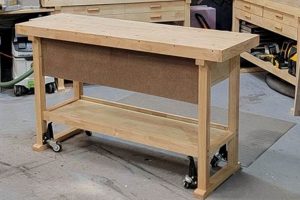
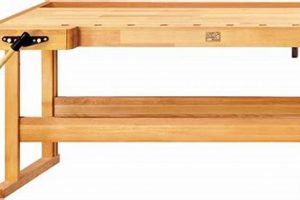
A substantial and stable work surface, specifically designed for woodworking tasks, is a cornerstone of any productive workshop. Typically constructed from hardwood or a combination of hardwood and softwood, this platform provides a solid foundation for a variety of operations, from sawing and planing to joinery and assembly. For example, a craftsperson might use this robust structure to securely clamp a workpiece while hand-cutting dovetails.
The value of a well-built and properly equipped station lies in its capacity to enhance accuracy, efficiency, and safety. Its presence promotes better posture, reduces fatigue, and minimizes the risk of accidents. Throughout history, these dedicated spaces have evolved from simple trestle tables to complex, feature-rich designs, reflecting the changing needs and techniques of woodworking professionals and enthusiasts.
The subsequent sections will delve into the specific attributes that contribute to the effectiveness of such a workspace, exploring considerations like material selection, dimensions, vise mechanisms, and storage solutions. These elements collectively determine the utility and longevity of this essential piece of equipment.
Enhancing Woodworking Precision and Efficiency
Optimizing a woodworking environment requires careful attention to the primary work surface. The following recommendations aim to improve project outcomes and user experience.
Tip 1: Select a Bench with Appropriate Mass: A heavier structure resists movement during demanding tasks such as planing or heavy sawing. Inadequate weight can compromise accuracy and increase effort.
Tip 2: Ensure a Flat and Stable Work Surface: The top should be meticulously flattened to provide a reliable reference plane. Regular maintenance, including planing or resurfacing, is essential to correct any warping or cupping.
Tip 3: Integrate High-Quality Vises: Consider the type and placement of vises. A robust front vise coupled with a tail vise offers versatile clamping options for securing a wide range of workpiece sizes and shapes.
Tip 4: Prioritize Effective Work Holding Solutions: Supplement vises with bench dogs, holdfasts, and other accessories to enhance workpiece stability and facilitate various joinery techniques. Explore different options to find those suited for particular projects.
Tip 5: Optimize Bench Height: The ideal height allows for comfortable and efficient hand tool use. A bench that is too low can strain the back, while one that is too high can impede leverage. Adjust height based on common tasks.
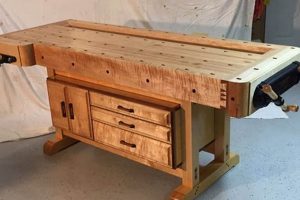
Tip 6: Incorporate Practical Storage: Integrate drawers or shelves to keep frequently used tools within easy reach. Organized storage minimizes wasted time and reduces clutter on the work surface.
Tip 7: Maintain Adequate Lighting: Proper illumination is crucial for precision work and safety. Supplement overhead lighting with task lighting focused directly on the work area.
Adherence to these principles enhances precision, reduces physical strain, and promotes a safer, more productive workflow within the woodworking space. The benefits of a well-configured workspace extend beyond efficiency, contributing to the overall quality and enjoyment of woodworking projects.
The subsequent section will explore specific models, considering their construction quality, features, and suitability for various woodworking applications.
1. Solid Wood Construction

Solid wood construction forms the bedrock of a durable and reliable work surface. Its properties directly influence a station’s capacity to withstand the rigors of woodworking tasks, impacting stability, longevity, and overall performance. Its relevance to the utility of a robust platform is paramount.
- Dimensional Stability
Solid wood exhibits inherent characteristics regarding expansion and contraction in response to changes in humidity. A station crafted from properly seasoned and joined solid wood resists warping and twisting, maintaining a flat and true work surface over time. Failure to manage moisture content can lead to significant deformation, compromising accuracy and functionality.
- Load-Bearing Capacity
The density and strength of solid wood provide the necessary structural integrity to support heavy workpieces and withstand the forces generated during tasks such as planing or mortising. Lower-quality materials or composite construction may deflect under load, reducing precision and potentially leading to structural failure. Solid hardwoods, such as maple or beech, typically offer superior load-bearing capabilities.
- Vibration Dampening
Solid wood effectively dampens vibrations produced by power tools or hand tools. This reduces noise, enhances precision, and minimizes fatigue during prolonged use. Engineered materials often lack the inherent damping characteristics of solid wood, resulting in increased noise levels and reduced workpiece stability. This characteristic is especially important when using hand planes or chisels.
- Repairability and Longevity
Solid wood allows for repairs and refinishing, extending the useful life of the station. Dents, scratches, or other damage can be addressed through sanding, planing, or patching, restoring the original functionality and appearance. Conversely, surfaces constructed from veneered or laminated materials are difficult or impossible to repair, potentially requiring complete replacement in the event of significant damage.
The selection of solid wood as the primary construction material for a woodworking structure ensures a robust, stable, and enduring platform for a wide range of woodworking activities. The properties inherent in solid wood directly contribute to enhanced precision, reduced vibration, and increased longevity, solidifying its importance in any professional setting.
2. Vise Mechanism Quality

The effectiveness of a work surface in securing workpieces is fundamentally linked to the quality of its vise mechanism. The precision and reliability of these components directly influence the outcome of woodworking tasks and the overall usability of the station. Inferior vise mechanisms undermine the potential of even the most robust structure.
- Clamping Force and Stability
A high-quality vise should deliver substantial and consistent clamping force across the entire jaw surface. Adequate clamping pressure prevents workpiece slippage during demanding operations such as planing or jointing. A vise with insufficient clamping force compromises accuracy and poses a safety hazard. This is particularly critical when working with hardwoods or irregularly shaped items.
- Jaw Parallelism and Accuracy
Parallel jaws are essential for applying even pressure to the workpiece. Misalignment or warping of the vise jaws results in uneven clamping, potentially distorting the material or preventing secure holding. Precision machining and robust construction are necessary to ensure consistent jaw parallelism over the life of the vise. Deviation in parallelism compromises dimensional accuracy, thus resulting in misaligned wood joints.
- Smooth Operation and Minimal Play
A well-designed vise operates smoothly and exhibits minimal play in the moving parts. Rough operation, excessive backlash, or binding hinder precise adjustments and reduce user control. High-quality threads, close tolerances, and durable materials contribute to smooth operation and long-term reliability. Excessive wear and tear result in imprecision over the lifespan of the station.
- Material Quality and Durability
The vise mechanism should be constructed from high-quality materials, such as cast iron or steel, to withstand the stresses of repeated use. Inferior materials are prone to cracking, bending, or premature wear, rendering the vise ineffective. Durable construction is essential for maintaining performance and ensuring longevity, thereby maximizing the investment in the station.
The aforementioned attributes underscore the critical role of vise mechanism quality in determining the overall effectiveness of a woodworking structure. A well-engineered and meticulously constructed vise translates directly into enhanced precision, improved safety, and increased user satisfaction. The investment in a high-quality vise mechanism represents a commitment to achieving superior woodworking results.
3. Dimensional Stability

Dimensional stability, referring to a material’s ability to maintain its size and shape despite changes in environmental conditions, is a crucial factor in the performance and longevity of a woodworking station. These conditions involve fluctuations in humidity and temperature which directly impact wooden structures, influencing their propensity to warp, twist, or crack. A Grizzly woodworking bench, typically constructed from solid wood or a combination of materials, is significantly affected by dimensional stability. For example, a bench top made of improperly seasoned wood may expand excessively during humid summer months, leading to an uneven work surface. Conversely, during dry winter months, the same bench may contract, potentially compromising the integrity of joints and fastenings.
The consequences of inadequate dimensional stability extend beyond mere aesthetic concerns. A warped bench top impairs the accuracy of woodworking operations, making it difficult to achieve precise cuts and joinery. Furthermore, instability in the bench structure can undermine the effectiveness of vises and other work-holding mechanisms, reducing clamping force and increasing the risk of workpiece slippage. A scenario where a craftsman attempts to plane a long board on a warped surface illustrates the tangible impact of diminished dimensional stability. The resulting unevenness complicates the task and potentially compromises the quality of the finished piece. Similarly, inaccuracies are encountered while using a structure that exhibits noticeable movement.
Addressing dimensional stability in a Grizzly woodworking bench requires careful attention to material selection, construction techniques, and environmental control. Selecting kiln-dried lumber with a moisture content appropriate for the local climate is paramount. Employing joinery methods that accommodate wood movement, such as mortise-and-tenon joints with elongated mortises, helps mitigate the effects of seasonal changes. Moreover, maintaining a stable humidity level in the workshop through the use of a dehumidifier or humidifier can significantly reduce the risk of warping and cracking. Ensuring a stable, structurally sound Grizzly woodworking bench requires careful preparation in constructing the structure and maintaining environmental conditions to minimize seasonal changes on the materials.
4. Work Holding Options
The integration of effective work holding options is critical to realizing the full potential of a woodworking structure. A station without versatile and reliable methods for securing workpieces severely limits its utility, regardless of material quality or construction. The ability to firmly and predictably position material for cutting, shaping, and assembly operations directly influences precision, safety, and efficiency. The presence of varied work-holding features allows completion of a broader range of projects than would be possible with a simple flat surface.
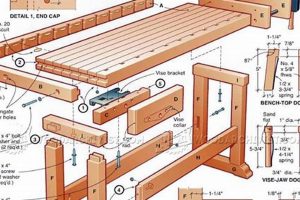
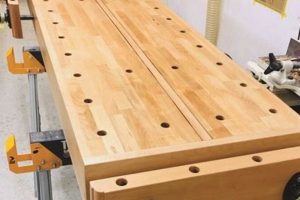
A typical configuration might include a front vise, tail vise, and an array of bench dog holes. The front vise, often a quick-release or traditional screw vise, secures material along the front edge of the station. The tail vise, coupled with bench dogs, provides clamping force across the bench’s width. These mechanisms enable the woodworker to hold boards flat on the bench surface and on the bench edge for specific woodworking activities. The bench dog holes, strategically placed, facilitate the use of various accessories such as holdfasts, clamping squares, and specialized jigs. A craftsman crafting a dovetailed drawer may employ a combination of the front vise and a clamping square, securing the drawer sides while hand-cutting the dovetails. Another example, a carving artisan uses holdfasts to securely position a piece for detailed work. These examples showcase the vital interrelation between workpiece control and construction proficiency.
The effectiveness and accessibility of work holding directly impacts project accuracy and efficiency. A platform equipped with comprehensive work holding capabilities provides a foundation for consistent and predictable results. In essence, the quality and variety of work holding options significantly enhance the overall utility and value of a woodworking station, enabling complex joinery, intricate shaping, and precise assembly. Without versatile and secure holding options, even the most robust and precisely built bench is fundamentally compromised, restricting the scope and quality of possible projects.
5. Optimized Height
The height of a woodworking structure is a critical ergonomic factor that significantly impacts posture, efficiency, and safety. Optimal height minimizes physical strain and maximizes control during various woodworking tasks. The height should be customizable to fit the user, or have the appropriate height for the user.
- Ergonomic Considerations and Posture
A station set at an inappropriate height forces the user to assume awkward postures, leading to fatigue and potential musculoskeletal injuries. If too low, the user will be forced to hunch over the work, straining the back and neck. Conversely, a work surface set too high requires the user to raise the shoulders, leading to shoulder and arm fatigue. An optimized height promotes an upright posture, minimizing strain and maximizing endurance during extended periods of woodworking. For example, proper station height leads to minimized back strain and fatigue.
- Efficiency and Leverage
An accurately dimensioned work surface enables efficient use of hand tools. The height allows the user to apply appropriate leverage for tasks such as planing, sawing, and chiseling. If too low, the user cannot generate sufficient force. Too high, and the user loses control and precision. Proper height provides an optimal balance between power and control, resulting in cleaner cuts, smoother surfaces, and reduced effort. For example, optimized station height increases efficiency when using hand tools.
- Workpiece Stability and Control
Station height influences the stability of the workpiece during processing. A bench at the proper height allows the user to exert downward pressure on the material, minimizing movement and vibration. If too low, the user may struggle to maintain adequate downward force. If too high, instability can occur. Optimized height facilitates secure workpiece positioning, enhancing control and reducing the risk of errors or accidents. Secure material positions lead to increased control over project.
- Tool Access and Organization
Station height influences accessibility to tools and accessories. A work surface at a comfortable height allows for easy access to commonly used tools stored on or beneath the structure. The need to bend over or reach excessively for tools reduces efficiency and increases the risk of dropping or misplacing them. Proper height facilitates efficient workflow, minimizing disruptions and maximizing productivity. Accessible tools increase workflow.
In conclusion, optimized height is an essential element in the overall design of a woodworking station. A height consideration promotes comfort, reduces fatigue, enhances precision, and increases efficiency. Its effects on the ergonomic, and accessible, tool access characteristics make it critical when working with wood.
6. Integrated Storage

Efficient organization and accessibility are paramount in a functional workshop. Integrated storage solutions within a woodworking station directly contribute to a streamlined workflow, reducing clutter and improving productivity. The following explores specific facets of integrated storage that enhance the utility of a woodworking structure.
- Tool Placement and Organization
Dedicated compartments for hand tools, power tools, and measuring instruments reduce search time and promote a systematic approach to woodworking tasks. A well-organized setup minimizes disruptions and prevents damage to tools, ensuring they are readily available when needed. For example, drawers with custom dividers or dedicated shelves can provide secure and easily accessible storage for chisels, planes, saws, and other essential tools. The presence of this element increases efficiency during projects.
- Material Storage
Storage for lumber, hardware, and consumables keeps essential supplies within easy reach, minimizing interruptions and preventing materials from becoming misplaced or damaged. Options such as drawers or shelves provide organized space for storing screws, nails, sandpaper, and project components. Organized space minimizes the clutter and disruptions during the projects.
- Dust Collection Integration
Incorporating dust collection components within the workstation, such as integrated dust ports or dedicated space for a dust collector, promotes a cleaner and safer working environment. Reducing dust accumulation minimizes health risks and improves visibility. This may involve a built-in cabinet to house a small dust collector or strategically placed ports for connecting to a larger system. A clean working environment is a safer environment for woodworking and increases accuracy due to the increased visibility.
- Ergonomic Design and Accessibility
Integrated storage should be designed with ergonomic principles in mind, ensuring that tools and materials are easily accessible without excessive bending, reaching, or straining. Drawers and shelves should be positioned at appropriate heights, and frequently used items should be placed within easy reach. A well-designed storage system minimizes physical strain and promotes a comfortable and efficient workflow. A workbench with accessible tools and supplies improves working on a project.
A comprehensive approach to integrated storage enhances workflow efficiency, maximizes workspace utilization, and promotes a safer, more organized, and more productive woodworking environment. Prioritizing thoughtful storage solutions transforms a woodworking station from a simple work surface into a well-equipped and highly functional workspace. The design should be considered to improve productivity, ensure safety, and keep clutter to a minimum.
Frequently Asked Questions About Woodworking Workspaces
The following addresses common inquiries regarding this tool, its components, and their suitability for various applications.
Question 1: What factors determine the optimal dimensions of a woodworking surface?
The ideal size depends on the type and scale of projects commonly undertaken. Larger projects necessitate a greater surface area, while smaller projects may be accommodated by a more compact design. Available workspace and storage constraints should also be considered.
Question 2: What are the advantages of solid hardwood versus softwood for bench construction?
Hardwoods, such as maple or beech, offer superior durability and resistance to wear, making them well-suited for high-stress applications. Softwoods, such as pine or fir, are less expensive but more susceptible to damage. The choice depends on budget and anticipated usage intensity.
Question 3: How critical is the flatness of the surface for precise woodworking?
An accurately flattened surface is essential for achieving precise cuts, consistent joinery, and reliable assembly. Any deviations in flatness can lead to inaccuracies and compromised results. Regular maintenance, including planing or resurfacing, is vital for maintaining a true surface.
Question 4: What are the key considerations when selecting a vise mechanism?
Clamping force, jaw parallelism, smooth operation, and material quality are essential attributes to consider. A well-engineered vise should provide substantial and consistent clamping pressure without introducing distortion or play.
Question 5: How does bench height affect user ergonomics and efficiency?
A height promotes good posture, minimizes strain, and allows for efficient leverage when using hand tools. A work surface that is either too high or too low can lead to fatigue and potential musculoskeletal issues. Experiment with various heights to determine the optimal setting.
Question 6: What are the benefits of incorporating integrated storage within the structure?
Integrated storage reduces clutter, improves organization, and provides convenient access to tools and materials. Well-designed storage solutions enhance workflow efficiency and maximize workspace utilization.
Careful consideration of these questions contributes to a more informed decision-making process when selecting or customizing a woodworking station.
The subsequent section will provide guidance on maintaining and caring for woodworking structures to ensure longevity and optimal performance.
Grizzly Woodworking Bench
This discussion explored key aspects pertaining to the tool, emphasizing factors that influence its overall utility and longevity. Elements such as solid wood construction, vise mechanism quality, dimensional stability, work holding options, optimized height, and integrated storage were examined in detail. The objective was to provide a comprehensive understanding of the elements contributing to a stable and efficient work platform.
The effectiveness of a woodworking project hinges on preparation and equipment. Investing in a suitable station represents a commitment to safety, precision, and enduring performance. Future advancements will likely focus on enhanced ergonomics, improved material science, and integration of digital technologies, yet the fundamental principles of stability and work holding remain paramount.