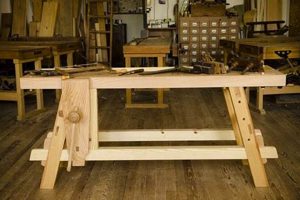
A portable workstation designed for woodworking tasks, these units offer a stable surface for cutting, assembling, and finishing projects. Characterized by their collapsibility, they provide a space-saving solution for hobbyists and professionals operating in environments with limited square footage. They typically consist of a work surface supported by a folding frame, often constructed from metal, wood, or durable composite materials.
The utility of a compact, easily stored work area is significant. It enables woodworking to occur in locations where a permanent setup is impractical. Historically, these types of benches evolved from the need for itinerant craftsmen to carry their tools and working surfaces. The benefits include flexibility, ease of transport, and the ability to quickly set up or dismantle a workspace as needed. This offers advantages for apartment dwellers, individuals with small workshops, or those who engage in on-site carpentry work.
Subsequent sections will detail the different types available, factors to consider when selecting a suitable model, and insights into maximizing its functional potential within various woodworking applications.
Enhancing Utility
The following guidance aims to assist users in optimizing the performance and lifespan of their portable woodworking platform, facilitating effective project execution while maintaining the equipment’s integrity.
Tip 1: Prioritize Stability: Before commencing any task, ensure the unit is placed on a level surface. Uneven terrain can compromise stability, leading to inaccurate cuts and potential damage. Adjust leveling feet, if equipped, or utilize shims to achieve a stable base.
Tip 2: Secure Workpieces: Employ clamps or vises to firmly secure the material being worked on. This prevents movement during cutting, drilling, or shaping, enhancing precision and mitigating the risk of injury. Choose clamping mechanisms appropriate for the material’s thickness and shape.
Tip 3: Manage Load Capacity: Adhere to the manufacturer’s specified weight limit. Exceeding this limit can cause structural damage, potentially resulting in collapse. Distribute weight evenly across the work surface to avoid localized stress points.
Tip 4: Implement Dust Control: Woodworking generates substantial dust. Utilize a vacuum system or dust collection port, if available, to maintain a clean workspace and prevent respiratory irritation. Regularly clear debris from the folding mechanisms to ensure smooth operation.
Tip 5: Regularly Inspect Hardware: Periodically examine bolts, hinges, and locking mechanisms for wear or loosening. Tighten any loose fasteners and replace damaged components promptly to maintain structural integrity and prevent accidents.
Tip 6: Optimize Storage Practices: When not in use, store the unit in a dry environment to prevent corrosion or warping. Avoid stacking heavy objects on top of it, as this can deform the work surface or damage the folding mechanism.
These measures are essential for safeguarding the equipment’s longevity and maximizing its functional capabilities. Careful application of these principles will contribute to a safer and more efficient woodworking environment.
The following sections will explore the integration of this equipment into various woodworking project types and the impact on workflow optimization.
1. Portability

The defining characteristic of a folding woodworking bench is its portability. This attribute stems directly from its design, enabling ease of transport and setup. The folding mechanism allows the bench to collapse into a compact form, facilitating storage in limited spaces and transportation to job sites. The correlation between portability and the folding design is causal: the folding design enables portability. Without the ability to fold, the bench would be significantly less adaptable to diverse work environments.
The importance of portability manifests in various scenarios. For contractors, a portable bench enables on-site material preparation and assembly, reducing the need for extensive pre-fabrication in a fixed workshop. Homeowners with limited workshop space benefit from the ability to quickly set up a stable work surface when needed and store it away when not in use. Consider a carpenter installing trim in a client’s home. A standard, non-folding bench would be impractical. A folding bench, however, allows for precise cuts and assembly within the workspace, optimizing efficiency and minimizing disruption.
Understanding the significance of portability influences the selection process. Factors such as weight, folded dimensions, and the presence of carrying handles become paramount. Ultimately, portability transforms the folding woodworking bench from a static piece of equipment into a dynamic tool, extending its utility beyond the confines of a traditional workshop. Failure to appreciate the practical implications of portability can lead to the selection of a bench ill-suited to the user’s specific needs and working conditions.
2. Stability

The stability of a folding woodworking bench is a critical performance characteristic directly impacting safety, precision, and the overall quality of woodworking tasks. Inherent to the design of folding structures, achieving adequate stability necessitates careful engineering and material selection. Compromised stability undermines the very purpose of a workbench, negating the benefits of portability and space-saving design.
- Leg Locking Mechanisms
The design and robustness of leg locking mechanisms are paramount for ensuring stability. These mechanisms, typically consisting of levers, pins, or clamps, prevent unwanted collapse during use. Inadequate locking mechanisms can lead to sudden instability under load, posing a safety hazard and compromising project accuracy. For example, a poorly designed locking mechanism may fail under the weight of a large workpiece, causing the bench to buckle and potentially injuring the user. The effectiveness of the locking system directly translates to the bench’s overall reliability and safe operational load capacity.
- Frame Material and Construction
The material composition and construction of the bench’s frame significantly influence its stability. Steel frames generally offer superior rigidity and resistance to bending compared to aluminum or composite alternatives. The gauge of the steel, welding quality, and cross-bracing design contribute to the frame’s ability to withstand stress and maintain a stable platform. For instance, a bench with a thin-walled steel frame and inadequate cross-bracing may exhibit excessive flexing under load, resulting in inaccurate cuts and difficulty in performing precise joinery.
- Foot Design and Surface Contact
The design of the bench’s feet and their contact with the supporting surface are critical for stability. Wide, non-slip feet distribute the bench’s weight over a larger area, reducing the likelihood of slippage or sinking into soft surfaces. Adjustable feet allow for leveling the bench on uneven terrain, ensuring a stable working platform. Conversely, small or smooth feet may provide insufficient grip, particularly on slick surfaces, leading to instability and potential movement during operation. The type of flooring in the workspace should also be taken into account.
- Weight Distribution and Load Capacity
Even weight distribution and adherence to the manufacturer’s stated load capacity are essential for maintaining stability. Overloading the bench or concentrating weight in a single area can create excessive stress on the frame and locking mechanisms, potentially leading to failure. Distributing weight evenly across the work surface minimizes stress points and maximizes the bench’s ability to support the intended load. Exceeding the load capacity not only compromises stability but also increases the risk of structural damage and potential injury.
These factors collectively define the stability of a folding woodworking bench. Understanding these elements is critical when evaluating different models and selecting a bench suitable for the intended woodworking tasks. Prioritizing stability ensures a safe and productive working environment, enhancing both the quality and enjoyment of the woodworking experience.
3. Load capacity

Load capacity is a primary factor determining the suitability of a folding woodworking bench for specific tasks. It represents the maximum weight, uniformly distributed, the bench can safely support without compromising structural integrity or stability. Ignoring this specification can lead to equipment failure and potential injury.
- Material Properties and Load Bearing
The materials used in the bench’s construction directly dictate its load capacity. High-strength steel frames inherently support greater weight than aluminum or plastic composites. For example, a bench with a steel frame might accommodate 350 pounds, while a comparable model constructed from lightweight aluminum might be limited to 150 pounds. Choosing a bench with insufficient load capacity for anticipated project weights risks structural failure and potential hazard.
- Design and Structural Support
The design of the folding mechanism and the presence of reinforcing elements influence load-bearing capabilities. A bench with robustly designed leg-locking systems and cross-bracing exhibits superior stability and supports heavier loads. Conversely, a flimsy design with minimal support is prone to buckling or collapse under stress. Consider a scenario where a woodworker attempts to plane a large, dense hardwood board on a bench with inadequate support; the resulting stress could overwhelm the structure, leading to instability and inaccurate work.
- Impact of Dynamic vs. Static Loads
Load capacity ratings typically refer to static loads weights applied gradually and steadily. Dynamic loads, such as those generated by hammering or forceful sawing, exert significantly greater stress on the bench. A bench rated for 200 pounds static load might be unsuitable for tasks involving heavy impact forces, as these forces can momentarily exceed the design limits. Therefore, assessing the intended use and considering the potential for dynamic loading are crucial for selecting an appropriate bench.
- Consequences of Overloading
Exceeding the manufacturer’s specified load capacity has demonstrable consequences. Over time, it can lead to permanent deformation of the frame, weakening of joints, and failure of locking mechanisms. In extreme cases, overloading can result in catastrophic collapse, posing a severe safety risk. Even if immediate failure does not occur, repeated overloading diminishes the bench’s long-term reliability and service life. Prudent users adhere strictly to the recommended load limits to ensure safe and effective operation.
The relationship between load capacity and the functionality of a folding woodworking bench is undeniable. Selecting a bench with a load capacity commensurate with the anticipated project weights is paramount for ensuring both safety and efficient work. Properly accounting for the materials used, design elements, the nature of applied forces, and adherence to load limits will allow woodworkers to leverage the portability and convenience of a folding workbench, ensuring long-term usability.
4. Surface area
The surface area of a folding woodworking bench directly influences the scope and efficiency of woodworking projects that can be accommodated. It represents the available workspace and must align with the typical dimensions of materials being processed. Insufficient surface area constrains project size and impedes workflow, while excessive surface area may compromise portability and storage convenience.
- Workpiece Dimensions and Accommodation
The primary determinant of required surface area is the size of the workpieces that will be manipulated. A bench intended for small-scale projects, such as crafting or model making, requires less surface area than one used for larger tasks like furniture assembly or cabinet making. For instance, a bench with a 24″ x 48″ surface may adequately accommodate smaller projects, but it would prove inadequate for cutting or assembling a full-size door panel. The user must therefore evaluate the typical dimensions of materials to be used and select a bench with sufficient surface area to comfortably accommodate those dimensions.
- Tool Placement and Accessibility
Surface area also dictates the amount of space available for tool placement and accessibility during project execution. Ample surface area allows for convenient organization of tools, hardware, and measuring devices within easy reach. This reduces the need to constantly rearrange the workspace and improves overall efficiency. Consider a scenario where a woodworker is assembling a complex joint. Adequate surface area ensures that all necessary tools, such as chisels, mallets, and squares, are readily accessible, minimizing interruptions and streamlining the assembly process. Limited surface area can lead to clutter and necessitate frequent tool retrieval, hindering productivity.
- Clamping and Securing Capabilities
The ability to effectively clamp and secure workpieces is closely tied to surface area. Larger surfaces often provide more options for clamp placement, enabling secure fixation of irregular or oversized materials. A bench with limited surface area may restrict clamping options, making it difficult to firmly hold workpieces during cutting, shaping, or assembly operations. For instance, a bench with a small surface area may not accommodate the use of bar clamps for edge-gluing wide panels, necessitating alternative methods that may be less secure or precise.
- Impact on Portability and Storage
Increasing surface area inevitably impacts the bench’s portability and storage requirements. Larger work surfaces generally translate to larger folded dimensions and increased weight, making the bench more difficult to transport and store. There is a trade-off between workspace and portability that must be considered. A bench with a very large surface area may offer ample workspace, but its size and weight may negate the benefits of its folding design, rendering it impractical for users with limited storage space or those who require frequent transport. The user needs to balance desired surface area with the practical constraints of portability and storage.
The optimal surface area for a folding woodworking bench is a function of the types of projects undertaken, the tools used, and the available space for storage and transport. By carefully evaluating these factors, users can select a bench that provides sufficient workspace without compromising portability or convenience.
5. Material strength

Material strength is a critical determinant of a folding woodworking bench’s overall performance, longevity, and safety. It directly impacts the bench’s ability to withstand load, resist deformation, and maintain structural integrity under repeated use. The choice of materials significantly influences the bench’s suitability for various woodworking tasks and its lifespan in diverse working conditions.
- Frame Composition and Load-Bearing Capacity
The composition of the frame, typically constructed from steel, aluminum, or composite materials, directly correlates with its load-bearing capacity. Steel frames offer superior strength and rigidity, enabling them to support heavier workpieces and withstand greater stress. Aluminum frames, while lighter, generally have a lower load capacity and may be more susceptible to bending or deformation under heavy loads. Composite materials offer a balance between weight and strength, but their long-term durability under sustained stress may vary. The selection of frame material must align with the anticipated load and usage patterns of the bench.
- Surface Material and Resistance to Damage
The material used for the work surface, such as hardwood, plywood, or laminate, impacts its resistance to scratches, dents, and abrasion. Hardwood surfaces, like maple or beech, offer excellent durability and resistance to damage, making them suitable for heavy-duty tasks. Plywood surfaces provide a more economical option, but they may be more prone to splintering or delamination over time. Laminate surfaces offer a smooth, easy-to-clean surface, but they may be susceptible to scratching or chipping under impact. The choice of surface material should consider the types of tools and materials that will be used on the bench and the level of wear and tear it is expected to endure.
- Joint Strength and Structural Integrity
The strength of the joints connecting the various components of the bench is crucial for maintaining its structural integrity. Welded steel joints offer exceptional strength and rigidity, ensuring that the frame remains stable under load. Bolted joints, while providing adjustability, may be more prone to loosening over time, requiring periodic tightening. Glued joints, commonly used in wooden benches, rely on the strength of the adhesive and the precision of the joinery to maintain structural integrity. The design and construction of the joints must be robust enough to withstand the stresses imposed by repeated folding and unfolding, as well as the loads applied during woodworking tasks.
- Hardware Durability and Corrosion Resistance
The durability and corrosion resistance of the hardware, such as hinges, latches, and fasteners, are essential for the long-term functionality of a folding woodworking bench. Steel hardware, particularly when treated with a corrosion-resistant coating, offers excellent strength and durability. Brass hardware provides superior corrosion resistance but may be less strong than steel. Plastic hardware offers a lightweight and corrosion-resistant option, but it may be more prone to breakage under stress. The selection of hardware should consider the intended operating environment and the potential for exposure to moisture or corrosive substances.
The interplay between these material-related attributes determines the long-term viability and performance of a folding woodworking bench. The judicious selection of materials, based on a clear understanding of their respective strengths and weaknesses, is paramount for ensuring a safe, reliable, and durable workspace.
6. Folding mechanism

The folding mechanism is the defining component of a folding woodworking bench, establishing its portability and space-saving attributes. Its efficacy directly determines the bench’s ease of use, stability in both deployed and collapsed states, and overall lifespan. The mechanism’s design, materials, and construction are central to the bench’s ability to transition between a functional workspace and a compact storage unit. Failure in this component negates the primary advantage of this type of bench.
Real-world examples demonstrate the direct impact of the folding mechanism. A bench utilizing a simple hinge and locking pin system may offer quick deployment but might compromise stability under heavy loads if the pin is undersized or the hinge is poorly constructed. Conversely, a mechanism employing multiple locking points and reinforced linkages may provide superior stability and load capacity but increase complexity and setup time. Consider two scenarios: a contractor requiring rapid setup on a job site might prioritize a simple, quickly deployed mechanism, even at the expense of some load capacity. A serious hobbyist, prioritizing stability for intricate work, might accept a more complex mechanism with a longer setup process.
The practical significance of understanding the folding mechanism’s characteristics is considerable. A user informed about the specific type of mechanism, its load limits, and its maintenance requirements can make informed decisions about bench selection and usage. This understanding also facilitates proper care and maintenance, extending the bench’s lifespan and preventing potential failures. Neglecting the importance of this connection can lead to the selection of a bench ill-suited to the intended tasks or premature failure of the mechanism, rendering the bench unusable. Therefore, the folding mechanism represents a critical area for evaluation when considering a folding woodworking bench.
Frequently Asked Questions
This section addresses common inquiries regarding folding woodworking benches, providing clear and concise answers to assist in informed decision-making.
Question 1: What is the primary advantage of a folding woodworking bench compared to a traditional workbench?
The primary advantage lies in its portability and space-saving design. A folding unit allows for convenient storage and transportation, making it suitable for limited spaces and on-site work, unlike traditional workbenches, which are generally stationary and require dedicated space.
Question 2: What factors should be considered when evaluating the load capacity of a folding woodworking bench?
Factors to consider include the materials used in its construction (e.g., steel, aluminum, composite), the design of the folding mechanism and supporting structures, and the intended use case (static vs. dynamic loads). Ensure the selected bench’s load capacity meets or exceeds the requirements of anticipated woodworking projects.
Question 3: How does the surface area of a folding woodworking bench impact its usability?
Surface area determines the size of workpieces that can be accommodated and the available space for tool placement and clamping. A larger surface area generally allows for greater project scope and enhanced workflow, while a smaller surface may limit project size and accessibility.
Question 4: What maintenance is required to ensure the longevity of a folding woodworking bench?
Regular maintenance includes inspecting and tightening fasteners, lubricating moving parts in the folding mechanism, cleaning the work surface to prevent debris accumulation, and storing the bench in a dry environment to prevent corrosion. Adhering to the manufacturer’s recommendations is crucial for optimal lifespan.
Question 5: Are folding woodworking benches suitable for heavy-duty woodworking tasks?
Suitability depends on the specific model and its load capacity. Some models are designed for light-duty tasks, while others, constructed from robust materials like steel, can handle heavier workloads. Evaluate the bench’s specifications and intended use to determine its appropriateness for heavy-duty tasks.
Question 6: What safety precautions should be observed when using a folding woodworking bench?
Always ensure the bench is placed on a level surface and that the folding mechanism is securely locked before commencing work. Distribute weight evenly across the work surface and avoid exceeding the specified load capacity. Utilize appropriate clamping and securing methods to prevent workpiece movement, and wear appropriate personal protective equipment.
Understanding these key aspects is essential for selecting and utilizing a folding woodworking bench effectively. Careful consideration of load capacity, surface area, material strength, and adherence to safety guidelines will maximize the bench’s utility and lifespan.
The subsequent section will address the integration of this particular equipment into specific woodworking project types and its subsequent impact on optimizing project workflows.
Conclusion
This exposition has explored the multifaceted utility of the folding woodworking bench, emphasizing its defining characteristics: portability, stability, load capacity, surface area, material strength, and folding mechanism. A comprehensive understanding of these attributes is paramount for selecting a suitable bench and maximizing its operational efficiency within diverse woodworking environments. It’s a crucial piece of equipment for woodworker to get their job done.
The judicious application of these insights will enable woodworkers to leverage the benefits of a collapsible workstation, enhancing productivity, safety, and project quality. Further research and innovation in materials and design promise to refine these tools, extending their applicability across a wider spectrum of woodworking endeavors. Choosing the right folding woodworking bench ensures a stable, accessible, and portable workstation for many projects to come.

![Build a Pro Hardwood Woodworking Bench [DIY Guide] | Step-by-Step Guides, Tools & Inspiration to Build Beautiful Wooden Decor on a Budget](https://woodfromhome.com/wp-content/uploads/2026/03/th-525-300x200.jpg "Build a Pro Hardwood Woodworking Bench [DIY Guide] Step-by-Step Guides, Tools & Inspiration to Build Beautiful Wooden Decor on a Budget")
![Best Woodworking Bench Light [Setup Guide] | Step-by-Step Guides, Tools & Inspiration to Build Beautiful Wooden Decor on a Budget](https://woodfromhome.com/wp-content/uploads/2026/03/th-505-300x200.jpg "Best Woodworking Bench Light [Setup Guide] Step-by-Step Guides, Tools & Inspiration to Build Beautiful Wooden Decor on a Budget")