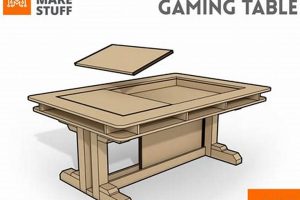
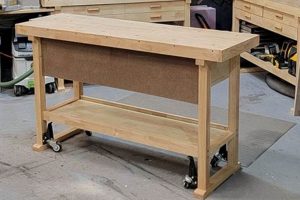
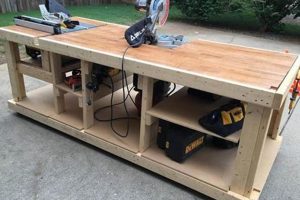
This furniture piece combines the functionality of a standard table with the engaging challenge of a jigsaw puzzle. Crafted from wood, its surface is designed to accommodate and secure puzzle pieces, allowing for assembly and display. It offers a dedicated space for puzzle enthusiasts to work on their projects without occupying other surfaces.
The benefit of such a design lies in its ability to provide a stable and protected workspace for puzzles in progress. This prevents pieces from being misplaced or disturbed, particularly in households with children or pets. Its historical context stems from the need for dedicated spaces for hobbies and recreational activities, evolving from simple boards to integrated furniture solutions.
The following sections will delve into the construction materials, design variations, ergonomic considerations, and target audience preferences relevant to this type of specialized furniture.
Guidance on Selection and Maintenance
The following recommendations are intended to assist in the informed selection and proper care of such furniture pieces, ensuring longevity and optimal user experience.
Tip 1: Assess Material Quality: Prioritize hardwoods such as oak or maple for enhanced durability and resistance to warping. Verify the wood’s origin and sustainability certifications to ensure responsible sourcing.
Tip 2: Examine Puzzle Surface Construction: The puzzle surface should be smooth, level, and offer sufficient friction to prevent slippage. Consider felt or baize lining for added protection of puzzle pieces.
Tip 3: Evaluate Storage and Mobility Features: Determine if integrated storage drawers or compartments are necessary for puzzle organization. Assess the table’s weight and mobility features if relocation is a frequent requirement.
Tip 4: Consider Ergonomic Factors: Table height and tilt adjustability can significantly impact user comfort during extended use. Ensure the table is compatible with appropriate seating options.
Tip 5: Inspect Joint Construction and Stability: Examine the joints and connections for signs of weakness or instability. Solid construction is critical for supporting the weight of puzzles and preventing wobbling.
Tip 6: Implement Proper Cleaning Procedures: Use a soft, damp cloth and mild cleaning solution to maintain the wood surface. Avoid abrasive cleaners or excessive moisture, which can damage the finish.
Tip 7: Protect from Environmental Factors: Shield from direct sunlight and extreme temperature fluctuations to prevent warping, cracking, or fading of the wood.
Adherence to these guidelines will contribute to the selection of a high-quality piece and ensure its lasting performance and aesthetic appeal.
The subsequent discussion will focus on the aesthetic and functional considerations relevant to integrating such a piece into various living spaces.
1. Wood Type

The selection of wood significantly impacts the durability, aesthetics, and overall functionality of a woodwork puzzle table. The material properties of different wood species directly influence the table’s resistance to wear, stability, and visual appeal. Therefore, understanding wood types is crucial when evaluating such furniture.
- Hardwood vs. Softwood
Hardwoods, sourced from deciduous trees (e.g., oak, maple, cherry), are generally denser and more resistant to dents and scratches compared to softwoods from coniferous trees (e.g., pine, fir). A puzzle table made from hardwood will typically withstand more prolonged use and maintain its aesthetic integrity better than a softwood counterpart. The difference in durability is critical given the potential for friction from puzzle pieces and occasional spills.
- Grain Pattern and Aesthetics
Different wood species exhibit distinct grain patterns, influencing the table’s visual appeal. Oak, for example, displays a prominent grain, providing a classic and robust aesthetic. Maple offers a smoother, more uniform appearance. Cherry presents a rich, reddish hue that deepens with age. The selection of wood grain pattern is a subjective decision, but it directly impacts the overall aesthetic integration of the table within a room’s decor. A well-chosen grain can enhance the perceived value and elegance of the piece.
- Wood Density and Stability
Wood density is directly correlated with its dimensional stability. High-density woods are less prone to warping or cracking due to changes in humidity or temperature. Dimensional stability is crucial for a puzzle table, as a warped surface can impede puzzle assembly. For instance, kiln-dried hardwoods are preferred because the drying process minimizes moisture content and enhances stability, ensuring the table remains flat and functional over time.
- Finish Compatibility and Durability
The wood type dictates its compatibility with different finishes. Some woods absorb stains and sealants more readily than others, influencing the final appearance and protection. For example, cherry accepts stains uniformly, resulting in a consistent color. Pine, due to its porous nature, may require multiple coats to achieve the desired finish. The chosen finish protects the wood from moisture, scratches, and UV damage, contributing to the table’s longevity. A durable, properly applied finish is essential for preserving the table’s aesthetic appeal and preventing damage during use.
These considerations collectively highlight the significance of wood type in determining the quality and longevity of a puzzle table. The inherent properties of the chosen wood species directly impact the table’s structural integrity, aesthetic appeal, and ability to withstand the rigors of puzzle assembly and display, underscoring its importance in the selection process.
2. Surface Smoothness

The quality of the surface is paramount to the functionality and enjoyment derived from a woodwork puzzle table. Surface smoothness directly influences the ease of puzzle assembly, preservation of puzzle pieces, and overall aesthetic appeal of the furniture. A meticulously crafted surface ensures a superior puzzling experience.
- Reduced Friction and Piece Maneuverability
A smooth surface minimizes friction between the table and puzzle pieces, allowing for effortless sliding and repositioning. This is crucial for efficient puzzle assembly, particularly with large or intricate designs. A rough or uneven surface, conversely, can impede piece movement, leading to frustration and potentially damaging delicate puzzle components. The degree of smoothness directly affects the user’s ability to manipulate pieces accurately and efficiently.
- Prevention of Piece Damage
A smooth surface reduces the risk of scratching or damaging puzzle pieces during assembly. Rough surfaces, splinters, or imperfections can abrade the pieces, diminishing their visual appeal and potentially compromising their structural integrity. High-quality puzzle tables feature meticulously sanded and finished surfaces to ensure the delicate pieces are protected from harm. This preventative measure contributes to the longevity of the puzzle and the overall enjoyment of the hobby.
- Uniform Light Reflection and Visual Clarity
A smooth, uniformly finished surface promotes consistent light reflection, enhancing visual clarity and reducing eye strain. Uneven surfaces can create glare or shadows, hindering the ability to discern subtle color variations and patterns in the puzzle image. Optimal light reflection is particularly important for puzzles with intricate details or monochromatic color schemes. A well-prepared surface contributes to a comfortable and visually stimulating puzzling experience.
- Cleanability and Maintenance
A smooth surface is easier to clean and maintain, preventing the accumulation of dust, debris, and puzzle residue. A porous or rough surface can trap particles, making it difficult to maintain a hygienic and visually appealing workspace. Smooth surfaces can be easily wiped clean with a soft cloth, ensuring the table remains presentable and functional over time. This ease of maintenance contributes to the long-term value and practicality of the puzzle table.
In conclusion, surface smoothness is not merely an aesthetic consideration but a fundamental element in the design and functionality of woodwork puzzle tables. A meticulously prepared surface enhances the puzzle assembly process, protects delicate puzzle pieces, improves visual clarity, and facilitates easy maintenance. The quality of the surface directly impacts the user’s enjoyment and the long-term value of the furniture.
3. Edge Protection

Edge protection serves as a crucial design element in woodwork puzzle tables, directly influencing the preservation of puzzle pieces and the prevention of accidental displacement. The absence of adequate edge protection introduces a heightened risk of pieces sliding off the table, particularly during assembly or when the table is subjected to slight movements. This is not merely an inconvenience; it can result in lost or damaged puzzle components, diminishing the overall enjoyment and longevity of the puzzle set.
A practical example of effective edge protection can be observed in tables featuring a raised lip or border surrounding the puzzle surface. This physical barrier effectively contains the pieces, preventing them from falling. Alternatively, recessed surfaces offer a similar function, providing a defined area for puzzle assembly that minimizes the likelihood of pieces sliding off. The selection of materials for edge protection, such as wood or felt, also plays a significant role. Wood provides a robust and durable barrier, while felt offers a softer surface that minimizes the risk of scratching delicate puzzle pieces. The dimensions of the edge protection must be carefully considered to ensure it is sufficiently high to contain the pieces without obstructing the user’s view or access.
In summary, edge protection is an indispensable component of woodwork puzzle tables. Its presence directly mitigates the risk of piece displacement and damage, contributing significantly to the user’s experience and the longevity of the puzzle itself. Understanding the different types of edge protection and their respective benefits is essential for selecting a puzzle table that provides optimal functionality and protection. The absence of adequate edge protection represents a significant design flaw, potentially detracting from the overall value and usability of the furniture.
4. Storage Capacity

The storage capacity inherent within a woodwork puzzle table directly influences its utility and practicality. The ability to securely store puzzle pieces, both during assembly and between sessions, is a primary determinant of its overall value. Insufficient storage often results in misplaced pieces, incomplete puzzles, and a compromised user experience. For example, a table lacking integrated drawers necessitates the use of external containers, increasing clutter and potentially damaging delicate puzzle components.
The inclusion of dedicated storage compartments or drawers addresses several practical concerns. First, it provides a designated space for organizing pieces by shape, color, or edge type, streamlining the assembly process. Second, it safeguards incomplete puzzles from accidental disruption, allowing users to pause and resume their work without the risk of losing progress. Finally, adequate storage contributes to a more organized and aesthetically pleasing environment by eliminating the need for extraneous containers. A well-designed puzzle table integrates storage seamlessly, ensuring it complements the functionality of the table without compromising its aesthetic appeal.
Ultimately, the presence of robust storage capacity transforms a simple table into a comprehensive puzzle-solving solution. It is a critical factor to consider when evaluating woodwork puzzle tables, as it directly impacts the user’s ability to efficiently manage, preserve, and enjoy their puzzles. Tables with insufficient storage, conversely, are less likely to provide a satisfactory and sustained user experience, regardless of their aesthetic qualities or construction materials.
5. Joint Stability

Joint stability is a critical factor in the construction and longevity of any woodwork piece, especially a puzzle table. The integrity of the joints directly influences the table’s ability to withstand weight, resist movement, and maintain a level, functional surface for puzzle assembly.
- Impact on Load Bearing Capacity
Stable joints are essential for distributing weight evenly across the table’s structure. Weak or poorly constructed joints can compromise the table’s load-bearing capacity, potentially leading to sagging or collapse under the weight of a large puzzle or other items placed on the surface. A puzzle table with reinforced joints can support heavier loads without compromising structural integrity, ensuring years of reliable use.
- Resistance to Wobbling and Movement
Unstable joints often result in wobbling or unwanted movement, making puzzle assembly difficult and frustrating. A solid joint construction minimizes movement, providing a stable surface that prevents puzzle pieces from shifting or falling. This stability is particularly crucial for intricate puzzles that require precise alignment and manipulation of individual pieces.
- Influence on Surface Levelness
The overall stability of the joints directly contributes to the levelness of the table surface. Uneven joints can cause the surface to warp or tilt, creating an uneven playing field for puzzle assembly. Precise joint construction is paramount to maintaining a flat and consistent surface, ensuring puzzle pieces lie flush and facilitate smooth assembly. This factor is particularly important for large or complex puzzles that require a perfectly level surface for proper completion.
- Long-Term Structural Integrity
The quality of the joints determines the long-term structural integrity of the puzzle table. Well-constructed joints can withstand years of use and environmental changes without weakening or failing. Conversely, poorly made joints are susceptible to loosening, cracking, or separating over time, ultimately compromising the table’s stability and functionality. Investing in a puzzle table with robust and durable joints is a crucial factor in ensuring its lasting value and utility.
In summary, joint stability is inextricably linked to the overall quality and functionality of a woodwork puzzle table. Stable joints enhance load-bearing capacity, minimize wobbling, maintain surface levelness, and ensure long-term structural integrity. These attributes are essential for creating a reliable and enjoyable puzzle assembly experience. Therefore, assessing the quality and construction of the joints is a crucial step in selecting a puzzle table that will provide years of dependable service.
6. Ergonomic Height

Ergonomic height, in the context of woodwork puzzle tables, refers to the table’s vertical dimension optimized for user comfort and posture during puzzle assembly. This consideration is crucial for mitigating strain and promoting sustained engagement with the activity.
- Posture and Spinal Alignment
An appropriately designed puzzle table height facilitates a neutral spinal posture. If the table is too low, the user is forced to hunch over, leading to neck and back strain. Conversely, a table that is too high necessitates raised shoulders, causing tension in the upper back and neck. The ideal height allows the user to maintain an upright posture with relaxed shoulders, minimizing musculoskeletal stress. For example, a table designed for an average adult may be unsuitable for a child or a taller individual, highlighting the need for adjustable height features or a range of table sizes.
- Arm and Shoulder Positioning
Ergonomic height influences the positioning of the arms and shoulders during puzzle manipulation. A correctly sized table enables the user to comfortably reach and manipulate puzzle pieces without overextending or straining the shoulder muscles. If the table is too low, the user must extend their arms forward, leading to shoulder fatigue. If the table is too high, the user’s arms are forced into an elevated position, causing discomfort in the shoulders and upper arms. An optimal height allows for a relaxed, neutral arm position, minimizing the risk of repetitive strain injuries.
- Vision and Neck Strain
The height of the puzzle table also affects the angle of vision and the potential for neck strain. A table that is too low requires the user to tilt their head downwards excessively, causing neck muscle fatigue. A table that is too high may necessitate tilting the head upwards, leading to similar discomfort. The ideal height positions the puzzle surface at a comfortable viewing angle, minimizing the need for extreme head movements and reducing strain on the neck muscles. Proper ergonomic height promotes sustained focus and reduces the likelihood of headaches and neck pain.
- Seating Compatibility
The ergonomic height of a puzzle table must be compatible with the user’s seating arrangement. A mismatch between table height and chair height can negate the benefits of an otherwise ergonomically designed table. Ideally, the user should be able to sit with their feet flat on the floor and their knees at a 90-degree angle, with the table surface at a comfortable height for arm and hand manipulation. Adjustable chair heights or specialized seating options may be necessary to achieve optimal ergonomic alignment.
These facets underscore the significance of ergonomic height in the design of woodwork puzzle tables. Optimizing the table’s vertical dimension promotes comfort, reduces strain, and enhances the overall puzzle-solving experience. Failure to address ergonomic considerations can lead to musculoskeletal discomfort and reduced user satisfaction, highlighting the importance of incorporating ergonomic principles into the design and selection process.
Frequently Asked Questions about Woodwork Puzzle Tables
The following questions address common inquiries regarding the functionality, maintenance, and selection of specialized woodwork puzzle tables. These answers provide comprehensive insights for informed decision-making.
Question 1: What are the primary benefits of utilizing a woodwork puzzle table compared to assembling puzzles on a standard table?
Woodwork puzzle tables offer several advantages, including a dedicated and protected workspace, integrated storage solutions for puzzle pieces, and ergonomic design considerations that promote comfort during extended use. A standard table lacks these specialized features, potentially leading to misplaced pieces, interrupted projects, and musculoskeletal strain.
Question 2: How should a woodwork puzzle table be properly cleaned and maintained to ensure its longevity?
Regular cleaning with a soft, damp cloth is recommended to remove dust and debris. A mild cleaning solution can be used for stubborn stains. Avoid abrasive cleaners or excessive moisture, as these can damage the wood finish. Periodic application of wood polish or sealant may be necessary to maintain the wood’s luster and protect against environmental factors.
Question 3: What types of wood are most suitable for constructing a durable and long-lasting puzzle table?
Hardwoods, such as oak, maple, and cherry, are generally preferred due to their density and resistance to wear. These woods offer superior strength and stability compared to softwoods, making them ideal for supporting the weight of puzzles and withstanding frequent use. Kiln-dried hardwoods are particularly advantageous due to their reduced moisture content and enhanced resistance to warping.
Question 4: How can the appropriate ergonomic height of a puzzle table be determined for optimal user comfort?
The ideal height should allow the user to maintain an upright posture with relaxed shoulders while seated. The elbows should be bent at a 90-degree angle, and the forearms should rest comfortably on the table surface. Adjustable table heights or the use of appropriately sized chairs can facilitate optimal ergonomic alignment and minimize musculoskeletal strain.
Question 5: What are the key features to consider when evaluating the surface quality of a woodwork puzzle table?
The surface should be smooth, level, and free from imperfections that could damage puzzle pieces or impede assembly. A non-reflective finish is desirable to minimize glare and reduce eye strain. Felt or baize lining can provide added protection and prevent pieces from sliding. The surface material should also be easy to clean and maintain.
Question 6: How does the presence of integrated storage compartments enhance the functionality of a woodwork puzzle table?
Integrated storage provides a designated space for organizing and protecting puzzle pieces, preventing them from being misplaced or damaged. Drawers or compartments can be used to sort pieces by shape, color, or edge type, streamlining the assembly process. Storage also allows incomplete puzzles to be safely stored between sessions without disrupting progress.
These FAQs provide a foundational understanding of the critical aspects involved in selecting and maintaining woodwork puzzle tables. Careful consideration of these factors will contribute to a more enjoyable and rewarding puzzle-solving experience.
The subsequent section will explore the stylistic integration of such furniture within diverse interior design schemes.
Conclusion
This exploration of the amantea woodwork puzzle table has illuminated its functional and design intricacies. From the selection of appropriate wood types and the importance of surface smoothness to the crucial aspects of edge protection, storage capacity, joint stability, and ergonomic height, each element contributes significantly to the user’s experience. These factors, when carefully considered, define the overall quality and utility of this specialized furniture piece.
The integration of such a table into any living space represents more than a mere addition of furniture; it signifies a commitment to dedicated hobby space and mindful design. As puzzle enthusiasts continue to seek optimized solutions for their craft, the principles outlined herein serve as a practical guide for discerning selection and enduring enjoyment of the amantea woodwork puzzle table.