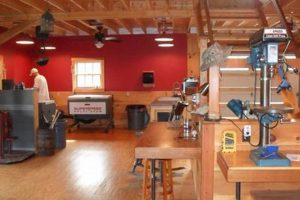
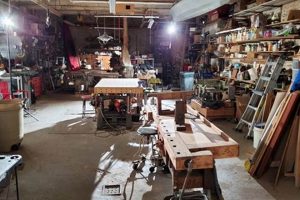
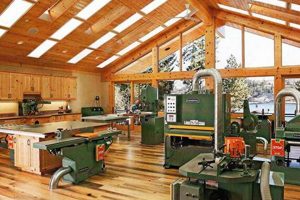
The process of removing airborne particulate matter and gaseous pollutants from the atmosphere within a woodworking environment constitutes a critical safety and health consideration. This process involves the utilization of specialized equipment and techniques designed to capture and eliminate dust, shavings, volatile organic compounds (VOCs), and other contaminants generated during woodworking operations such as sawing, sanding, and finishing. Examples include the installation of ceiling-mounted filtration units, downdraft tables, and localized dust collection systems connected directly to power tools.
Effective capture and removal of these contaminants are paramount to maintaining a safe and healthy work environment. Benefits include reduced respiratory health risks for woodworkers, improved visibility within the shop, and minimization of dust accumulation on surfaces and equipment. Historically, rudimentary methods such as open windows and simple fans were employed, but modern systems offer significantly enhanced filtration efficiency, capturing even microscopic particles that pose the greatest health threat. This evolution has contributed substantially to improved occupational safety and longevity within the woodworking trades.
The subsequent discussion will delve into various types of filtration systems, their selection criteria based on shop size and usage, maintenance requirements for optimal performance, and strategies for integrating these systems into existing woodworking shop layouts. Considerations for compliance with relevant health and safety regulations will also be addressed.
Essential Strategies for Maintaining Air Quality in Woodworking Environments
Optimizing atmospheric conditions within a woodworking shop necessitates a proactive and informed approach. The following guidelines provide practical strategies for selecting, implementing, and maintaining systems to mitigate airborne contaminants effectively.
Tip 1: Conduct a Thorough Needs Assessment: Prior to investing in equipment, evaluate the shop’s dimensions, the frequency and intensity of woodworking activities, and the types of materials processed. This assessment informs the selection of appropriately sized and configured filtration systems.
Tip 2: Prioritize Source Capture Systems: Implement dust collection at the point of origin. Attaching collection hoses to power tools such as sanders, saws, and planers minimizes the dispersion of particulate matter into the surrounding air.
Tip 3: Select Filtration Media Based on Particle Size: Utilize filters rated to capture a wide range of particulate sizes, including fine dust (PM2.5) and respirable crystalline silica. High-Efficiency Particulate Air (HEPA) filters are recommended for superior performance.
Tip 4: Implement a Regular Filter Maintenance Schedule: Adhere to manufacturer-recommended filter replacement or cleaning intervals. Clogged filters reduce airflow and filtration efficiency, compromising the system’s effectiveness.
Tip 5: Consider Ambient Air Cleaners: Supplement source capture systems with ambient air cleaners. These units circulate and filter the air within the shop, capturing residual dust that escapes the primary collection points.
Tip 6: Optimize Shop Ventilation: Ensure adequate ventilation to introduce fresh air and exhaust contaminated air. Balance ventilation with filtration to prevent energy losses and maintain a comfortable working environment.
Tip 7: Implement Regular Shop Cleaning Practices: Vacuum surfaces regularly to remove accumulated dust and debris. Avoid sweeping, which can resuspend particulate matter into the air.
Maintaining air quality within a woodworking shop is an ongoing process that requires diligent application of these strategies. The cumulative effect of these actions results in a safer, healthier, and more productive working environment.
The subsequent section will address specific equipment options and their comparative advantages, providing further guidance for informed decision-making.
1. Particle Size

Particle size is a foundational consideration in designing and implementing efficient air filtration systems for woodworking environments. The effectiveness of any dust collection or air purification setup is directly contingent upon its capacity to capture the range of particulate matter generated during woodworking processes. These particles vary significantly in size, spanning from large shavings to microscopic dust particles invisible to the naked eye. Larger particles, such as sawdust and wood chips, are relatively easy to collect with basic filtration methods. However, finer dust particles, particularly those in the respirable range (typically less than 10 micrometers in diameter), pose the greatest health risk. These small particles can penetrate deep into the respiratory system, potentially causing or exacerbating respiratory ailments. The selection of appropriate filtration media, characterized by its Minimum Efficiency Reporting Value (MERV) or HEPA rating, hinges on the anticipated particle size distribution within the shop. Systems neglecting to address the full spectrum of particulate sizes risk compromising worker health and overall air quality.
Consider the example of a woodworking shop primarily engaged in sanding operations. Sanding generates a substantial amount of fine dust. A filtration system equipped only with a coarse filter designed for collecting larger debris would prove inadequate, allowing the harmful fine dust to circulate freely. Conversely, a shop focusing on rough milling might find a multi-stage system with a pre-filter for large particles and a finer filter for smaller particles more economical and effective, as the pre-filter extends the life of the more expensive, high-efficiency filters. Understanding the specific woodworking processes performed and the resulting particle size distribution enables a tailored approach to air filtration, maximizing its efficiency and cost-effectiveness. Furthermore, the type of wood being worked also influences particle characteristics. For instance, hardwoods tend to produce finer, denser dust than softwoods, demanding more robust filtration capabilities.
In summary, particle size is not merely a parameter but a determinant in air filtration for woodworking. Correct identification of the range of particle sizes generated within a specific woodworking shop environment is the critical first step in selecting, configuring, and maintaining an appropriate air filtration system. Neglecting this aspect can lead to inadequate protection of worker health, increased equipment wear, and reduced overall air quality. Continuous monitoring and adaptation of the filtration strategy, as woodworking practices or materials change, is essential to maintaining a safe and healthy working environment. Challenges remain in accurately characterizing the full spectrum of particulate matter, particularly in dynamic shop environments. However, the fundamental importance of particle size as a driving factor in effective air filtration cannot be overstated.
2. Airflow Volume

Airflow volume, measured in cubic feet per minute (CFM), represents the quantity of air drawn through a filtration system. Within a woodworking shop, adequate airflow volume is critical for the effective capture and removal of airborne particulate matter. Insufficient airflow fails to draw contaminants effectively from their source, resulting in their dispersion throughout the workspace. This inadequate capture compromises the efficacy of the filtration system, increasing the risk of respiratory hazards and diminished visibility. For example, a dust collector with a low CFM rating connected to a wide-belt sander will struggle to capture the fine dust generated, leading to dust accumulation on surfaces and increased exposure for the operator.
Proper airflow volume is not solely dependent on the equipment’s rating but also on the ductwork design and system setup. Long, convoluted duct runs or undersized ductwork can significantly reduce airflow, negating the system’s intended performance. A system designed for 800 CFM may only deliver 500 CFM at the tool due to frictional losses within the ducting. Therefore, careful consideration must be given to minimizing duct length, using smooth-walled ducting, and avoiding sharp bends. Furthermore, the filter’s condition directly impacts airflow volume. Clogged or overloaded filters impede airflow, reducing the system’s overall effectiveness. Regular filter maintenance or replacement is essential to maintain optimal airflow and filtration performance. Some advanced systems incorporate sensors that monitor airflow and alert users to filter blockage.
In summary, airflow volume is a critical parameter in air filtration for woodworking shops, directly influencing the system’s ability to capture and remove airborne contaminants. Adequate airflow, achieved through proper equipment selection, system design, and diligent maintenance, is essential for maintaining a safe and healthy working environment. The interaction between airflow volume, filter efficiency, and system configuration determines the overall effectiveness of the air filtration strategy. While higher CFM ratings generally indicate superior performance, they must be considered in conjunction with other factors to ensure the system meets the specific needs of the woodworking environment. The challenge lies in optimizing airflow while minimizing energy consumption and noise levels, necessitating a balanced approach to system design and operation.
3. Filter Efficiency

Filter efficiency, a crucial metric in the context of woodworking environments, quantifies a filter’s capability to capture airborne particulate matter. Measured by Minimum Efficiency Reporting Value (MERV) or in percentage capture rates for specific particle sizes, filter efficiency directly affects the overall air quality within the shop. Higher efficiency ratings indicate a greater ability to trap fine dust, shavings, and other contaminants generated during woodworking processes. The selection of filters with appropriate efficiency ratings is paramount to mitigating respiratory hazards and ensuring a safe working environment. For example, a woodworking shop that specializes in sanding operations, which produce a high volume of fine dust, requires filters with higher MERV ratings compared to a shop primarily engaged in rough milling. Failure to select filters with adequate efficiency results in the recirculation of harmful particles, negating the purpose of the air filtration system.
Filter efficiency is also significantly impacted by maintenance and filter condition. Over time, filters become loaded with particulate matter, which reduces airflow and can compromise filtration efficiency. A filter initially rated at MERV 13 may experience a decline in performance as it accumulates dust, potentially dropping to an equivalent MERV 8 rating. This underscores the importance of regular filter replacement or cleaning as per the manufacturer’s recommendations. Furthermore, filter type influences efficiency; HEPA filters, for example, offer superior filtration compared to standard pleated filters but require more powerful air handling systems to overcome their increased resistance to airflow. Practical application involves matching the filter type and maintenance schedule to the specific woodworking operations and the types of materials being processed. Monitoring pressure drop across the filter can provide an indication of its condition and signal the need for replacement. Sophisticated air filtration systems often incorporate sensors and alarms to automate this monitoring process.
In summary, filter efficiency is not merely a specification but a critical determinant of air quality in woodworking shops. It directly impacts the health and safety of woodworkers by dictating the system’s capacity to remove harmful airborne contaminants. Proper selection, diligent maintenance, and consideration of filter type are essential for maximizing filtration performance and ensuring a safe and healthy working environment. The challenge lies in balancing filter efficiency with airflow requirements, cost considerations, and the specific needs of the woodworking environment. Ongoing monitoring and adaptation of the filtration strategy are necessary to maintain optimal air quality and protect worker health in the dynamic environment of a woodworking shop.
4. System Placement

The efficacy of air filtration in a woodworking shop is inextricably linked to system placement. Location of filtration devices determines the scope and efficiency of contaminant capture, directly impacting the respirable air quality within the workspace. Optimal placement reduces the distance contaminants travel before being captured, minimizing dispersion and worker exposure. Strategic positioning accounts for the specific location of dust-generating equipment, prevailing air currents, and the overall shop layout. For instance, placing a dust collector directly adjacent to a lathe or sander significantly increases the capture rate of airborne particles generated during these processes. Conversely, a poorly positioned system, far removed from the primary source of contaminants, allows dust to disperse widely, diminishing its effectiveness and potentially creating stagnant pockets of polluted air.
Practical application of effective system placement involves a multifaceted approach. Down-draft tables, for example, are strategically positioned beneath sanding or finishing operations to capture particulate matter as it falls. Ambient air cleaners are often mounted overhead to circulate and filter air throughout the entire shop volume, addressing contaminants that escape source capture systems. Furthermore, considerations for airflow patterns are crucial. Placement should avoid creating “dead zones” where air circulation is minimal, ensuring that all areas of the shop receive adequate filtration. Implementing a system without proper regard for placement can lead to inefficient operation, requiring longer run times and potentially failing to meet required air quality standards. The initial layout should also account for potential future expansion or changes in equipment configuration, providing flexibility for relocation or addition of filtration components.
In summary, system placement is a critical determinant of air filtration effectiveness in woodworking shops. Thoughtful consideration of contaminant sources, airflow patterns, and equipment configuration is essential for maximizing capture rates and minimizing worker exposure. The challenge lies in adapting system placement to the unique characteristics of each shop, balancing practicality with optimal performance. Effective system placement, combined with appropriate equipment selection and diligent maintenance, forms a cornerstone of a comprehensive strategy for maintaining a safe and healthy working environment in woodworking environments.
5. Maintenance Schedule

The longevity and efficacy of air filtration systems in woodworking shops are inextricably linked to adherence to a rigorous maintenance schedule. This schedule, a proactive and systematic approach to equipment upkeep, directly influences the sustained ability of the system to capture and remove airborne particulate matter. Neglecting scheduled maintenance precipitates a cascade of detrimental effects, including reduced airflow, diminished filter efficiency, increased energy consumption, and heightened risk of system failure. For instance, a clogged filter, a direct consequence of insufficient maintenance, impedes airflow, forcing the system to work harder and consume more energy while simultaneously reducing its capacity to capture fine dust particles. This ultimately compromises the air quality within the woodworking environment and elevates the potential for respiratory health issues among workers.
A well-defined maintenance schedule encompasses several critical components. These include regular filter inspection and replacement, ductwork cleaning to remove accumulated debris, motor and blower maintenance to ensure optimal performance, and periodic system inspections to identify and rectify potential issues proactively. The frequency of these tasks depends on several factors, including the intensity of woodworking activities, the types of materials processed, and the system’s operating environment. For example, a shop working primarily with hardwoods that generate fine dust may require more frequent filter changes compared to a shop processing softwoods. The implementation of a computerized maintenance management system (CMMS) can aid in tracking maintenance tasks, scheduling reminders, and documenting maintenance history, ensuring consistent adherence to the schedule. A practical example involves implementing a monthly filter inspection program, coupled with quarterly ductwork cleaning and annual motor servicing. This proactive approach prevents system degradation and ensures sustained performance over the equipment’s lifespan.
In summary, the establishment and diligent execution of a maintenance schedule are not merely ancillary tasks but integral components of effective air filtration in woodworking shops. The absence of such a schedule leads to a decline in system performance, increased operational costs, and elevated health risks. Overcoming challenges related to resource allocation and time constraints requires a commitment to prioritizing maintenance as a critical investment in worker health and safety. Linking maintenance activities to tangible metrics, such as reduced filter replacement costs or improved air quality readings, reinforces the practical significance of this often-overlooked aspect of woodworking shop management. Long-term adherence to a well-defined maintenance schedule provides the most reliable means of ensuring consistently clean air, contributing to a healthier and more productive working environment.
6. Safety Standards
Adherence to established safety standards directly governs the implementation and operation of air filtration systems within woodworking shops. These standards, often mandated by regulatory bodies such as OSHA (Occupational Safety and Health Administration) or local environmental agencies, dictate permissible exposure limits (PELs) for airborne contaminants generated during woodworking processes. The primary cause for implementing air filtration is to mitigate the risks associated with exceeding these exposure limits, which can lead to various respiratory illnesses and other health problems. The direct effect of non-compliance includes potential fines, legal liabilities, and, most importantly, compromised worker safety. For example, OSHA’s standard for wood dust (29 CFR 1910.1000) sets a PEL that woodworking shops must meet. An effective air filtration system, designed and operated in accordance with these standards, is a critical component of achieving and maintaining compliance.
The importance of safety standards extends beyond mere regulatory compliance. These standards often provide detailed guidelines on the selection, installation, and maintenance of appropriate air filtration equipment. They may specify minimum airflow requirements, filter efficiency ratings, and exhaust ventilation protocols. Consider the practical example of a woodworking shop choosing between a single-stage and a two-stage dust collection system. Safety standards might dictate the use of a two-stage system with higher filtration efficiency to capture the respirable crystalline silica generated during sanding certain types of wood. Understanding and implementing these guidelines ensures that the chosen air filtration system effectively addresses the specific hazards present in the woodworking environment. Furthermore, these standards often mandate employee training on the proper use and maintenance of air filtration equipment, fostering a culture of safety and promoting responsible practices.
In conclusion, safety standards and air filtration in woodworking shops are inextricably linked. Safety standards provide the framework for identifying, assessing, and controlling the hazards associated with airborne contaminants. Air filtration systems, when implemented in accordance with these standards, serve as a primary engineering control to mitigate these risks. Challenges remain in ensuring consistent compliance and adapting to evolving regulations. However, a commitment to understanding and adhering to relevant safety standards is fundamental to creating a safe, healthy, and productive woodworking environment. This necessitates ongoing monitoring, evaluation, and adaptation of air filtration strategies to meet the ever-present goal of protecting worker well-being.
Frequently Asked Questions
This section addresses common inquiries regarding atmospheric management within woodworking environments, providing clarity on key aspects of air filtration systems and their implementation.
Question 1: What is the primary purpose of air filtration in a woodworking shop?
The principal objective is to remove airborne particulate matter generated during woodworking activities. This reduces the risk of respiratory ailments, improves visibility, and minimizes dust accumulation.
Question 2: How is airflow volume measured, and why is it important?
Airflow volume is quantified in cubic feet per minute (CFM). Adequate CFM ensures effective capture and removal of contaminants at their source, preventing their dispersion throughout the workspace.
Question 3: What is MERV, and how does it relate to filter efficiency?
MERV, or Minimum Efficiency Reporting Value, is a rating system that quantifies a filter’s ability to capture particles of specific sizes. Higher MERV ratings indicate greater filtration efficiency.
Question 4: Why is system placement a critical factor in air filtration effectiveness?
Strategic system placement minimizes the distance contaminants travel before capture, maximizing capture rates and reducing worker exposure. Proximity to dust-generating equipment is essential.
Question 5: What are the key components of an effective maintenance schedule for air filtration systems?
A comprehensive schedule includes regular filter inspection and replacement, ductwork cleaning, motor and blower maintenance, and periodic system inspections.
Question 6: How do safety standards influence air filtration practices in woodworking shops?
Safety standards, such as those set by OSHA, establish permissible exposure limits for airborne contaminants. Air filtration systems must be designed and operated to meet these standards, ensuring worker safety and compliance.
In summary, informed decision-making regarding air filtration involves understanding airflow, filter efficiency, strategic placement, diligent maintenance, and adherence to safety standards. Each element contributes to creating a cleaner, healthier, and more productive woodworking environment.
The subsequent section will delve into specific case studies and practical examples to illustrate the application of these principles in real-world scenarios.
Air Filtration for Woodworking Shop
The preceding discussion has explored the multifaceted aspects of air filtration for woodworking shops. Key points addressed encompass particle size considerations, airflow volume management, filter efficiency selection, strategic system placement, the implementation of rigorous maintenance schedules, and strict adherence to relevant safety standards. Effective implementation of these principles constitutes a proactive approach to mitigating health risks and fostering a safer working environment. The discussed points should lead to a higher comprehension of the core tenets that enable air filtration in woodworking shops to function properly.
Prioritizing effective air filtration is not merely a matter of regulatory compliance, but a fundamental investment in the well-being of woodworking professionals. A commitment to maintaining optimal air quality translates to enhanced productivity, reduced healthcare costs, and a sustainable future for the woodworking trades. Continued advancements in filtration technology, coupled with ongoing education and training, will further refine practices and promote a healthier future for all woodworkers. The ultimate success of woodworking rests not only on skill and craftsmanship but also on a resolute dedication to a safe and healthy work environment.