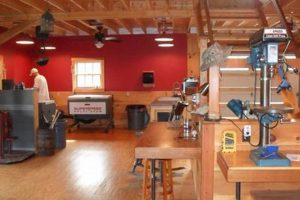
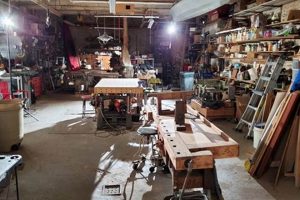
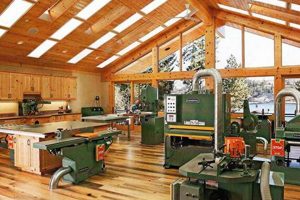
The establishment of a compact, dedicated space for woodworking activities involves careful consideration of numerous factors. This process includes identifying essential tools, optimizing spatial arrangement, and implementing safety protocols. Successful creation hinges on resourcefulness and a prioritized approach to acquiring equipment.
A properly configured area facilitates efficiency, precision, and safety, thus supporting the creation of high-quality woodcrafts. The benefits extend beyond the tangible products to include skill development, creative expression, and potentially, income generation. Historically, dedicated workspaces have been fundamental to woodworking traditions across cultures and eras.
The following sections will elaborate on key aspects of the setup process, including space selection and preparation, essential tool acquisition, dust control measures, and safety considerations. These topics aim to provide a comprehensive guide to creating a functional and productive woodworking environment.
Essential Considerations for Woodworking Space Preparation
The following tips offer guidance on the critical aspects of configuring a dedicated area for woodworking, emphasizing safety, efficiency, and long-term productivity.
Tip 1: Evaluate Existing Space: Assess the available square footage to determine suitability for essential tools and material storage. Prioritize locations with adequate ventilation and natural light where possible.
Tip 2: Implement a Scalable Tool Acquisition Strategy: Begin with fundamental tools, such as a circular saw, drill/driver, measuring tools, and hand planes. Expand the tool collection gradually based on project requirements and budgetary constraints.
Tip 3: Emphasize Dust Collection from the Outset: Invest in a dedicated dust collection system, prioritizing a shop vacuum connected to power tools. Supplement with a portable air filter to minimize airborne particulate matter.
Tip 4: Prioritize Safety Equipment and Practices: Acquire appropriate personal protective equipment, including safety glasses, hearing protection, and a dust mask or respirator. Enforce a strict adherence to safety protocols at all times.
Tip 5: Optimize Layout for Workflow Efficiency: Arrange tools and equipment logically to minimize unnecessary movement and maximize productivity. Designate specific areas for cutting, assembly, and finishing operations.
Tip 6: Consider Electrical Requirements: Ensure adequate electrical capacity to power all tools and equipment simultaneously. Consult a qualified electrician to install additional circuits or outlets as needed.
Tip 7: Incorporate Adequate Lighting: Supplement natural light with strategically placed task lighting to improve visibility and reduce eye strain. Consider LED lighting options for energy efficiency and long lifespan.
Adhering to these recommendations will contribute significantly to establishing a safe, efficient, and productive woodworking environment. Early planning and diligent execution are essential for long-term success.
The subsequent sections will explore advanced considerations and offer insights into optimizing operational efficiency and expanding project capabilities.
1. Space Evaluation

Space evaluation is a critical preliminary step in establishing a functional and efficient woodworking environment. It dictates the feasibility of accommodating necessary tools, materials, and workflow processes. Insufficient or poorly utilized space can significantly impede productivity and compromise safety.
- Area Measurement and Layout Planning
Accurate measurement of the available space is fundamental. This involves determining the square footage and identifying any physical limitations, such as low ceilings or obstructing columns. Layout planning, whether conducted physically or digitally, facilitates optimized tool placement and workflow arrangement, preventing overcrowding and promoting efficient movement.
- Tool Accommodation Assessment
Space evaluation must consider the dimensions of essential tools, including table saws, planers, and workbenches. Sufficient clearance around each tool is necessary for safe operation and material manipulation. Proper storage solutions for both hand tools and power tools should also be factored into the spatial allocation to maintain organization and accessibility.
- Material Storage Requirements
Woodworking necessitates the storage of raw materials, including lumber, sheet goods, and hardware. Space evaluation must account for these storage needs. Vertical storage solutions, such as shelving or racks, can optimize space utilization. Proper organization and labeling of materials are crucial for efficient project execution.
- Workflow and Ergonomics
The spatial arrangement should facilitate a logical workflow, minimizing unnecessary movement between workstations. Ergonomic considerations, such as workbench height and tool placement, should be addressed to reduce physical strain and improve comfort during extended periods of work. Adequate space for maneuvering and material handling is essential for safe and efficient operation.
Effective space evaluation directly impacts the functionality and safety of a woodworking setup. By carefully considering area dimensions, tool requirements, material storage, and workflow ergonomics, a woodworker can optimize the available space and create an environment conducive to productivity and craftsmanship. The early investment in thorough space planning yields significant returns in terms of efficiency, safety, and overall satisfaction.
2. Tool Prioritization

Effective establishment of a compact woodworking space necessitates strategic tool prioritization. The initial selection of tools directly influences the scope and efficiency of potential projects. Failure to prioritize appropriately can result in unnecessary expenditure on infrequently used equipment, hindering the ability to acquire essential tools for core woodworking tasks. For instance, acquiring a specialized dovetail jig before possessing a reliable table saw would limit project scope and hinder fundamental woodworking skills development. Consequently, tool prioritization is an inseparable element of a successful shop setup.
The order of tool acquisition should be guided by project needs and the frequency of tool usage. A foundational set typically includes measuring and marking tools, a quality hand saw, a drill/driver, and a circular saw. As skills and project complexity evolve, tools such as a table saw, jointer, planer, and router can be added. Dust collection equipment should be considered a high priority due to its direct impact on air quality and health. Neglecting this aspect can lead to long-term health consequences, impacting productivity and overall well-being. An example would be prioritizing a high-quality dust extractor over a less essential sander.
Strategic tool prioritization offers economic advantages and optimizes workflow within a limited space. Challenges may arise from budget constraints and the overwhelming availability of woodworking tools. The key insight is aligning tool purchases with immediate project requirements and gradually expanding the tool collection based on demonstrated need. This approach ensures resources are allocated effectively, fostering a well-equipped and productive woodworking environment from its inception. It contributes directly to realizing the benefits of a well-functioning small woodworking shop, allowing for the efficient creation of woodworking projects of diverse complexity.
3. Dust Management

Woodworking activities generate significant quantities of airborne particulate matter, posing substantial health risks within a small enclosed shop environment. The effectiveness of dust management strategies is directly proportional to the overall safety and long-term viability of the woodworking practice. Inadequate dust control leads to respiratory ailments, including asthma and chronic bronchitis, representing a direct negative consequence of neglecting this critical component when setting up a small woodworking shop. Effective dust management includes both source capture and ambient air filtration.
Examples of effective dust management integration include equipping power tools with dust collection ports connected to a shop vacuum or central dust collection system. Implementing a down-draft sanding table reduces airborne dust during sanding operations. Air filtration units, strategically positioned within the shop, further mitigate particulate matter concentration. The investment in such systems, while potentially representing a significant initial cost, is justified by the long-term health benefits and reduced cleanup time. A practical demonstration involves comparing a shop utilizing only a basic dust mask versus one incorporating a comprehensive dust collection system; the latter exhibits significantly reduced airborne dust and associated respiratory hazards.
Integrating robust dust management protocols is not merely a recommendation but a fundamental requirement for a sustainable woodworking practice. The challenge lies in balancing cost constraints with the need for effective particulate matter control. The failure to address dust management proactively jeopardizes the health and well-being of the woodworker, potentially leading to irreversible respiratory damage and hindering the continued enjoyment of the craft. Therefore, thorough consideration and implementation of dust management solutions are essential when setting up a small woodworking shop, contributing directly to a safer and more productive workspace.
4. Safety Measures

The integration of comprehensive safety measures is paramount during the setup and operation of a small woodworking shop. These protocols are not merely supplementary additions but fundamental elements that directly influence the well-being of the woodworker and the overall operational efficiency of the space.
- Personal Protective Equipment (PPE)
The consistent use of appropriate PPE is essential for mitigating potential hazards. This includes, but is not limited to, safety glasses or face shields to protect against flying debris, hearing protection to prevent noise-induced hearing loss, and respirators or dust masks to safeguard against inhalation of fine particulate matter. Neglecting PPE can lead to immediate injuries and long-term health problems. The selection of PPE should align with the specific tasks being performed, ensuring adequate protection without hindering dexterity or visibility.
- Machine Guarding and Safe Operating Procedures
Power tools, inherent to woodworking, pose significant risks if not operated correctly. All machinery must be equipped with functional safety guards and interlocks to prevent accidental contact with moving parts. Adherence to established safe operating procedures is crucial. This includes understanding the tool’s capabilities and limitations, maintaining a safe distance from moving components, and ensuring proper workpiece support. Regularly inspecting and maintaining machinery contributes significantly to reducing the likelihood of accidents.
- Fire Prevention and Control
Woodworking shops are susceptible to fire hazards due to the presence of combustible materials such as wood dust, solvents, and finishes. Implementing fire prevention measures is critical. This includes maintaining a clean workspace free from accumulated dust, storing flammable materials in appropriate containers, and ensuring adequate ventilation. Fire extinguishers, specifically designed for Class A fires (ordinary combustibles), must be readily accessible and personnel trained in their proper usage. Regular inspections of electrical wiring and outlets are essential to prevent electrical fires.
- Emergency Procedures and First Aid
Preparation for potential emergencies is a crucial aspect of shop safety. A well-stocked first aid kit, containing necessary supplies for treating cuts, abrasions, and other common woodworking injuries, should be readily available. Clear emergency contact information must be prominently displayed. Individuals working in the shop should be familiar with basic first aid procedures and emergency protocols, including evacuation routes and shutdown procedures for machinery. Regular drills can help reinforce these procedures and ensure a swift and coordinated response in the event of an accident.
The conscientious application of these safety measures directly contributes to a safer and more productive woodworking environment. Integrating safety into every aspect of the shop setup and operational procedures minimizes the risk of accidents and promotes a culture of safety consciousness, benefiting both the individual woodworker and the overall woodworking community.
5. Efficient Layout
An efficient layout constitutes a cornerstone of any successful attempt to establish a compact woodworking shop. The spatial arrangement of tools, equipment, and work surfaces directly impacts workflow, safety, and overall productivity. A poorly designed layout introduces unnecessary movement, increases the risk of accidents, and limits the capacity to undertake complex projects. Conversely, a well-optimized layout minimizes wasted space, streamlines processes, and fosters a safer and more enjoyable working environment.
The connection between an efficient layout and the success of setting up a woodworking shop is characterized by a clear cause-and-effect relationship. The careful positioning of primary tools such as the table saw, miter saw, and workbench in relation to material storage areas directly influences the time required to complete tasks. For example, locating lumber storage too far from the cutting area necessitates excessive transportation of materials, reducing efficiency. Likewise, inadequate space around machines restricts maneuverability, increasing the potential for accidents. In contrast, a logical layout allows for a continuous and unimpeded workflow, maximizing productivity within the confines of a limited space. A practical application could be arranging tools based on workflow order (cutting, shaping, assembly, finishing), reducing wasted steps.
The process of establishing a woodworking shop inherently involves navigating spatial constraints. While an ideal layout may be unattainable in all cases, prioritization of key principles such as workflow optimization and safety is crucial. A carefully planned layout not only enhances productivity but also promotes a sense of order and control within the workshop, contributing to a more positive and rewarding woodworking experience. Overcoming challenges associated with limited space requires creative solutions, such as utilizing vertical storage systems and multi-functional tools. Ultimately, the effort invested in designing an efficient layout translates directly into tangible benefits, including increased output, reduced risk of injury, and a more enjoyable and sustainable woodworking practice.
6. Electrical Capacity

Electrical capacity is a foundational, often underestimated, aspect of configuring a small woodworking shop. Adequacy in this area dictates the operational potential of the shop, directly influencing the number and types of power tools that can be utilized concurrently, thus impacting workflow and project scope.
- Circuit Load Calculation
Determining total electrical demand begins with a precise calculation of the amperage requirements for each power tool intended for use within the shop. This involves consulting the tool’s nameplate for its amperage rating and summing the values for all tools that may operate simultaneously. Exceeding circuit capacity leads to tripped breakers, disrupting workflow and posing potential fire hazards. A concrete example: a 15-amp circuit should not continuously power tools exceeding 12 amps in combined draw (80% rule) to prevent overheating and potential failure. This assessment is a critical early step.
- Outlet Placement and Circuit Allocation
Strategic placement of electrical outlets is crucial for facilitating efficient and safe power tool operation. Outlets should be positioned in close proximity to work areas, minimizing the need for extension cords, which can present tripping hazards and voltage drop, thus reducing tool performance. Allocating dedicated circuits for high-amperage tools, such as table saws or dust collectors, prevents overloading and ensures consistent power delivery. A well-planned outlet configuration accommodates current and future tool requirements.
- Wiring Gauge and Conductor Selection
The gauge of electrical wiring must be appropriate for the amperage load it will carry. Undersized wiring leads to overheating, voltage drop, and increased risk of fire. National Electrical Code (NEC) guidelines specify minimum wire gauge requirements based on amperage and circuit length. Employing appropriately sized conductors ensures efficient power transmission and minimizes potential hazards. For example, a 20-amp circuit typically requires 12-gauge wire, while a 15-amp circuit necessitates 14-gauge wire, depending on distance from the breaker panel.
- Safety Grounding and Ground Fault Circuit Interrupters (GFCIs)
Proper grounding of electrical outlets and equipment is essential for preventing electrical shock. A grounding conductor provides a low-resistance path for fault currents, tripping the circuit breaker and de-energizing the circuit. Ground Fault Circuit Interrupters (GFCIs) provide an additional layer of protection by detecting minute imbalances in current flow, indicating a potential ground fault. GFCIs are particularly important in damp or wet environments, such as those near concrete floors or water sources, within a woodworking shop.
These facets underscore the importance of addressing electrical capacity proactively when setting up a small woodworking shop. Adequate electrical planning, encompassing load calculation, outlet placement, wiring gauge selection, and safety grounding, ensures a safe and efficient operating environment. Neglecting these aspects can lead to operational disruptions, safety hazards, and potential long-term damage to equipment. Thorough assessment and proper implementation are therefore paramount to the success of any woodworking endeavor.
7. Lighting Adequacy
The significance of lighting adequacy within the context of establishing a compact woodworking shop is not merely aesthetic; rather, it is a fundamental element directly impacting safety, precision, and overall productivity. Insufficient or poorly positioned lighting increases the risk of accidents, compromises the accuracy of cuts and measurements, and can contribute to eye strain and fatigue, thereby reducing efficiency and potentially diminishing the quality of finished products. The relationship is causal: deficient lighting directly causes reduced visibility, which in turn increases the likelihood of errors and injuries. Proper lighting transforms the workspace into a safer and more efficient zone. For example, inadequate illumination while operating a table saw dramatically elevates the risk of misjudgment and subsequent injury. The strategic deployment of task lighting, conversely, enhances visibility, enabling more precise cuts and safer operation.
The practical application of lighting adequacy extends beyond mere illumination. Color rendering index (CRI) is a crucial factor; lights with a high CRI allow for accurate color perception, essential for tasks such as staining and finishing. Placement is also critical. Overhead lighting provides general illumination, while focused task lighting should be directed towards specific work areas, such as the workbench and machine stations. Shadows must be minimized to ensure clear visibility of intricate details. An example includes adjustable LED lamps that can be positioned to eliminate shadows cast by hands or tools. Natural light, when available, should be maximized, but supplemented with artificial lighting to maintain consistent illumination throughout the day. Dimmer switches allow adjustment of light intensity based on specific tasks and preferences.
In summation, lighting adequacy is an indispensable component of a well-configured woodworking shop. Overcoming the challenges of limited space and budget constraints requires careful planning and prioritization of lighting solutions. Investing in appropriate lighting is not an optional luxury but a crucial investment in safety, accuracy, and long-term productivity. A properly lit workshop fosters a more enjoyable and sustainable woodworking practice, promoting craftsmanship and minimizing the risk of accidents and errors. Failing to address lighting adequately fundamentally undermines the potential of the shop and jeopardizes the well-being of the woodworker. Thus, prioritizing proper illumination is essential.
Frequently Asked Questions Regarding Small Woodworking Shop Setup
This section addresses common inquiries and misconceptions concerning the establishment of a compact woodworking workspace, providing authoritative and concise answers to guide informed decision-making.
Question 1: Is a dedicated dust collection system truly necessary in a small woodworking shop?
A dedicated dust collection system is highly recommended, and in many cases, essential for a small woodworking shop. Wood dust poses significant respiratory health risks. While a basic dust mask offers limited protection, a proper system significantly reduces airborne particulate matter, creating a healthier and safer working environment.
Question 2: What is the minimum space requirement for a functional small woodworking shop?
The minimum space requirement is highly variable, dependent on the scale and type of projects undertaken. However, a space of approximately 100 square feet (e.g., 10ft x 10ft) is often considered a practical minimum for accommodating essential tools and providing sufficient working room. Careful planning and efficient layout are crucial for maximizing functionality within limited confines.
Question 3: In what order should essential woodworking tools be acquired?
A recommended acquisition order prioritizes fundamental tools: 1) Measuring and marking tools; 2) A quality hand saw; 3) A drill/driver; 4) A circular saw. Subsequent acquisitions should be guided by project requirements and may include a table saw, jointer, planer, router, and specialized accessories.
Question 4: What are the critical electrical considerations for a woodworking shop?
Critical electrical considerations include accurate circuit load calculation, strategic outlet placement, appropriate wiring gauge selection, and the implementation of safety grounding and Ground Fault Circuit Interrupters (GFCIs). Consulting a qualified electrician is advised to ensure code compliance and prevent electrical hazards.
Question 5: How important is lighting in a small woodworking shop?
Adequate lighting is fundamentally important. Insufficient lighting increases the risk of accidents and reduces precision. A combination of general overhead lighting and focused task lighting is recommended, with consideration given to color rendering index (CRI) to ensure accurate color perception, particularly during finishing processes.
Question 6: What are the essential safety measures that must be implemented?
Essential safety measures include the consistent use of appropriate Personal Protective Equipment (PPE), ensuring functional machine guarding, adherence to safe operating procedures, implementing fire prevention and control measures, and establishing clear emergency procedures with readily accessible first-aid supplies.
Adhering to these guidelines will contribute to a safer, more efficient, and more productive woodworking environment. Meticulous planning and diligent execution are key determinants of long-term success.
The following section will explore advanced considerations and provide insights into optimizing operational effectiveness and expanding project capabilities.
Conclusion
The preceding exploration has detailed critical aspects of establishing a compact woodworking shop. Key elements include space evaluation, tool prioritization, dust management, safety measures, efficient layout design, addressing electrical capacity, and ensuring adequate lighting. The successful integration of these components is directly correlated with the shop’s overall productivity, safety, and the woodworker’s long-term well-being. A comprehensive approach to each element is paramount to creating a productive workspace.
The establishment of a woodworking shop is an ongoing process of refinement and adaptation. While initial setup requires careful planning, continuous assessment and improvement are essential for maximizing efficiency and mitigating potential risks. Diligent adherence to safety protocols, coupled with a commitment to ongoing learning and skill development, will ensure a rewarding and sustainable woodworking practice for years to come. Continued research and adaptation to new technologies will further optimize the woodworking environment.