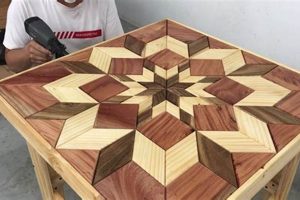
The creation of personalized presents through amateur carpentry offers a tangible expression of care and skill. Such handcrafted items can range from simple decorative pieces to functional household goods, all constructed from wood by individuals for presentation as gifts. Examples include customized cutting boards, small wooden toys, or personalized picture frames.
Handmade presents often possess a perceived value beyond their monetary cost, reflecting the time and effort invested in their creation. The act of crafting something by hand provides an opportunity for creative expression and skill development. Historically, offering handmade items has been a common practice across cultures, signifying personal connection and resourcefulness.
The subsequent sections will explore specific projects suitable for various skill levels, materials selection considerations, and finishing techniques that enhance the aesthetic appeal and longevity of these crafted items.
Tips for Successful Handcrafted Wooden Presents
Effective execution of woodworking projects intended as presents necessitates careful planning and attention to detail. The following tips provide guidance to ensure a successful outcome.
Tip 1: Project Selection Based on Skill Level: Choose projects that align with the individual’s current woodworking proficiency. A beginner should start with simpler designs, such as a basic wooden box or a small tray, while more experienced individuals can tackle complex projects like a dovetail-jointed jewelry box.
Tip 2: Prioritize Material Selection: Select wood types that are both aesthetically pleasing and suitable for the intended use. Hardwoods like maple or cherry are appropriate for items requiring durability, such as cutting boards. Softwoods like pine are more cost-effective for decorative pieces.
Tip 3: Ensure Precise Measurements and Cutting: Accurate measurements and precise cuts are essential for a professional finish. Utilize quality measuring tools and employ appropriate cutting techniques to avoid errors that can compromise the final product’s appearance and structural integrity.
Tip 4: Focus on Secure Joinery: Employ appropriate joinery techniques to ensure the structural integrity of the piece. Depending on the project, options include mortise and tenon joints, dovetail joints, or simple butt joints reinforced with screws or dowels. Properly executed joinery enhances durability and visual appeal.
Tip 5: Sanding for a Smooth Surface: Thorough sanding is crucial for achieving a smooth and professional finish. Begin with coarser grit sandpaper to remove imperfections and gradually progress to finer grits to achieve a polished surface. Proper sanding enhances the application of finishes.
Tip 6: Apply Appropriate Finishes: Select a finish that protects the wood and enhances its natural beauty. Options include varnish, lacquer, oil-based finishes, and water-based finishes. Ensure the finish is food-safe if the item will come into contact with food.
Tip 7: Personalization Through Customization: Incorporate personalized elements to increase the present’s sentimental value. Engraving names, dates, or meaningful quotes can transform a simple item into a cherished keepsake.
Adhering to these recommendations will improve the likelihood of producing well-crafted, durable, and aesthetically pleasing wooden articles suitable for gifting.
The following section provides guidance on project ideas appropriate for various occasions and skill levels.
1. Project Complexity

Project complexity significantly dictates the suitability of a woodworking endeavor intended as a present. The inherent correlation lies in the direct impact of complexity on the likelihood of successful project completion and timely delivery. A project exceeding the skill level of the individual can result in a poorly executed final product, rendering it unsuitable for gifting. Conversely, a project that is too simplistic may lack the perceived value and thoughtfulness expected in a present. Therefore, an appropriate equilibrium between challenge and achievability must be maintained.
For instance, a beginner attempting a complex piece involving intricate joinery, such as a dovetail drawer, is more prone to errors and delays, potentially resulting in a substandard article. A more fitting initial project might involve constructing a simple picture frame or a basic wooden box, allowing for the development of fundamental woodworking skills without overwhelming the individual. Experienced woodworkers, conversely, can undertake more demanding projects, such as crafting a custom-designed coffee table or a meticulously detailed wooden toy, demonstrating a higher level of skill and dedication.
In summary, project complexity serves as a critical filter in selecting appropriate woodworking projects for gifting. By aligning project scope with existing skills, the probability of creating a well-executed and appreciated present increases substantially. This understanding mitigates the risk of frustration and wasted resources, ultimately enhancing the value of the finished product.
2. Material Selection

Appropriate selection of materials is paramount in the creation of handcrafted wooden presents. The choice of wood species, hardware, and finishing products directly influences the aesthetic appeal, durability, and overall value of the finished item. Careful consideration of these factors is essential to ensure the suitability of the article as a gift.
- Wood Species Selection
The species of wood dictates both the appearance and structural properties of the final product. Hardwoods, such as maple and cherry, offer superior durability and a refined aesthetic, making them well-suited for items requiring longevity and frequent use, such as cutting boards or furniture. Softwoods, such as pine and fir, are more economical and easier to work with, making them appropriate for decorative items or projects where structural integrity is less critical. The selection should align with the intended use and desired aesthetic of the article.
- Hardware Considerations
The selection of hardware, including hinges, knobs, and fasteners, impacts both the functionality and visual appeal of the wooden piece. High-quality hardware constructed from durable materials such as brass or stainless steel enhances the longevity and perceived value of the item. Furthermore, the style and finish of the hardware should complement the overall design of the project, contributing to a cohesive aesthetic. Inappropriate hardware selection can detract from the overall quality of the finished product.
- Finishing Product Options
The choice of finish significantly influences the appearance and protection of the wood surface. Options include varnishes, lacquers, oils, and waxes, each offering varying levels of durability, sheen, and ease of application. Varnishes and lacquers provide a durable, protective coating, while oils and waxes enhance the natural grain of the wood and offer a more tactile finish. The selection should be based on the desired aesthetic, the intended use of the item, and the wood species. A food-safe finish is mandatory for items intended for contact with food.
- Material Cost and Availability
Budgetary constraints and material availability often influence the selection process. Exotic hardwoods may offer unique aesthetic qualities but are typically more expensive and less readily available than domestic species. Similarly, specialized hardware may require ordering from specialty suppliers, potentially increasing project costs and lead times. A practical approach involves balancing aesthetic preferences with cost considerations and accessibility, ensuring the project remains feasible and within budget.
The integration of appropriate materials significantly elevates handcrafted wooden items from simple projects to thoughtful and enduring presents. By carefully considering the properties, aesthetics, and cost implications of each material, the woodworker can ensure the creation of a gift that is both visually appealing and functionally sound, reflecting the care and attention invested in its creation.
3. Tool Availability

Tool availability constitutes a critical determinant in the feasibility and scope of amateur carpentry projects intended as gifts. The range of tools accessible directly influences the complexity, precision, and ultimately, the quality of the resulting handcrafted item. A limited toolset restricts project options to simpler designs requiring minimal shaping and joinery, while a comprehensive collection enables the execution of more intricate and refined pieces.
- Basic Hand Tools
Essential hand tools, such as saws, chisels, hand planes, and measuring instruments, form the foundation of any woodworking endeavor. Their presence, or lack thereof, dictates the ability to perform fundamental tasks like cutting, shaping, and smoothing wood. For example, the absence of a hand plane limits the ability to achieve perfectly flat and smooth surfaces on a wooden box, directly impacting its final aesthetic appeal. Projects such as simple coasters or picture frames are feasible with a basic hand tool collection.
- Power Tool Accessibility
The availability of power tools, including drills, sanders, circular saws, and routers, significantly expands the scope and efficiency of woodworking projects. Power tools enable faster and more precise material processing, facilitating the creation of more complex designs. For instance, a power drill allows for accurate hole creation for joinery, while a router enables the creation of decorative edges and grooves. The accessibility of these tools expands the range of feasible gift ideas to include items such as small tables or custom-shaped wooden toys.
- Specialized Tool Ownership
Certain woodworking projects necessitate the use of specialized tools. Examples include jointers and planers for preparing lumber, bandsaws for intricate curved cuts, and lathes for turning wooden objects. The ownership or availability of such tools through rental or shared workshops enables the creation of unique and sophisticated gifts. Custom-turned wooden bowls or precisely dimensioned cutting boards exemplify projects that benefit from specialized tool access.
- Maintenance and Condition
The condition of available tools significantly influences the outcome of woodworking endeavors. Sharp blades, properly calibrated machinery, and well-maintained hand tools are essential for achieving accurate and clean cuts. Dull blades can result in splintered edges and inaccurate dimensions, compromising the overall quality of the project. Regular maintenance, including sharpening, cleaning, and lubrication, is crucial to ensuring tools are capable of producing professional-quality results, regardless of project complexity.
In conclusion, the correlation between tool availability and woodworking gift projects is undeniable. Access to a diverse range of well-maintained tools empowers individuals to undertake more ambitious and refined projects, resulting in handcrafted items that possess a higher level of quality and perceived value. This understanding emphasizes the importance of assessing tool availability and condition before embarking on woodworking projects intended for gifting.
4. Skill Level

Proficiency in woodworking directly dictates the feasibility and ultimate quality of self-initiated carpentry projects intended as presents. The correlation between skill level and the successful completion of a handcrafted wooden item is significant. Aligning project complexity with existing skills is paramount to producing a gift that is both aesthetically pleasing and structurally sound.
- Beginner Skills and Suitable Projects
Individuals with limited woodworking experience should focus on projects involving basic cuts, simple joinery techniques, and minimal shaping. Suitable project examples include coasters, small wooden boxes constructed with butt joints, picture frames utilizing pre-cut molding, or basic wooden toys with uncomplicated designs. The emphasis should be on mastering fundamental techniques and achieving accurate cuts rather than attempting complex constructions. Inappropriate project selection at this level can lead to frustration and a poorly executed final product.
- Intermediate Skills and Expanding Project Scope
Individuals possessing intermediate woodworking skills can undertake projects that incorporate more complex joinery, such as rabbet joints, dado joints, or simple mortise and tenon joints. Suitable examples include small shelves, cutting boards with simple patterns, spice racks, or more elaborate wooden toys with moving parts. This skill level necessitates proficiency in using a wider range of tools and requires a greater understanding of wood properties and finishing techniques. Projects at this level demand increased precision and attention to detail.
- Advanced Skills and Complex Creations
Individuals with advanced woodworking skills possess the proficiency to execute intricate joinery techniques, complex shaping, and advanced finishing methods. Project possibilities include dovetail-jointed boxes, custom-designed furniture, intricate wood carvings, or musical instruments. This skill level requires mastery of a wide array of tools, a deep understanding of wood behavior, and the ability to execute complex plans and designs. Successful execution at this level results in handcrafted articles of exceptional quality and aesthetic value.
- Impact of Skill on Project Enjoyment and Outcome
The alignment of project complexity with existing skills influences both the individual’s enjoyment of the woodworking process and the final outcome of the project. Undertaking a project that exceeds one’s capabilities can lead to frustration, errors, and a substandard finished product. Conversely, selecting a project that is too simplistic may lack the challenge and satisfaction derived from creating something meaningful. Appropriately matched projects foster skill development, enhance enjoyment, and increase the likelihood of producing a well-crafted and appreciated present.
The consideration of skill level is, therefore, not merely a suggestion but a fundamental prerequisite for successful woodworking projects intended as gifts. By accurately assessing one’s abilities and selecting projects that align accordingly, individuals can maximize their chances of creating handcrafted items that are both personally rewarding and valued by the recipient.
5. Time Commitment

The allocation of time constitutes a crucial factor in the successful execution of amateur carpentry projects intended as gifts. The available timeframe directly influences the complexity, quality, and feasibility of producing a satisfactory handcrafted item. Proper consideration of time constraints is essential to ensure a timely and well-executed final product.
- Project Complexity and Time Allocation
The intricacy of a woodworking project directly correlates with the time required for completion. Simple projects, such as basic picture frames or coasters, necessitate minimal time investment, typically ranging from a few hours to a single day. Conversely, complex projects involving intricate joinery, such as dovetail-jointed boxes or custom-designed furniture, may demand several days or even weeks of dedicated effort. Accurate assessment of project complexity is crucial for determining the necessary time commitment.
- Skill Level and Efficiency
An individual’s proficiency in woodworking influences the efficiency with which a project can be completed. Experienced woodworkers typically possess the knowledge and techniques to execute tasks more quickly and accurately than beginners. Novices may require additional time to familiarize themselves with tools, techniques, and project plans. Consideration of skill level is essential for realistic time estimation and project planning.
- Material Preparation and Acquisition
The preparation and acquisition of materials contribute significantly to the overall time investment. Selecting, purchasing, and preparing lumber may require travel to specialty suppliers and involve tasks such as planing, sanding, and cutting materials to size. Delays in material acquisition or unforeseen preparation requirements can impact the project timeline. Adequate planning for material procurement is essential for efficient project execution.
- Finishing and Curing Time
The application of finishes, such as varnish, lacquer, or oil, requires significant drying and curing time. Multiple coats may be necessary to achieve the desired aesthetic and level of protection. Failure to allow sufficient drying time between coats can result in imperfections and necessitate rework. Consideration of finishing time is critical for accurate project scheduling and timely completion.
The interplay between these factors underscores the importance of realistic time estimation in the context of handcrafted wooden presents. Overly ambitious projects undertaken with insufficient time can lead to rushed execution, compromised quality, and ultimately, a disappointing outcome. Conversely, selecting projects that align with available time and skill levels ensures a more enjoyable and successful woodworking experience, resulting in a gift that reflects both thoughtfulness and craftsmanship.
6. Finishing Techniques

The successful realization of amateur carpentry projects, particularly those intended as gifts, hinges significantly on the application of appropriate finishing techniques. These processes, enacted post-construction, serve to protect the wood, enhance its aesthetic qualities, and render it suitable for its intended purpose. A substandard finish can diminish the perceived value of an otherwise well-crafted item, while a meticulously applied finish elevates the gift, communicating attention to detail and care in the creation process. For instance, a cutting board created from maple, if left unfinished, will be susceptible to moisture absorption, bacterial contamination, and warping, rendering it unsuitable for culinary use. Conversely, the application of a food-safe mineral oil and beeswax finish protects the wood, enhances its natural grain, and makes it a safe and aesthetically pleasing gift.
The selection of an appropriate finishing technique is dependent on the type of wood utilized, the intended use of the item, and the desired aesthetic. Options range from penetrating oil finishes, which enhance the wood’s natural grain, to film-forming finishes such as varnish and lacquer, which provide a durable, protective coating. Each option presents its own set of advantages and disadvantages in terms of application, drying time, durability, and aesthetic outcome. A jewelry box, for example, might benefit from the application of multiple coats of lacquer to provide a durable, high-gloss finish that protects the wood from scratches and enhances its visual appeal. Alternatively, a rustic wooden sign might be better suited to a penetrating oil finish that enhances the wood’s natural character and provides a more matte appearance. The finishing technique also impacts the longevity and maintenance requirements of the article. Film finishes may require periodic refinishing, while penetrating oil finishes require regular reapplication to maintain their protective properties.
In conclusion, the judicious application of finishing techniques is not merely an aesthetic consideration but a critical component in transforming raw materials into valued and enduring presents. The selection and execution of these techniques directly impact the functionality, durability, and perceived value of the handcrafted item. Challenges in this area often stem from inadequate surface preparation, improper application techniques, or the selection of inappropriate finishing products. A thorough understanding of these factors ensures that the completed woodworking project is not only visually appealing but also fit for its intended purpose, thereby maximizing its worth as a thoughtful and enduring gift.
7. Personalization Options

The integration of personalized elements elevates amateur carpentry projects from functional items to cherished keepsakes, enhancing their value as presents. The incorporation of individual details transforms a generic handcrafted item into a bespoke gift, reflecting the giver’s thoughtfulness and consideration of the recipient’s preferences.
- Engraving and Inscription
The practice of engraving names, dates, monograms, or meaningful quotes directly onto the wooden surface provides a permanent and personal touch. Laser engraving tools allow for precise and detailed designs, while hand carving techniques offer a more traditional and artisanal aesthetic. For example, a personalized cutting board might feature the recipient’s name and wedding date, transforming a functional kitchen item into a sentimental memento.
- Custom Design Elements
Incorporating design elements tailored to the recipient’s interests or hobbies adds a distinctive touch. This might involve selecting wood species with specific colors or grain patterns, shaping the wood into unique forms, or incorporating inlays of contrasting materials. A wooden box intended for a gardener, for instance, could feature an inlaid floral design or be constructed from reclaimed wood with a rustic texture, reflecting their passion for nature.
- Selection of Specific Wood Types
The choice of wood species can be personalized to reflect the recipient’s preferences or to commemorate a special occasion. Different wood species possess unique colors, grain patterns, and symbolic associations. Gifting a piece crafted from cherry wood might symbolize love and affection, while a piece made from walnut could represent wisdom and stability. The conscious selection of wood type adds a layer of personal meaning to the present.
- Hand-Painted Decoration
The addition of hand-painted artwork or decorative elements allows for the creation of truly unique and personalized gifts. This could involve painting the recipient’s favorite animal or landscape onto a wooden plaque, adding whimsical designs to a child’s wooden toy, or creating intricate patterns on a decorative box. Hand-painted details transform a simple wooden item into a bespoke work of art, reflecting the giver’s creativity and the recipient’s individuality.
The strategic application of personalization options transforms amateur carpentry projects into uniquely meaningful and appreciated gifts. By carefully considering the recipient’s preferences and incorporating personalized elements, the giver creates a lasting memento that reflects both thoughtfulness and craftsmanship. This approach elevates simple wooden items to cherished keepsakes, strengthening the bond between giver and recipient.
Frequently Asked Questions About Handcrafted Wooden Presents
The subsequent section addresses common inquiries regarding the creation of gifts through amateur carpentry. Information is presented to clarify frequently encountered challenges and provide practical guidance.
Question 1: What woodworking tools are essential for a beginner interested in creating handcrafted presents?
A starter set should include a hand saw, a measuring tape, a combination square, sandpaper of varying grits, wood glue, clamps, and a selection of chisels. The acquisition of power tools, such as a drill and sander, can expedite certain processes but is not strictly necessary for initial projects.
Question 2: What types of wood are most suitable for creating long-lasting wooden gifts?
Hardwoods such as maple, cherry, and walnut offer superior durability and aesthetic appeal, making them suitable for items intended for frequent use or display. Softwoods like pine and fir are more cost-effective for decorative items or projects where structural integrity is less critical.
Question 3: How can one ensure a food-safe finish for wooden kitchen items intended as presents?
Only finishes specifically labeled as food-safe should be employed. Options include mineral oil, beeswax, and certain types of polyurethane that comply with food safety regulations. Adherence to the manufacturer’s instructions is crucial to ensure proper application and curing.
Question 4: What joinery techniques are recommended for creating sturdy wooden gifts?
The selection of appropriate joinery techniques depends on the project’s complexity and intended use. Mortise and tenon joints, dovetail joints, and rabbet joints offer superior strength and durability. Simpler butt joints reinforced with screws or dowels are suitable for less demanding applications.
Question 5: How can one personalize amateur carpentry projects to enhance their value as presents?
Personalization can be achieved through engraving names, dates, or meaningful quotes directly onto the wood surface. The integration of custom design elements, the selection of specific wood types, and the addition of hand-painted decoration also contribute to a personalized and thoughtful present.
Question 6: What are the common mistakes to avoid when creating wooden gifts?
Common errors include inaccurate measurements, improper joinery, inadequate sanding, and the application of inappropriate finishes. Meticulous attention to detail, adherence to project plans, and the use of high-quality materials and tools are essential to avoid these pitfalls.
The information provided addresses fundamental concerns associated with the creation of handcrafted wooden presents. Attention to these details can significantly improve the quality and perceived value of these projects.
The following section provides a conclusion summarizing the core themes presented in this resource.
Conclusion
The preceding analysis has explored various facets of crafting presents through amateur carpentry. Considerations such as project complexity, material selection, tool availability, skill level, time commitment, finishing techniques, and personalization options collectively influence the success of these endeavors. Each element necessitates careful evaluation to ensure the creation of a valued and enduring item.
The creation of presents through diy woodworking gift ideas represents a commitment of resources, skill, and time. A thoughtful approach, encompassing detailed planning and precise execution, is essential to transform raw materials into meaningful and appreciated objects. Future endeavors in this area should prioritize the refinement of technical skills and the exploration of innovative design concepts to further enhance the value and significance of handcrafted wooden articles.